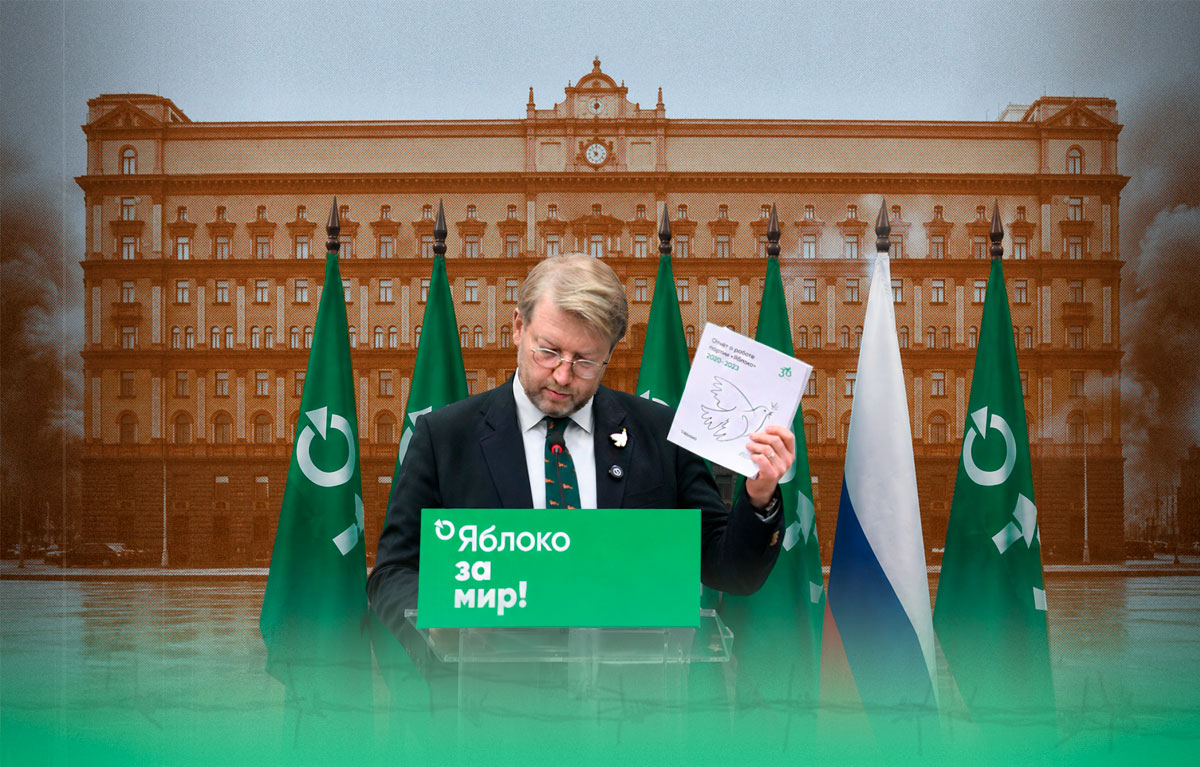
Chairman of the Yabloko party Nikolai Rybakov
Lev Shlosberg*, politician, one of the leaders of the Yabloko party, former editor-in-chief of the Pskov Province, was sentenced to 11 years and 1 month in a colony on charges of "repeated discrediting" of the army and spreading "fakes" about the Russian armed forces. In his final word in court, Shlosberg rejected the fabricated charges. He stated that he is being unlawfully persecuted at the behest of the authorities and called for an immediate end to the war in Ukraine. The judge constantly interrupted the politician, claiming she was absolutely not interested in "hearing about human rights and freedoms".
On the same day, we learned that the head and former owner of the Rolf company, Sergey Petrov, at one time a State Duma deputy from the Fair Russia party, one of the few who helped opposition media, was sentenced in absentia to 9 years in a colony. Previously, his company was nationalized. Finally, today (August 17), it became known that a criminal case was initiated against the founder of the Dozhd TV company* Natalia Sindeeva* and the general director of this channel Mark Ten. This is today's snapshot of <political persecution in Russia>.
"Yabloko" and the Needle's Eye
I will try to outline my hypothesis about what is happening and why it is happening right now.
Of course, the repressive reins were pulled by the Russian authorities not now and not today. Active political persecution began even before the war, when Alexei Navalny**, returning to Russia after being poisoned, was arrested at Sheremetyevo airport in February 2021, sent to prison, consistently received new prison terms, and was eventually killed in the polar colony of Harp. After the murder of Alexei Navalny, it is strange to be surprised that the Russian authorities behave this way, copying and adopting methods from the most terrible Stalinist times. Even during the times of <General Secretary of the CPSU Central Committee> Leonid Brezhnev, especially when the war in Afghanistan began and mass arrests of dissidents took place, fewer people were imprisoned for "politics" than now, when there are 1800 political prisoners in Russia, according to human rights activists, and we know their names. This is Alexei Gorinov, this is Mikhail Kriger, these are our journalist colleagues Anastasia Favorska**, Artem Kriger**, and many other well-known, close people to us who have been given long sentences.
The authorities realized that on television channels, according to the election law, a party appeared that said: "Stop the war, end the war." It was the only party that consistently advocated for the cessation of the massacre, for stopping the killing of people
The strangeness of the story with Lev Shlosberg may lie in the fact that it coincided with the removal of the Yabloko party from the State Duma elections. These have long been ersatz-elections, an imitation of popular will, nevertheless, the Yabloko party, to the surprise of many, was registered by the Central Election Commission. The head of the CEC, Ella Pamfilova, said that the ballot included a variety of parties, including opposition ones like Yabloko. However, the authorities then realized that on television channels, according to the election law, a party appeared that said: "Stop the war, end the war." Regardless of the formulations in which the idea of ending the war was put forward by party leader Grigory Yavlinsky and Lev Shlosberg, it was the only party that consistently advocated for the cessation of the massacre, for stopping the killing of people.
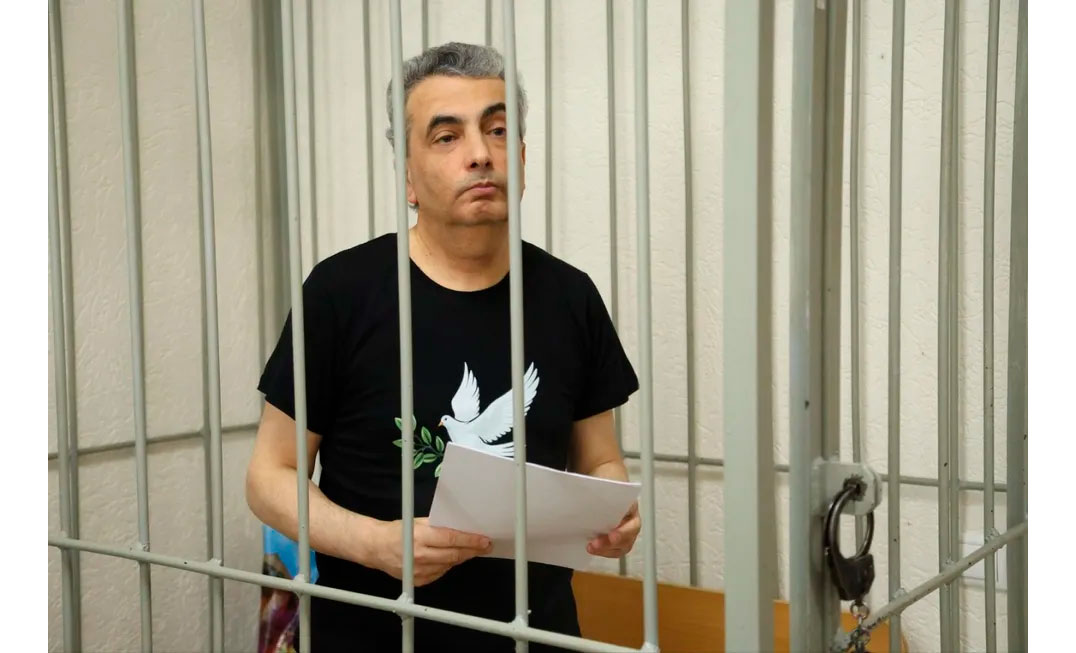
Lev Shlosberg. Photo: Pskov "Yabloko"
It is clear that such decisions as removing a party from elections are made at the level of the head of the presidential administration, Vaino, who goes directly to Putin for this, and Putin obviously gave the go-ahead. Although, I admit, this surprised me a little because it is known that Grigory Yavlinsky communicates with Putin, they met quite often. And, of course, I am surprised that Yavlinsky could not protect Lev Shlosberg. By the way, Yavlinsky was not on the list of those who went to the elections from the Yabloko party. And the Supreme Court removed the party from the elections on some completely ridiculous grounds. Yabloko, represented by its chairman Nikolai Rybakov, came to the Supreme Court with an appeal. Naturally, the Supreme Court again refused. At this time, supporters of the party, mostly very young guys, gathered near the Supreme Court, as on the day when Yabloko was removed from the elections. They were predictably detained. And everyone who was at the protest action on the day Yabloko was removed from the elections received summonses. We roughly understand how this will end. Young men will be offered to sign a contract with the Ministry of Defense and sent to the front, or threatened with long court sentences, sent to pre-trial detention centers, etc.
A Too Long Wave
Why did such a repressive wave suddenly start now? I must say that, of course, it did not start today, in fact, it never stopped. And the reason for this is that the main levers of power in the country are concentrated in the hands of the "KGB corporation," which existed and exists under different names, but its essence does not change. It is a political police. This is the main thing that was laid in its foundation when the All-Russian Extraordinary Commission (VChK) was created in 1918. This was exactly what was recorded in the documents. First of all, it is the protection of the regime from any ideological opponents, any hostile parties, and classes. This function was performed by the political police throughout the years of Soviet power. The political police especially strengthened in the thirties of the last century when the collegial body in the form of the Politburo of the CPSU(b) was de facto abolished, after the seventeenth party congress was crushed, after the introduction in thirty-seventh year of quotas for republics and regions, how many people should be repressed by the first category (execution), how many should be sentenced to prison terms. The main decisions were made by Stalin (according to "Meduza"**, out of 383 lists compiled for approval by Politburo members, Stalin personally signed 357. — NT). But all the direct work of the bloody wheel was left to the Chekists. It was a period of absolute omnipotence of the political police when the Chekists could do whatever they wanted: they shot people without trial and investigation right in the cells (especially their own Chekists when their turn came), arrested, sent to camps, exiled the wives of "enemies of the people," took away children, etc. It was an absolute bloody bacchanalia unleashed by Stalin, in which the main instrument was the NKVD.
In fact, power was concentrated in the hands of state bandits who carried out so-called justice. Repressions and the Great Terror (a term introduced by historian Robert Conquest) were the result of Stalin's fear of a book by Leon Trotsky that had come out at the time (he wrote about how power in the USSR was seized by the communist bureaucracy, whose tool became the state security organs) and the fear that the communist world would turn away from Stalin and listen to Trotsky.
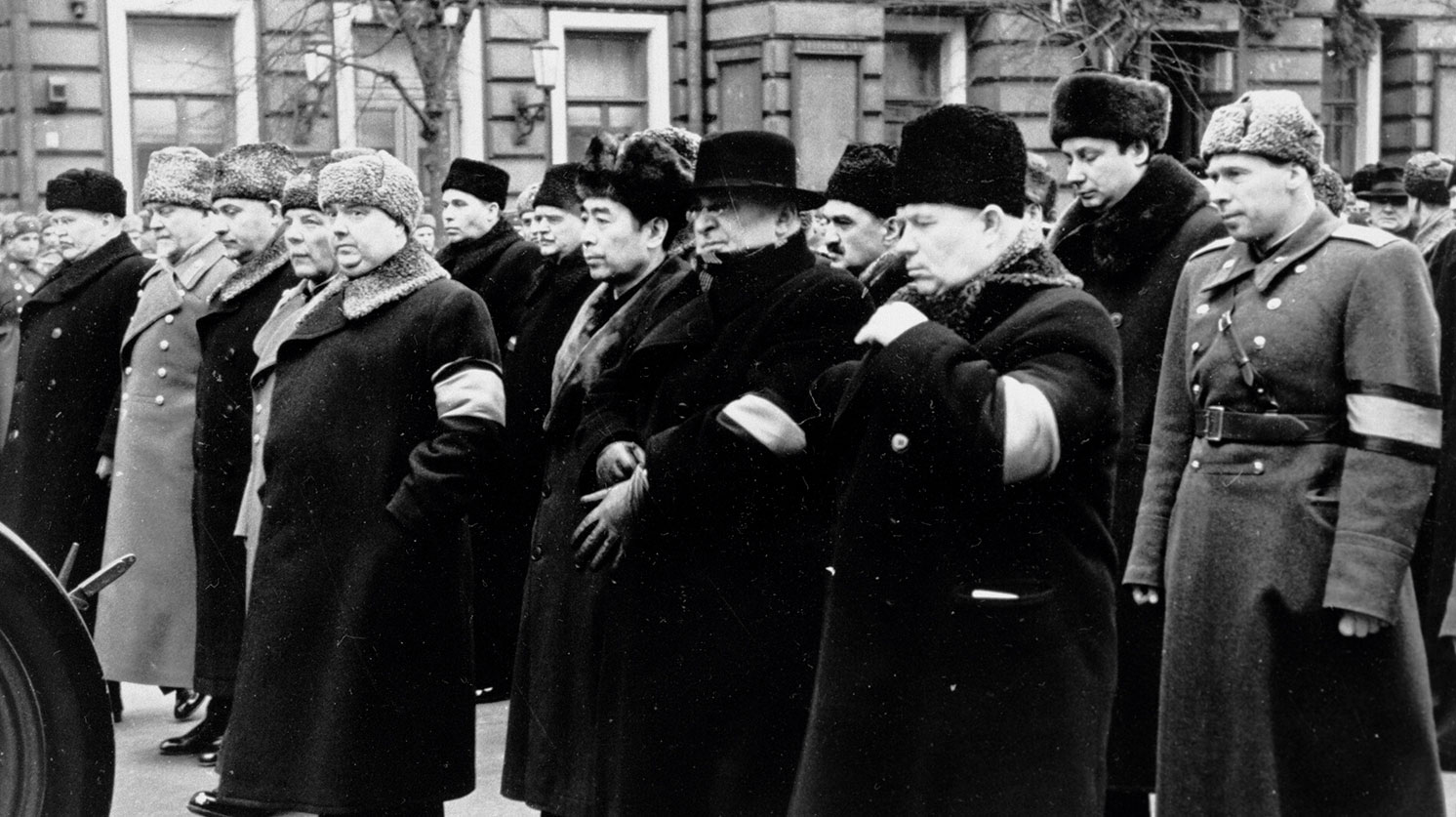
From left to right: Vyacheslav Molotov, Nikolai Bulganin, Lazar Kaganovich, Kliment Voroshilov, Georgy Malenkov, Nikolai Shvernik, Zhou Enlai, Lavrentiy Beria, Anastas Mikoyan, Nikita Khrushchev, and others walk along Okhotny Ryad behind the coffin with the body of Joseph Stalin, 1953. Photo: RIA NOVOSTI
The bacchanalia continued in one form or another until Stalin's death in 1953. Then the party nomenclature, with the help of the military, primarily Marshal Zhukov, who was called the Marshal of Victory by the people, tried to get rid of the omnipotence of the Chekists. Stalin's right hand, Lavrentiy Beria, was arrested and shot, accused in the "best traditions" of the Stalinist system of being a British spy. It is clear that there was no investigation or trial. It was pure revenge on the part of the party elite solely out of self-preservation. They understood what danger the huge army of Chekists, people who were used to killing, imprisoning, torturing, raping, starving, and depriving of sleep without trial and investigation, posed to them. Since open trials over them were impossible because all those who tried to clean up were themselves involved in bloody repressions, they preferred to deal with the leaders in the usual way for the organs. Minister of State Security Abakumov, who under Stalin imprisoned Jews for the "Jewish conspiracy," later ended up in prison and was shot. Deputy Minister of State Security Ryumin, who prepared documents for repressions, was also shot.
Khrushchev and his entourage were afraid to judge the Chekists. They did not want to arrest many either, because it was completely clear that the chains of investigation would lead to each of them
The entire inner circle of Stalin was purged due to the fear of the party nomenclature that this terrible bandit structure would remain. Therefore, under Khrushchev, who led the party after Stalin, steps were taken to protect the party and Soviet elite from repressions. What did they do? Instead of holding trials, they imprisoned about 150 people, among whom were such bloody butchers who personally shot the convicted. For example, Major General Vasily Blokhin, who also shot my cousin. He was the commandant of the internal prison of the NKVD, headed the economic department of the NKVD, where, by the way, Putin's grandfather worked. This chief executioner of Lubyanka got off with the deprivation of general's epaulettes and a general's pension. He died a natural death and is buried in the Donskoy Cemetery, where the remains of his numerous victims lie in unmarked graves. Two years after a junior Chekist, lieutenant colonel, then colonel Vladimir Putin became president of the country, a large white monument appeared on Blokhin's grave at the Donskoy Cemetery, on which his portrait is carved on a stone in general's epaulettes.
Khrushchev and his guys were afraid to judge the Chekists. They did not want to arrest many either, because it was completely clear that the chains of investigation would lead to each of them. Therefore, they infiltrated the KGB, primarily the central apparatus, but also the apparatuses in the regions with employees of the CPSU Central Committee, workers of regional and district party committees, to at least have information from the inside. I suppose they understood, as we understand now, that only another political police can control the political police, like any special and secret service. And the political police by law has the right to eavesdrop, spy, intercept mail, plant "bugs." All this was possible formally with the permission of the court, but in fact, it was done at the snap of a finger.
In Khrushchev's times, party and KGB structures became very intertwined. Probably, the Politburo of the CPSU Central Committee received some information from inside the state security organs, but only until the moment when the party comrades became very old and the "races on gun carriages" began. And of course, the KGB of the USSR, which had the expertise and tools developed for it by the best research institutes of the USSR Academy of Sciences, gradually began to come to the fore. Therefore, when in 1991 the doors of the CPSU Central Committee were closed and this criminal structure was liquidated, in fact, only half of the work was done. By that time, the party, the CPSU Central Committee had turned into a fence into which stones were thrown. Behind this fence sat the Chekists, who were waiting to see who would win and how to exist in these conditions.
The KGB had enough information from research institutes that the Soviet Union lost the Cold War because the Soviet economy turned out to be uncompetitive. During the times of Yuri Andropov at the head of the KGB (late 60s — early 80s), there were groups working on reforms according to the Yugoslav and Hungarian models, economic reforms were also dealt with by the head of the Council of Ministers Alexei Kosygin. In short, at the top, they understood that something had to be done with the economy because the defense expenses were colossal, practically 2/3 of the state budget went to military production or the production of dual-use goods. Gradually, there was nothing to eat and nothing to wear in the country. I am not at all surprised that it was Andropov who became the first to simultaneously be the chairman of the KGB of the USSR and a member of the Politburo of the CPSU Central Committee. This was not even the case under Stalin. And Andropov was looking for a young person capable of reforms as his successor, which were supposed to save the Soviet system and beautify its face.
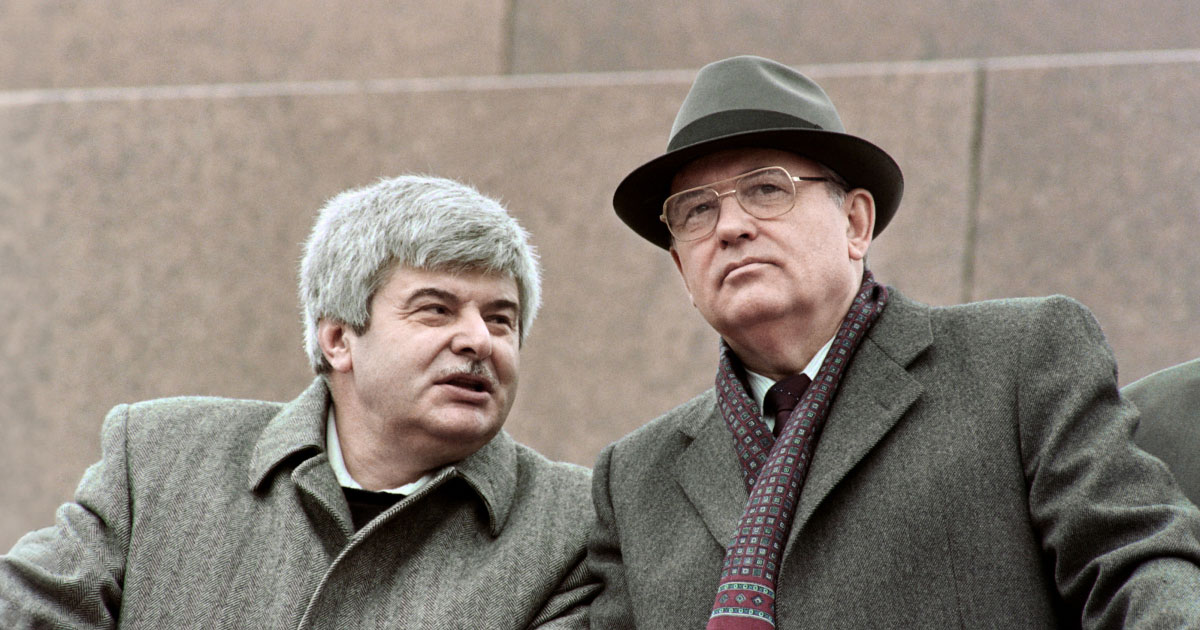
Gavriil Popov and Mikhail Gorbachev. Photo: Getty Images / «Babel'»
Why did we end up with what we have today? When Boris Yeltsin came to power, there were people in his entourage who were somehow connected with the KGB of the USSR. There were those like Gavriil Popov, a people's deputy of the USSR and the first democratically elected mayor of Moscow, who was a key secret employee at the economic faculty of Moscow State University, as if he led other secret employees, that is, simply informants. And there were others who simply believed that it was profitable to deal with the KGB, that it was a real force. Boris Yeltsin said that if the KGB were closed, chaos would ensue in the country. Many people who came to power in post-Soviet Russia had a personal interest in the archives of the KGB of the USSR not being opened and this structure somehow being preserved. Some had relationships with this corporation, or their parents and grandparents were related to it. It was precisely a corporation, a closed structure, in which all decisions are made by the top in a closed manner.
They Are Countless
In short, by 2000, what happened happened. It started even earlier when Yeltsin began to surround himself with people from the KGB. And there are no former KGB officers, especially as members of this terrible "brotherhood," which is so wonderfully described by Vladimir Sorokin in "Day of the Oprichnik." These people were in abundance in Yeltsin's entourage, in his administration. The same happened in the journalistic world, which then formed public opinion. And, unfortunately, the best journalistic pens for obvious reasons could not advocate for the destruction of the most vile, most repressive, most terrible structure of Soviet power — the KGB. After the events of 1993, the shooting from tanks at the Supreme Council and its dissolution, a decree suddenly appeared signed by President Yeltsin of the Russian Federation, which said: the organs of the VChK, OGPU, GPU, NKVD, NGB, MGM, KGB — are unreformable and require destruction. It is a big mystery how this decree appeared. Apparently, it was prepared by Yuri Baturin, then the president's assistant on security issues. Baturin's father was a resident in Iran, that is, he himself was a person who grew up in the corporate environment of "real men," as they called themselves. But it ended up with absolutely nothing. According to one version, Yeltsin's then-assistant and chief security officer Korzhakov hoped that his structure, the federal security service of the president, would become the main one on Lubyanka and subordinate it to itself. But he did not succeed, and no destruction of the KGB of the USSR (FSK, then FSB) happened either. Everything returned to normal. And in 2000, a person from this corporation came to power.
Unfortunately, this was an absolutely inevitable option. This was also due to ignorance of history, misunderstanding of the role of institutions and organizations, lack of institutional culture. The archives were not opened. Because many people's knees were shaking with horror that the archives would be opened and it would become known who and how they informed on, or what benefits they received from their contacts with the KGB.
And therefore, all the institutional memory, institutional culture, organizational principles of the KGB were preserved. And then only political will was needed, which Putin did not lack, to restore this structure.
For the first time in Russian history, the political police, from being a tool of power, as it was partly in Stalin's times, in Khrushchev's, Brezhnev's, and Gorbachev's times, turned into an institution of country management
Under Yeltsin, the KGB was divided into several structures. Putin brought them back together, leaving only the First Main Directorate, what is called the Foreign Intelligence Service, aside. This is not the only intelligence service Putin has now, but the SVR deals with analytics and is kind of standing aside for now.
Sociologist Olga Kryshtanovskaya, until 2008, meticulously counted the participation of representatives of special services in Russian power and large corporations. If under Gorbachev, in the country's leadership, there were slightly more than 4% of people from the KGB, people in uniform, then under Putin, there were almost 67%. In the government during Yeltsin's times, people from repressive structures made up 11.4%, and under Putin, by 2008, already 39.5%. In the end, their number grew significantly in the State Duma and the Federation Council. As a result, the number of people from the KGB and GRU in the country's leadership bodies turned out to be 10 times more than it was under Gorbachev.
By 2015, people from the KGB had completely taken control of power. This happened with difficulty. It was necessary to seize the oil industry, the gas industry, telecommunications, and the banking sector. By 2015, the president, the head of his administration, the speaker of parliament, 10 ministers, at least 25 deputy ministers, and heads of agencies were people from the KGB. This was always the case under Soviet power: KGB officers formally were in secondary roles, but in fact, they were shadow leaders of departments. In Putin's time, hundreds of heads of various departments in the Kremlin and the government were also people from the KGB. The same was in the legislative power and in the leadership of state corporations and banks. This was an important step that began with the defeat of Yukos in 2003, the actual nationalization, and the transfer of its assets to the state company Rosneft. And this was the beginning of creating the economic foundation of Putin's power and the KGB corporation as a whole.
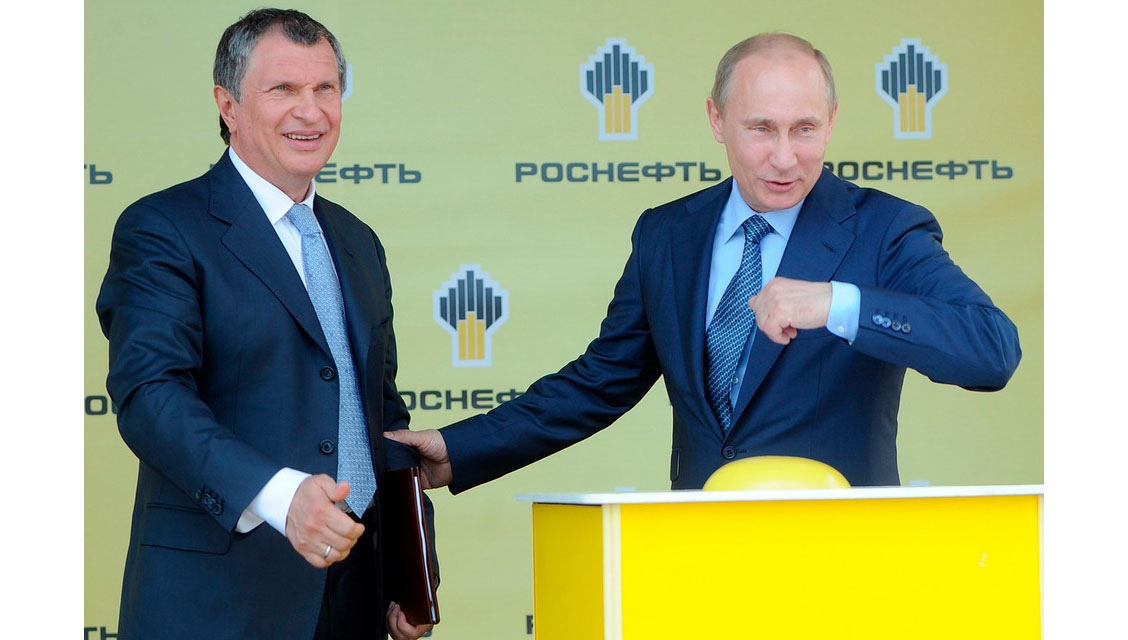
Igor Sechin and Vladimir Putin. Archive photo: Alexandra Mudrats / TASS
The Chekists began to control the banking business and, above all, export-import operations through the creation of Rosfinmonitoring, financial intelligence, which controlled all transactions that went out of the country and back. The sphere of communication, television, and radio companies — this is primarily, of course, Yuri Kovalchuk, who himself is from the Third Main Directorate of the KGB of the USSR. Plus, they began to control a large part of the oil industry, primarily Rosneft, which became the largest oil company in the world, and the gas industry. As a result, for the first time in Russian history, the political police, from being a tool of power, as it was partly in Stalin's times, in Khrushchev's, Brezhnev's, and Gorbachev's times, turned into an institution of country management. This happened by 2008. It was exactly then that Putin's silent coup took place.
From this time, the destruction of political opponents began. And primarily, this object was Alexei Navalny. And in 2020, the constitution was changed, which made Putin and, accordingly, the corporation he represents, the lifelong rulers of Russia. And this is the first time that a repressive structure has become the main structure of the country. There was an incorporation into this structure of both the legislative and judicial power, and the Supreme Court. Parties also became part of the corporation, they are all inside it. Revanchism, militarism, imperial consciousness, finally, the Special Military Operation, the war in Ukraine — a natural product of this process.
Turn the Valve
But let's return to today. Why was Yabloko first registered and then the registration was canceled? Because the KGB corporation has its own habits, concepts, tools, and its own institutional culture. The most important element of this institutional culture is control. Total control. It's not even that the Chekists are interested in what citizens think. This is more of interest to ideologues like Deputy Head of the Administration Kiriyenko. And control means we know who can go against us, why they can go against us, and how to prevent it. At the moment when this institution feels that something is getting out of control (as happened with politician Boris Nadezhdin*, for whom people began to collect signatures en masse, as he was the only candidate for participation in the presidential elections who opposed the war), a ban is triggered. Nadezhdin was not allowed to register as a candidate, and now he has been completely pushed out of the country.
The same happened with the Yabloko party, the same with Shlosberg. Eight people from Yabloko are already imprisoned. It is quite obvious that this is not the limit. The more difficult the situation for Russia at the front, the worse the economic situation. And now we see how, at the snap of a finger, the chief economist of Vnesheconombank, Andrey Klepach, who spoke about the fact that the country's economy cannot withstand such military expenses, is lagging behind and losing its positions in the world, is removed from his position. Problems with gasoline, drone strikes on refineries and logistics facilities, the transfer of the war to Russian territory — the war has ceased to be something that happened somewhere outside the country. All this creates colossal tension in society. And one of the reasons why Sergey Kiriyenko wanted the Yabloko party to participate in the elections is an attempt to understand what the moods "on the ground" are. The Chekists also do not have reliable information, nevertheless, they have something, they conduct their own surveys. And when they realized that steam could escape from the boiler, that elections, which are always a source of political mobilization, could lead to an increase in protest sentiments, that people would start discussing more why they need this war, which has already deprived them of much, and the problems are only growing, — then they decided to turn the valve. The Chekists decided that it was impossible to allow even a not-so-popular politician like Navalny to appear, but someone who would constantly say before the vote: "Stop the war, stop the war, stop the war!"
Now Putin has no resources for a new war. But we are dealing with a person who lives in conditions of extreme asymmetry of information, in conditions of very poor expertise
At the same time, the Western press talks about the future aggression of Russia against NATO countries as something inevitable. They talk about Europe arming itself, expecting an attack from Russia. That is, in Europe, they finally realized that it was not only the Ukrainians who were unlucky. And of course, NATO's response will be in this case.
I think that Putin now has no resources for a second and third front. The attempt to capture the remaining 10 or 12 percent of the Donbas territory is happening with the heaviest efforts and colossal losses, 30 thousand per month die in "meat" assaults. Putin needs working hands at military factories, so he will cooperate with North Korea, which even the USSR did not allow itself. That is, Putin now has no resources to start a war against NATO countries, especially against Poland, where military industry expenses have reached 6.5% of GDP. Poland takes the upcoming threat most seriously, more seriously than others. In short, for Europe, this is a prospect for the future (certainly, if this regime is not swept away earlier). It seems to me that now Putin has no resources for a new war. But we are dealing with a person who lives in conditions of extreme asymmetry of information, in conditions of very poor expertise. Around him are people who are loyal to him, but who do not have great intellectual abilities. They are his advisors, they put information in the red folder for him, based on which he makes decisions.
Legends and Myths
Now about two myths that have appeared in the last few days when suddenly everyone woke up and saw that the country is ruled by the KGB. The first is confusion in concepts. The FSB is called either a secret service or a special service. The FSB is neither a special nor a secret service. It is a classic political police. A secret service is a service that performs secret operations related to the protection of the country's leadership. The Presidential Security Service is a secret service. In the United States, the Presidential Security Service protects the country's top officials, protects foreign guests of the first magnitude, and performs some special assignments related to cybercrimes and crimes in the financial sphere.
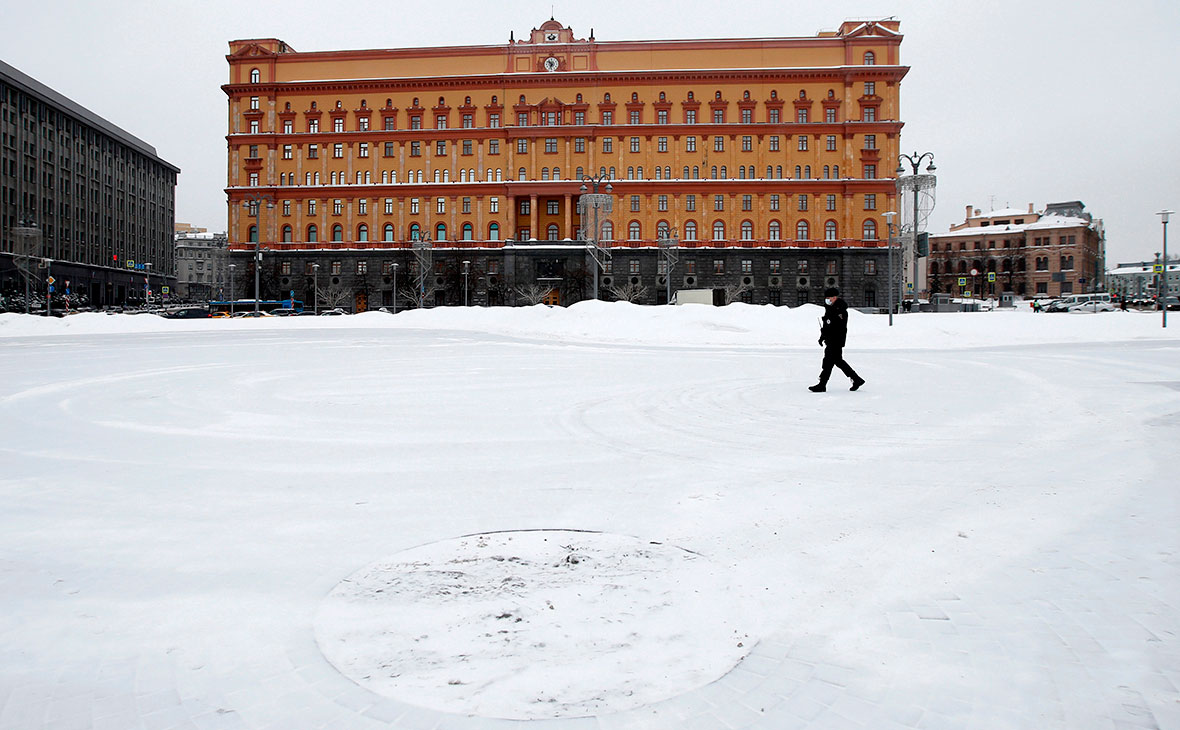
The building of state security organs on Lubyanka. Photo: Artem Geodakyan / TASS
A special service or secret service is primarily a law enforcement agency that protects the country and its institutions, protects the people. The same goes for the army. When Trump tried in his first term to use the army as internal troops to disperse protesters, four-star generals gathered and declared that they do not serve any monarch, any president, they serve the people of the United States. This also applies to those seventeen special structures that are part of the so-called intelligence community of the United States. It is very important that this multitude of various secret services and special services allows them to control each other because they all receive money in the special committee on intelligence of the United States of America, they fight for it. And as soon as the committee receives information that some structure is trying to encroach on the political field or perform functions not inherent to it, it faces wallet problems. The wallet of the United States is controlled by the legislative body. As you understand, our wallet is in the pocket of one person.
All general secretaries eventually got hooked on KGB or FSB "reports." The same thing happened with Yeltsin. "First persons" always believed that only close contact with the KGB or FSB would protect from a coup
Another myth that has also appeared recently is that all political cases are handled exclusively by the second FSB service, headed by General Sedov, a former tax officer from St. Petersburg, an old KGB officer (they are all from there). It is true that within the second service there is a department for the protection of the constitutional order, which was also in the KGB of the USSR, which replaced the fifth department of the KGB of the USSR. In essence, it just changed its name. But they did not protect the constitution then, nor do they protect the constitution now. This service deals with creative unions and universities. It was they who destroyed "Shaninka," brought the Higher School of Economics to disrepair, manage Moscow State University, etc. But as under Soviet power, all FSB services, like all KGB departments, in one way or another performed the function of political police. For example, when Putin first came to the United States shortly after he was elected president of the country, he said: "I was not in the KGB, I was in intelligence." He was never in intelligence, but he said so not by chance because it was believed that intelligence was a white bone, the First Main Directorate of the KGB of the USSR. All the others, "men," dealt with internal affairs, fought dissidents, etc. And the fact that Putin fought dissidents, we know for sure. There are documents published by human rights activist Yuly Rybakov, they are well known. Investigator Putin's signature is on the search act related to one of the dissident cases in Leningrad.
But that's not the point. The task of the First Main Directorate was to monitor the top officials of the state. There were people in their entourage who reported to the first directorate about what Gorbachev was saying, doing, and planning to do. People from the first directorate monitored Gorbachev's associate, one of the ideologists of perestroika, Alexander Nikolayevich Yakovlev. They wrote reports. All general secretaries, as Alexander Nikolayevich Yakovlev said, eventually got hooked on these "reports" of the KGB or FSB. The same thing happened, naturally, with Yeltsin. These "first persons" always believed that only close contact with the KGB or FSB would protect from a coup.
The question arose, what could make many decent people work for a criminal structure. They knew what the NKVD and MGB were doing, what a bloody carousel they arranged in Russia in the late twenties, thirties, forties, and fifties. Among them were quite decent people, but even these decent people always remained members of the corporation. I remember well that when Putin came to power in 2000, KGB officers from St. Petersburg followed him, from private business structures, Chekists began to move to state and semi-state business formations. The entire "Gazprombank" — it was a KGB residency in Vienna headed by resident Akimov. One of these people orchestrated the deal to create the Yukos company. He became very rich on this, of course, and he headed the security service at Yukos. I remember well that in our conversation after Putin came to power, this person said the phrase: "I'm tired of wiping my pants for oligarchs." This is a very indicative thing.
Corporate relations, corporate ties are very strong. This is not accidentally called "fascism," from the Italian "fascio" — "fist," "bundle," "union." Such regimes of military-bureaucratic authoritarianism are well known in Latin America. There, the military plays the role of the constituent force, they are connected by history, training in the same academies and schools, just like the KGB officers. We also have a regime of military-bureaucratic authoritarianism, only in Russia it is military-KGB authoritarianism.
Actually, probably, this can be concluded. I had no doubts that the corporation of Chekists would seize power. I wrote about this in a book about the KGB, which was published in 1991 in Russian, and in a book that was later published in other countries and was never translated and published in Russia. I wrote about this in an endless number of articles. And yet what happened happened, and we all bear responsibility for it.
Video Version
* Yevgenia Albats, Lev Shlosberg, Natalia Sindeeva, the Dozhd TV channel, the online publication "Meduza," Boris Nadezhdin are declared "foreign agents" in the Russian Federation. "Dozhd" and "Meduza" are recognized as "undesirable organizations."
** Alexei Navalny is on the list of "extremists and terrorists." Anastasia Favorska, Artem Kriger are convicted under the "extremist" article.
Photos used: Alexander Shcherbak / TASS, RIA Novosti / Vladimir Astapkovich.