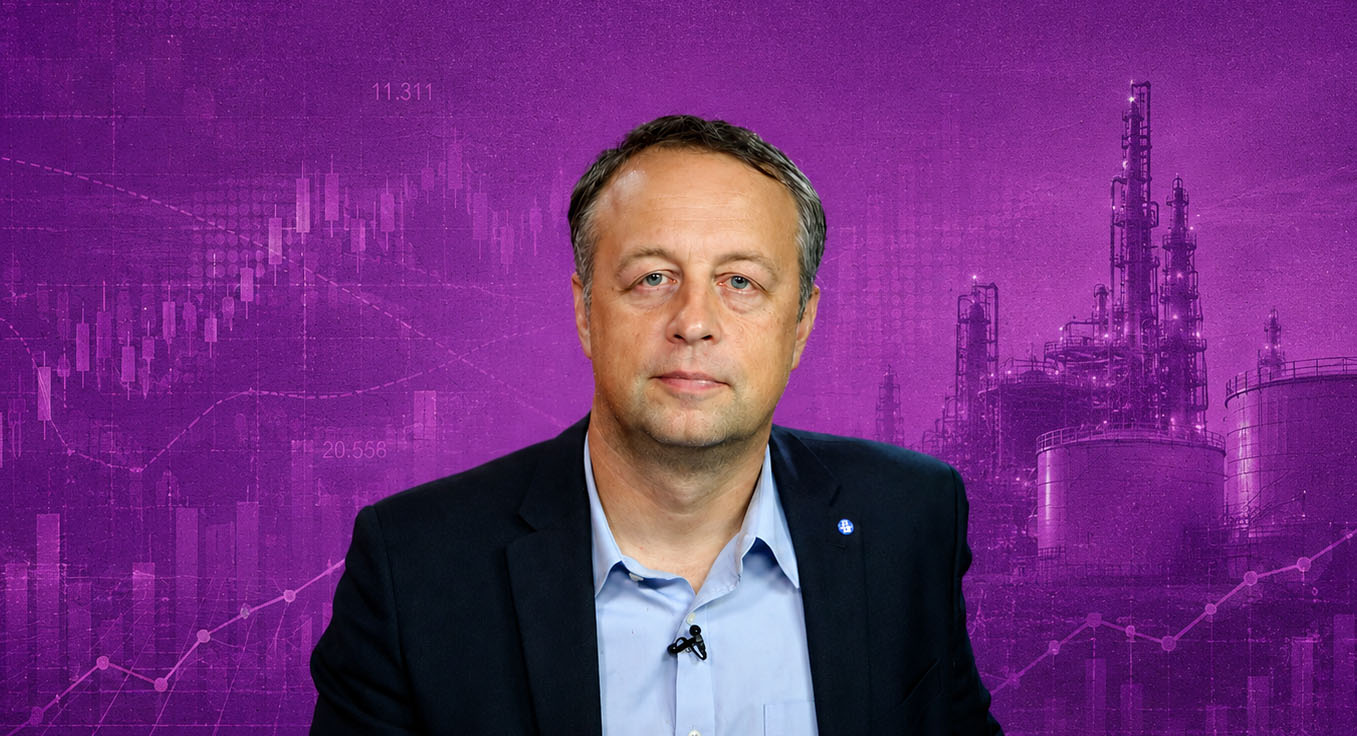
Konstantin Sonin
Yevgenia Albats*: Ukrainian drones continue to hit Wildberries (WB) warehouses, with nearly two dozen strikes, many warehouses are almost destroyed. There are two points of view. The first is that the company Wildberries is almost the foundation of the Russian economy, which is why Ukraine attacks it. The other point of view is that it is unpleasant, it is a strong blow to small businesses, but the Russian economy will not suffer greatly from this. What do you say?
Konstantin Sonin: I think the second is true: it is a strong blow, these are losses, with each such blow Russia loses hundreds of millions of dollars. Small businessmen lose, shareholders lose, the Russian economy loses. But each individual blow is not fatal. And even if Wildberries disappears from the face of the earth, that is, the Ukrainians finish it off, this in itself will not lead to the end of the war, will not collapse the Russian economy.
Yevgenia Albats: So you support the point of view of <businessman> Yevgeny Chichvarkin*, who says that the Armed Forces of Ukraine are making a mistake by striking Wildberries warehouses, or, as the well-known blogger Ruslan Leviev* says, that this is a violation of the laws of war, a strike on civilian targets, and so on.
Konstantin Sonin: I think Leviev can be ignored, and I am not a military expert to understand the tactics of the Armed Forces of Ukraine. It seems to me that they, in particular, are forcing Russia to move air defense from scarce places to protect Wildberries warehouses, which also brings some military benefit. But it seems to me that the key thing is that the Armed Forces of Ukraine are damaging the Russian economy, and the declared task is to inflict such damage that at some point the Russians will think and stop the war. How to create such pressure on Putin so that he finally stops the war? Strikes on Wildberries, each individual strike will not make him stop the war. But gradually, perhaps, it will.
What is Zelensky Betting On?
Yevgenia Albats: Volodymyr Zelensky, the President of Ukraine, said that the war will most likely stop in November 2026. And there is talk that negotiations between Russia and Ukraine will resume in August, mediated by either the European Union or the United States, or both together. Do you think that these optimistic forecasts of Volodymyr Zelensky are related precisely to the strikes on Wildberries?
Konstantin Sonin: It seems to me they are related to two things. So far, throughout the summer, the Armed Forces of Ukraine manage to inflict significant damage on the Russian economy every day, every night, every week. Losing 200 million dollars a day does not kill the Russian economy. But if this happens over months, it is already a very large loss. And the second is that in the spring and summer of 2026, the advance of Russian troops in eastern Ukraine almost stopped. The combination of these two things, plus daily damage, plus the harsh conditions in which Russian regions live, where there are big problems with electricity, water, where gasoline prices are high, are the factors that President Zelensky is counting on.
Yevgenia Albats: The Armed Forces of Ukraine again hit Bashkir refineries with drones. At the same time, as my interlocutors say, there is practically no gasoline shortage in Moscow and St. Petersburg.
Konstantin Sonin: The main thing that eliminates the gasoline shortage is not the availability of gasoline, but the fact that the price of gasoline is still determined by the free market. Gasoline prices rose after these strikes, accordingly, consumption decreased, people drive less. In this new equilibrium, there is no shortage.
Yevgenia Albats: But, as far as I understand, in Moscow, prices, if they have risen, have not risen very much.
Konstantin Sonin: If they have risen by 10%, that is already an increase. This means that people have switched to public transport, travel less, and due to this, the shortage has disappeared. The shortage disappears due to the price increase.
The economy, the state budget, the budget of each person, and their behavior adapt. Without Wildberries logistics, Russians will live worse. But if your kitchen is destroyed in your apartment, it does not mean you will stop eating
Yevgenia Albats: The company Wildberries was one of the most successful private companies in Russia. We observed fights over it between Kadyrov's people and Suleiman Kerimov's people, who, as they say, is directly connected with the head of the presidential administration, Mr. Vaino. How important do you think the company Wildberries is for the Russian economy, what is its role?
Konstantin Sonin: Through it, products reach almost every Russian family. Almost any small businessman uses WB or Ozon. But it should also be understood that without WB, the Russian economy will not stop producing, and consumption will not cease either. Goods from manufacturers will still be delivered to buyers. It will just be more expensive, a little more complicated, entrepreneurs will receive less money, buyers will consume less and overpay for it.
But the goods will not disappear. The disappearance of Wildberries is not the same as the physical disappearance of all the business tied to it. It means there will be different logistics, more complex, more expensive delivery.
Yevgenia Albats: Can we say that the destruction of the company WB is a loss of some percentage of GDP?
Konstantin Sonin: It is difficult to estimate. It is easy to calculate, say, the cost of goods lost in the fire, disappeared in the warehouse, it is estimated at several hundred million dollars each time damage is done to a warehouse. You can see how much was spent by banks that financed the company's expansion on building some terminal. This will change GDP, but giving an exact figure is very difficult. I think that in total, complete destruction is tenths of a percent. Maybe 0.3% of GDP will disappear in this way.
Yevgenia Albats: What is more frightening for the Russian economy - strikes on refineries and tankers or strikes on WB?
Konstantin Sonin: Both are costs, they are a problem. But it should also be understood that the economy, the state budget, the budget of each person, and their behavior adapt. If your kitchen is destroyed in your apartment, it does not mean you will stop eating. Without Wildberries logistics, Russians will live worse. But what exactly will be reduced is not so easy to say.
Yevgenia Albats: Could this lead to a shortage of goods?
Konstantin Sonin: A shortage can only arise if there is state price regulation. If the price is determined by the market, there can be no shortage. Accordingly, if the government has enough composure, as it still has with gasoline, on the one hand, to press for prices not to rise too much, but at the same time not to set prices, then there will be no shortage.
The War is Already in Russia
Yevgenia Albats: What will be an indicator of a sharp deterioration in the situation in the Russian economy? What will be the indicators?
Konstantin Sonin: These indicators are already there. Russians live worse by all indicators: they cannot do what they used to do, it takes them more time and more money for the same things, for the same goods and products. They travel less, rest less. Physical transportation has also fallen. I don't know what other indicator is needed to show in real-time that the situation has worsened.
Yevgenia Albats: A very famous economist writes: "The question is in the decline of production under such conditions. Why don't we see a more significant real crisis? What other economy could exist under such conditions? It is an absolute mystery to me."
Konstantin Sonin: Look, one of the things that accompany us in the twenty-sixth year is high oil prices. If President Trump had not started a war with Iran, that is, oil prices would be low and the Armed Forces of Ukraine would hit refineries with the same intensity, then Russia would have even bigger budget problems. What is a budget problem? As it was in the last years of the Soviet Union, investments in infrastructure can be radically reduced. Now no hospitals, no clinics, nothing social is being built because all the money is sent to war. Unbuilt hospitals, unbuilt roads, unraised teachers' salaries may not be visible, but they are there.
Yevgenia Albats: Strikes on Wildberries and refineries are essentially bringing the war to Russian territory. For many people, this is a complete surprise. Could this affect the behavior of Russians and their attitude towards the war?
Konstantin Sonin: First, when we talk about bringing the war to Russian territory, we must understand that when Putin attacked Ukraine, in the twenty-second year Ukraine did not have missiles, did not have drones, did not have the information infrastructure to strike back at Russia. That is, we can say that the Ukrainians brought the war to Russia at the moment when they had this opportunity. Second: I think there is no particular chance for some kind of mobilization like the revolutions we read about in books. And I think that the Ukrainian leadership today has no illusions about this. The thought now is different: it is necessary to inflict damage to such an extent that it becomes so difficult for Russians to live that they simply stop obeying the authorities. If you remember the eighty-ninth - ninetieth year, then mobilization came at a very late stage of the collapse of the Soviet Union. And before that, growing economic difficulties led to the fact that people at all levels simply stopped obeying the authorities. The Soviet Union collapsed because people stopped obeying. And the KGB and the police stopped ensuring that people obeyed. Party officials were also busy with their own affairs and did not oversee the KGB. It seems to me that the scenario for ending the current war is the scenario of 1916 or 1990 when due to growing economic difficulties, due to the fact that it is clearly visible that the Putin regime, Putin personally is absolutely not interested in what Russians live by, will lead to the fact that Russians will be outraged and will stop paying attention to the authorities. And this general sabotage, the collapse of power will lead to the end of the war.
Yevgenia Albats: Yegor Gaidar in the book "The Death of an Empire" wrote that in eighty-three - eighty-four years, when the price of oil fell in the world and the Soviet authorities ran out of money, they could no longer pay those who protect the regime, that is, the KGB, the police, and so on. Do you assume that something similar could happen now?
It seems like we are watching a movie about how it happened in the Soviet Union, that there were decisions that could have stopped the state's slide into catastrophe. But they were not made
Konstantin Sonin: All this is true, but it is also true that until the last days of the ninety-first year, the Soviet Union continued to produce tanks, continued to produce missiles. It seemed necessary to make a decision to stop this production, close these factories, transfer everyone to social benefits because it was urgently necessary to purchase food. But no, until the last moment, this was not done. The military budget was reduced only when the state collapsed. This is what we are observing now. Then they will say that it was possible at any moment to agree to a truce, stop the war, reduce military production, urgently increase social benefits, infrastructure spending. It was possible to urgently conduct negotiations that would lead to the easing of sanctions. But we now see live that this is absolutely not being done. It seems to me that many people in the government perfectly understand that this madness needs to be stopped, but then it will turn out that the madness did not stop.
Yevgenia Albats: Yes, Dmitry Yazov, then Minister of Defense and Marshal of the Soviet Union, wrote in a report to the Politburo that the Soviet Union had already produced three times more tanks than needed. But they continued to produce them.
Konstantin Sonin: They continued to produce, continued to purchase production lines, and it was impossible to stop this. Now it seems like we are watching a movie about how it happened in the Soviet Union, that there were decisions that could have stopped the state's slide into catastrophe. Nevertheless, decisions were not made.
Business Conversation with Putin
Yevgenia Albats: At the same time, we see that some shifts are happening in the Russian nomenclature. A large interview with Mr. Melnichenko recently appeared in The Economist. He is a major capitalist, engaged in fertilizers. He is under sanctions, lives in Dubai, not in Moscow. And he writes a column in which he says, in my opinion, something unintelligible, talks about the need to preserve Russia's sovereignty, as if someone is taking it away, and so on. But I heard assessments that this is a very smart column. What do you think about the text itself and why Melnichenko decided to publish it in The Economist.
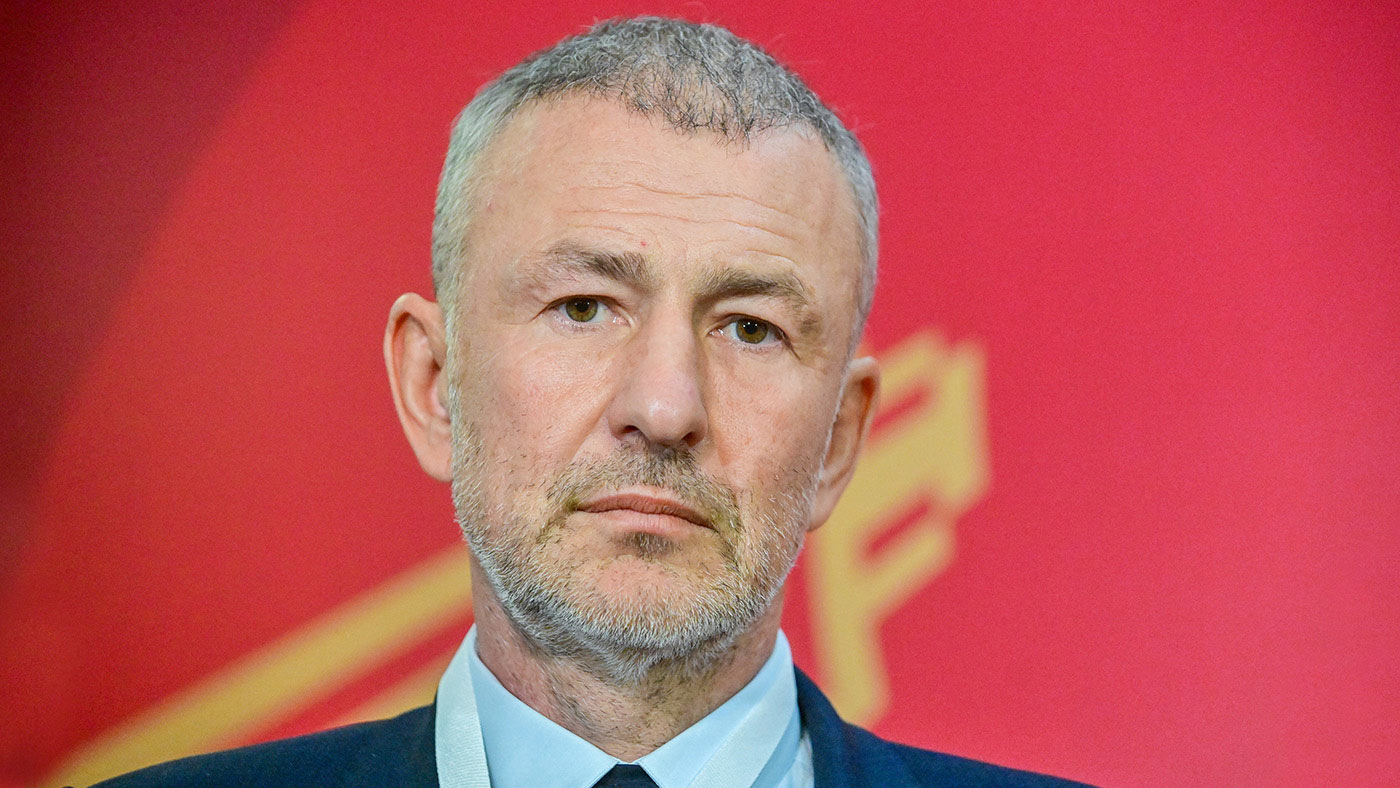
Andrey Melnichenko. Photo: S. Kiselev / Agency "Moscow"
Konstantin Sonin: I, unlike many anti-Putin people, have a lot of understanding for Russian businessmen. We can talk as much as we want about how they were irresponsible because they had the resources to stop the rise of the Putin regime, but they didn't stop it. But if you keep in mind that their social function is to extract profit from everything, then they are not to blame for this. They could have stopped it, but it would just have been other people. I am not personally acquainted with Andrey Melnichenko, but I know that he started his business, I think, by manually exchanging currency at Chistye Prudy, creating added value because each exchange is the creation of added value. And then he was very successful all his life. Apparently, very capable. Plus, he was incredibly lucky, like all billionaires. He was engaged in business all his life. If Putin could somehow be used, he used Putin. I am absolutely sure that any Russian businessman, if told that they could do business without fascism, without Putin, without this regime, but in a democracy, they would much prefer to make a lot of money and live in a democratic regime. This is about the general attitude towards business.
And now I will say an unexpected thing about how I read what was written in the article in The Economist. It seems to me that although it is written in English, it is a letter from Melnichenko personally to Putin, and he is trying to find such a language that seems strange and even just insane to us - this about protecting Russia's sovereignty. He is trying to find such words so that Putin can exit the war and come up with in his head how he protected sovereignty, preserved Russia. It is a bit strange that this is done through The Economist, but on the other hand, we know that no one can say anything else to Putin. And it's not even that they are afraid to say something, but that he doesn't hear anything anymore. It seems to me that Melnichenko, maybe those who helped him write this, also billionaires, had the idea that if formulated so that Putin could understand it, and go through a respected international publication, then maybe he will understand and hear it, and his end of the war will turn into the protection of sovereignty.
Yevgenia Albats: Using an external source when there is no access to the body, that is understandable.
Konstantin Sonin: Agree, the version that this is a letter to Putin explains a lot because many people were puzzled about who he was addressing this to. If he is addressing Putin, then many formulations make sense.
Yevgenia Albats: I completely agree with you and understand your logic that Melnichenko uses the vocabulary that Putin operates with and thus tries to convey to him: "Let's stop the war". But I did not understand from this article what Melnichenko actually proposes. Putin can already stop the war and say that he protected Russia's sovereignty, right? Nevertheless, this does not happen. I remind you that Putin had a KGB buddy, Cherkesov, who at some point, when he lost access to the body, published a famous article in the newspaper "Kommersant" about how the country hangs on a Chekist hook and that this terrible corruption must be stopped, remove the money changers from the temple because the Chekists have turned into those very money changers, and Putin, like Jesus, is the person who can remove the money changers from the temple. This cost Cherkesov complete and absolute disgrace, from which he never emerged until his death. Why do you think that Putin will be given an article from The Economist, and he will not want to do the same with Melnichenko?
It is surprising that many oligarchs are very afraid of Putin. Despite the fact that they descended alone into the mines to angry miners, personally went to meetings with bandits. Yes, they are all physically brave people. They turned out to be politically, many, very cowardly
Konstantin Sonin: Well, first of all, these are different letters. Melnichenko's letter is written in Putin's language. He does not accuse him of anything. Cherkesov accused Putin of acting incorrectly. Melnichenko says that everything was right before. Just now, at this moment, it is necessary to adjust the course, pursuing the same goals. So it seems to me that this is a different level of communication quality. I don't know how much courage this requires, but you know, all Russian oligarchs, people are physically fearless, each of them, I think, could go with a grenade on a tank under appropriate circumstances, or be Benya Krik in Odessa, or the head of the Odessa Cheka fighting Benya Krik. The fact that Roman Abramovich, for example, went to Kyiv, I think, requires considerable courage.
Yevgenia Albats: Did you say without irony that all Russian oligarchs are very brave people?
Konstantin Sonin: It is surprising that many of them are very afraid of Putin. Despite the fact that they descended alone into the mines to angry miners, personally went to meet bandits, and not with the current bandits, but directly with such, where there are two convolutions and a gun in hand. Yes, they are all physically brave people. They turned out to be politically, many, very cowardly. But it seems to me that Melnichenko's question is rather not about courage, but about what to do. Everyone thinks it's simple. But if he, for example, comes to a meeting with Putin (I am sure he can get a meeting with Putin) and tells him: "The war is ruining Russia, let's end it", Putin will shrug his shoulders, think he is crazy and never meet with him again. Well, probably, he will try to destroy the business or something else, but the main thing is that the war will not stop because of this. Therefore, maybe it was an attempt to use a weak remedy when there are no other means at all.
Yevgenia Albats: And do you think there will be a result? Or will it be exactly the same as with all previous appeals?
Konstantin Sonin: I think this is a full-fledged attempt. Unfortunately, there is little chance that it will be heard because the main problem is not to physically deliver something to Putin, but that he does not listen to anything.
Yevgenia Albats: We have seen with you how a well-known and quite talented person, Mr. Moshkovich, was suddenly detained, imprisoned, and after that, his company "Rusagro" with a capitalization of 2.5 billion dollars was nationalized. No petitions helped, his business was taken away. What is the difference between Melnichenko and Moshkovich?
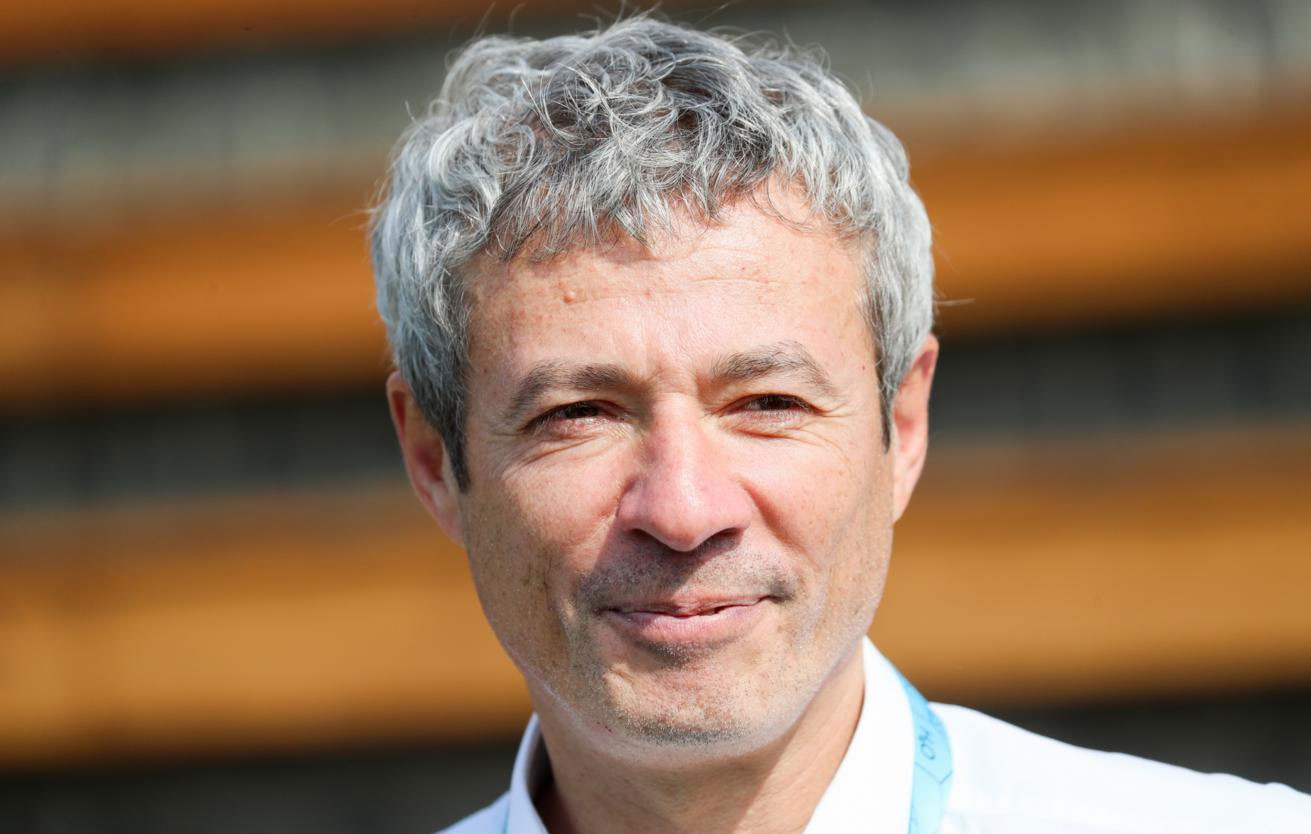
Founder of the agricultural holding "Rusagro" Vadim Moshkovich. Photo: S. Savostyanov / TASS
Konstantin Sonin: Melnichenko is sitting in Dubai. I know little about Moshkovich's business. But I know that he is the only Russian oligarch known to me who spent huge money on a purely charitable cause, on creating a truly outstanding school for gifted children "Letovo". The program was excellent, and this is a tragic story, and sad for Russian capitalism too, because it cannot be that business and ultimately consumers will benefit from the fact that a private company is nationalized and the owner is in prison.
Yevgenia Albats: Well, what is there to nationalize Melnichenko's fertilizers?
Konstantin Sonin: There are businesses that are quite difficult to nationalize due to their structure, some smart intertwining of shareholdings, loans, contacts. Perhaps if something is tried to be taken away from him, it will undermine some channels, say, through which sanctioned things are supplied to Russia, something related to the war. Of course, each individual is vulnerable, and surely, Andrey Melnichenko would not live in Dubai if he did not think there was a threat if he were in Russia. When Moshkovich's business was nationalized, I was surprised that one of the largest, most successful, and luckiest Russian businessmen's business turned out to be integrated in such a way that it was relatively easy to nationalize. He essentially had one huge holding, of which he was the majority shareholder. He was very efficient in terms of profitability, but not as well protected as a modern large business in Russia should be.
Yevgenia Albats: We know Sergey Petrov well. He had the company "Rolf", all built on his contacts, including personal contacts with Japanese car manufacturers, on their trust in Petrov. And yet the Russian authorities nationalized his company without hesitation.
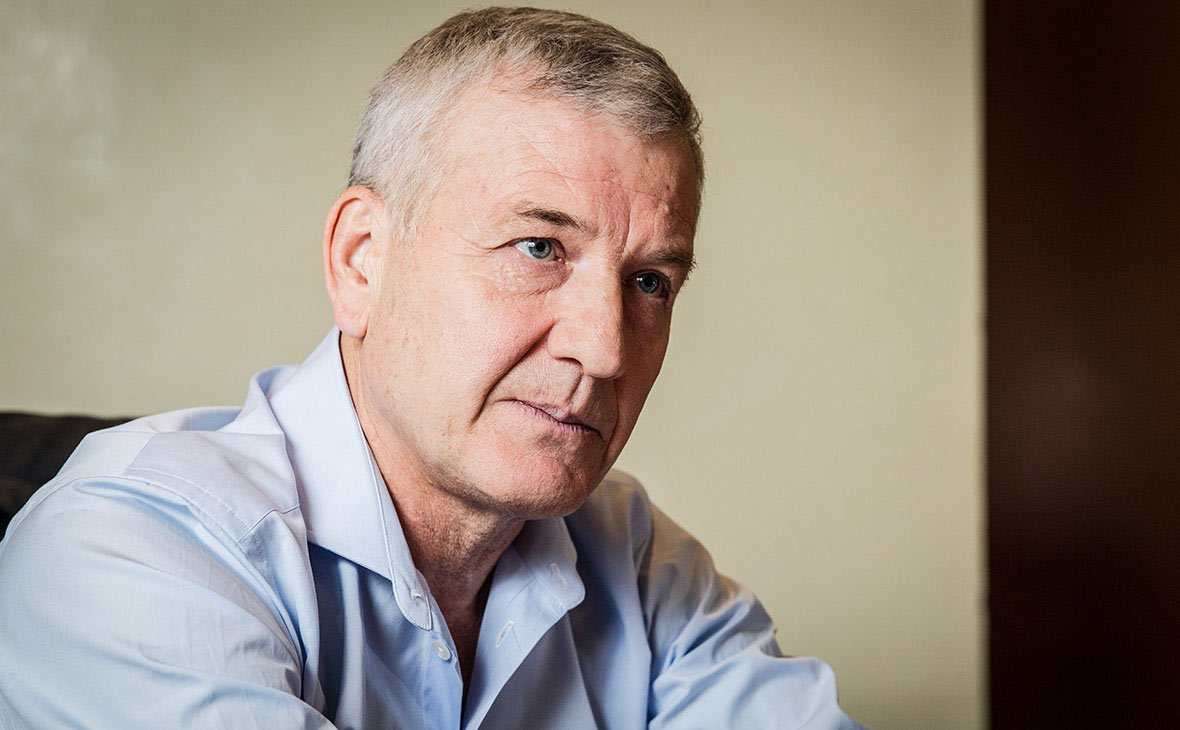
Sergey Petrov. Photo: O. Yakovlev / RBC
Konstantin Sonin: Then it was easy to nationalize. And imagine if he had shut up at an early stage, stopped helping the opposition, and now it would turn out that through his contacts with Japanese car manufacturers, some important parts from Japan, from China for drones and something else are being supplied. Then it would be easier for him to convince predators from law enforcement or to go to Putin and the presidential administration. If he had Vaino with Kiriyenko as shareholders, maybe the business would remain.
Yevgenia Albats: So you think that those who are not nationalized and especially not touched, one way or another help the Russian state. Either they are connected with the Russian military-industrial complex, or they perform some delicate, let's say, assignments of the Russian state.
Konstantin Sonin: Or they share a lot with Putin's entourage, with the security forces, hire the children of the Patrushevs and Bortnikovs to their boards of directors.
Yevgenia Albats: Sergey Petrov proposes to create a fund now that will address the issue of returning lost property, enterprises, apartments, etc. His proposal is related to the adoption of another, even tougher law against those they call "foreign agents". According to this law, "foreign agents" lose the right to any property in Russia. What do you think about Petrov's idea?
Konstantin Sonin: All these laws, which have been adopted by the State Duma since the beginning of the war and even before that, with political will, will be canceled by one decision of the Constitutional Court. It is obvious that all these laws contradict the Constitution. That is, it is easy to imagine a formal mechanism by which everything that the last State Duma adopted, not to mention Putin's decrees, is considered unconstitutional. It seems to me that whatever fund is being talked about now, everything will still be decided later. If there is a post-Putin regime that will not be fixated on the Iranian side, that the war will stop, but the isolation will continue, then, of course, all these laws will be canceled, and there will be restitution. If the next post-Putin regime will come out of this situation, move towards greater international integration, more peaceful existence, restoration of relations, restoration of people's rights, then, in principle, this will create economic growth. It will pay compensation for damage to Ukraine and return what was taken from illegally repressed people. If you return to the normal path, like Japan, like Germany after World War II, this only contributes to growth.
Who Will End the War
Yevgenia Albats: Konstantin, do you share Zelensky's optimism that the war will end in November?
Konstantin Sonin: President Zelensky is a much more informed person than I am. Maybe he is the most informed about all this of all people in the world. Therefore, I take this seriously. But I do not make predictions about it, and it seems to me that President Zelensky also does not make predictions. He proceeds from the fact that Ukraine will defend itself even if the war does not end in November. I think the war will continue until a new US president, and the new US president will end this war.
Yevgenia Albats: And why can the new US president end it, but the current one cannot? And the previous one could not.
Konstantin Sonin: The current president cannot complete any project. It seems to me that this is the main problem. Trump does not help Putin, the US helps Ukraine, albeit insufficiently. But Trump, due to his behavior, due to his inability to adhere to the chosen course, gives Putin hope. He gives people around Putin the opportunity to think that suddenly there will be some miraculous Anchorage, somehow they will talk and everything will turn around. With a more standard US president, whoever it may be, it will become clear that even the current course of not very strong support for Ukraine, but support! - will continue, and this will kill hope even among the most stubborn Putinists.
Yevgenia Albats: We have seen with you that Biden, who seemed not to like Putin very much, nevertheless achieved nothing.
Konstantin Sonin: It seems to me that the first two years of Biden's presidency were quite professional. In the last two years, he has really lost part of his ability to make decisions. And the problem was that he was surrounded by people who were nobody without him. While he himself understood foreign policy, while he himself made decisions, everything was normal. They had a severe trauma in the American administration related to events in Afghanistan. They spent incredible money, hundreds of billions of dollars on arming and training the Afghan army. And it all didn't just go away - the weapons went to the Taliban, the Afghan army scattered. As soon as at the beginning of the war it became clear that the Ukrainian army was not scattering, that the government was fully and politically controlling the situation and accountable to the population, from that moment new weapons, new technologies were supplied to Ukraine almost at the speed they could master them. And after two years, it all got confused, partly because Biden's ability to delve into the situation clearly decreased.
Yevgenia Albats: But we suddenly saw that finally, the Europeans realized that Ukraine is part of Europe and began to help Ukraine much more effectively and seriously, which we did not see, it seems to me, before.
Konstantin Sonin: Yes, this is undoubtedly true. If by Ukraine's victory we mean that Ukraine will remain an independent, sovereign, heavily armed state, apparently part of the European military architecture, I have no doubt that this victory will be achieved. What is tragic and sad is that people continue to die. I have no doubt that this will come to the end of the war, but it will take years and human lives.
Yevgenia Albats: And, unfortunately, people are dying en masse. We have just seen how a whole family was killed in Ukraine. Seven children were killed in one family. After that, it is completely unclear how to continue breathing. And at the same time, we see how children in Russia have also begun to die as a result of drone strikes. It is terrible, it is completely hard to believe that we are witnessing all this in the 21st century when it seemed that humanity had moved so far away from the barbarism of World War II. What should not happen happens easily, and we are witnesses to it.
Video Version
* Yevgenia Albats, Konstantin Sonin, Yevgeny Chichvarkin, Ruslan Leviev are declared "foreign agents" in the Russian Federation.
Photo: echofm.online.