 They haven't tackled ancient Greek playwrights yet—there are such forbidden relationships between people that it's shocking. You might as well cancel classical philology along with art history. And the history of Ancient Greece and Rome should be rewritten by Medinsky with Torkunov and Chubaryan, so that it fully complies with censorship restrictions on the most delicate parts.
Russian classics were less fortunate—they fell under the roller of the law "On Narcotic Drugs and Psychotropic Substances": with warning labels, Pushkin, Gogol, Chekhov appeared on "Litres", shelves in stores are filled with books with warning stickers and a frightening image of a plus in a triangle... In the case of the classics, what do drugs have to do with it, here it's all about discrediting state power and the foundations of the autocratic system, not to mention inciting all sorts of hatred—"bald dandy, enemy of labor", as well as more serious charges—"brandished a regicidal dagger". The CEO of "Eksmo" Evgeny Kapiev indirectly mocked the absurdity of anti-psychotropic searches, reporting that artificial intelligence found drug propaganda in the root of the surname "Dragunsky", and as a result, he goes to the Investigative Committee on the most serious charges, propaganda of same-sex relationships, which, it must be said, were burned out with a hot iron from the products of this giant publishing house. There were five orders and regulations from the CEO on this matter—so frightened was the market after the arrests of 2025. But the machine of repression—we know this from the experience of recent years—only has a forward gear. Then there is also a version of foreign financing: but there are no suicides at the level of such a large-scale publishing house, and therefore, there is no foreign financing. None. This, by the way, also applies to the Russian economy, which is experiencing a severe investment hunger—direct foreign (read: Western) investments have collapsed, and the brotherly Asian peoples are not going to replenish them, rather, they themselves claim the help of Russian taxpayers...
There is trouble in the book market and in library affairs: half of the titles were financed by the banned and undesirable Soros, who saved Russian book publishing and the humanities (the state did not care about this, but as it is clear now, it would have been better if it had not interfered in this sphere), and the other half is covered with warnings about all sorts of psychotropic nature. However, banning Oster's "Harmful Tips", on which several generations of late Soviet and Russian children grew up (the first edition appeared during Soviet times, and no one canceled it then), can only be done under the influence of a poisonous psychotropic archaic ideology of total resentment and beastly seriousness.
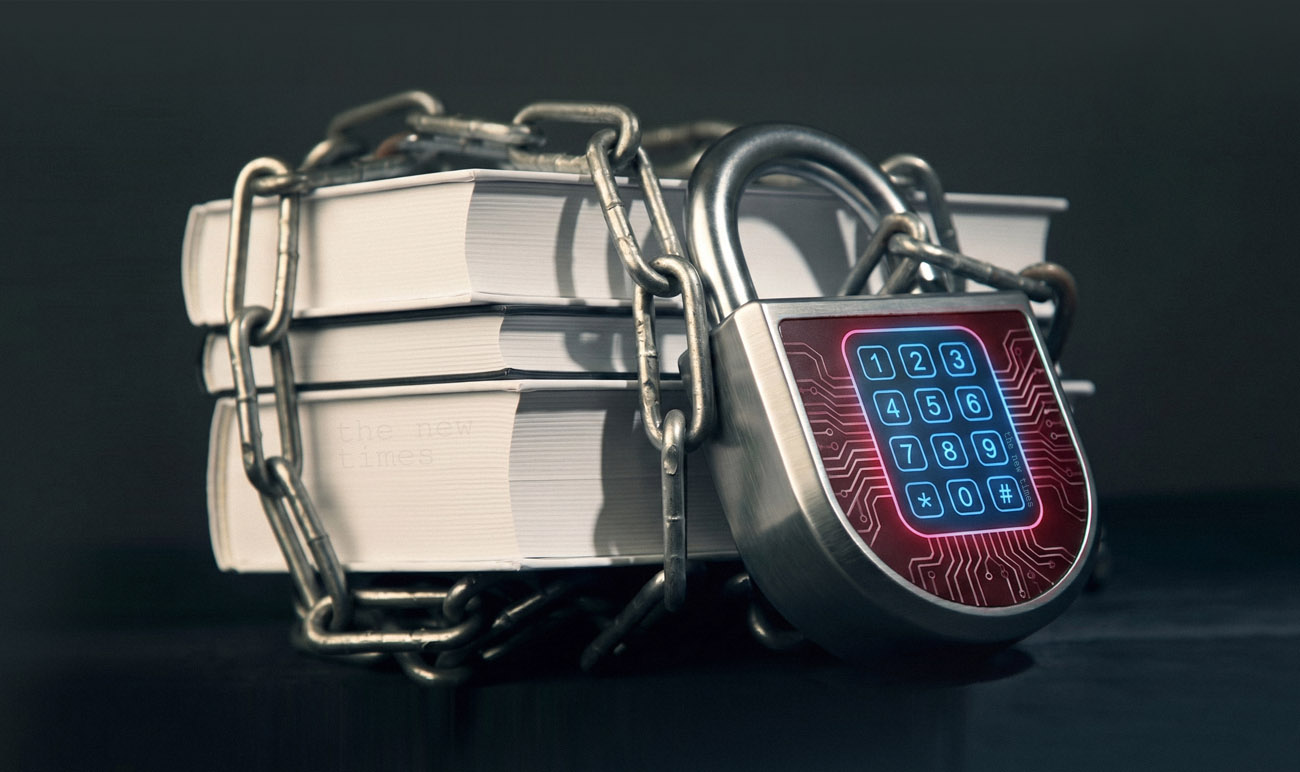
Nikolai Alekseevich Nekrasov in the 1860s, the years of the Great Reforms, dreamed of a time, "when the peasant will carry not Blucher / And not a foolish lord— / Belinsky and Gogol / From the market". The peasant may have carried something like that in the Soviet years and partly post-Soviet, but now all this and especially, by the way, Herzen, whose quotes beautifully characterize today's government, goes against state policy. Denunciation of despotism, bureaucracy, stupidity, cruelty, ignorance, militarism—this is classical Russian literature, filled, if you believe today's legislation, with "psychotropic" substances. If the peasant wants to carry something out, it will likely not be from the market, and not from the book fair—they are now severely censored, making them incredibly dull and pandering to the most undiscerning tastes—but from marketplaces, where you can still find practically any books, including semi-banned literature.
Characters of different professions existing in sovereign isolated spaces begin to organize competitions among themselves, calling them "international", compile ratings that are recognized by no one but themselves, award each other prizes at the price of a can of preserves, and announce long and short lists for a narrow circle of trustworthy individuals. For themselves. Such lists must be cheerfully traditionalist, sovereign, cleansed of forbidden plots, decisively pro-government. Therefore, privileged "literature" is sealed in the capsule of the Writers' Union, and the award lists, especially the "Big Book", turn out to be incomplete without works, for example, by Margarita Simonyan. They forgot about her, but after a shout from above, the mistake was hastily corrected. It will be interesting to see if she will now be forgotten in the short list, where the favorites will be the same "usual suspects" Prilepin and Shargunov, prominent figures of the Writers' Union.
Censorship becomes ubiquitous. But it only sets the impulse. The rest is completed by self-censorship, when the same publishers and authors begin to fear their own shadow, as well as find opportunistic niches for turbo-patriotic "literature". But self-censorship, as the experience of "Eksmo" shows, does not save. Nor do personal connections at the top, and this applies not only to the book market but to any other spheres, from financial-industrial to palace-political. There is no defense against the force of the security forces. The absurdity of accusations and claims surprises no one, but only refers to dystopian literature, and, as banal as it may sound, directly to Kafka and Orwell.
A narrow circle of liberal intelligentsia reads books about totalitarian regimes, including works about their own heritage, the memory of which is being erased so that no traces remain—this is now "extremism". All that remains is to reinstall Felix Edmundovich in his old place, and, as many advise, to arrest the Solovetsky stone and take it somewhere far away, so it doesn't interfere with the Chekists running the country. As for the sphere of leadership over writers, publishers, and readers, very unpleasant allusions are found here. That very unfinished intelligentsia reads not "The Gulag Archipelago" in one night, but, for example, the scientific book by Jan-Peter Barbiana "The Literary Politics of the Third Reich. Books and People under Dictatorship". There are also "lists of literature to be withdrawn", their own writers' organizations, from which all sorts of liberals/Jews are cleaned out and trustworthy ones are accepted. There is also a department "Counteracting Lies", that is, the truth. And library purges. And representatives for "spiritual and ideological education". And editing encyclopedias. And confiscation of "harmful and undesirable literature". Even the popular term "destructive" among current cleaners flashes. All dictatorships are largely the same, as it is said in literary studies, "typical heroes in typical circumstances". And each strives to establish a "media dictatorship" (in Barbiana's terms). This happens completely organically and involuntarily—totalitarian patterns and reflexes self-reproduce, surviving decades and centuries.
Our native Stalinist experience is no less impressive: for example, Dostoevsky, beloved by "soilists" and current pro-government ideologists, was banned in those best years, so dear to the heart of today's Kremlin. The way the book market is being ironed out now has no analogs in late Soviet history: no one pasted "yellow stars" on Pushkin and Gogol, children's literature was handled by professionals, not investigative bodies, censors were, as a rule, educated people and, rather, helped the censored than oppressed them.
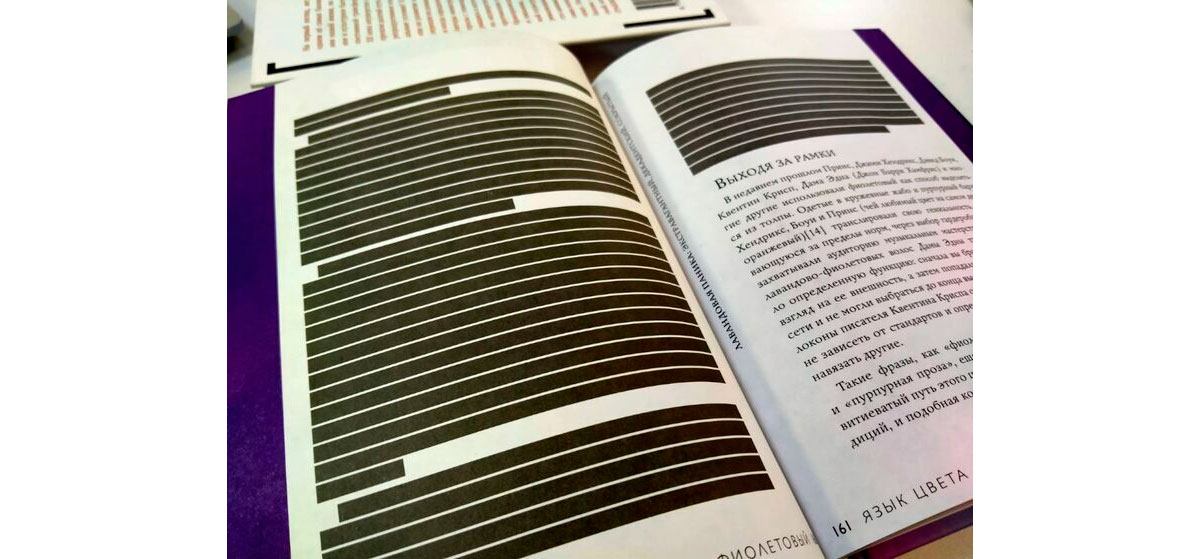
Photo: BFM-Novosibirsk
Everything the authorities touch turns from gold into shards. However, it is not so easy to destroy a market institution that has many niches through which talented and anti-despotic will still be broadcast. And it will still penetrate the country and from within the country, as it has already happened with "samizdat" and "tamizdat". And people will still read what they want to read, not the imposed "sovereign" literature. Mean, denunciatory, eliminating competition around itself, it is always talentless. And when a talented person becomes a state ideologist and is planted like potatoes under Catherine, he loses his gift—this is a law of social nature. Reading Pushkin, Gogol, Tolstoy, Chekhov cannot be banned, for it is what "they" call the "cultural code", as, indeed, Griboedov or even Saltykov-Shchedrin. But it would be better for them not to immerse the nation in reading the classics. Otherwise, you might read about themselves something like Herzen:
"...Russia begins with the emperor and goes from gendarme to gendarme, from official to official, to the last policeman in the most remote corner of the empire. Each step of this ladder acquires, as in Dante's bolgi <ditches>, a new force of evil, a new degree of depravity and cruelty..."
They all remained Famusovs from that very Russian literature, disgraced by them: "If evil is to be stopped: take all the books and burn them". Leaving, of course, only their works from the long and short lists.
* Andrey Kolesnikov is considered a "foreign agent" by the Ministry of Justice of the Russian Federation.