 In the demodernization in the interests of "security," the Kremlin decided to return to, so to speak, factory settings. That is, to get rid of modern communications. It's like getting rid of the steam engine or the internal combustion engine in one historical era or another. Or refusing aviation or automobiles. Or plumbing, heating, sewage, electricity. In the internet, mobile internet, and the phenomenon of messengers, Russian authorities see exclusively political meaning and undermining of foundations, while it is an indispensable technology and, moreover, an element of the habitat.
The example of Putin's regime shows in practice: political demodernization always implies technological demodernization. Alongside, of course, with the degradation of social life and the economy. Technology is needed by the modern Russian regime only as a tool of Big Brother and protection from the thinking part of the human population. The focal modernization—gadget-based according to Medvedev of the zero years, "island" according to Skolkovo—has ended. These were and are merely exhibition samples, the very Potemkin villages that hid the emptiness and obscured the abyss into which the country fell back in 2012. The flight (downward) is normal, and it is not yet over. The direct fall (we will return to this term at the end of the column) is going "according to plan." The plan of demodernization.
Digital Resistance
You can't go far on this all-seeing state eye, which sees conspiracies everywhere. An anomaly can be imagined as the norm, ensuring "security." But it is precisely security, ordinary, human security, that becomes many times less. Life has simply turned into a minefield due to the endless Special Military Operation, the change in the nature of the war, which has become protracted and deadlocked, drone attacks, political repressions, and idiotic bans. Normality is somewhere else, not where prohibition is elevated to a principle, and unanimity is considered the goal of reshaping a person. This was very effectively demonstrated in front of everyone, right in the Kremlin, by Nikol Pashinyan, who suddenly explained what freedoms are like and how it essentially makes life easier. The autocrat noticeably fidgeted while listening to all this. He has a different path, and he will not deviate from it.
It is amazing the not at all passive, but active conformism with which the bureaucracy rushes to fulfill the task of war with society. With what fury and ingenuity, as on the front, Roskomnadzor, the Ministry of Digital Development, the Ministry of Press, the Ministry of Justice, even Rosselkhoznadzor (in the context of the mass "genocide" of livestock) fight with the population of Russia and the everyday needs of Russians. With what readiness the same Maksut Shadaev, head of the digital department, acts as a security officer, gathering representatives of large companies and giving them instructions on how to become accomplices in the fight against VPN (as a result of which cashless payments collapse and the banking system is paralyzed). How the head of Rostelecom, Mikhail Oseevsky, rejoices at the reduction in Telegram traffic, as if this improves the lives of Russians and opens up brilliant technological prospects for them.
A characteristic piece of news: Roskomnadzor demanded that censored Russian media and Telegram channels delete information that the massive banking failure could have been caused by internet blockages. According to the department, such publications are aimed at "destabilizing the socio-political situation in the Russian Federation." That is, it is not the absurd bans that destabilize the "socio-political situation," but the information about them!
What are they trying to achieve with this? What do they want from people? What is their goal? Why all this? Only the most expressive and unfunny caricature dictatorships like Iran and North Korea reach such Orwellian absurdity. And what is happening is a sure sign of the ultimate, North Korean scale, absurdization of Russia. Let vital medicines disappear, let vital equipment in various industries, including education and medicine, not be replaced, let small businesses collapse, business communications that feed the country crumble, and numerous sectors of the economy stagnate, the main thing is to "return Donbass," cherish and scratch the invented "thousand-year history" and ensure complete control over the population of Russia, carrying Max as a banner.
In this model, the future is completely absent. In all senses, including the practical: there is no future for young people. Either they choose the path of a security officer/military. Or they join the banners of digital totalitarianism, turning their talents against their own people, who are actively engaged—regardless of their political views—in digital resistance (Pavel Durov's formula). Or they leave the country, avoiding service in the departments of Shadaev and Lipov and in the drone troops. Sometimes almost entire courses of high-quality faculties of strong universities. And precisely in those areas that are needed by digital totalitarians, who have also decided to live forever, and therefore focus on biotechnology for a select few. The regime can only lower the level and quality of education (including through the specific contingent of students who have admission privileges) and/or replenish the ranks of workers and technicians for the production of "finished metal products" with young growth. All this happens against the backdrop of technological development in the eternally "decaying" Europe and the space race of the USA and China. Russians are not destined, as in the joke, to land on the Moon. Other countries and peoples will do this.
This Train in the Dirt
The authorities speak a lot and pompously, with the strain of a restaurant singer, about unity and cohesion of society. Society—again, regardless of personal political views—has long been united and consolidated by a single internet network, to which messengers have been added. Users do not consider them "enemy." Rather, "enemy"—that is, imposed by force, as the state has been accustomed to not for years, but already decades—is considered the very Max, the use of which is forced.
And this is also a zone of resistance to the state, which is trying to deprive people of social connectivity, offering instead a single network of absolute control, this time like in China. For the state, the danger is also that this connectivity is not only within Russia but also with the rest of the world. And this is something no Russian authority can allow, because from there, from the world, equal not to Asia, but to Europe and the USA, comes the contagion that erodes our purity and unity. The internet and messengers, generally free communications guaranteed by Article 29 of the Constitution of the Russian Federation, create a different connectivity, a different "unity." It is more difficult to manage and control it from the Kremlin and Lubyanka.
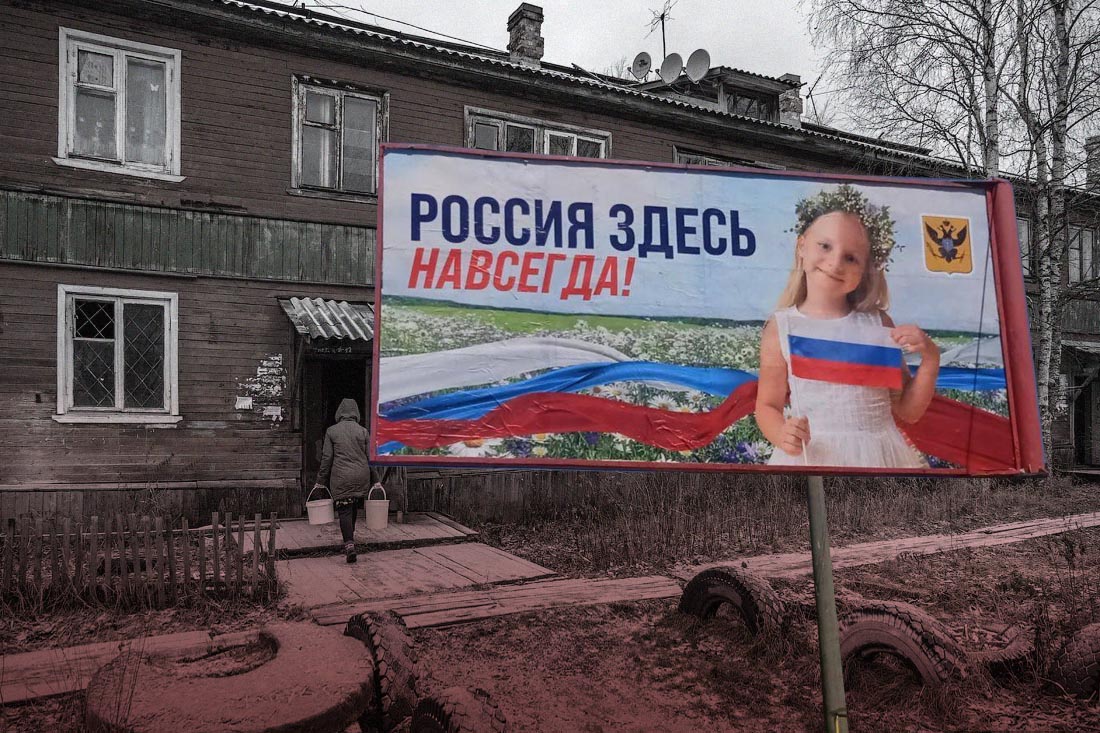
As political demodernization entails technological demodernization, so with the disappearance of the last elements of democracy, the connectivity of society with the internet and messengers is destroyed. The state, engaged in destruction rather than creation, has not bothered with other useful types of country connectivity—such as expanding the sewer network; "direct fall" toilets (this is an official term) still make up a significant part of the nation's sanitation fleet, and in some cities of the vast homeland, which always lacks territories, feces flow directly into the river, and from there into the water supply, as, for example, in Karelian Kem. There is where to direct taxpayers' money, there is something to do in the matter of modernizing everyday life. But we, you see, are concerned with the spiritual, prevailing over the material, the "thousand-year history"—so we live as if a thousand years ago. Paraphrasing a colleague "foreign agent" BG, one could anxiously state: this train is not only on fire but also in the dirt, in the most literal sense of the word. A birdhouse in the yard, equipped with a source of intoxication in the form of TV and the messenger Max—this is the spiritual image of modern Russia with a "sovereign internet" and a sovereign highly spiritual "direct fall" toilet.
* Andrey Kolesnikov is considered a "foreign agent" by the Ministry of Justice of the Russian Federation.
Photo: barracks of Arkhangelsk / Varlamov.ru.