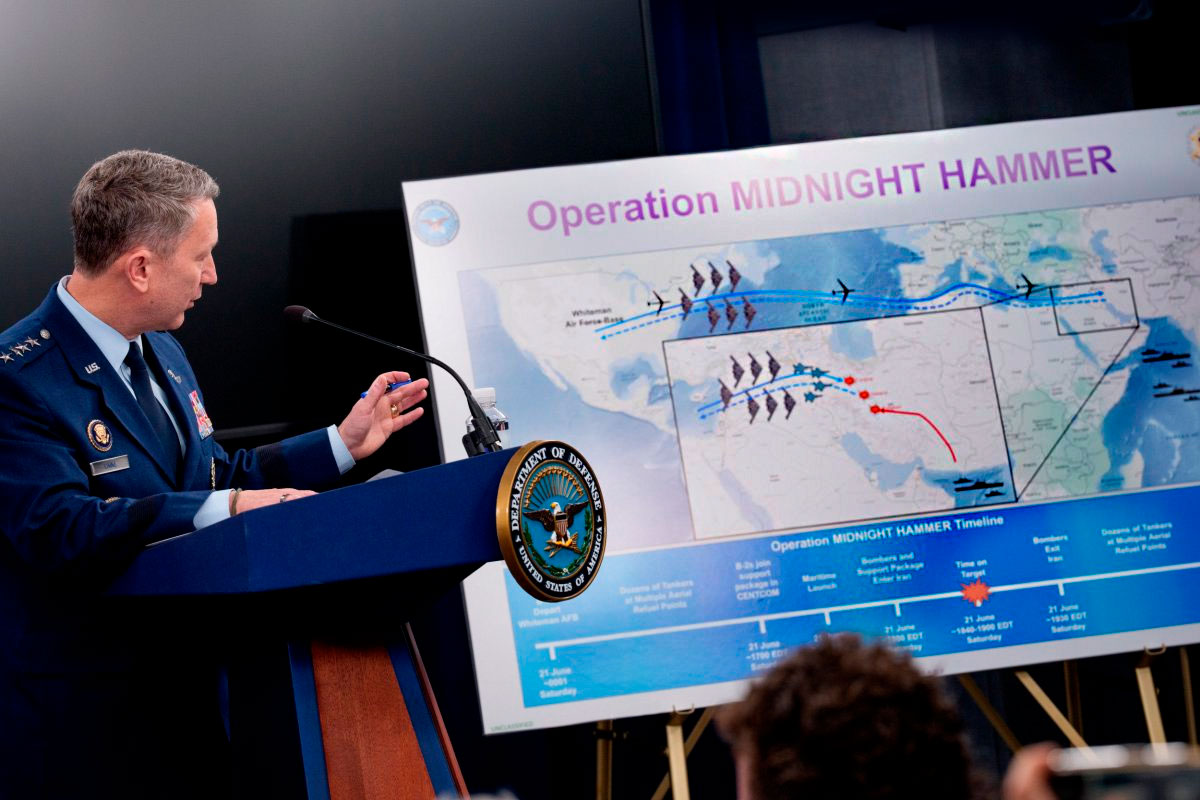
General Dan Cain discusses the details of the mission to strike Iran during a press conference at the Pentagon, June 22, 2025. Photo: Andrew Harnick / Getty Images
Evgenia Albats*: After the completion of the operation Midnight Hammer ("Midnight Hammer"), US President Donald Trump said that the American bombing had completely obliterated the Iranian nuclear program (he used the term obliterated). However, the next morning at a press conference, the Secretary of Defense and the Chairman of the Joint Chiefs were more cautious and spoke of severe damages. The Iranian side stated that they had prepared in advance for the strikes and moved the enriched uranium and equipment to other secret locations. International observers say it will take more time to determine the real damage. In any case, there is some difference between Trump's words and those of the military. What do you think about this?
Uranium in baskets
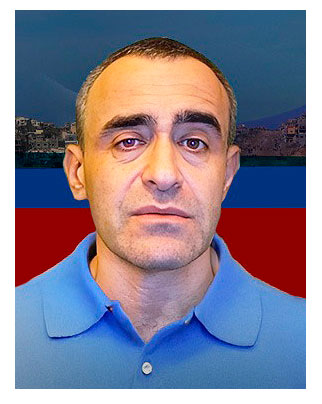 David Sharp: Trump tends to make loud statements, it's his style. But in this case, we are talking about serious damage, there is no doubt about that, even the head of the IAEA Grossi said so, and not only him, I know some Israeli sources. Serious damage to the Fordow facility is the minimum that can be talked about, and in general, this is more than enough. That is, from the point of view of Israel and the United States, ideally, complete destruction. But disabling, practically total loss is what most likely happened. And given that the rest of the Iranian nuclear program facilities, a significant part of them, were destroyed by Israel and then finished off by the Americans, I would cautiously say that the Iranian military nuclear program is almost nullified. That is, some nuances and some unknown components may remain. But all the most important components, or almost all, are either destroyed or disabled for a long time. The fact that the Iranians could take out a certain amount of enriched uranium and office equipment from Fordow does not mean, firstly, that the place where they delivered it was not monitored and that it is unknown. The main thing is not this. If you physically do not have the most important facilities that turn all this into enriched up to 90 percent uranium and then into weapons, and there are no longer many of those who were personally supposed to turn it into weapons, then you simply have nothing much to do with this enriched up to 60 percent uranium. Even if you took it out in baskets. So this should not comfort Iran's supporters. It can be stated that it is a matter of gaining time, that is, the Iranians, if they wish, can start building nuclear facilities again, but there is a maximum gain of time thanks to what happened at the beginning of the Israeli operation and what the Americans finished. The Iranian nuclear program has gone far back, almost to the starting level—not in terms of knowledge, but in terms of physical capabilities. This is very important because even if the Iranians try to return to the results achieved earlier, this process can be physically influenced. Moreover, it requires a lot of time, and during this time circumstances may change—regarding both the Iranian authorities and the pressure of the international community.
Many specialists have assessed everything related to the nuclear project over decades, from the color of the secretary's underwear of some physicist to the footage and depth of all facilities
Evgenia Albats: Journalistic ethics require me to say that satellite images, even from such a well-known company as "Maxar," for example, show craters in Fordow, show that the entrance to the plant is covered, but it is unknown how much the bombs managed to destroy what is underground, under 90 meters of rocky soil. Do you not accept this as an argument?
David Sharp: I take into account the seriousness of the approaches of those who planned this attack, who studied the Iranian nuclear program and the Fordow facility, and these are thousands of professionals in different countries, particularly in the United States and Israel. This is a mass of specialists who have assessed everything related to the nuclear project over decades, from, excuse the expression, the color of the secretary's underwear of some physicist (I'm practically not joking) to the footage, depth, and so on of all facilities. And when such people, and these are specialists in different fields, plan strikes, then strikes are not just carried out. Moreover, when they are planned, implemented, it is done with the most serious margin of safety in terms of the possibility of defeat. Finally, these people, these structures have the opportunity to assess what happened on a much larger scale and better, I would say, pixel, and in terms of understanding, they have much more opportunities than we do based on a "Maxar" image. And what I hear from very competent sources, who are not inclined to pass off wishful thinking as reality and who have access to serious information—is that even by conservative estimates, there is very, very serious damage inside. And it is not for nothing, by the way, that the head of the IAEA spoke about this. Despite the fact that he does not have the capabilities of the intelligence services of Israel and the United States, he knows something and has some tools, and I would advise in this case to pay attention to his words as well.
The truth is in the middle
Evgenia Albats: Nikita, a question for you. You worked in Iran as a journalist for the state Russian agency TASS. In your book, you write that your press card was once even revoked because they suspected you had been to Fordow. And you managed to get it back with great difficulty. You were also in Isfahan. I understand that you are familiar with a huge number of young people who are by no means supporters of this medieval regime. What do you know about what is happening in Iran now?
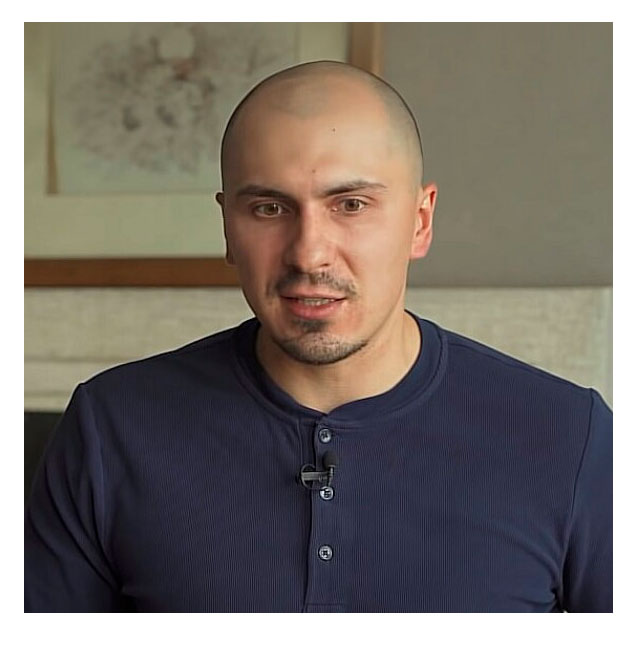 Nikita Smagin: Well, let's clarify that Fordow is near the city of Qom. Qom is the religious capital in Iran. And I was in Qom at that time, I knew the rules well and did not leave the boundaries of Qom at all. That is, there is a perimeter, a ring, beyond which you cannot go. Nevertheless, I was later accused of allegedly going to Fordow, and it's about 60 kilometers by road to Fordow. It was curious, but at the moment even alarming, and now it's rather amusing to recall how I received a message that I had been at a nuclear facility and my press card was not being extended, and at that very moment, someone knocked on my door. And immediately in my head, it clicked—they came. But in fact, the knock was random, some delivery.
What is happening in Iran now—until last Wednesday, we could more or less say what was happening there. There are, among other things, official sources. And there is a scheme for verifying information, it is quite simple. Official media actually publish a lot, and much of it is true. Especially when we talk about damage, about those killed in protests, etc. They provide a certain minimum bar. For example, they said that 200 people died. In reality, it may be much more, but at least that many. Also, when they report on strikes. In parallel, you get information from the Western press or from some external resources. As a rule, the truth is somewhere in the middle. Plus, if we are talking about things like strikes, like protests, a lot of information "on the ground" appears, photos, videos that come from people who actively shoot and send it to BBC and other places, publish themselves. Until Wednesday, it was clear to us that protest activity had ceased. In Iran, protest activity had been ongoing since the end of 2022 (I remind you, "woman-life-freedom"). Local protest was everywhere. For the last two, almost three years, it was such that only one or two days a month people did not protest. When the strikes began, all this stopped, and it's clear why. People are just scared, they don't know what to do. A mass exodus from large cities begins, primarily from Tehran. My friends, acquaintances from Tehran went somewhere to the north. Further after Wednesday, Iran is simply covered with a veil, almost impenetrable, and we very poorly understand what is happening. That is, periodically someone breaks through the internet blockages (I'll explain, they turned on the national internet, through it VPN will not break through, you will not be able to reach any services through VPN), but periodically, since everything does not work 100%, sometimes somewhere someone gets in touch. You can call by phone, you can send a text message. It doesn't work very stably, but nevertheless. I talked to people who are in emigration, they somehow contacted their relatives. What can be said? The general situation is fear. People just don't understand what is happening, they don't understand what to do next, they don't understand how long they should stay outside Tehran. The humanitarian situation was tolerable, without serious disruptions, there were queues at gas stations, and they even began to set quotas, somewhere 5 liters per person, somewhere 15 liters. But it is not visible, according to my sources, that this was a massive problem. Otherwise, we poorly understand what is happening in Iran.
Evgenia Albats: Official Iranian sources report that they managed to take out equipment from Fordow, from two other bases. That is, they do not admit that these nuclear facilities suffered serious destruction.
Nikita Smagin: They admit the destruction, but they say that they still preserved a significant part and will definitely restore it in the future. As a rule, there are such optimistic reports. I think this is very far from reality. In general, it is more or less clear what happened. I think the issue of Iran's nuclear program is leaving the agenda, by and large. It seems to me that this is already a story about whether Iran can restore all this in 10 years—probably it can. But what kind of perspective is 10 years? We don't understand what will happen to Iran in a week, two, three. And what will happen to the region in a year is also unclear. I think that in the foreseeable future we will have more questions of a different nature.
When all your leadership is knocked out, and you come to their place, you already understand that you cannot live a peaceful life in your beautiful home, you have a completely different paradigm
Evgenia Albats: How can the Iranian elite feel now?
Nikita Smagin: What is the main point here? Has the Iranian elite reached the feeling that they have nothing to lose, that they are already a group of martyrs who are going further for their martyrdom, or are they still thinking that they may still have a country, may have a state, may have some stability. I have a feeling that mass liquidations, of course, could have hit the military leadership very hard, their perception of reality. Because, you see, if we take an ordinary representative of the Islamic Revolutionary Guard Corps, and even at the top—it's a functionary. Who is largely engaged in corruption, arranging their children, etc. There are a huge number of publications about where and how
What is in Iran's caches
Evgenia Albats: Israeli media reported that as a result of Israeli Air Force strikes on Iran's missile bases, many missiles and launchers were destroyed. Nevertheless, we saw that every day ballistic missiles attacked Israel by the dozens and dozens. David, do you have an idea of Iran's capabilities to continue daily strikes on Israel?
David Sharp: In the army, it was planned that within plus or minus two weeks it would be possible to complete the tasks of destroying specific facilities. This did not mean, in the army's interpretation, the end of the war. At the planning stage, the army said that we could destroy the set targets within the framework of the minimum task. But this does not mean at all that the war will end. There was always a scenario where Iran would not want to end the war. It suffered serious damage, it is very vulnerable, and publicly humiliated. And it does not depend at all on Israel whether Iran wants to continue the shelling or not, and then Israel is left either to exchange fire with Iran in a moderate mode or to raise the bar so that the Iranian leadership is faced with a choice of whether it is worth it. Exhaustion on the Iranian side is a few missiles and drones a day. Iran is unlikely to be able to launch dozens of ballistic missiles a day anymore, a significant part of the ballistic missiles have been destroyed. The assessments of the Israeli command were in the spirit that Iran has about one and a half thousand missiles and less than two hundred launchers left. That is, the stock will run out very quickly. No one in Israel even thought that the Israeli army could destroy all mobile installations that are hidden in facilities resembling Fordow in miniature. I will say more, what was achieved—so far personally for me has become a pleasant surprise. A significant part of Iran's potential has been reduced. But they have missiles that are stored in inaccessible places. And as long as there are launchers that are hiding in a huge territory in a built-up area. And of course, in cave bases, where they can be temporarily blocked and caught on the way out. But it is impossible to completely destroy them. Therefore, it can and should be assumed that Iran will not want to stop and will continue to shell Israel for quite a long time.
Evgenia Albats: I think many had the idea that the "Iron Dome," that is, Israel's air defense system, is almost impenetrable. But we see that 5–10% of missiles still get through. How capable are the Israelis of tolerating this?
David Sharp: Very capable. By and large, what happened is trifles compared to what was expected. There is the concept of calculated losses. When the leadership of Israel, the military command, and the heads of special services decided on the Iranian operation, there was a rare consensus that it was necessary to prevent very, very serious threats up to the very existence of Israel. The conservative forecast was that there would be many times more casualties, that the air defense would cope even worse if it were not possible to suppress the Iranian missile installations so effectively. 24 dead, dozens seriously injured—this is a real tragedy. But compared to the threat they were trying to neutralize, this is a price that had to be paid.
Regarding air defense systems, perhaps someone in Israel had additional illusions, although all commentators and the military always said: there is no 100% protection and 100% effect. The "Iron Dome" system is very little relevant to the current situation. It participates in interceptions, shoots at fragments of Iranian missiles. But against ballistics, it is used only as a means of last resort. The Israeli missile defense system copes with the threat within the framework of calculated forecasts, copes well, with more than 80% interceptions. With the help of the Americans: hundreds of American military operators, THAAD batteries take on a certain part of the load, not counting the interception of UAVs at distant approaches, which are handled by Israeli and American air forces. Iranian medium-range ballistic missiles with detachable warheads are the most serious challenge faced by the Israeli missile defense system. In the case of Gaza and Hamas, it was sometimes possible to achieve 95% indicators, and there almost exclusively the "Iron Dome" acted. But when you counter volleys of missiles with detachable warheads, and volleys sometimes have many dozens of missiles, the results are worse. And the fact that they are above 80% is very good.
Player Russia
Evgenia Albats: How do you think, how much can Russia stand on the side of Iran here, or will it be a repetition of the story with Assad in Syria?
Nikita Smagin: It seems to me that the only option where Russia could influence something is if it intervened in what is happening and transferred some armed forces there. The supply of weapons, it seems to me, will not change anything at all. Moreover, if you start supplying Iran with what it needs, for example, planes, air defense systems, then I think they simply will not reach Iran, Israel will strike them on the way. And it must be understood that Iranians on average would not want Iran to particularly develop relations with Russia. If we imagine that the regime is preserved, but at the expense of Russia's support, then this is conditionally Bashar Assad's Syria, most of the population will perceive the authorities as not very legitimate. And there will be a very big risk in the future to get exactly the same. Or even worse. But we do not know what exactly the Iranians offered in Moscow and how Russia will react to this. In any case, knowing Putin, I would not exclude in principle that Russia may somehow intervene, and then it will be a completely different story.
It is also necessary to understand that the strike on bunkers with deep bombs frightened not so much, it seems to me, people in Tehran, as people in China, North Korea, in Russia. And other people, even, I think, Erdogan, who does not have very good relations with the USA. The fact that the United States is returning to the idea that it is possible to intervene, it is possible to strike, in general, can also somehow unpredictably respond in the minds of military leaders.
Evgenia Albats: And what about China? Is it ready to support Iran in any way?
Nikita Smagin: I think that China's interests are not so much in Iranian oil, although in Iranian too. The main thing is that the Strait of Hormuz is not blocked. China receives half of its oil through the Strait of Hormuz. China would like all this to stop. We understand that China is much more cautious in foreign policy than, for example, Russia. It has trade interests with Iran, but the trade turnover is five times less than with Saudi Arabia. To say that Iran is some special country for China—no. There are more questions in general about the region and the Strait of Hormuz. I do not quite understand how China can influence the situation now. It is more likely to observe what is happening and then see.
Conditional Iranian liberals will never take power. They do not have the resources for this. It must be a person from the IRGC, for example, or some tough conservative
Evgenia Albats: The Rahbar, the supreme leader of Iran Ali Khamenei, is 86 years old. He can be said to have one foot in the grave. But the question is about the Iranian elite. Can Iran go to the negotiations that Donald Trump keeps talking about? Abandon the nuclear program, the claims to destroy Israel?
Nikita Smagin: In theory, we can imagine that a military coup occurs and a person comes to power who simply says that we do not need all this, let's abandon all slogans, and Trump immediately lifts sanctions from them, applause from the public, etc. It seems to me that this would also suit Trump quite well, as an option. He will report that he has the greatest victory in history. But for this, there must be a military coup or something like that. Because Khamenei is unlikely to go for it.
Evgenia Albats: Are you sure he won't go for it?
Nikita Smagin: To some negotiations, purely in theory, perhaps, but to abandon anti-Americanism and the anti-Israel position, of course, no. It seems to me that whatever Islamic republic remains, there will continue to be strikes on Israel. I imagine only something like a military coup. Conditional Iranian liberals will never take power. They do not have the resources for this. It must be a person from the IRGC, for example, or some tough conservative who is ready to go for all this.
Iranian protest
Evgenia Albats: Nikita, you write very interestingly in your book about how Iranian society is organized. About the Islamic Revolutionary Guard Corps having 300–400 thousand bayonets. And voluntary assistants, activists, another 2–3 million people. At the same time, among young people, city dwellers, there are generally no supporters of the ayatollah regime. Your friends went to the square during the protests. But you also write that the regime responds more and more harshly to these protests every year, responds with direct killings of people and executions. We see from the example of Russia that such a powerful repressive apparatus as exists in Russia and which is even harsher in Iran makes broad resistance simply impossible. In this sense—what is the possibility of regime change?
Nikita Smagin: Broad resistance is possible, but organized resistance is impossible, that's the problem. The Islamic Republic has learned to do what many authoritarian regimes do. They understand that the most terrible thing for power, the most frightening thing—is organization. In Iran, the most dangerous protests were in 2009. This happened immediately after the elections because after the elections you have a system of headquarters that yesterday campaigned, and now turn into places that coordinate the protest. And they are already leading people to the streets. And this is a completely different story. In this sense, the Iranian example is in many ways consonant with the example of Belarus and Venezuela. Modern authoritarian regimes have learned very well how to deal with such threats. The Islamic Republic is a very adaptive system, it constantly adapts to protest. Constantly changes its tactics. It does not touch small groups, let them make noise. And in 2019, people took to the streets, and they started shooting with live ammunition. One and a half thousand people died. In the next protests, they decided, just in case, not to shoot with live ammunition, only with buckshot. 250 people died. But buckshot cripples. You won't go out to protest anymore.
This is very characteristic of the system, and in general for Khamenei. This is a person who has a double and triple bottom in his head. By the way, what is connected with the fact that he still periodically goes to negotiations with the United States? With the fact that this is a complexly organized person and a complexly organized regime, the flesh of which he himself is. If we take the situation before the start of the strikes, it was more about the fact that everyone was waiting for the transition, waiting for Khamenei to leave, because everyone wants change. The whole system is permeated with this. Do you think in the IRGC they do not want change? Oh, they do, only they want different changes, in a different direction. That's the problem, the country will change, but in what direction? There is no common agenda.
Does this mean that the overthrow of the regime is impossible? In general, no. To overthrow the regime, you do not need crowds of people, but you need an organized mobilization structure. Where can it come from? Strikes do not directly contribute to the weakening of the system. They rather complicate the picture.
Evgenia Albats: Sanctions have hit the Iranian economy very hard. Do you not assume such a scenario that the guards of the Iranian revolution themselves, the same business guys as the security officers in Russia, will go for the destruction of the theocracy regime out of pure pragmatic interest?
Nikita Smagin: Some limited optimism can come from the Syrian scenario. There, a person came, for whose capture a $10 million reward was offered. But since he said that he was ready to coexist with Israel and interact with the world, while in principle ready to push Russia out and guarantees that Iran would not return there—the West decided that in this situation it was logical to remove everything from him, and in general, he is on the path to international recognition. He, it seems to me, in terms of potential non-handshakability, is much tougher than most representatives of the Iranian elite. And nevertheless. That is, this example can really inspire someone.
But again, many things must coincide. In general, the Islamic Revolutionary Guard Corps benefited from the sanctions, they mainly dealt with bypassing sanctions and under the pretext of endless security struggles seized more and more assets. Another question is that now the problem is different. You will either be mostly destroyed, or you will survive simply as a living unit. Here the question is important, what identity will they have time to form during this time. Islamic, martyr-like, like Hamas, conditionally, or another. In this sense, the Iranian elite, it seems to me, is similar to the side that is ready, in case of something, to turn to the other side for the sake of money, for the sake of well-being. But they somehow managed to do it not very acceptably for the West. They even tried to negotiate with the USA about normalization in the 90s, but these options did not inspire the United States very much.
Evgenia Albats: Minorities, of which there are many in Iran, cannot rise now?
Nikita Smagin: If there are confirmed signs that power is shaking, the activation of national minorities is possible. But first of all, I would bet not on national consciousness, but again on those structures that are ready to mobilize someone. There is a whole set of organizations that have been conducting an armed struggle with the Islamic Republic for years. But they have learned to fight them perfectly. And they know how to run away, hide, but they are unlikely to have the strength and intention to start an organized movement. With the Kurds, it is more or less clear, they are really fighting for liberation and some national idea. But with the Baloch, it is unclear what they are fighting for. They either fight with the police or cover drug trafficking. They may talk about themselves as freedom fighters, but it is not entirely clear how much they need it, freedom. We need to see if there will be a process of disintegration as the Iranian state weakens. In a power vacuum, there is more potential for civil war than for a quick resolution of the issue.
Evgenia Albats: This is more of a Libyan option.
Nikita Smagin: Yes, and quite real.
Evgenia Albats: David, a question for you. You say that if Iran stops shelling Israel, the war will really end. At the same time, if the regime of the ayatollahs and the IRGC in Iran is preserved, then the task of destroying the state of Israel will not be removed from the agenda. What is your forecast for the development of events?
David Sharp: In Israel, they would certainly like a change of regime in Iran, clearly understanding that theoretically, the regime could change for the worse, but if for the better, it would lead to the establishment of almost normal relations with Iran, as they were in the times of the Shah. But Israel is not able to change the Iranian regime. This is not even close to being on the agenda. Neither from the point of view of Israel, nor even from the point of view of the United States, which could technically pull this off, but it would not occur to them. I really don't like this, but I have to quote Netanyahu: we can do something, but by and large, we solve our primary tasks, and then everything is in the hands of the people of Iran. When the dust settles, the people of Iran will be able to see the consequences of what is happening, draw conclusions. And not only the people, but also those who are the basis and part of the regime. If significant changes occur in their consciousness, if there is an element of disorganization, disintegration, when they understand that everything is very bad—this can become a trigger for protests.
Evgenia Albats: So you exclude Israeli special forces in Tehran or somewhere near the Rahbar's bunker?
David Sharp: This could have been on the agenda before the start of the operation. According to rumors, the Americans really did not want this, and in Israel, they came to the conclusion at that moment that we attack only military targets and targets related to the nuclear program. The elimination of the spiritual leader is somewhat not comme il faut, there would be as much harm from this as benefit. Despite the fact that there are direct personal scores with him, as they say. He gave orders to kill Israelis and carry out terrorist attacks, Israel has absolutely reliable information about this. So he deserved retribution.
But things are not done that way. Things are done in accordance with strategic expediency. The elimination of the leader can, of course, become a trigger for something, but it is not a guarantee of regime overthrow.
Video version:
* Evgenia Albats, Nikita Smagin are declared "foreign agents" in the Russian Federation.