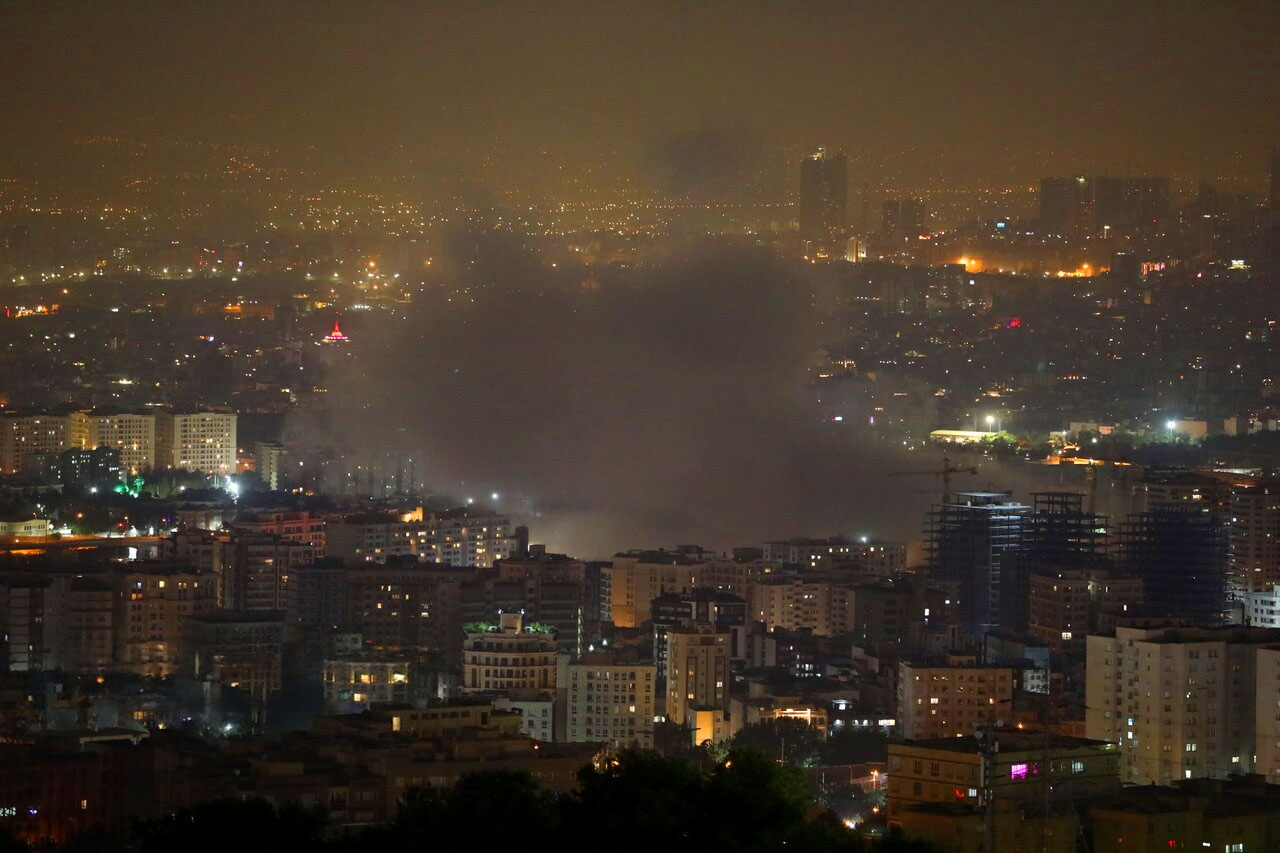
Explosions in Tehran (Iran) June 13, 2025. Photo: Mehr News Agency
Evgenia Albats*: The main event of recent days has been the start of the war between Israel and Iran. Israel launched targeted strikes and eliminated generals of Iran's top military leadership, as well as nuclear physicists directly responsible for creating the nuclear bomb. Israeli aviation is consistently destroying nuclear facilities and destroying missile launchers. It seemed that a couple of days, and the war would end with the complete defeat of Iran's nuclear facilities. (UPD: On the night of Sunday, June 22, American military aircraft and submarines struck three key nuclear facilities in Iran. — NT.) Iran responds with ballistic missiles at residential buildings and infrastructure in Israel. We see casualties and destruction. How long do you think the war will last — days, months, years?
War Goals
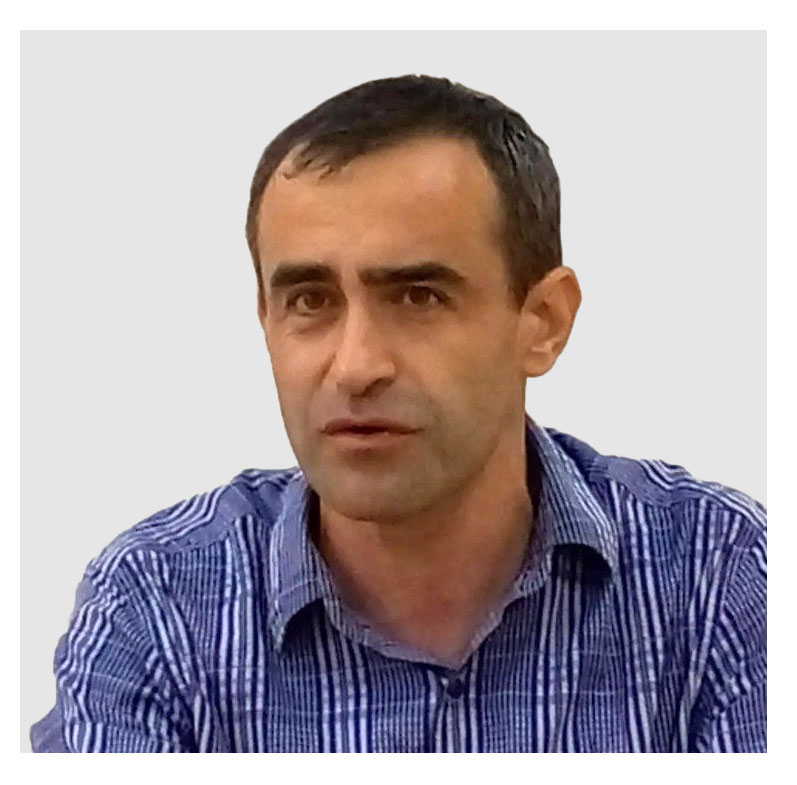 David Sharp: From a military point of view, the operation was calculated to last weeks, up to a few weeks, as it is necessary to destroy a specific list of targets related to Iran's nuclear program and military-industrial complex. It cannot be ruled out that the war may end earlier than Israel destroys the intended targets, but only if Iran accepts certain demands that satisfy Israel and the United States at the moment. And this is primarily and mainly the cessation of uranium enrichment on Iranian territory. This is the most important component of the negotiations that have been much talked about and will continue to be talked about. Another important point, in my opinion: despite the fact that Iran has suffered the heaviest losses and will continue to suffer them, this does not mean that the leadership of Iran will want to stop. They may decide to continue the war of attrition with Israel, involving Israel in a kind of firefight. This option was considered by the Israeli leadership and military command when the decision to launch the operation was made. Let's see what comes of it. Perhaps it is a political game, perhaps a desire to really rethink the worldview, but so far Iran is showing the first signs of readiness for negotiations. However, these signs have not taken real shape. The operation continues.
 Pavel Podvig: Much depends on what goals Israel sets for itself. It can be agreed that the main goal is not so much the nuclear facilities, but the military machine as a whole. And one can assume that at some point Iran will question whether they want to reach some kind of agreement or continue the military actions we have seen over the past few days. It's hard to say. I think that to do this, you need to know the internal situation in Iran well. But I hope that there will be an organized movement, some process that will help find a way to stop the military actions by establishing restrictions on Iran's nuclear program. Destroying the actual nuclear facilities, destroying them without the participation of the United States will be extremely difficult for Israel, if at all possible. But according to the statements coming from Iran, they are open to negotiated solutions. And here a lot will depend on whether this process can be directed in some direction and end the hostilities with the help of an agreement or arrangement.
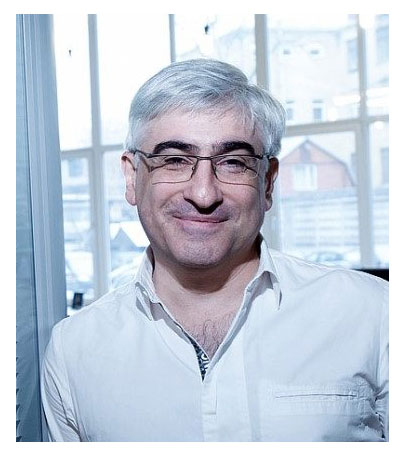 Alexander Turkot: I am not a military expert, my opinion is based on information I gather from conversations with informed friends both in Israel and the United States. I believe that weeks — is too long, I think a week — and everything will somehow subside. A war of attrition is theoretically possible, but attrition will come very quickly, because it is believed that Iran has one and a half to two thousand ballistic missiles. With the expenditure of up to a hundred missiles a day and with the destruction of stocks by the Israeli Air Force, it should be enough for a week. They cannot burn the entire stock to zero, they must be left with something. Therefore, at some point, I think they will move to reduce the level of tension, and the fewer missiles are launched daily, the more chances that the air defense will cope with them more successfully. The second factor, very serious, is the game that the current American leadership is playing. So far they, or rather one person, behave like this: not my war, I want to be a peacemaker, I really want the Nobel Peace Prize, so guys, I'm warning you, let's sit down and be friends. But at some point the game may end, like all his previous attempts. And then, I think, things will move faster in one direction or another. It is clear that the critical object, which is deep under the rocks, cannot be destroyed by Israel without technical assistance from the United States. The only option, I heard, is some kind of serious sabotage work. Perhaps with the landing of troops. At least such things are being discussed. Nevertheless, I believe that within a week the degree will decrease significantly.
Evgenia Albats: After the Iranian missile strike on Haifa, three people died. An entire family died in the Arab village of Tamar. More than a dozen people — in a high-rise building in Bat-Yam, there are casualties in Tel Aviv. How do people around you react to this? I understand, Israel has been at war throughout its history. For the past three years, we have read every day about soldiers dying in Gaza. Before that, of course, there was the terrible massacre on October 7, 2023, which became a wound for Jews around the world. People in Israel still believed that the Iron Dome would protect them from attacks. And suddenly it turned out that Israel's missile defense system misses about 10% of missiles. Is this unexpected for you?
Iran deliberately or due to the inaccuracy of its own missiles often hits residential areas. This is unacceptable for Israel, and in response it, starting with military targets, may move to infrastructure — oil, gas, energy
Alexander Turkot: No. In general, here we need to sort out the terminology, the Iron Dome is designed to protect against short-range air attacks, it handles well with missiles from Gaza and Lebanon. Against ballistic missiles, there are other means, these are new American systems. To date, Israel's missile defense has had little experience in dealing with heavy one-and-a-half-ton missiles. I hope the missile defense system is learning and experience is emerging. After all, when the story in Gaza began, everyone feared that Hezbollah, which had up to a hundred thousand missiles, would join in at the same time, and the flight time was negligible, and they had been preparing for decades. If they broke through the defense, they could reach Haifa in literally hours. This did not happen. Were we afraid that something similar would happen with Iran? In principle, there was already an attempt by Iran to attack our facilities, and a similar percentage, maybe a little less, reached. Another thing is that it was more of a demonstration: you spat on us, and we will spit on you and end it there. Now everything is still in the escalation stage, Iran deliberately or due to the inaccuracy of its own missiles often hits residential areas. This is unacceptable for Israel, and in response it, starting with military targets, may move to infrastructure — oil, gas, energy. And Iran is not in a position economically where it can afford to lose a couple of power plants, a couple of ports or bridges and tunnels.
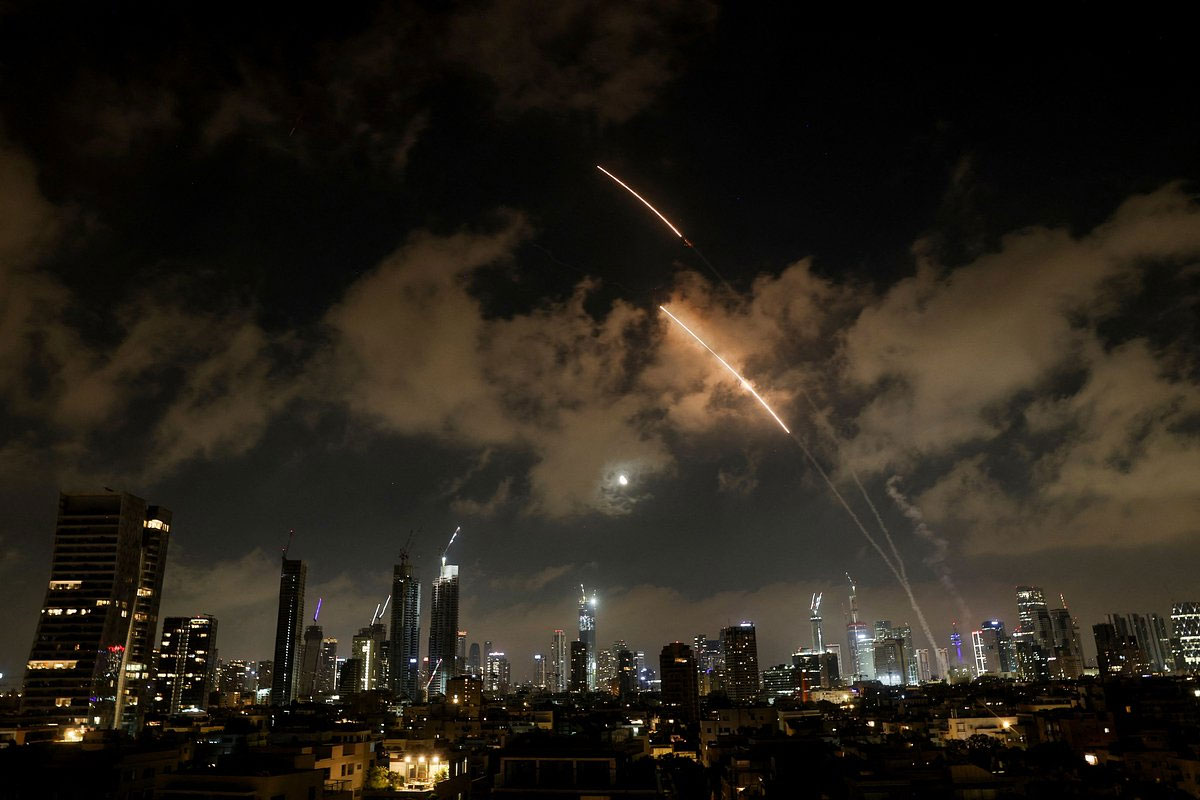
Operation of air and missile defense systems in Tel Aviv.
Photo: Violeta Santos Moura / Reuters
Timing Choice
Evgenia Albats: Why did the war start right now? In various media, both Israeli and English-speaking, two hypotheses are put forward. Hypothesis number one, expressed by the newspaper Haaretz — Prime Minister Netanyahu's coalition is on the verge of collapse, Netanyahu's rating is sharply declining, so he needed to start this powerful operation. The second hypothesis is that Netanyahu said in a statement before the operation began that Iran had already accumulated enough nuclear material for nine atomic bombs. And that this is the red line that Israel simply cannot allow Iran to cross, because it is clear where the bombs will fly first, since the destruction of Israel is the goal of the ayatollah regime in Iran. What do you say?
Alexander Turkot: There are a couple more factors that I would add to your arguments. Let's start with the fact that Haaretz — is a very popular newspaper, but it reflects the left discourse, anti-Bibi, let's call it that. I myself am an ideological opponent of the current government, but now it's not about that at all. So, the sum of factors. Firstly, as for the government crisis, literally on the eve of the strike, a vote of no confidence took place, it was lost by the opposition, and according to the laws of the Knesset, the next vote of no confidence the opposition can bring no earlier than six months later. That is, Netanyahu had at least six months of leeway, and in Israeli politics, this is a lot. Second — the operation was prepared a long time ago. It can be said with great confidence that it was prepared by the previous defense minister, the previous chief of staff. So they were ready. Why now? The American factor is added. Until the last moment, the Americans tried to persuade Iran to sign an agreement. It's unclear what, because from the previous agreement signed by Obama, Trump withdrew on his own. But still, this would give the Americans some indication of success, they did not want to lose this thing in advance. As soon as this factor was removed, the gates opened. Further. About quantitative indicators. I am not sure that we know exactly that there is readiness for 9 charges, there were versions that for 15. Plus, there was a version that Iran plans to transfer some of these charges to the Yemeni Houthis. And this is a real danger. Iran handed it over and forgot, and they would definitely strike immediately. This could not be allowed. Plus, as in the operation with pagers, everything came together perfectly. Therefore, I think it is a combination of factors.
Evgenia Albats: David, your opinion — why now? The second question — what has the Israeli Air Force managed to achieve?
David Sharp: Regarding the fact that Netanyahu decided to attack Iran. In fact, it is Iran, of course, that attacked Israel more than 40 years ago and since then has spilled a lot of Jewish blood and the blood of Israeli citizens of non-Jewish nationality. And the war with Iran has been going on one way or another for a long time, but now we mean a massive attack on Iran. The version that Netanyahu decided to stay in power for a few more months and therefore single-handedly started the campaign cannot be called anything other than absurd nonsense. Operations of this kind, at this level, are not carried out on a whim. This is not the elimination of a couple of terrorists in Gaza. Decisions of this kind are made based on a colossal amount of information about Iran's nuclear program, including information not known to the whole world, and based on a consensus, a broad consensus not only within the political leadership but also within the circle of those who are responsible for intelligence and carry out military command. There was an understanding that it was necessary to attack right now, that there was no time left to wait. This is the foundation. Let me remind you that back in the early 2010s, in 2011–2012, the same Netanyahu and his current political opponent (however, even then he was episodically a political opponent) Defense Minister Ehud Barak came to the conclusion that it was necessary to attack Iran, but the chief of staff and the head of the Mossad rebelled, they believed that this was impractical for a number of reasons, and moreover, violating their duty, they leaked all this to President Obama, in order to create pressure on the Israeli leadership so that the attack did not take place, and the attack ultimately did not take place. These are events from the distant past. These are real, strikingly significant events.
Regarding why it was decided to attack now and in principle. Several factors came together. The first and main factor — is not how much enriched uranium Iran has accumulated. This is just fairly well-known information because uranium enriched to 60% is monitored by the IAEA. In fact, the IAEA provides these figures, perhaps the intelligence agencies have some of their own reservations, but in general, it is considered a fact. However, the main thing was not even this, although by improving the uranium enrichment process, accumulating raw materials, Iran demonstrated that it was approaching a nuclear bomb. Intelligence established the fact that Iran is moving secretly towards what is called a weapons group. That is, the creation of an explosive device itself, signs of this were noticed a year ago. In the summer of twenty-four, in a report by American intelligence regarding Iran's nuclear program, it was noted for the first time that Iran was advancing towards the creation of a warhead itself. And this, from Israel's point of view, was crossing a red line, when there was no more time to wait. Either we could miss the moment when Iran gets the bomb, or Iran would go so far that it would no longer be clear how close it is to it. And there are a number of very important factors. Iran tasted blood, twice launched massive missile strikes on Israel, crossed the fear barrier. And in Israel, they realized that a massive missile threat, massive use of ballistic missiles against Israel could have catastrophic consequences if Iran reaches a qualitatively and quantitatively new level. Iran had plans to increase its missile arsenal to 8,000 within two years. This is an assessment of Israeli intelligence based on real data. Such a situation for Israel, as a very small country with a small number of objects, is not very acceptable, to put it mildly.
Finally, there are other very important factors. Hezbollah's military potential has lost its relevance, Hezbollah has been defeated. Two-thirds to three-quarters of Hezbollah's firepower has been destroyed, it cannot intervene on Iran's side. Hamas's missile potential has been neutralized, the Assad regime has fallen, thus cutting off the possibility of using forces from Syrian territory. And Israel received an additional corridor over Syria for continuous air attacks against Iran, where Israeli planes even refuel in the air openly. And we must not forget the green light from the United States, certain support has been promised. Interception of missiles and drones — is an important component. With the arrival of Trump, the US supplied Israel with a large batch of ammunition for aviation. The Americans are probably sharing intelligence and reporting, this is absolutely certain, about missile launches. This saves lives, allows you to go to shelters in time.
All these factors played a role. The final directive was given in October-November. A year ago, after the Iranian strike, it was decided to seriously prepare. Today, in retrospect, we can look at all the actions of the Israeli leadership, I mean personally Netanyahu, both defense ministers, military command, previous and current, in the context that, by and large, the decision was made last fall. And a lot was subordinated to this idea of attacking Iran, which was probably supposed to be implemented already at the end of April, but was postponed, apparently due to negotiations between Trump and the Iranians.
Evgenia Albats: And where did the missiles that Hezbollah had, these many tens, if not hundreds of thousands, go?
David Sharp: Hezbollah had about 150 thousand missiles and heavy mortar shells. Apart from those that Hezbollah managed to fire, 70–75% of its potential of missiles, drones, cruise and ballistic missiles were destroyed in warehouses and positions thanks to intelligence work carried out over 15–17 years, since the Second Lebanon War. Intelligence did not eat its bread in vain.
Iran miscalculated. They thought that Israel had a red light from the United States while negotiations were ongoing, although the signs were very serious, for example, the evacuation of American personnel from embassies. But the Iranians interpreted this as an attempt to pressure
Evgenia Albats: Am I correct in understanding that all the recent strange maneuvers of the Trump administration regarding Israel, the fact that Trump flew to Arab countries in the Middle East and did not visit Israel, and the fact that they started writing about relations somehow deteriorating, and the fact that Trump insisted on negotiations with Iran — was a smokescreen?
David Sharp: There was, undoubtedly, a very serious disinformation component, in which the United States participated, and to everyone's surprise, Trump kept his word. But it is not worth considering all the steps, all the events that we have seen in recent months, as part of a disinformation campaign. We also half-jokingly, half-seriously talk about the fact that the political crisis was staged, and it was, in general, real, although some people knew what was happening and acted in accordance with future plans. Allegedly, the wedding of the prime minister's son was a sham, that it was also scheduled to deceive the Iranians, and so on. But I would assume that it was not canceled so that the Iranians would not suspect anything. In general, the elements of disinformation were very serious. Iran, accordingly, miscalculated. Iran, roughly speaking, believed that Israel still had a red light from the United States while negotiations were ongoing, despite the fact that the signs were very serious, for example, the evacuation of American personnel from the embassy. But even this, the Iranians, being captive to their concept that Israel would not attack, interpreted as an attempt to pressure, to scare. Those who make decisions there have paid dearly for this, they are no longer with us.
Is Israel at Risk?
Evgenia Albats: David mentioned Ehud Barak, former Prime Minister of Israel, then Defense Minister. Barak, in an interview with Christiane Amanpour, a well-known CNN journalist, said that this is a completely useless attack on Iran, that it will not give anything. Economist came out with the same headline, the meaning of which is that Israel is taking a big risk by striking Iran, and it may not give it any results. Question to Pavel Podvig. You are the person who understands how Iran's nuclear program is arranged and what is happening with it. Do you think Israel's strike on Iran will stop or at least buy time, give Israel a few years of respite?
Pavel Podvig: Good question. Probably, some short-term effect can be achieved, this cannot be ruled out. But as someone very well noted, such an attack may allow you to buy time — a year, maybe two. But if you want to win 10, 15, 20 years, then you need to look for ways of more permanent settlement.
As for the idea of readiness for nine devices, which were also supposedly being transferred to the Houthis, I'm afraid this is talk at the level of «I will now show you where the attack was being prepared from». Yes, it is known that Iran was accumulating material and producing enrichment to the levels they needed, but according to the US intelligence community, i.e., in a report from March 2025, it is said quite clearly: yes, there was a program, yes, they suspended it, closed it in 2003, and as of today, they have not resumed it. I specifically looked at the past years, in 1924 there was a slightly different, softer wording, that Iran is currently not engaged in activities necessary for creating a nuclear explosive device. That is, if you look at what was actually there, even look at the facilities that were attacked (for example, as the <IAEA Director General> Rafael Grossi said, a uranium reconversion plant was attacked, that is, for obtaining metallic uranium from fluoride compounds that are in the enrichment process), then this plant, yes, was destroyed, but Grossi said that the plant was under construction. Inspectors were there, they saw it all, it is all known. Without metallic uranium, you will not create any nine devices.
Evgenia Albats: Are you saying that Iran does not have metallic uranium?
Pavel Podvig: They once conducted experiments with natural metallic uranium, and because of this, there was the last IAEA report and the resolution adopted by the IAEA Board of Directors literally a day before the attack, which states that Iran is not fulfilling its obligations under the safeguards agreement. But if you look at what «not fulfilling obligations» means, one of the episodes is that in 2002–2003, Iran declared 10 kilograms of natural uranium at one of the facilities. And the agency has information that there was not 10 kilograms, but more. And Iran cannot provide an explanation as to why more, how much more, and so on. Iran is certainly responsible for this, but the difference between natural uranium in 2002 and weapons-grade uranium in 2025 is so significant that it is clear to anyone that these are completely different things.
We can talk about how successful the moment was for Israel to launch strikes, because all of Israel's opponents, Hezbollah and others, were weakened, and the situation in Syria is what it is. In fact, there is also such a moment as the negotiations that Iran was conducting with the United States. One of my colleagues, who deals with these issues quite closely, expressed, in my opinion, a completely reasonable thought that, by and large, Israel was afraid that the United States would make a deal with Iran. Such a possibility existed, and then the regime in Iran would be legitimized by the United States thanks to this deal. Such a course of events was completely unprofitable for Israel. The Prime Minister did not hide that there are hopes that Israeli strikes will cause discontent in Iran and possibly even a change of regime. I am not a specialist in the politics of all these states, but it seems to me that there is a possibility that Iran, under the influence of attacks, will make concessions, make a deal that will indeed close the possibility of enriching nuclear fuel on Iranian territory. But there is also the possibility that they will go down another path, begin to withdraw from the non-proliferation treaty, and will restore their program. And by and large, it is extremely difficult to destroy this program, especially if Iran takes additional measures to protect it.
Evgenia Albats: In your opinion, how seriously have the Israelis disrupted Iran's nuclear system? I read that almost 14,000 centrifuges necessary for uranium enrichment were destroyed. How serious is the need to destroy the underground Fordow plant, which the Israelis cannot bomb — the bombs needed to destroy it seem to be only with the Americans.
Pavel Podvig: Yes, that's about right. We know that one of the plants in Natanz, which is on the surface, was destroyed. There is a high probability that the underground plant in Natanz was also damaged, although we do not know this for sure yet. I hope the IAEA gets there and tells us about it in the end. The Fordow plant was created with such attacks in mind, no one hid this. It is really very difficult to hit it. In addition, literally a day or two before these attacks, following the IAEA Board of Directors' resolution, Iran announced that they had created a new plant somewhere in reinforced rock, but they have not yet equipped it with centrifuges. If I understand correctly, the production of centrifuges was also moved underground some time ago, so if the ability to produce centrifuges remains, they can produce and deploy them. Yes, it will be very difficult for them to establish this production under constant attacks, but not impossible. If there is a desire, Iran will probably be able to restore the nuclear program. But it is clear that only when there is no control, so there is a possibility that Iran will withdraw from the non-proliferation treaty, and everything will be hidden.
Evgenia Albats: If Iran withdraws from the non-proliferation treaty, what will it do?
Pavel Podvig: The main obligation under the treaty — is not to have, not to develop nuclear weapons, but this obligation is fulfilled through the agreement with the IAEA on safeguards, which implies that the agency has the ability and procedures to ensure that all materials on Iranian territory are in peaceful circulation. Without the treaty, no one will know what, where, and how Iran is producing.
Evgenia Albats: It is obvious that Iran is deceiving the IAEA, that the militarization of Iran's nuclear program began long ago.
Pavel Podvig: No, in fact, even before the 2015 agreement, Iran applied the so-called additional protocol on a voluntary basis, by the way, and then under the 15th-year agreement, there were additional obligations for reporting on the nuclear program, and there are very strict and very detailed requirements, up to reporting on uranium ore, uranium concentrate, centrifuge production, and so on, not to mention the uranium itself, enriched or not. To imagine that somewhere in parallel there is a program that the IAEA could not find, I think, is completely unrealistic.
Evgenia Albats: But this is exactly what happened during Obama's second term when underground plants were discovered under Iranian President Ahmadinejad, which the IAEA did not know about or at least was not allowed to enter.
Pavel Podvig: Well, they were discovered. No, if I remember correctly, the problem was that Iran simply sent notifications later than it was supposed to.
Evgenia Albats: Back in 1996, I published an article called «Our Man in Tehran». About Soviet missile experts who were involved in missiles with special equipment, that is, with nuclear weapons, which Iran was buying to help them create delivery systems. This was an FSB business. After that, there was silence, but we know that recently Putin signed an agreement with Iran on strategic partnership. And it can be assumed that the technologies Iran needed, Putin could transfer in exchange for drones and love and friendship with Iran. How realistic is it that Rosatom, Russian scientists, Russian technologies are involved in Iran's nuclear program?
Pavel Podvig: It's hard for me to imagine that Rosatom specialists could participate in such activities. Different corporate culture, if you will. Then, by and large, Iran doesn't really need anything. If they made their own centrifuges (by what means — that's another question, but not from the Soviet Union, not from Russia, it's known), then they work, they have been set up, they are operating. And what else — nuclear warhead calculations? There are no big secrets there.
Evgenia Albats: David Sharp, what do you say? How possible is Putin's involvement and help to Iran in Iran's nuclear program?
David Sharp: Well, theoretically, it's possible.
Evgenia Albats: What do you know specifically?
Nuclear weapons are not given for some «shaheeds», for some trifles or because they got angry at someone for transferring anti-tank missiles. It's a very expensive gift, and it must have a very serious meaning
David Sharp: At one time, when we saw closer cooperation between Iran and Russia, when the possibility of supplying lethal Israeli weapons to Ukraine was discussed, the head of the Mossad, a fairly serious person, and not only he voiced concerns that if Russia were very, very upset by such a development, a situation could arise where it would help Iran with military nuclear technologies. That is, such a situation was not ruled out, it was even talked about and thought about. On the other hand, everyone understands perfectly well that such a step generally contradicts Russia's policy and its interests. For example, as can be judged, the spread of nuclear weapons in general does not interest Russia very much. Moreover, nuclear weapons are not given for some «shaheeds», for some trifles or because they got angry at someone for transferring anti-tank missiles. It's a very expensive gift, and it must have a very serious meaning. Such a gift has almost never been made in history, although there have been interesting examples. So Iran is in some way even a rival of Russia. If we remove the factor of the current situational alliance, Iran is historically a rival of Russia. It is a theocratic authoritarian state almost on Russia's border. Moreover, if Iran is given nuclear weapons, this will cause great discontent, this I am putting it mildly, not only in the United States and Israel, but also in those whose attention is very important to Russia. This could be Saudi Arabia, Turkey, Egypt. Many do not need nuclear weapons in Iran's hands. Moreover, nuclear weapons in Iran's hands, especially the transfer, implies that many countries will understand the following: if they can, then we can. And not only can, but must. A nuclear arms race around the world — is hardly what Russia needs. Nothing can be ruled out if it's technically possible, especially when one person and his inner circle make decisions in the country. Hence, there are concerns, but the probability is still assessed as not very high.
Who Learns from Whom
Evgenia Albats: David, we observed the «Web» operation that Ukrainian intelligence carried out in Russia, when drones were introduced and used directly in Russia. Approximately the same thing the Mossad did in Iran. Do you think Israel helped Ukraine with technologies, or vice versa, Ukraine helped Israel?
David Sharp: Ukraine definitely did not help Israel. Israel used such practices long before the «Web» operation was carried out. Including in Iran in previous years, drones delivered to Iranian territory and attacking targets were used repeatedly. Including in February 2022, a drone production plant was destroyed with a remotely controlled machine gun delivered to the right place. The head of the military component of Iran's nuclear program was eliminated in due time. The method is known, moreover, no help is needed here, the idea is important. The idea suggested itself, in practice, the Israelis implemented it a long time ago, the Ukrainians also implemented it. I don't think they needed any help. New technologies are used by the military of different countries. Naturally, and by special services, moreover, some special services are a kind of flagship in the implementation of certain technological solutions.
Evgenia Albats: Alexander Turkot, you worked as a representative of the computer giant IBM in many countries around the world. In the USA, in France, in Japan. And you worked a lot in Russia. In your view, can the Russian leadership enter into closer relations with Iran and side with Iran in this war?
Video version:
Alexander Turkot: My career in computing does not allow me to make such far-reaching conclusions. I probably agree with David that the transfer of nuclear weapons solutions from hand to hand — is a very, very fraught thing, and most importantly, irreversible. Today the ayatollah is your friend, tomorrow something happened, the ayatollah is gone, a pro-American regime has come, and suddenly Russia has another country with an unclear course and nuclear potential under its belly. I think this is not in Russia's interests. As for the fact that Iran may not have planned to deceive the IAEA or engage in its nuclear weapons potential. Here my computer logic says that if something looks like a duck, walks like a duck, and quacks like a duck... Stocking thousands of ballistic missiles that have nowhere to fire except Israel, in their daily political agenda, obviously carry the destruction of Israel. Otherwise, it is completely unclear why they need a nuclear program. They will be given to build Bushehr anyway. And there is no reason to enrich uranium. Maybe they haven't made a bomb yet. But they really want to. And if they want to, they will. And the closer they are to this, the more difficult this issue will be to resolve. Political alliances — are an absolutely flexible story. Today Iran is with Russia, with North Korea, with Pakistan, with China, and in 5–7 years everything can change. And the presence of nuclear weapons is irreversible.
Will America Help?
Evgenia Albats: An American destroyer is now heading to the Middle East. Obviously, the Americans are preparing to defend Israel here. Do you think Trump seriously wanted to conclude some kind of agreement with Iran, given that it is unclear how Iran can be trusted? Can we count on the United States, having weapons that Israel does not have, to help destroy Iran's nuclear program?
Alexander Turkot: Trump has more allies in America compared to his first term, even among those segments of the population that were previously fundamentally unwilling to sit at the same table with him. I mean primarily technology companies, even some universities, academia, and so on. He has a lot of supporters who are ready to follow his projects. Does he want to sign an agreement? I'm sure he does. He promised so much that he would reconcile those, reconcile these. He feels like a master of destinies. I think seriously. How likely is it to work out, here I have serious doubts, because, as we know, Iran managed to fool the IAEA for a long time, and if desired, it can probably continue to do so.
Evgenia Albats: Trump made a very harsh statement regarding Iran. But Iran's statements are not very clear, sometimes it is ready for negotiations, sometimes it will not go to any negotiations. What do you know about this? And what do you think about the allegedly shot down Israeli bombers and captured pilots?
Alexander Turkot: Regarding the downed planes and especially the pilots — absolute nonsense and fake. One of the «pilots», if you saw the picture, is our mutual friend Andrey Makarevich, and the photo is probably 30 years old. Very funny. At best, they may have shot down a couple of drones. As for their attempts to bargain, of course, they will bargain, they have not yet come to their senses, the shock is severe. The army is decapitated, intelligence is decapitated, there is unrest within the country, the city is running. The regime is strong, but not almighty. I think they are ready to start negotiations, if only to buy time and gather strength, regroup, find new colonels to make them generals. I don't believe in their sincerity at all, but some negotiations will probably begin. The Americans will press, they want a quick success. It would be better for us if this dragged on longer, then we could somehow refine and if not blow up this underground plant, then at least continue to destroy missile production, missile depots, and launchers.
Pavel Podvig: I hope that in Iran they will understand that withdrawing from the non-proliferation treaty is not in their interests at all, since the safeguards system and IAEA control actually allow Iran to demonstrate the absence of military elements in the program. Can it be trusted? No, it cannot, a verification system must be built, and this system can be built. The IAEA has very good specialists, methods, and ways, there is intelligence, and so on, this just needs to be dealt with and the system built in such a way as to be sure, to know what exactly is happening inside Iran's program, in this case, the space for a more normal life will be expanded.
Evgenia Albats: There have been many statements from Israel that it does not aim to change the regime in Iran. But as long as the ayatollahs are in power, they will not abandon the idea of destroying Israel. Is it still possible to change the regime in Iran?
Any replacement, even a dictator for a dictator, leads to a window of new opportunities. Therefore, of course, it would be desirable for the regime to change. Moreover, everyone hopes for this
Pavel Podvig: In my opinion, it's not just about Iran as such, but about authoritarian regimes, whether there is an effective means of ensuring security to prevent the emergence of such regimes or at least to curb and deprive them of the ability to act aggressively. Changing the regime from outside is extremely difficult. But trying to build a system that will allow you to control what is happening, make military confrontation impossible, unprofitable — is a more solvable task.
David Sharp: Changing the regime — there is no such goal. To change the regime in some country, you need to either occupy it militarily or for a revolution and a military coup to occur. Israel is not going to occupy Iran, it would be funny to even talk about it. The United States is not going to do it either. It is not worth mistaking hopes for calculations, there is a fundamental difference. You can hope that the people of Iran will rise up because they are tired of the Iranian regime. You can do something to give them more chances, but in the end, it all depends on the internal situation in Iran. The repressive apparatus is very strong, and part of the population still supports the regime. Maybe the majority is against it, but 30–40 percent and the security forces — is a powerful asset of the ayatollahs.
Alexander Turkot: The more officials say they don't want to change the regime, the more I am convinced that they primarily want to change the regime. Otherwise, why talk about it? This is a basic thing. Changing a dictator usually leads to either a change of course or a weakening of the regime. Because squabbles begin, internal redistribution, new cliques come, and so on. This is beneficial. Therefore, to say that we don't want — is hypocrisy. In principle, any replacement, even a dictator for a dictator, leads to a window of new opportunities. Therefore, of course, we want the regime to change. Moreover, I think everyone hopes for this. And therefore, steps are being taken to undermine the economic foundations so that the regime cannot pay huge sums to its proxies. After all, the main goal — is to eliminate not only the nuclear program or delivery means, but first of all, the main message, which is ideologically aimed at destroying the neighbor.
Editorial note:
Detailed analysis of the American operation to destroy nuclear facilities and its consequences — in Evgenia Albats' program on the Youtube channel «Full Albats» on Monday, June 23, at 20:00 Moscow time:
Reference:
David Sharp came to Israel from Ukraine in 1991. Studied at the management college, worked as a journalist, editor at «News of the Week», has been specializing in the study of military conflicts in the Middle East, as well as military history for many years.
Pavel Podvig graduated from the Russian PhysTech, taught and conducted research on global security programs at many universities in the USA, specialist in nuclear security. Lives in Geneva.
Alexander Turkot originally from Uzbekistan, graduated from the technical university in Tashkent, repatriated, worked for many years at IBM. Successful entrepreneur. Lives in Israel.
* Evgenia Albats is declared a «foreign agent» in the Russian Federation.