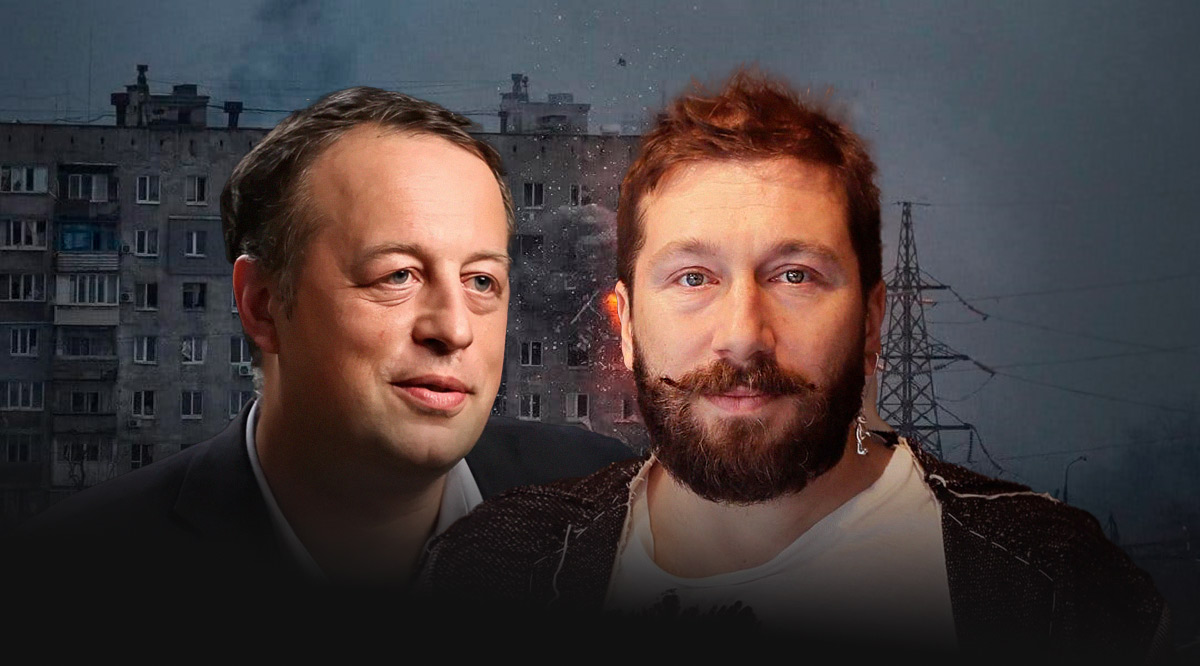
Evgenia Albats*: Four years ago, Russia invaded Ukraine, and a full-scale war began. Where were you on February 24, 2022?
Maybe abroad they still didn't believe in this war, but in Moscow, there was definitely a feeling that it was already in full swing
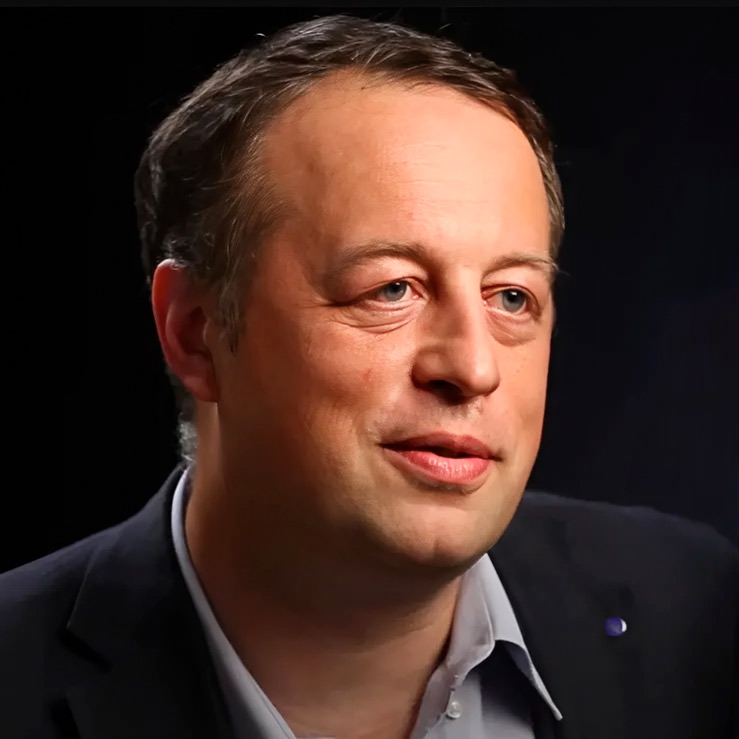 Konstantin Sonin: I was in Moscow, where I had come for a year and a half as part of a creative sabbatical, and I still had eight months left in Moscow. On the evening of February 23, I was on Arbat, at the "October" cinema, watching the film "Death on the Nile" after my public lecture as part of the InLiberty project, and simultaneously checking on my phone what was happening. From Moscow, it seemed that the war was already starting. I looked at the transcript of my lecture, and at the end, they asked me what new sanctions would be introduced. I said—it depends on where the Russian tanks stop, depending on where they reach. So, maybe abroad they still didn't believe in this war, but in Moscow, there was definitely a feeling that it was already in full swing.
Evgenia Albats: Evgeny, where did this news catch you?
Evgeny Chichvarkin: At home. I woke up in the morning and read the news.
Evgenia Albats: And what was your first reaction?
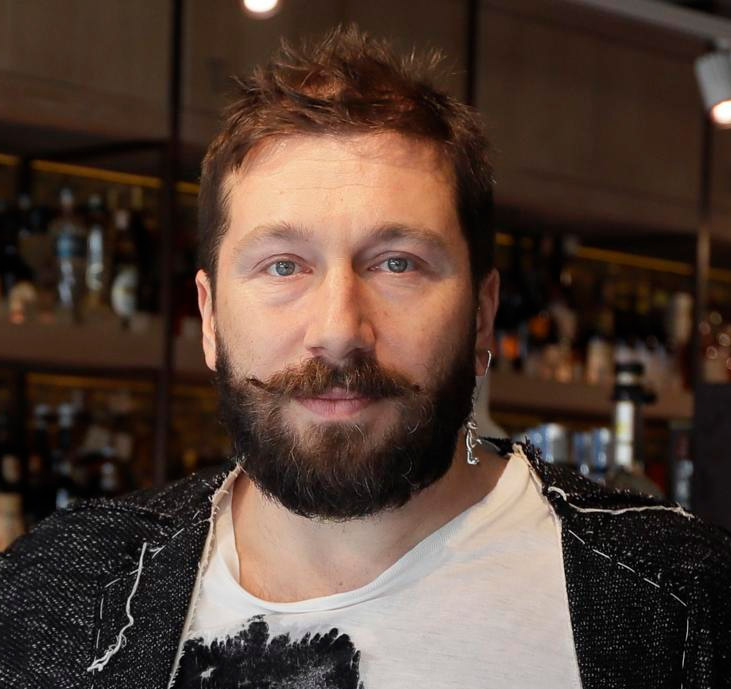 Evgeny Chichvarkin: Swearing. I understood that everything was leading to this. But I understood this only in the last two days, to be completely honest. In the last two days, I told all my friends in Kyiv to stock up: get satellite phones, canisters, and some kind of car, an SUV. To be ready—with gasoline and food, to get to the border. But that was already in the last two days. Before that, it seemed to me that Putin was bluffing. I was wrong.
Evgenia Albats: Konstantin, what was your first reaction?
Konstantin Sonin: I felt that something terrible had happened, that it was a dreadful thing, that it was very bad for Russia. That it couldn't end well. Of course, I also thought about my friends in Kyiv. On that day, February 24, we had a roundtable scheduled in Prague about Russia and Ukraine. I participated via Zoom from Moscow. Tymofiy Mylovanov, the president of the Kyiv School of Economics, participated via Zoom from Kyiv. And so I was in touch from Moscow, and Tymofiy was driving in a car through Kyiv—and bomb blasts could be heard. But this feeling was completely, utterly unreal.
Evgenia Albats: And I was in the hospital. Two days before that, Dr. Andrey Volna*, who now works in Ukraine and who joined the Platform of Russian Democratic Forces at PACE, operated on my knee. And he came into my room, it was early morning, he was walking and covering his mouth from sobbing. He came in and said: "It's war". Then for a month or two, I cried all the time, although it's not typical for me at all. I listened to broadcasts by Ilya Krasilshchik* with people in Ukraine. They asked the same question: "Why are you bombing us?" These were people from different cities: from Donetsk, Luhansk, Kyiv, Kharkiv, Chernihiv. And everywhere they were bombing. Someone said: "I'm sitting in the bathroom". Someone said: "I've settled here—where the fortified walls are"... It was a real nightmare. Although it also seemed to me that after Putin <in 2020> poisoned Navalny and changed the Constitution, it was obvious that his next step would be a war with Ukraine. Moreover, Gleb Pavlovsky in an interview on YouTube told me: "There will be a big war".
Konstantin Sonin: Boris Nemtsov, who, frankly speaking, was smarter than Gleb Pavlovsky, said many years before that there is no Putin without war, that he would start a war with Ukraine.
Adventure and Stupidity
Evgenia Albats: As you probably remember, Putin addressed the Ukrainian military and intelligence officers and called on them to switch to Russia's side. This happened literally in the first two days after the invasion. Five billion dollars were spent by the FSB leadership, primarily the Fifth Service of General Beseda, on intelligence from the territory, which was spent on buying agents in the Security Service of Ukraine, in the army, in the GUR, and so on. But nowhere, except Kherson, did it have any effect. Where did Putin miscalculate?
Konstantin Sonin: It seems to me he miscalculated in everything. He has a completely inadequate, uninformed idea of what Ukraine is. He is a semi-literate person, and what he reads about history, he reads from equally semi-literate people like Medinsky—some nonsense. About the specific Ukraine of 2022, he had a completely wild idea. If he had looked at the results of the 2019 elections, at real public opinion polls in Ukraine, if he had looked at how the Ukrainian political elite reacted to the 2014 crisis, when in the absence of any leader, the Ukrainian elite formed a government and never lost control for a second—if he had seen all this, if there were adequate people around him or if these adequate people were not cowardly scoundrels, then he would have known that his adventure was doomed.
I believe that even if Zelensky had been killed in the first hours or if Zelensky had left Kyiv (as Putin might have expected), other commanders would have been found. The command of the Ukrainian army consisted of people who for 8 years before that had been defending against Russian provocations and Russian regular troops in eastern Ukraine. Why should they suddenly easily surrender and switch to Russia's side? It was all a terrible adventure and stupidity.
In Russia, they thought that support in Ukraine was much greater, that it was deep enough in the intelligence services and the army. But the intelligence services and the army had already seen how everything was happening in Donbas, who and what received there
Evgeny Chichvarkin: They really spent 5 billion. They miscalculated in that a monstrous percentage of this money was stolen. And the people who took this money said: "Yes, yes, yes, we will do everything",—they thought that Russia was just spreading money for control, that there would be no war, that they would not be needed. And they weren't going to do anything at all. The way Russia, Putin, the Russian state was presented before 2014 and after 2014, these are two very big differences. Despite the fact that there were still many sympathetic <to Russia> people by 2022 and in Zaporizhzhia, and especially in Mariupol, and in Odesa, and in Kherson. In Odesa, some people approached me last August at the entrance to Privoz and said directly not to curse "dear Russia". And in Russia, they thought that support was much greater, that it was deep enough in the intelligence services and the army. But the intelligence services and the army had already seen how everything was happening in Donbas, who and what received there. All the separatists who dreamed of becoming kings turned out to be "lackeys" for the security officers. That was the miscalculation.
And of course <they did not expect> that Zelensky had such a backbone. An absolutely unyielding person turned out to be, taking a blow of terrible strength. He did not flinch, and his entourage did not flinch. They knew, they knew and were preparing. And they had a scenario for communicating with people during this period.
Plus, the Russians miscalculated due to arrogance. If the entire blow had been concentrated on Kyiv, considering that sabotage groups were already there, shootouts were happening right in the center, some cars drove up to Podil and so on, it is unclear how everything would have gone. But it seemed to Putin that he would take everything at once. And indeed, Mariupol was already under Russian control for some time in 2014. And there were many more people ready to collaborate there. If in Kharkiv in 2015, when I was speaking there, I was threatened, and the Right Sector** gave me physical armed protection due to <attacks> from veterans, then over the following years, very Russian-speaking and very Russian-cultured Kharkiv became completely different. People rethought reality differently. Russian troops also entered Kharkiv, there were Russian troops in the north. Tanks drove around, well, they all stayed there in those tanks to burn. The clashes were quite serious. I know this firsthand from quite close people. I sent them Starlink there in the first days, it happened that way.
Evgenia Albats: Could they be bought in the UK?
Evgeny Chichvarkin: No, no, they were redistributed by the center in Kyiv. And of course, everyone was asking "give-give-give", whoever reached out first, called, got more, using connections.
Evgenia Albats: In March 2023, I was between Kherson and Mykolaiv, I interviewed a person who headed the municipality of one of the enlarged districts there. He was detained in Kherson at the very beginning of the war. He told me how he was interrogated. An FSB officer asks him: "Tell me, what did we do wrong?" And he replied: "Why did you decide that we would immediately go and surrender?" He said: "We have data on the elections in Mykolaiv". In Mykolaiv, 60% of voters voted for pro-Russian parties. And my interlocutor replied to the security officer: "Yes, but the turnout was 20%. You forgot to calculate that this is 60% of 20% turnout".
Konstantin Sonin: As a political economist, I start to shake at such analysis. <Even when they vote for a pro-Russian candidate>, it does not mean at all that people want to be bombed first, then sent tanks, and then start arresting them and their neighbors. This is a Putin and KGB approach to analysis: we already have a solution, we already know what should be. "Ukrainians and Russians are one people". And then everything is simply adjusted to this solution, everything else is not listened to.
Evgeny Chichvarkin: Look, Mykolaiv is managed by serious, authoritative businessmen, each group has its own interest. Initially, the city is very Russian-speaking. And essentially, the elections in Mykolaiv, the elections in Kherson—these elections are not even from political groups, but from local influence groups. Including through politics. And the whole South is de facto like that. In the 90s and early 2000s, everything was boiling and dividing, by the time of the Maidan, everything was mostly divided. Some local group can take the Russian party, some agree and be part of "Batkivshchyna", and some—that they will become the Yanukovych party. This is a slightly different world. The task of holding elections is completely different. We don't always understand this.
Konstantin Sonin: This world is not always understandable? Or did Putin and the FSB just not want to look at the data? For example, at the data of the 2019 elections...
Evgeny Chichvarkin: Well, you can say, they were poorly disposed towards the Ukrainian language and forced Ukrainization. They wanted to continue trading, interacting with Russia. They wanted there to be Russian schools and the Russian language. The security officers counted all this and thought: yes, they are definitely waiting for us here.
Konstantin Sonin: Some completely fantastic leap. From the fact that a person wants certain candidates and wants to speak a certain language, to conclude that he wants to be captured—that's not an analytical argument. It's just that you want to capture and invent that they are waiting for you there.
Evgeny Chichvarkin: Yes, undoubtedly so. But the bloodless capture of Crimea turned their heads very much, for a long time and seriously.
Putin Against Society
Evgenia Albats: At the beginning of the war, literally in the first week, Ukrainian President Volodymyr Zelensky addressed the Russians and urged them to protest against the war. I was in Moscow at the time, and it seemed to me that he was absolutely convinced that now the same Muscovites who went to the square in 2011–2012 would come out against the war. And we remember the first war in Chechnya, when the protests were quite serious. But none of this happened. Why?
Konstantin Sonin: It must be understood that the army that Putin holds and feeds to fight against Russians is even larger in size. Of course, he does not bomb, does not drop bombs on Russian cities, as he drops them on Ukrainian cities. But the number of people physically engaged in protecting Putin and the Putin regime from Russians is greater than the grouping of Russian soldiers in Ukraine. The number of FSB officers, the National Guard, all the special services. Tens of thousands of people protested against the war. Tens of thousands of people signed various open letters. But they were immediately arrested. The media were instantly closed. I was also in Moscow, stayed there, went to "Dozhd"*, to "Echo of Moscow", but all this was closed. In fact, we decided to leave when they criminalized not what you say now, but what you said before. I was against the war with Ukraine for 20 years and against Putin's policy in the Ukrainian direction. I couldn't cancel my columns written earlier! Putin suppressed protests against the war (I am sure that the war would never have been popular, would never have received the approval of the majority) with very harsh measures. President Zelensky and Ukrainians endured nightmare difficulties, terrible hardships, and dangers, and I do not compare them with the Russian experience. But they lived their whole lives in a democratic country. President Zelensky was born in the USSR, but lived most of his life in a free country. How to protest in a country like Russia now? Why didn't they protest in Hitler's Germany? Why didn't Ukrainian nationalists protest in the USSR? Because those who protested were imprisoned. Those who participated in protests ended up in camps. The same thing happened in Russia. I don't know if this is justified from a moral point of view, but it is clear that it was difficult for peaceful Russians to do anything.
Evgenia Albats: We now see protests in Iran, and the regime there is not much friendlier than Putin's.
Konstantin Sonin: Yes, we see protests in Iran and admire Iranian women, youth, and university professors. They are admirable.
After such a tightening of punitive measures, the sticky Soviet fear becomes stronger and stronger. They immediately said: we will beat, torture, imprison. They beat, tortured, and imprisoned. And it will get even worse
Evgeny Chichvarkin: In 2014, not after Crimea, but after the start of the war in Donbas, 60 thousand people came out in Moscow. If I'm not mistaken, the anti-war campaign in February, on the 24th and 25th, gathered a total of only 15–20 thousand people. And there the crackdown was very harsh. They still went to Mars Field for some time. I know a 70-year-old man who barely got away from there because they beat absolutely everyone, totally. The task was to terrorize. And they terrorized quickly enough, making it clear that it would no longer be like before. Plus all these completely outrageous, completely shocking sentences: a girl changes price tags in a supermarket, and she gets 7 years in prison for it. In January 2022, she might not even have had an administrative penalty, some kind of fine, and that would be it. It took literally one day to change everything. After such a tightening of punitive measures, the sticky Soviet fear becomes stronger and stronger. They immediately said: we will beat, torture, imprison. They beat, tortured, and imprisoned. And it will get even worse. I just got a "nine" for saying that the Russian army struck a children's hospital and killed children there. This "discredits the Russian army".
Konstantin Sonin: I have eight and a half for hate speech, for reposting materials about Russian military killing civilians in Bucha and Mariupol. And Boris Akunin was transferred to a strict regime.
Evgenia Albats: And what is the point of these in absentia sentences? When they poison Alexei Navalny*** with poison, I understand: everyone, wherever they live, immediately shudders and thinks that they too can have their door or car handle smeared, and so on. Heart attack and coffin lid. But what is the point of transferring Akunin to a strict regime, or declaring Katya Kotrikadze on the international wanted list, or in your sentence?
Konstantin Sonin: In Putin, we imagine some evil deep mind. But from the very beginning, his main way of seizing the state was through second-rate and incompetence. That is, to seize television, you need to appoint people there who cannot handle it. His main propagandists are Solovyov and Simonyan, who in a competitive environment would not be allowed near television. The same is true in the prosecutor's office and investigation—they think they are fighting something with such in absentia cases. But they have this idiocy everywhere. They are at war with culture, they are at war with science, in particular, because they are such crooked-handed f...s.
Evgenia Albats: If they are so crooked-handed, why are we in exile, and they have seized the country?
Konstantin Sonin: Because a professor, a good journalist, a cool businessman—this is all civilization, it doesn't play. You understand? To break something good, to destroy a business, to destroy a university, to close a newspaper, you don't need brains, you need a club and strength. It's a tragedy for the country when not intelligence, not complexity, not beauty, not education, but strength begins to prevail. And here are the insane results.
Evgeny Chichvarkin: Well, plus we don't march in formation, and they do it with pleasure. And it is clear that those who march in formation are stronger because they listen to orders and execute them. And each of us has our own opinion. Why such harsh sentences? Putin does not trust the intelligentsia, does not like it, just like Stalin. He wants to intimidate with these measures, so that everyone remains silent and does not express themselves. It would be better if they swore allegiance and licked the ice of Baikal <like the Shaman>. This is just one of the tasks. The second task is that if any of us completely loses it, then it is possible to come out of the moratorium on the death penalty and say: here he is sentenced to death in Russia. Who are Putin's infantrymen here? This person is our absolute enemy, lose him. I think, in the end, it will come to this.
Ukraine Before the War
Evgenia Albats: Just recently, The Guardian published a very interesting study by Shaun Walker. Shaun Walker worked in Russia for many years. When the war began, he was in Kyiv, and I interviewed him from Moscow. He was hiding, literally, in a trench somewhere near Kyiv. For his research, he interviewed more than a hundred sources, including top leaders of Western intelligence. He writes that President Zelensky insisted that Putin would not start a war, that the gathering of Russian troops at the border with Ukraine was pressure on Ukraine and nothing more. CIA Director Bill Burns flew to Kyiv two or three times, showed Zelensky intelligence data, and told him that Putin was about to start a war. Moreover, General Zaluzhny recalls that he repeatedly approached Zelensky and the head of the president's office Yermak and said that it was necessary to introduce a state of emergency, then it would allow him to redeploy troops and take other actions. And even worse, Zaluzhny claims that he practically secretly transferred a division to Hostomel. In fact, this saved the situation in Hostomel, but he said that if the war had not started, he would have simply been imprisoned. Moreover, both the Americans and the British said that the war was about to start—they are all part of the so-called Five Eyes—a group of five countries exchanging intelligence information, while French and German intelligence said that Putin was bluffing. You both spend a lot of time in Ukraine. Konstantin, you teach in Kyiv, at the Kyiv School of Economics. Evgeny, you deliver medicines by car, spend a lot of time in different cities of Ukraine. How do you understand what was happening on the eve of the war in Ukraine?
Evgeny Chichvarkin: Many thought it was a bluff. Some of our friends received 100% confirmation at midnight Kyiv time and left at midnight. And at 4 a.m. they were already on the Lviv ring road, so they calmly passed that morning. And some friends, on the contrary, took all the children out two weeks earlier, but then it seemed to them that everything had calmed down, and they returned. Yes, indeed so. Perhaps we deceived ourselves, because I also wanted to believe that it was a bluff. In addition, there was the introduction of troops into Kazakhstan three weeks before that, for three days, and a fairly easy withdrawal. They rattled weapons and left. In fact, there was a coup, relatively mild, as we can now understand. And it seemed like they left and left, they didn't start capturing. These are all purely judo deceptive techniques.
Evgenia Albats: Zelensky, as Guardian writes, was afraid to show Putin that he was preparing for war. He was afraid that panic would start, that people would flee the country, that there would be no one to defend. And that the economy would collapse immediately, the hryvnia would collapse, and so on. Therefore, he strongly opposed talks about the war starting soon.
Evgeny Chichvarkin: I think this is a logical explanation. My friends, veterans of Saur-Mogila, dug up their caches around January 15, 5–6 weeks before that.
Evgenia Albats: So they were arming and preparing?
Evgeny Chichvarkin: Yes, they were told to surrender their weapons in 2015, they nodded, put them in oil, and placed them in the forest—those are the old habits. And here they brought everything from the forest. In the last two or three days, people were fully armed. They were waiting.
Konstantin Sonin: I read the article, I have great respect for it, but I would say that it simplifies the situation. The question for Zelensky and others was not whether there would be an attack. They couldn't understand whether it would be an attack on Kyiv or, say, just the recognition of Donetsk and Luhansk, the introduction of official Russian troops into territories already occupied. Then, perhaps, it is indeed worth refraining from panic. Another point: the article speaks well of American intelligence, but very poorly of those who analyzed intelligence data in America, of people like Jake Sullivan, who listened to Putin, who were sure that there would be no war. That is, they had intelligence data showing one thing, but they believed there was no one to help in Ukraine. In the article, for example, it is said that when Ukrainian Foreign Minister Kuleba, who was in Washington at that moment, spoke with Biden, Biden seemed to say goodbye to him, as if forever.
Evgenia Albats: To him and the Ukrainian people, that's what he said.
Konstantin Sonin: Because the Biden administration correctly assessed the situation. They correctly analyzed the situation in Russia, foresaw a large-scale attack, knew that Putin would start a war, but had no idea what Ukraine was, who was there, did not know how a united political nation had formed there after 2014, after 2019, how united the leadership was, what a powerful connection there was between the political and military leadership. Over four years of war, we have seen fewer political dramas between the Ukrainian military leadership and the political leadership than, say, between Churchill's government and his commanders, Roosevelt's government and his commanders. Speaking of Stalin and Soviet marshals is not even worth it, they just flew back and forth. All this was completely invisible to Sullivan and those who advised Biden.
Evgeny Chichvarkin: The tension between the Ukrainian leadership and the military top is undoubtedly very high right now.
Konstantin Sonin: Yes, that's true, but it's less than in all known wars.
Evgeny Chichvarkin: I agree with you. But I just want to say that the further it goes, the more the psyche is exhausted, and the more internal tension between the army leadership and the central office leadership increases. They cannot not communicate, but at some point, roughly speaking, in the fall, the situation became very acute, sparking.
Konstantin Sonin: I do not dispute this. The facts you speak of are beyond doubt. But it seems to me that many people who look at these facts ignore the history of wars. In the history of wars, there is enormous tension between political leadership and the army, there is the displacement of commanders, dissatisfaction of front-line commanders, and also the fact that front-line commanders try to talk to parliament directly, bypassing political leadership. This exists in the best armies, it exists, it has always been. President Lincoln ran against a former commander of his troops, whom he replaced, and for many years was forced to appoint candidates from other parties, as if his political opponents. Remember any war where the commander-in-chief was not replaced, and then he was dissatisfied and did not accuse the tsar or the Führer of doing it.
Evgenia Albats: Should Zelensky have warned Ukrainian citizens about the imminent start of the war, or did he act logically and politically expediently, fearing mass panic?
Konstantin Sonin: I think books will be written about whether his decision was optimal, whether it was right that Zelensky did not announce mobilization. This is a debate for decades.
Russia did not even find such a person in Ukraine who could say that we are forming a government and inviting Russian troops—to such an extent it was far from reality
Evgenia Albats: You said that Putin could have just recognized the independence or even included the so-called Donetsk and so-called Luhansk people's republics into Russia. But we know that there were sabotage groups planning to kill Zelensky. And Zelensky said a day before the meeting with the presidents of Poland and Lithuania that maybe we are seeing each other for the last time. He knew they were looking for him. There was probably a possibility to remove Zelensky and put a puppet.
Konstantin Sonin: Note that not a single Ukrainian politician announced the formation of a new government. Even such completely crazy people like deputy Tsarev or former president Yanukovych. Putin failed to form a "real" Ukrainian government. Remember how Stalin started the war with Finland? By saying that there is a "real" Finnish government, and we are helping Kuusinen by fulfilling his request to liberate Finland. But here they didn't even find such a person who could say that we are forming a government and inviting Russian troops—to such an extent it was far from reality.
War as a National Idea
Evgenia Albats: Why did Putin start this full-scale war? The country was in a state of stagnation and under some sanctions, but somehow it lived, and it lived certainly no worse than in 2014, than in other centuries. Despite the annexation of Crimea, Putin was once again being accepted and invited. Yes, there was an unpleasant story in Brisbane, Australia, at the "G20", when he found himself alone at the table during lunch. But nevertheless, he was still being invited. Why did he enter into this full-scale war?
Konstantin Sonin: Why did Hitler attack England when he had already captured half of Europe? Why attack the USSR? Putin couldn't stop.
This is how he lives. But I also explain it by the fact that the way Putin strengthens his power is a kind of degradation, de-institutionalization of the Russian state. In the end, he found himself surrounded by people who, like Kozak, who was allegedly against the war, don't even resign. Kozak didn't even leave.
Evgeny Chichvarkin: He wasn't let go.
Konstantin Sonin: No, you can always resign. It didn't threaten him with anything. But cowardice is such a thing... Putin is surrounded by people who are not responsible for anything. And at the head of the so-called parliament, and at the head of the so-called Federation Council, and at the head of the so-called government—people who are mentally—servants. It is this system that led to such a result that one person can start a war.
Evgenia Albats: Evgeny, why does Putin need this war?
Evgeny Chichvarkin: They searched for a national idea for a long time and found it in the form of war. That's one. Second, I think it's the old KGB environment, Patrushev, Kovalchuk, and his old friends. The idea of Juche is that we can do everything ourselves, that we have a special path... Moreover, almost all the CIS countries were governed by high-ranking officials, Russia had its people everywhere, these Putin's people controlled a lot. Saakashvili was the first to start freeing himself from them, and that's where it all began. Zelensky did the same in 2021. I did work for the leadership of Ukraine on customs tariffs. And based on this, among other things, they removed some of Putin's people. They were in the Ministry of Defense, responsible for supplying weapons, there were deputies loyal to Putin. Putin's people were also at customs. And they were all being thrown out.
Evgenia Albats: Did they control the SBU?
Evgeny Chichvarkin: To some extent, yes. But now it has changed.
Evgenia Albats: They fired a huge number of people there since the beginning of the war.
Evgeny Chichvarkin: Yes, it's a close structure, it's clear how to control it. In the end, tasty and sweet moments were slipping away. Ports were slipping away, productions were slipping away from the control of the security officers. And they started vibrating, as it seems to me. Plus "land". This word, when Putin pronounces it, just sounds very voluptuous: "land". And I think this is another very important factor—control over the land. Because years will pass, and perhaps what is now needed by no one, what lies in this land, will be worth something like lithium. Which was also needed by no one, but now it is necessary. Well, and so on. A lot was buried in Siberia. And 30 years ago it was worth zero whole damn tenths, the same nickel was relatively cheap, and then, when everything became much more expensive, it turned out that Russia had 75 trillion. Well, let's say a million will die, one and a half will die, even three million—it doesn't matter. The territory will remain ours, and everything that is in the land will be ours. It's hard to argue with this logic.
Evgenia Albats: Konstantin, why does Putin need a full-scale war? The economy is now in a very difficult situation.
Konstantin Sonin: It wasn't then. He started the war in a normal situation. That's why it continues because he started the war when everything was normal in Russia. It seems to me that the degradation of the Russian state led to the war. By the 23rd year of his rule, Putin was absolutely surrounded, as Mandelstam wrote <about Stalin>, by half-people who are not statesmen, but are high-ranking servants.
Evgenia Albats: And what are the goals? Why? What did he tell himself?
Konstantin Sonin: To capture Ukraine.
Evgenia Albats: And become an outcast? He understood that sanctions would be imposed, that he would become an outcast?
Konstantin Sonin: He doesn't consider that the Soviet Union was an outcast. They have such an understanding that if we, like in the Soviet Union, declare that we are not outcasts, then we will not be. Whoever I want to be, that's who I consider myself to be. I have not committed war crimes, I do not bomb peaceful neighborhoods, and if I say so, then it is so.
Evgenia Albats: By the way, the meeting in Alaska confirmed these assumptions of his. For all four years of the war, Ukraine is limited in means of defense. Including the defense of cities from Russian missiles and drones. For all four years, there is a feeling that Europe and the United States, despite all the pro-Ukrainian rhetoric, are doing little. Do you have an explanation for this? One of my interlocutors a couple of years ago here in the United States said that of course, the United States wants Ukraine to win, but not too quickly. Because the first task is to bleed Russia as much as possible. Yes, at the cost of Ukrainian lives.
Konstantin Sonin: It seems to me that this is a typical rationalization of what is happening for cabinet analysts. In reality, what has happened in the last two years is that the Biden administration has been completely dysfunctional. Biden has aged, and his environment was weak. In the last two years, they have finally lost this thread, but they have lost it not only in Ukraine but in all other matters as well. It seems to me that European countries are thinking about how to help Ukraine, but they do not have enough support to send troops there. And there are no trained troops, in fact, Ukraine now has about the same number of soldiers as all European armies combined. And accordingly, they help as much as they can, making sure it has political support. For example, I believe that the quickest way to end the war is if Poland, Germany, and France send troops to Ukraine.
Evgeny Chichvarkin: I think that during Biden's time, at least weapons were being issued. At present, support from the US is very weak. And Trump is very trumping. Trumping everyone to sit down at the negotiating table and agree, because he just wants to lift all sanctions from Russia and establish trade. And this idea of the "Great North" does not leave him alone. It's access to everything that is hidden there, in Russia.
Evgenia Albats: Will the war end in 2026, Evgeny?
Evgeny Chichvarkin: There is a high probability that it will pause.
Evgenia Albats: Konstantin, the same question to you. Will the war end in 2026?
Konstantin Sonin: I don't think so. I think it will kind of hang. Perhaps there will be no official agreements, but the intensity of hostilities will sharply decrease. That's what I allow. In general, it seems to me that we have moved into a waiting mode for the next president of the United States. I believe that President Trump has some special love for Putin. Therefore, despite the large-scale support for Ukraine in American society and Congress, it turns out neither here nor there. But any next Republican president or Democratic president will be much more on Ukraine's side, and then the war will end. But unfortunately, this is a rather sad forecast, as it means that losses in the coming years will still be huge. Primarily in Ukraine, but also in Russia.
Evgenia Albats: And what will happen after the war, Kostya? In Ukraine, in Russia?
Konstantin Sonin: After the war, I think an economic miracle will begin in Ukraine, similar to the Italian post-war miracle, the Polish miracle after the collapse of the USSR, the miracle that has been happening in the Baltic countries for the last 30 years. I think that Russia will experience a period like after Stalin's death, when it will become possible to get rid of the most odious people and regime, as they got rid of Beria and his henchmen, there will be a significant improvement in the political situation, a weakening of repression. But there will be no democracy and new glasnost.
Evgenia Albats: But will we be able to return home?
Konstantin Sonin: Will we be able to return home? In this life, I think not.
Video Version
* Evgenia Albats, Konstantin Sonin, Evgeny Chichvarkin, the TV channel "Dozhd", Ekaterina Kotrikadze are declared "foreign agents" in the Russian Federation. "Dozhd" is recognized as an "undesirable" organization.
** Right Sector is recognized as an "extremist" and "terrorist" organization.
*** Alexei Navalny, Evgeny Chichvarkin, and Ekaterina Kotrikadze are included in the list of "terrorists and extremists".
Photo: t.me/V_Zelenskiy_official/5247, AP Photo/Kirsty Wigglesworth (E. Chichvarkin), "PostNauka"/Youtube (K. Sonin).