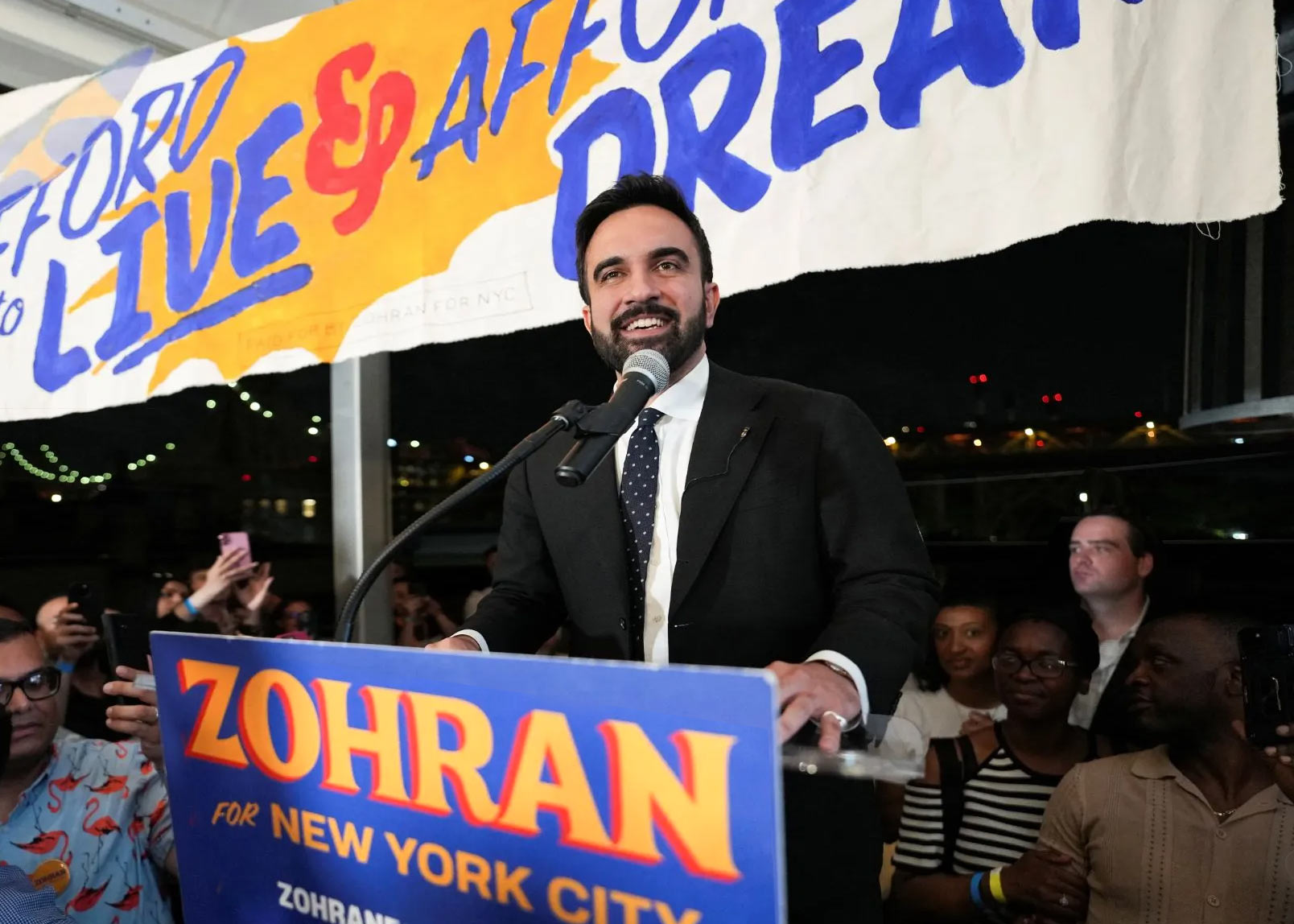
Zohra Mamdani. Photo: David 'Dee' Delgado / Reuters.
Evgenia Albats*: The 111th mayor of New York was elected a member of the Democratic Socialists of America Association, 34-year-old Shiite Muslim Zohra Mamdani. More than a million New Yorkers, primarily young people, voted for him. 78% of voters under the age of 30, 66% aged 30 to 44 voted for the politician who won the election on a left-populist platform. After the inauguration in January, Mamdani will have to manage a huge city with a budget of 102 billion dollars and a huge division of municipal bureaucrats. What will come of this, considering that Mamdani has so far only managed election campaigns and served in the New York State Assembly? Which of the promises — and these are control over housing rent prices, free buses, state grocery stores, free kindergartens and nurseries — excites you the most or, on the contrary, causes sharp rejection?
Rich and Poor
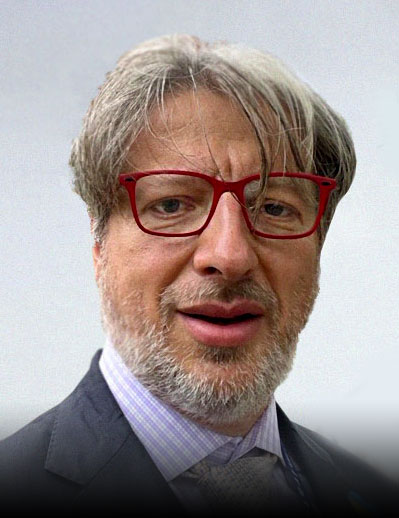 Alexey Friedland: Of what you listed, all four experiments have the right to exist. If you ask me which ones are the easiest, I would name free buses: at least in four or five cities in America, including Republican ones, they experimented with this, in Kansas, for example, in Iowa. It seems to me that if money is found, it is quite easy to do. Bus tickets are a tax on the poor. I believe that if people have the opportunity to travel around the city, it will increase economic activity.
As for rent control, I believe it is necessary. It was a correct experiment in the 60s, until the early 2000s. I rented an apartment in a building on Central Park West for a long time and raised my children there. And I must say that when we moved in, rent control still existed, we paid seven times more than our neighbors. It did not cause me outrage, as I believed that I could pay, and was glad that teachers lived in our house, people with low incomes, those who today cannot live in this house. During our 11 years of living in that house, almost all of them moved out, died, and my colleagues moved into their apartments. The house did not become any better from this.
New York is famous for its democracy, for the fact that millionaires, even billionaires sometimes, and the poor sit side by side in subway cars. And if the city does not have this democracy, then there will be no city with its soul, with its theaters, with its art.
Regarding control — Anya knows that I was a member of the board of directors of one of the prestigious New York private schools for a decade. And I remember that we conducted a study on how long it took teachers to get to school.
In the 70s, the average teacher's commute to school took 20–25 minutes. In the years when I was a member of the board of directors of this school, the teacher's commute already took an hour and twenty minutes. Today, teachers do not have the opportunity to live in Manhattan. The opportunity to live even in good areas of Brooklyn is disappearing. Transportation takes more and more time. Therefore, I am "for" this program. I am skeptical about free stores, but I do not see anything terrible in this. Well, they will try, in the end, Mamdani will be convinced that these stores need to be handed over to charitable foundations. This will be a useful experiment, but I do not think it will be very successful.
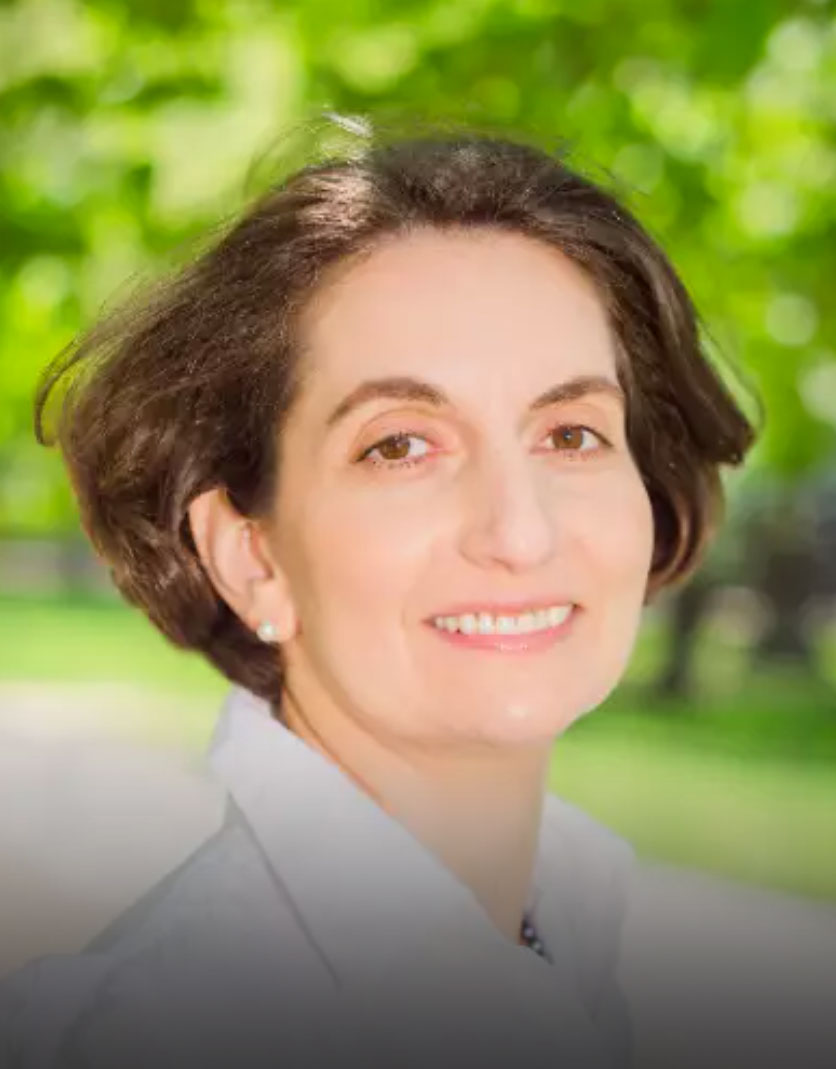 Anya Levitov: I generally share Alexey's enthusiasm about the fact that the rich and the poor should live together, side by side, and that we have integrated housing. This is wonderful. But the problem is how it is implemented. Now rent control practically no longer exists, because the people who received such apartments mostly died, these apartments were deregulated or entered the category of rent-stabilized, which is a slightly different category of rent increase restriction. But such apartments are not currently linked to the income of the person living in them. Mamdani himself is a vivid example of this: earning approximately 300 thousand dollars together, they live in a subsidized apartment. It is completely unclear why this is happening. This does not lead to economic diversity or the ability for teachers to live in such an apartment.
We have another category of housing, cooperatives, which have income restrictions for buyers who can live there, these apartments cannot be rented out. It must be your own main residence, the primary place of residence. And these houses and apartments really fulfill such a role, there really live police officers, teachers, firefighters, musicians, actors, and other citizens who earn little and at the same time are a very important part of our city. I would like there to be many of them here and for their lives to be wonderful.
But the way rent stabilization works for us now — not at all. Until 2019, if you started earning more than 200 thousand dollars a year, such an apartment was deregulated, it had to transition to a market price state. That is, this is a restriction on the apartment, not on income. It seems to me that this would work well and be reasonable if it were a personal subsidy that depended on the income of those who live there. And I know a number of people who live in huge, very cheap apartments, absolutely not needing this subsidy.
In June 2019, legislation was passed that prohibited property owners from raising rent even if they make significant capital improvements. As a result, according to various estimates, from 30 to 60 thousand apartments are empty. Because people lived in them since the 70s, renovating such an apartment now costs 200 thousand, and you have to continue renting it out for 600 or a thousand dollars. This makes no economic sense.
Another problem. It is possible to build subsidized housing perfectly and develop the amount of market housing. And this was done by Mayor Bloomberg. Under him, a huge amount of both subsidized and market housing was built because he developed a special tax program for apartment owners in new buildings. I am engaged in real estate, I have exhausted everyone with explanations of why everything Mamdani says is nonsense, nonsense, and terribly dangerous. But it doesn't help, no one wants to listen to all these minor details.
The problem with our real estate market and the incredible rent price is that nothing can be built. Labor is very expensive, and it is impossible to negotiate with unions. The cost of capital is very high, it is impossible to build something, sell it, and get the investment back. The cost of insurance is very high. Plus, monstrous bureaucracy, it is very difficult and expensive to get a building permit, there are many restrictions. Trump demolished the East Wing, the east wing of the White House, without batting an eye, but for me to change a window in an old building, I need to communicate with a special commission for 8 months, and the price as a result of all these approvals is very, very high. Maybe 10 times higher than in other states. And in connection with this, most people who used to invest in our beautiful city are now investing in the so-called sunbelt, Sunbelt. They all moved to the southern states. A huge number of people are going there after them.
Evgenia Albats: You mean Texas, Florida?
It is impossible to solve the problem of affordable housing like in the Soviet Union by creating communal apartments. The only way to increase the number of apartments is to increase the number of constructions
Anya Levitov: Various states where everything is just easier. And I like living here, I really like theaters, I want our city to be accessible, I want teachers in our schools to live in the city, not outside the city. But this can be solved in a completely different way.
Alexey Friedland: But it hasn't been solved. Since the 60s, there have been different mayors — Bloomberg, Giuliani. How did it happen that everyone tried to solve it, and it couldn't be solved? It only got worse. And now young people, new people appear who say, let's try what worked in the 60s and 70s. Everyone says it's a nightmare, nonsense, and nothing will come of it.
Anya Levitov: Because it is impossible to solve this problem like in the Soviet Union by creating communal apartments. The only way to increase the number of apartments is to increase the number of constructions. What does Mamdani say? He says, I will build 100% affordable housing and 100% subsidized housing at the state's expense. We already have 100% subsidized housing. It's called Projects. This is a segregation project. We gather poor people in one place. The social consequences are obvious, especially this affects children.
Alexey Friedland: You describe these Projects as something terrible, but this project lasted almost 40–50 years. Many wonderful people came out of there, who return there, live there with their families, get married, and so on.
Anya Levitov: But this is not a scientific approach to this issue. We need subsidies, we have a very expensive city, we need income redistribution, there is no doubt about that. But it would be good to do all this not under the slogan "it worked in the 60s, so let's apply it now in the new world and in the new situation", but to look at what the experiment conducted during a time much closer to us shows. These Projects may have been a great option once, but now people have different expectations from housing. These projects are a failed experiment in urbanism. There are no businesses there, there is no food, teenagers cannot find anything to do, there is no integration, there is no place for communication, nothing to catch the eye. All these projects are not built in accordance with how a city should be built and developed. And he (Mamdani) continues to say that we want it that way.
Stores or Cooperatives?
Evgenia Albats: I specifically looked at what percentage of Americans receive food assistance from the state, and I am completely shocked. 12.3% of the American population receives monthly food assistance. In the 2024 fiscal year, the average number of people receiving this assistance monthly was 41.7 million people. 41.7 million people in the USA receive subsidized food monthly. Then explain to me, what is the point of state stores?
Alexey Friedland: Let's not compare with the Soviet Union. First of all, because the entire food chain in the Soviet Union was state-owned. There is no talk of this here.
The goods that will be sold in those few stores, centers, which will be located in places of compact residence of poor people, have nothing to do with the Soviet experiment. There will be goods created on American farms, at private enterprises. Probably 99% of the market will work in parallel. We are talking about centers where you can get 5, 6, maybe 10 types of products.
Moreover, I am not a fan of even this system. I think it would be much more effective for the state to transfer some funds, redistribute funds to organizations like City Harvest, created by my friend. They distribute free food quite effectively throughout the city.
There may be other solutions, but what is my sympathy in this case? I see that young people want to try to solve this problem. They want to possibly apply some old methods that we know, and some new methods. We live in a world of new technologies, half of which I, for example, do not understand.
They will try. If they succeed, that's very good. Some number of poor families will get access to products. If they don't succeed, they will try others.
I don't see a reason for the hysteria that erupted, that here are free stores, here is the Soviet Union, after that they remember North Korea, Cuba, and so on. Nothing like that.
Anya Levitov: I don't think it threatens anyone, and there are indeed other more effective ways, including those existing in New York. We have, for example, food co-ops, food cooperatives. The most famous of them is the Park Slope Food Co-op, from which the Jews who founded it were driven out. And I stopped going there for this, in particular, reason. There, food was sold significantly cheaper than in the store and of better quality. And they regulated access to this store. People with excessive incomes and without the desire to spend their time (you had to appear there in person) were excluded from all this, and people with average incomes remained members of the co-op.
The problem is that you have to go there by bus, that is, there is a tax on the poor in the form of a bus fare, but it exists theoretically because no one insists on paying for the ride. According to city reports, approximately 60% of people who ride buses do not pay for it already now. The rest, I assume, have some subsidized or free cards, like students. But Mamdani chants free fast buses, and this is a very good chant. It's very difficult to shout about slow changes for the better based on good research. But without this, no result can be achieved.
Alexey Friedland: So you admit that the system was ineffective, 60% didn't pay, 40% rode for free for valid reasons. Why not cancel it?
Anya Levitov: No, I don't object. I don't think it's an important point. I don't think it will lead to any changes because it won't change the current situation. Now people don't pay and won't pay later. It will just be called differently.
Of all that Mamdani promised, he truly controls the police and schools. And this is where he can do the most harm. Everything else is empty promises, pure populism
Evgenia Albats: The elected mayor Mamdani, who will take office in January, will control the New York police, public schools, and dozens of agencies and commissions, including the board that decides on rent increases for about a million apartments. But raising taxes or increasing spending will require approval, first of all, from the New York City Council or state legislators in the state capital of New York, in Albany, where Governor Kathy Hochul is. She will be re-elected as governor, and she is unlikely to want tax increases during her campaign. In fact, she has already stated (despite supporting Mamdani) that she does not agree with him on everything. How much can Mamdani do what he promised voters? By the way, who does the rent board report to?
Anya Levitov: This board does not report to anyone. The mayor appoints one or two people there, but the rest are elected.
Evgenia Albats: By whom?
Anya Levitov: There are different local representatives. I think we voted for them, in particular, in June when there were primaries, at the same time we elected municipal representatives. They are all very leftist, but nonetheless, this is an important detail. That is, of all that Mamdani promised, he truly controls the police and schools. And this is where he can do the most harm. Everything else is empty promises, pure populism.
Evgenia Albats: Alexey, you talked about buses. I read that buses report to the Metropolitan Transportation Authority, which is the organization that manages the subways and buses of New York. And this organization, MTA, reports to the state, not the city. So Mamdani has no power over buses.
Alexey Friedland: Well, that's great. America is arranged in such a way that no one has great power. President Trump has no great power, Congress has no great power. Everything is divided. Will he manage to convince? Wonderful. If not, we will move on to another project, to another idea. Again, I see no reason for hysteria.
Anti-Zionist Rhetoric
Evgenia Albats: New York has the largest Jewish diaspora in America. Many rabbis were extremely concerned about Mamdani's anti-Israel, anti-Zionist rhetoric, for example, his refusal to consider Israel a Jewish state or his unwillingness to condemn calls for a global intifada. A call for a global intifada means — kill Jews around the world. Something like that. According to New York police data, in 2024, 54% of all hate crimes, primarily on ethnic and religious grounds, were against Jews. And yet 31% of New York Jews who voted cast their votes for Mamdani. Mamdani inherits the traditions of his parents, his father is a Muslim, and Mamdani himself declared that he is a Shiite, which means he adheres to a very conservative tradition in Islam. Does Mamdani's rhetoric not worry you?
There is a danger that Mamdani will appoint some kind of zoological anti-Semite to head the schools and make the atmosphere in the schools very heavy
Anya Levitov: It worries me very much. For me, this was the main reason to get involved in the election campaign. The fact is that my daughter, after that wonderful private school, on the board of directors of which Alexey was, went to a public school that was considered very good. She could have gone to any school, but she went to this one on October 9, 2023. She was immediately told there that she supports genocide, kills children. This happened even before the war in Gaza began.
Evgenia Albats: Two days after the massacre in southern Israel!
Anya Levitov: The massacre happened on Saturday, and on Monday she went to school. Over that weekend, we learned that our friend's child had died, we then thought he was missing, but later it turned out he had died. So it was all very traumatic for us personally. There were, for example, twelfth graders (my daughter went to 9th grade) who stopped her in the corridor and asked why she supports genocide. Although she is just Jewish, she was not even acquainted with any of them. The whole school was covered with Resistance by all means possible. We had a very difficult experience.
I want to say that this does not fall under the 54% of crimes against Jews — this bullying of children in schools and all sorts of difficult experiences. They don't go to the police with this. The whole hell that children went through at school was just our personal problems. And the school principal answered me: "Why is Fanny complaining? We erase all the swastikas in the evening". No one talked to the children, nothing was discussed, no one said that this behavior was unacceptable. There were days when she didn't go to school, she said she was afraid she would be pushed down the stairs. Now the situation in schools is undoubtedly better.
But I am sure that Mamdani will appoint some kind of zoological anti-Semite to head the schools and make the atmosphere in the schools very heavy. The mayor will control the purchase of educational materials and everything else, and he will buy everything that we refused, everything sponsored by Qatar, all these terrible anti-Semitic materials that our schools bought before and which Mayor Adams stopped. Now, I am sure, all this will be restored, and anti-Jewish, anti-Israel propaganda will return in schools at full speed.
Alexey Friedland: You asked if Mamdani's rhetoric causes me concern. It does not cause concern. Although many of his words cause regret. But the bar for political discussion in our country has long since dropped. It is not aristocratic. 50% of the country's women considered it possible for themselves to vote for Trump after he said what places he could grab them by. Or disabled people voted for Trump after he mocked a disabled journalist. Our level of political discussion has fallen. People use all kinds of rhetoric. Some tend to apologize. Mamdani apologized for the words about the policeman and about the IDF boots and so on.
Evgenia Albats: He said that the laces on the boot of a New York policeman standing on the neck of a black New Yorker were tied by the Israel Defense Forces.
Anya Levitov: He explained why he said it. He did not apologize.
Alexey Friedland: In any case, he said he would work with the police, just as in the city one of the largest Jewish communities in the world, he will have to coexist with it. Anti-Semitism was everywhere and always. But Mamdani was not elected because of his so-called anti-Semitism, a huge number of people do not care about this problem at all. They are much more concerned about the housing issue, the issue of life. And by heating up this discussion, it seems to me, we are not helping to solve this problem. The problem is not with Mamdani. The problem is much deeper. Let's hope that the government of Israel will appoint a commission, like the one it appointed in 2008, the Winograd Commission, which will consist of respected citizens of Israel, and will conduct an investigation of the last five years, including the methods of conducting the war. We will come to some conclusion and most likely attract a large number of those people who are skeptical about Israel to our side. And some will not be attracted. Anti-Semitism will always exist. And therefore, it seems to me, it is foolish to arrange a dialogue on the topic of anti-Semitism from these elections.
Anya Levitov: But it seems to me that the constant repetition that we are the largest community here and so many people do not consider Mamdani's obvious anti-Semitism to be a problem is the problem. Before World War II, Jews lived in Vilnius and made up 30% of the population, and in Warsaw made up 30% of the population, and in Kyiv made up 30% of the population. This did not prevent their fellow citizens from killing them, and then moving into their apartments, wearing their clothes, eating from their plates, and feeling good about it. And this was done even by those people who did not personally kill anyone. Therefore, the idea that such a number of Jews live in the city does not convince, approximately the same number of Muslims live in our city. We are not such a huge community now. The number of Jews who vote for Mamdani is also not news. There have been various episodes in our long Jewish life that indicate that we have Judenrats and anything else.
Evgenia Albats: You are talking about the times of the Holocaust, Judenrats were in camps and ghettos.
Alexey Friedland: But this, it seems to me, is already too much and on the verge of insult. Forty percent of Jews who voted for Mamdani, let's say, do not agree with you. Calling them a Judenrat, it seems to me, does not help the conflict, but is the initial reason why there are so many anti-Semites in society.
Anya Levitov: But the explanation that Jews behave badly, therefore there are many anti-Semites in society, seems to me the main problem of this conversation.
Son of His Father
Evgenia Albats: The richest person on the planet, Elon Musk, who is also the owner of the social network X, published a long and extremely worried, if not to say hysterical, video, which boils down to the phrase "reds in the city." Mamdani is the beginning of the extreme left's advance across the country. One of the reasons for such an anxious video recorded by Musk (and let's be honest, Musk is not the greatest philosopher of our time) is that the victory of Zohra Mamdani in New York is not just a local political upheaval. It is following the intellectual legacy of Edward Said, one of the ideologists of the anti-colonial movement that emerged in the 70s of the last century. As one of the authors writes, today his terms of decolonization, liberation, and resistance have become the moral lexicon of a generation of activists and politicians who see Israel not as a state among other states, but as the highest symbol of colonial sin. Columbia University professor Mahmoud Mamdani, the father of the new mayor, is one of Said's closest intellectual heirs:
«...What was once academic theory has now become the ruling ideology that questions the moral legitimacy of Zionism and redistributes anti-Semitism as just a discussion about power...»
This is written by one of the professors. Musk, on his part, is very wary of Mamdani. What do you, Alexey, say about this?
Alexey Friedland: Let's start with the fact that Musk is one of the beneficiaries of the socialist policies of previous presidents. If it weren't for those special subsidies for his car, I don't think he would be so rich. But let's put Musk aside. Edward Said was a Palestinian Christian. I have read his works, they are worthy of being discussed and being part of the philosophical space. He, in particular, did not advocate for the destruction of the state of Israel. He believed that there would be two states coexisting side by side.
Anya Levitov: It seems to me that the role of Mamdani's father is underestimated. It's not about who he is by religion. Views matter. Mamdani's father is an absolute ardent anti-Semite who does not believe that Israel has the right to exist and who believes that, for example, suicide bombers should be considered as soldiers conducting a just war. And it seems to me that this is very, very important, much more important than the origin of this person. I am sure that Mamdani Jr. does not even understand how offensive and monstrous what he says is. His phrase about the police boot laced by the IDF is undoubtedly an example of wild anti-Semitism. And besides, Mamdani says different things to different people, in different audiences, and different media. Therefore, of course, this is just opportunistic lying. And this outrages me terribly because I do not understand how one can listen to all this and take it at face value. He is a deceitful, lying politician.
Alexey Friedland: Are there others? Our bar has dropped very low.
Mamdani is Trump on the left. The same lies. Trump was elected promising cheap eggs, this one was elected promising low rent. Neither has any ability to influence this
Anya Levitov: This does not mean that we should all live with this bar. I do not think that it is necessary to choose an anti-Semite and a populist who has no experience or anything. Cuomo, whom I campaigned for, was also a terrible candidate. We had no one in these elections whom I would like to see as mayor. But at least Cuomo had views close to Bloomberg. He was going to build, reform, and develop, and this one is just going to break everything. He started by saying he would cancel the program for gifted children, but not everyone can attend a school that costs 56 thousand dollars a year, at least it used to cost that much. It's very expensive. We should have public programs for such children. And Mamdani tells us that programs for gifted children are not needed, although he himself attended a public school for gifted children, having passed the exam there. And the fact that young people in large numbers are led by this suggests that the quality of our education has fallen so much that people cannot critically listen and understand what they are being told.
The fact that a huge number of young people are against the market and against capitalism is because they simply do not know what socialism is and why socialism, where people have no economic independence and no economic pluralism, always leads to the Gulag. Therefore, when Mamdani shouted that it is necessary to confiscate the means of production, I think that people who vote for him do not even understand what it means. And he uses the most Soviet terminology about Zionism being a weapon of American imperialism. I remember this from Soviet school, I remember it well. People do not have an inoculation against lies.
And the people who vote for Mamdani are the same people who vote for Trump. These people vote for Trump on the right, and for Mamdani, these people vote on the left. But this is a terrible danger. Populism and extremism on both sides are a huge danger for us as citizens of a free and successful city, for us as Jews, for any minorities, for everyone. The huge amount of anti-Semitism on the left and right is the result of people like Mamdani's father promoting this idea within our school education for a long time. Mamdani is Trump on the left. This is the same problem for us as Trump. The same lies. Trump was elected promising cheap eggs, this one was elected promising free rent, low rent. Neither has any ability to influence this.
The main thing in our country is constant elections, a constant influx of new fresh blood. And yes, this implies that in half the cases these people will not be to our liking
Alexey Friedland: I agree with you about extremism and that one is a mirror reflection of the other. A year ago, before Trump's elections (and I did not vote for Trump), I said that regardless of the result, the next day America would be stronger because there is democracy and a change of power. And new ideas, including those ideas that we, for example, do not like, are part of the process. The most optimistic result of these elections, I see, is the participation of young people. Yes, I do not agree with much of what, for example, Mamdani says. But the fact that young people voted in such large numbers and want to experiment, want to drive, this is democracy. They should have such an opportunity. And when people threw tantrums, mostly my friends, that if Trump is elected, we will all leave, — well, leave!.. Everything will be fine in America. Now the other side is throwing a tantrum, that Mamdani won, and now we need to organize military squads, because tomorrow there will be Vilnius, they will eat from our plates, and all that. This also does not help the process at all. The main thing in our country is constant elections, a constant influx of new fresh blood. And yes, this implies that in half the cases these people will not be to our liking.
Anya Levitov: New York is still not a country, it's easy to leave New York. And there was a period in New York's life when people who pay taxes left the city, the city was on the verge of bankruptcy and there was a high crime rate. I don't want our city to return to the times when it was impossible to ride the subway, when you didn't know if you would come home and what would happen to your child. It seems to me that the probability is small, but the departure of wealthy people can happen, and this will have very big consequences because everything they voted for is based on lies. He tells that rich people do not pay enough...
Alexey Friedland: I also believe that rich people do not pay enough. Like you, I look at the numbers every day and also pay, probably more than all categories. I believe that we should pay even more if we want to preserve this city.
Anya Levitov: Recognition that rich people pay more taxes and support all these programs is an important acknowledgment. Yes, we have 20 thousand people supporting the whole city. When these people leave, if some of them leave, the city will have very big problems. And no one thinks about it. It seems to me this is a problem. In general, it would be good for people to think when voting: what will this give me?
Evgenia Albats: I understand that your points of view cannot converge now for the simple reason that no one knows what Mamdani will actually do after he becomes a real mayor in January 2026. I very much believe in the strength of institutions, in the legal system of America, in the fact that there is a strict principle of separation of powers here. And in New York, there is a mayor, there is an assembly, there is a state, there is a state assembly. And of course, a very strong judicial system. I want to believe that at least in one country in the world, institutions can work. I think we need to meet in a year and discuss how much Mamdani managed to implement his left-populist program and how much the young people who have now joined his organization will be able to make New York a city accessible for living and at the same time not allow pogroms here on national or religious grounds.
Reference
Alexey Friedland — businessman, successful investor. At the same time, he started farming on his farm in Hudson Valley, raising cows and even cultivating his own breed.
Anya Levitov — businesswoman, graduated from Wharton Business School, received an MBA degree, now a partner in a real estate sales company.
Video Version
* Evgenia Albats is declared a "foreign agent" in the Russian Federation.
Photo: David 'Dee' Delgado / Reuters.