
Vladimir Putin, Xi Jinping, Kim Jong Un. China, September 3, 2025. Photo: Alexander Kazakov / AFP
Evgenia Albats*: Thanks to a live microphone, the world learned what elderly dictators dream about: at a congress in China, on the way to a military parade marking the 80th anniversary of the victory over militaristic Japan in 1945, Chinese leader Xi Jinping and Russian leader Vladimir Putin exchanged phrases about what obviously concerns them both — extending life. Thanks to the development of biotechnology, human organs can be constantly transplanted, Putin said, and people will be able to stay young longer and even achieve immortality. To which Xi Jinping replied that in this century there is a chance to live to 150 years. Putin, at a press conference following his visit to China, confirmed that he spoke with Xi about longevity. The following is a quote from TASS:
«Modern health remedies, medical means, even surgical ones related to organ replacement, allow humanity to hope that active life will continue not as it does today. The average age in different countries varies, but nevertheless, life expectancy is significantly increasing».
Considering that the conversation was between three dictators, one of whom is waging an aggressive war in Ukraine, another threatens Taiwan and demonstrates readiness to confront the United States of America, and the third (Kim Jong Un, who is younger) has nuclear weapons, it is clear that all three pose an obvious threat to a world based on rules, international norms, and respect for human rights. And my first question to you, specialists in biology, aging, pharmacology, oncology — how seriously can we talk about such life extension? Is this confirmed by scientific research?
Longevity and Health
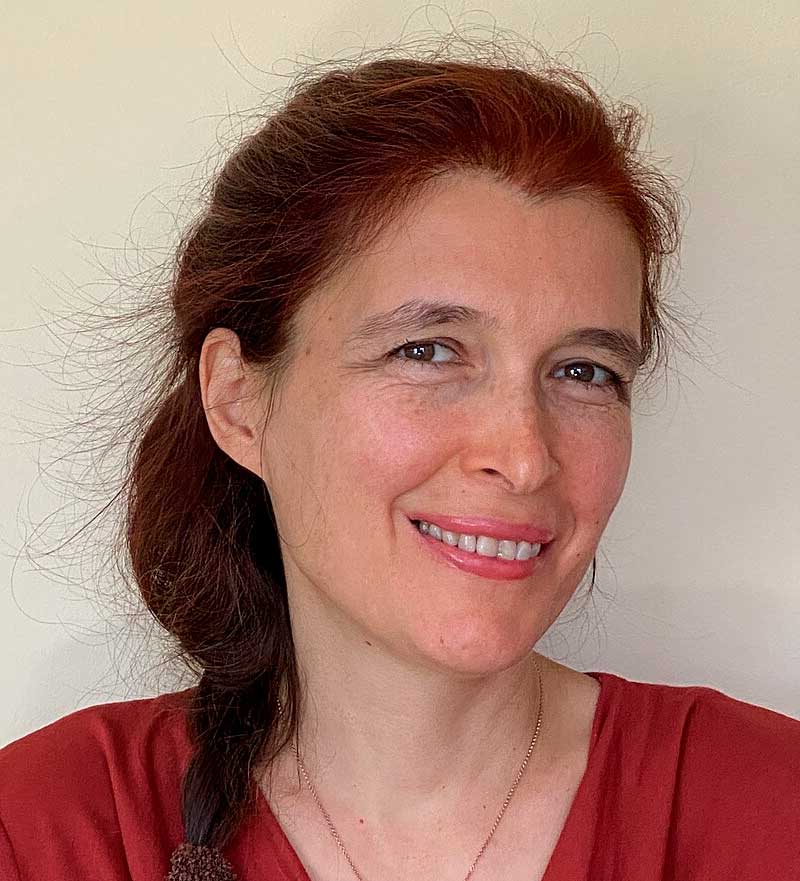 Vera Gorbunova: The issue of aging is indeed relevant today, and it affects everyone, not just political figures. This problem needs to be addressed for the entire society because birth rates are falling, there are more and more elderly people, and proportionally fewer young people. That is, the social security system, the pension system simply cannot withstand it. We can talk separately about extending life to immortality, but we need to at least make it so that people can live their lives as long as possible in good health. So that they can continue working, not retire because they have no strength left and their legs don't walk, but can continue to work productively and support themselves. And then the demographic problem can be gradually solved simply by improving people's health. Maybe people will live a little longer if they can stay healthy as long as possible.
The idea, like in science fiction stories of the 70s, that a person will live forever because one organ was replaced, another was replaced — this is, of course, nonsense
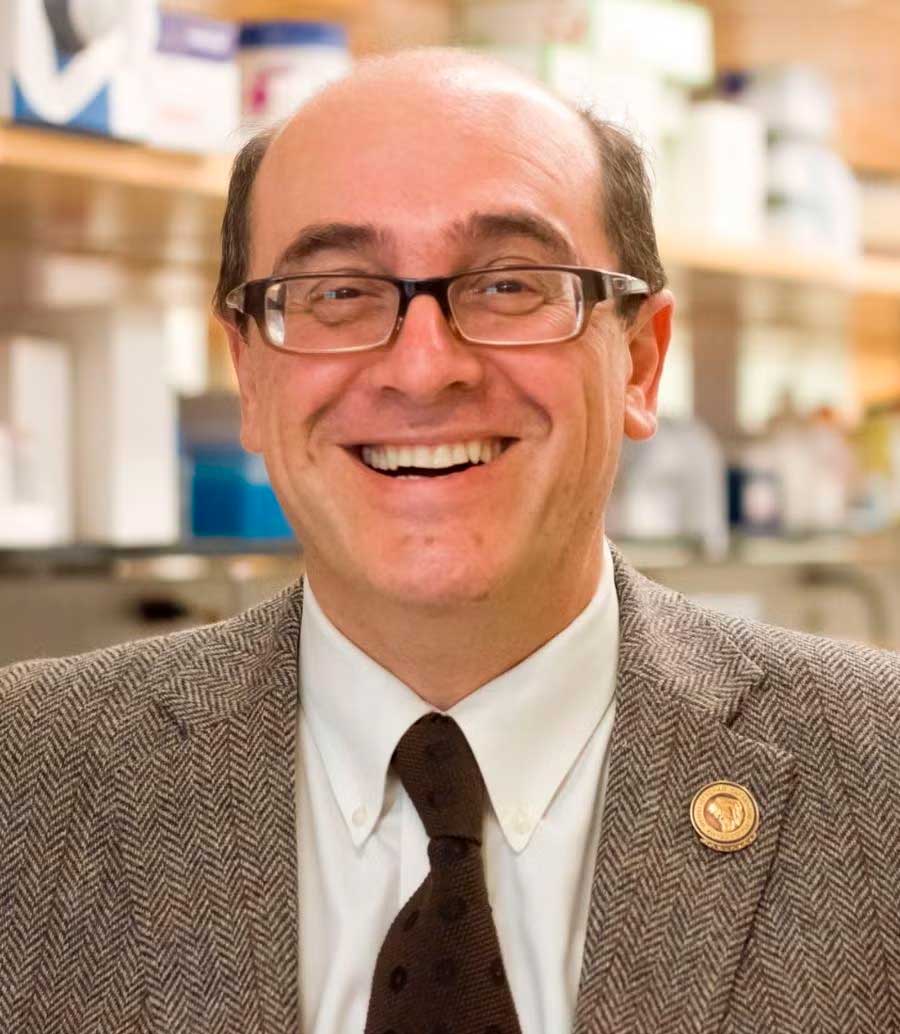 Alexander Kabanov: I listened to that conversation with half an ear, since it was all over the news and was actively discussed. To me, these were the words of not very intellectually gifted people, although educated. The first impression — they were just chatting about a hot topic. I'm not sure it's worth drawing too far-reaching conclusions from this conversation. On the other hand, regarding life expectancy, Vera Vladimirovna correctly said: we have been working for a long time, for at least a century, to combat certain serious diseases. And in general, to some extent, we are succeeding, life expectancy is increasing. For example, in people with cardiovascular diseases, life expectancy in the United States has increased significantly thanks to the fact that we started doing certain things preventively and preventing blockages, plaques, diagnostics have improved. The same with various types of cancer, thanks to the fact that we better recognize diseases, change our life practices aimed at not letting these diseases develop too quickly, in the end, learned certain means of intervention or treatment that save patients in situations that were previously considered hopeless.
Unfortunately, in the Russian Federation, life expectancy is not as high as, say, in Japan, it is quite low. And after the coronavirus, when many people died because of it, plus now there is a war, I think life expectancy will decrease. This is, of course, very bad.
Now about organ replacement. I don't work in the field of tissue replacement, but there has been great progress in this area, some organs we can replace. But the whole idea, like in science fiction stories of the 70s, that a person will live forever because one thing was replaced, another was replaced — this is, of course, nonsense. Therefore, the remarks that these leaders either deliberately or accidentally made into the microphone are devoid of any meaning. I'm afraid to intrude into Vera Vladimirovna's field, but humans have a lifespan limit. I communicate with other scientists in neighboring fields, particularly with Vadim Gladyshev, my very good friend, who studies biological clocks, how these biological clocks of aging are related to various diseases and what affects life extension. I don't know what the limit of human life is, but I think it's more than the current average life expectancy. And potentially, all else being equal, people can live longer.
Vera Gorbunova: Just when these events were happening <in China>, I was at a conference dedicated to aging and was speaking in a session on organ replacement together with Vadim Gladyshev. So this coincidence is quite amusing. Organ replacement is indeed a big progress. Individual organs, kidneys, bone marrow are replaced — usually to save people from imminent death when they have some serious diseases. When donor organs are transplanted, it is necessary to suppress the immune system of the person to whom they are transplanted. This is quite a difficult process, it is hard for a person to live with this because they become very sensitive to any infection. So donor organs are not a way to achieve longevity, we can dismiss that. It's not about someone being gutted and organs being taken out so someone can live longer. The discussion is about the possibility of creating artificial organs or creating organs from the patient's own cells. That is, you can take certain cells and, using various technologies, implant a grown organ from the patient's own tissues, which will not require suppression of the immune system.
This is indeed a big progress. Some organs are already being transplanted, they are printed using bioprinting. Quite simple organs, mostly something resembling a tube, like a trachea. They are trying to create a bladder, there are quite successful developments. But more complex organs, which have a complex internal structure, like the heart — no, progress has not yet reached that point. But such research is undoubtedly needed because it is significantly better than waiting for donor organs. Better because you don't need to suppress a person's immunity, you can take the patient's cells and grow organs from them. Can this really extend life? This is still science fiction. Ideally, it would be best to develop a system where the whole body can be maintained in better condition, rather than replacing organs one by one.
Alexander says — is there a limit? Well, the limit of human life is now considered to be 120 years. No one has yet surpassed it. There are centenarians — 110, maybe 117. There was one French lady who allegedly lived 122 years, although some people say this may not be true. But that's about the limit. Of course, the average life expectancy is now 70–80, and it would be wonderful if we could give all people the opportunity to live to 120 in good health. And there are quite a few developments in this direction. Unfortunately, funding does not always go where we would like, especially in America. Now the focus has shifted from such fundamental issues as aging to specific diseases. Therefore, it was quite amusing for us at the conference to hear that in Russia, too, it turns out, they are developing this. It would be generally good if more funds went to science than to war. That would be significantly better for all of humanity.
Evgenia Albats: And what is bioprinting? How is it done?
Vera Gorbunova: It's something similar to a regular printer, but in three-dimensional space, and instead of ink, cells are placed there, for example, from the same patient. Different types of cells for different organs and some biological polymer materials. A framework is created, cells are applied to it, and an organ is created, which then, of course, needs to be placed in some incubator where it will be bathed in a nutrient medium. If it's a heart, then there should be a flow of liquid, the heart should contract, it needs to be trained. Now they are indeed trying to grow organs from the patient's cells.
Alexander Kabanov: And the progress in this area is colossal — not in Russia, but in the world, in the United States, in Japan, in Israel. You mentioned the heart. Already for a long time, almost 20 years since these studies began, layers of cells are created, synchronized heart cells move in one specific rhythm, provide contraction, and can accordingly be increased. This is to varying degrees experimental. In some cases, there are experiments on humans, they are called clinical trials. This is indeed a significant area of research. But it has nothing to do with small talk, with that little conversation of two not-young men about how organs can be replaced, and so on.
In principle, it's great that all sorts of leaders around the world are starting to think about extending life. It would be better if people worried more about how to improve health and longevity than going to war
Evgenia Albats: In Moscow, among the nomenclature, life extension is an obsession. And primarily in Putin's narrow circle. There is a story about the creator of the company "Invitro" Alexander Ostrovsky, he supposedly created a laboratory that dealt with bioprinting organs. Ostrovsky was forced to leave Russia because this laboratory caught the eye of Putin's friends, the Kovalchuk brothers, and Ostrovsky was practically forced to sell the company, which was valued at about a billion dollars before the war, for two or three times less. The Kovalchuk brothers are specifically engaged in the issue of life extension. Putin's daughter, who is an endocrinologist, is also involved in this issue. Vladimir Putin himself takes this issue very seriously. They are completely obsessed with the idea of life extension. And therefore, between Putin and Xi, it was not a small talk, but a very serious conversation.
You said that bioprinting of the bladder is being created, some parts for eye and heart implants. But the question, as I understand it, is primarily in the brain. Suppose, with the help of organ replacement, such as the heart, it will be possible to extend life to 100 years and beyond. How long can the brain function for so long?
Vera Gorbunova: No one wants to live in a senile state. Therefore, the brain is what they want to preserve, but it is the most complex organ, replacing it is very difficult. Although there are also various developments, for example, introducing stem cells into the brain, but they still need to be placed correctly. That is, a lot of work is needed, and in principle, it's great that all sorts of leaders around the world are starting to think about it. It would be better if people worried more about how to improve health and longevity than going to war. Therefore, I'm only glad that more and more is being said about it now.
There is no more expertise
Alexander Kabanov: From 2010 to 2022, with a break for the pandemic, I regularly visited Moscow — received a mega-grant in the first wave and played a rather active role in this mega-grant movement, as a result, I quite often communicated with various types of officials, and so on. And at first, when journalists told me that the ruling elite had an obsession, an obsession, it seemed to me some exaggeration. Now I think it really exists by all indications. Well, for example, at some point they were clearly concerned about genetics. They believed that genetics would solve all problems. They have a maniacal idea from the very top: remember, they banned the export of genetic material, so to speak, of the Russian person. The late Konstantin Skryabin deciphered the "genome of the Russian person." All these things were of a nature, I would say, not very scientifically justified professional campaign. I have also been observing Soviet academic life for many years, I grew up in an academic and professorial family with long traditions. And one thing I can tell you for sure from my observation when I was still a young man. In the Soviet Union, there was a question of scientific expertise. There were some things on which experts could not express their opinion. But in general, there was trust in scientific experts. In Putin's Russia, there is no trust in scientists. People who are engaged in expertise say the things that they want to hear from them. This was even before February 2022, and after that, it intensified immensely. Well, you remember the "combat mosquitoes" and other nonsense. But the problem is that these things are presented in all seriousness. And if earlier scientists were ready to break through the wall with their heads or have a heart attack, proving the truth, now it is a completely different world. And in this sense, the contempt for scientists is very strong. Including the contempt of the powerful for their own Academy of Sciences. I clearly saw this in my two meetings with the "boss," as they call Putin.
Scientists are natural enemies of authoritarian populist rulers because they explain complex things, they cling to facts. They need the truth, not the general picture. And in this sense, we are experiencing a very bad period worldwide
In general, all this has a bad character. But I want to tell you that this is developing worldwide. Populists come to power everywhere. In our own country, the United States, populists are also in power, who also consider scientists unnecessary and harmful. That is, scientists are natural enemies of authoritarian populist rulers because they explain complex things, they cling to facts. They need the truth, not the general picture. And in this sense, we are experiencing a very bad period worldwide.
Vera Gorbunova: Yes, unfortunately, when populists come to power, all sorts of government programs are cut, and with them, the funding of science. Of course, biotechnology and some other industries, when a product is produced directly, can develop through private investments. But fundamental science relies only on the state, it requires money. Yes, this is taxpayers' money, but it is what moves us forward, what benefits all people, in the end, but the results do not come so quickly. Therefore, populist rulers say: oh, let's remove all this, it's not needed by anyone, we will save you money. But they lack a vision for the future, they need results by the next elections, and if there are none, then they don't need it. Therefore, the situation is so complicated.
Cancer Vaccine
Evgenia Albats: How do you assess the achievements of the "Invitro" laboratory and in general the biological laboratories dealing with the problem of aging in Russia? How well are they known to you? Or are they classified?
Vera Gorbunova: I know very little. I don't know if they are classified. Now it is quite difficult for Russian scientists to travel to international conferences. Recently I organized a Gordon Research Conference in Italy, we were supposed to have speakers from Russia, but they did not come because they did not receive visas. So maybe there is simply a communication difficulty.
Alexander Kabanov: I don't know the specifics. But I don't have much optimism because I observed the dynamics of the development of science in the decade before the full-scale invasion. And although there was some positive dynamics, in general, there was a significant lag. The full-scale war obviously made the situation much worse. Reorientation to China does not give Russia a competitive advantage because China focuses not on spreading scientific ideas, but more on itself. Therefore, I strongly doubt that there can be significant advances in Russia specifically in the field of biomaterials and all that.
I recently gave an interview to the Russian company RTVI. And they asked me about the state of affairs in the field of vaccines for cancer treatment, since the Gamaleya Institute made an announcement that they are starting trials on humans. They seem to have not yet started, just announced so far. But this is an achievement, thank God that this exists. There are now more than a hundred such trials worldwide. Some drugs are in the phase of third clinical trials, for example, "Moderna." This means that they are much closer to mass use in humans. The overall amount of technology that exists in Russia does not give grounds to believe that they will be at the forefront in general. This is my feeling.
Evgenia Albats: And the cancer vaccine — is it against cancer in general or against a specific type?
Alexander Kabanov: No, moreover, it is a personal vaccine. That is, one that focuses on a specific patient, where they determine, as I say for simplicity, "flags" of different colors that are present in this particular patient, their combination. And then they enhance the appearance of these flags so that the immune system starts destroying them. That is, it is a custom approach. It is probably impossible to create a universal cancer vaccine. And this approach is quite expensive for treating each patient, since the patient needs to be examined, a biopsy needs to be done, it needs to be determined what set of flags they have, then essentially create a nanoparticle that will contain the correct magnetic RNA tape that will encode these flags.
But further, now, we are talking about trials. In the USA, as I mentioned, phase three, "Moderna" from melanoma. Russians are also talking about melanoma, although they only have some results on mice, as I understand it. And now they are going to move on to testing on humans. These are actually quite advanced things. And the fact that Russia, one of the not very many countries, made "Sputnik," a vaccine against COVID — this is an achievement. For example, Israel could not make such a vaccine. Therefore, we should not consider that Russia is completely in the rear.
Responsibility of Scientists
Evgenia Albats: Now I have a question that will be difficult for both of you, but I cannot help but ask it. You both said that progress in this area is important, and it doesn't matter if autocrats and dictators or someone else does it. Are you not concerned about the ethical question that people, behind whom there is execution, who torture people, imprison them and kill them, these people will get the opportunity to live long? After all, it is clear that the first to use the fruits of these developments in the field of aging will be people who can pay. Putin, who is waging an aggressive war in Europe, is said to be the richest or one of the richest people on the planet. Vera Vladimirovna, what do you say?
Cancer vaccines are very expensive, but now a lot of work is being done to reduce the cost of these technologies. This will inevitably happen, and what we are working on will then be available to all people
Vera Gorbunova: I understand this question. Of course, nuclear physicists had a much more difficult moral dilemma, since they were developing weapons to kill people, or at least atomic technologies that were used to create weapons of mass destruction. Fortunately, for us biologists, at least those working in the fields of aging, cancer fighting, the question does not arise in this way. What we are developing is not intended for killing, on the contrary, we want to make people healthier, happier. To those who will use these technologies, I wish good health. It is probably wrong to think that some bad people will be the first to use them. Biological technologies, first of all, need to be worked out, the first to use them will probably be some volunteers who are ready to take such a risk, as always happens in clinical trials. Of course, cancer vaccines are very expensive, but now a lot of work is being done to reduce the cost of these technologies. And this will inevitably happen because even those who produce all this want to sell them to as many buyers as possible. Therefore, no, there is no such moral problem for me, because I know that what we are working on will then be available to all people.
Alexander Kabanov: In the Soviet Union, despite the fact that we lagged behind in biology, in some ways in chemistry, there were quite competitive, dangerous, significant programs for creating biological and chemical weapons. As for modern Russia, this is no longer the same caliber in terms of scientific potential and modernity. You see, it's one thing to create drones that kill including absolutely defenseless peaceful Ukrainians, and this is a crime that continues every day. Or the same "Caliber" missiles, based on old technologies, for which, by the way, they buy chips from China and all the rest. And another thing — some significant, outstanding, breakthrough works in the field of medical-biological research. In this sense, I agree with Vera Vladimirovna that this is a slightly different area.
When this criminal war began, I talked with my colleagues, friends, quite good scientists. I remember I had a conversation with one chemist, a young academician. And I told him: you understand, now everything will be closed, there will be no access <to world science>. And he tells me, well, we will work for the military. I tell him, if you think that the military has any real science, then you are deeply mistaken. During the Soviet period, I read a lot and saw some things. There, too, everything was quite fake. Closed science is generally fake. In science, there is such a requirement that you publish your works, they are either confirmed or refuted. And this is the mechanism of moving forward. And when you have everything closed, it is of quite a primitive nature.
What really worries me is not so much that Putin will live long. He has many crimes — political murders, war. Poisoning political opponents with chemical weapons, "Novichok" was a very serious watershed for me in my attitude to the regime and everything that is happening in Russia. But I am more worried not that Putin will live long. We are all under God, I don't think that he will have new organs transplanted, his brain transplanted, or something else. What worries me is that the authoritarian system, the criminal system has lasted for a hundred years, it has revived again. I don't know your personal history, but I think that in your family people suffered seriously from the events that took place both in Stalin's time and during the revolution. In my family, eleven people were killed. And the fact that the current regime has practically slid into fascism — this longevity worries me especially. Well, and scientists — they live, do research, publish their scientific works, should publish and should be heard. Because this is part of the scientific process. Russia is a very small percentage of world science. In terms of publications, it's 2%. In terms of influence — much less. But the people who work there, study, should have access to world science. And what they are trying to do now, declare scientists foreign agents — Konstantin Sonin* was declared a criminal, Oleg Itskhoki* was just declared a foreign agent — it's funny, on the one hand, but also very sad because there is actually a massive stupefaction of people. My wife asked me why I decided to give an interview to a Russian TV channel. Because I was talking about healthcare, and I decided that they are trying to isolate people from a normal conversation and invent all sorts of ridiculous things. It seems to me that it is necessary to maintain contact precisely on an intellectual level. Of course, this is not a simple question. But still, it seems to me that people need to be shown that there is a normal world.
Up to a hundred without aging
Evgenia Albats: When will it become real to extend people's lives to 100 years? What time are we talking about?
Vera Gorbunova: I think that in the next, probably, ten years we will achieve such progress that people will be able to live, maybe, up to a hundred. There is a whole revolution happening in this field now. First of all, everything was initially researched on fruit flies, on flies, on mice. A sufficient number of drugs have been found that can increase life expectancy by 10–20% in mice. For a person, 10–20% is just 100 years instead of 80. Special progress has been made in the development of aging biomarkers. Because to move from mice to humans, you need to conduct a clinical trial on humans. And people live long. Develop some drugs and wait for people to die of old age? Therefore, biomarkers have been developed, that is, it is now possible to measure a person's biological age. Just as our mentioned collaborator Vadim Gladyshev is very actively engaged in this. This field was first developed by my good friend Steve Horvath. Using various machine methods, they were able to integrate information from human DNA of various metabolites. All this together gives an idea of biological age. You can measure this age, for example, before the start of a clinical trial — people take some drug for six months. Then measure again. And in six months you can get an idea of whether people really slowed down aging during this time or not. Such clinical trials are just beginning now. For about 2–3 years, there have been more and more of them, so I expect that in the next 5–10 years there will be scientifically proven ways to extend human life. But again, we are talking about modest results — 5%, 10%, but this is becoming possible and scientifically provable, it can be quantified. And what is also very important, among these drugs that were tested on mice, many are very cheap. Therefore, there is no need to say that this will be only for the richest people. No, some of these drugs can be bought for a few dollars. The main thing is to prove that they work and develop the correct way of application, the correct doses, then everyone will be able to take them.
Evgenia Albats: And what are these drugs?
Vera Gorbunova: It is still being tested. But there are quite a few developments, various small molecules, some dietary supplements. That is, you can go to a pharmacy, there are many drugs labeled "against aging." This is not scientifically proven, but some of these supplements do work. Now, with the help of new methods, it is possible to prove which ones exactly. Some of them in serious universities, in serious hospitals are already beginning to be tested on patients and healthy people. At 60–70 years old, people come, take drugs, their biological age is measured, everything happens under the supervision of doctors. Many of my employees, colleagues are just engaged in this. One of the drugs we are testing and which is really very affordable is called fucoidan from brown algae. These algae are eaten by people, it is just part of the regular menu in Japan, in South Korea. As we know, the average life expectancy there is one of the highest, these algae are easily accessible. But we isolate a special drug and are now going to test it. In mice, it extends life by 15%. In addition, inflammatory processes are reduced in them. The substance is easily accessible, brown algae float in large quantities in the ocean. Therefore, we need to look at this optimistically. No one is talking about achieving immortality in the next few years, but it is possible to improve the health and life of people, maybe up to 100 years.
Evgenia Albats: What will be happening to the brain at this moment?
Modern science in the fight against aging is engaged in finding, accurately understanding the processes that trigger aging of all organs, and then developing methods to slow down this entire mechanism
Vera Gorbunova: This is very important. Fucoidan drugs from algae slow down aging throughout the body. Because the brain is a component of the whole system. When we talk about organ transplantation, yes, you can transplant a heart, but the brain is a problem, with age dementia sets in. A systemic approach is needed. If you start with people who are still healthy, around 60 years old, mainly preventive measures are needed. When no organ has yet failed, and the goal is to slow down aging, slow down the key processes that determine the aging of all organs, including the brain. Therefore, modern science in the fight against aging is engaged in finding, accurately understanding the processes that trigger aging of all organs, and then developing methods to slow down this entire mechanism. Not separately the eyes, the heart, and so on, but all at once. And this is becoming possible now.
Evgenia Albats: And this is possible in the next 5–10 years?
Vera Gorbunova: Yes, a small, modest achievement. But if people start to live on average up to 100 years, I think this is a wonderful achievement. While I am not talking about scientific fiction — up to 200 years. This will probably require more time, maybe another twenty years.
Alexander Kabanov: But I would say this. Imagine an additional two years of average life expectancy in a country with a population of 100 million. Multiply two years by 100 million, and you get 200 million years. We should look at this and in this way. These are big changes for humanity...
Reference
Vera Gorbunova — professor at the University of Rochester, director of the Center for Aging Studies. Engaged in the biology of aging and the related topic of resistance to various diseases associated with aging, including cancer. Graduated from St. Petersburg University, completed her doctorate at the famous Weizmann Institute in Israel, which was recently heavily damaged during the war with Iran.
Alexander Kabanov — professor at the University of North Carolina at Chapel Hill (USA), director of the Center for Nanotechnology in Drug Delivery. A well-known businessman who has created several pharmaceutical companies. Author of 350 scientific papers with several tens of thousands of citations. Most of the research is related to cancer treatment.
Video version
* Evgenia Albats, Oleg Itskhoki, Konstantin Sonin are declared "foreign agents" in the Russian Federation.