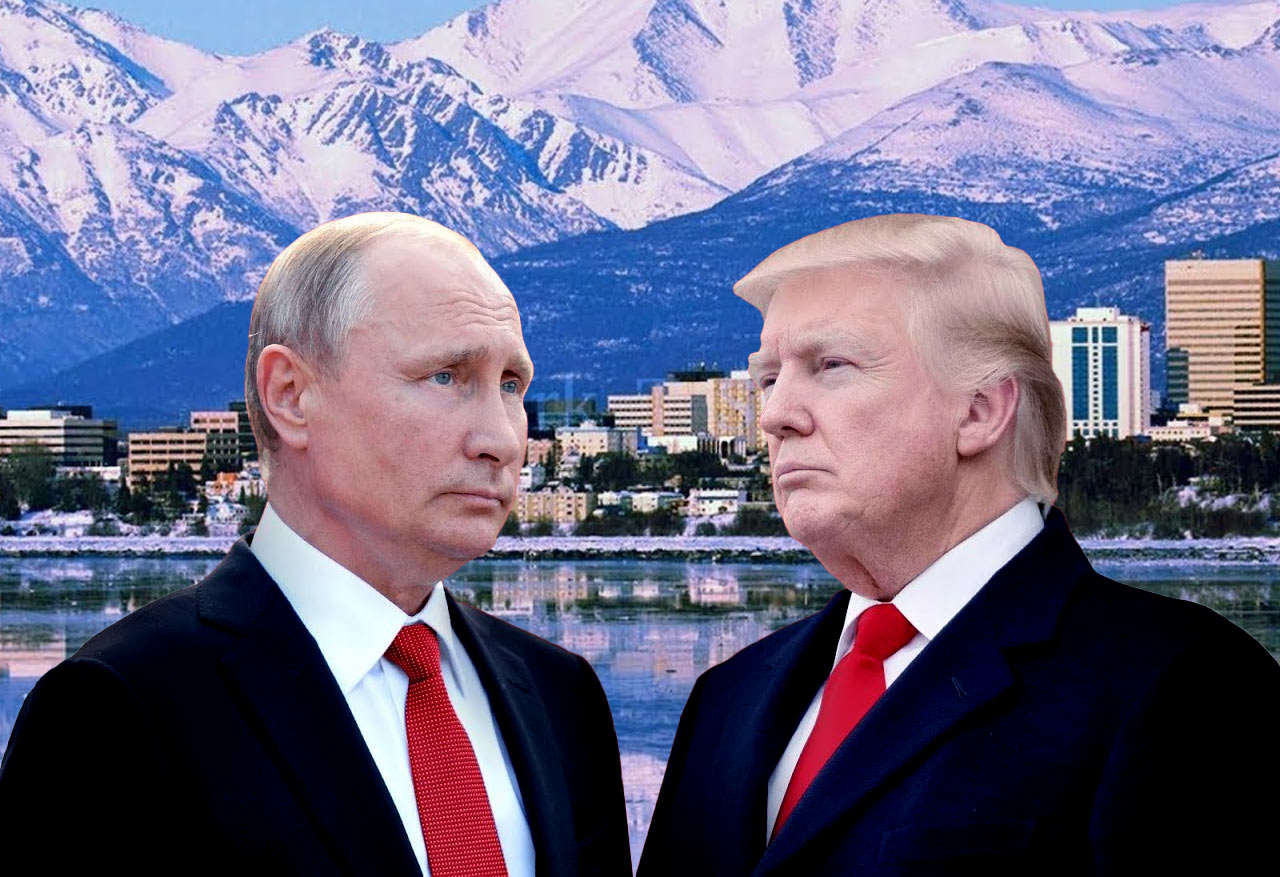
Evgenia Albats*: Gideon Rachman, a famous columnist for the Financial Times, compared the upcoming meeting between Trump and Putin to the Munich Agreement, when representatives of the great powers decided the fate of Czechoslovakia without Czechoslovakia, effectively handing it over to Hitler. He drew a direct parallel: now the fate of Ukraine will be decided by Donald Trump and Vladimir Putin. Since January, Putin's main task has been to buy time to seize as much territory in Ukraine as possible, but without angering Trump and prompting him to impose sanctions on Russian oil. And judging by what we are observing, Putin's bluff has succeeded once again. Special envoy Whitcoff, after meeting with Putin in the Kremlin, told Trump that Putin was ready to negotiate and even seemed willing to exchange territories. The Kremlin now denies that Putin is ready to give the Ukrainians the Zaporizhzhia and Kherson regions. Could the upcoming meeting in Alaska be another bluff?
Double Language
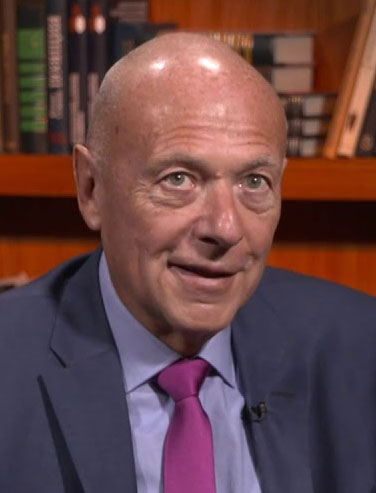 Andrey Kozyrev: I hope so, I think it will all end in the same comedic drama. Unfortunately, the comedy takes place against the backdrop of Russia's bloody aggression. The fact is, Whitcoff doesn't understand Russian and is not a diplomat at all, he has nothing to do with foreign policy. He is completely unable to understand the double language Putin speaks. And of course, he understood everything completely wrong, as is being written now, and could not understand it otherwise. Putin simply wrapped him around his finger, Whitcoff called Trump and said that Putin's proposals seemed wonderful to him. In reality, these are outrageous proposals. There is no exchange of territories, there is an attempt by Putin to gain a reward in the form of additional territories that he cannot, for now or ever, capture by force. Trump is an emotional person, we know this, he sincerely wants to achieve peace, he needs success. And he seized on this and scheduled a meeting with Putin. For Putin, the very fact of meeting with Trump is a big political win both domestically, although it is not so important there, and abroad. Even Xi Jinping will feel much better if Putin is not just a pariah in the civilized world, but a person negotiating with Trump. In short, I would be very happy for America and for Trump if this matter somehow fell through, because nothing serious will be discussed there, the parties have no idea about Putin's real intentions. I hope the White House and Congress understand this. But I think this is an unpleasant, unnecessary situation, especially bad for America, that it is Alaska. Because Alaska falls under Putin's definition of the borders of the so-called Russian world, as it was once a territory belonging to the Russian Empire. It sounds like a joke, but it casts an unpleasant shadow, and many are talking about it now. So it turns out that Putin will come to America, but to a territory that falls under his criterion of territorial claims. This is also bad because all diplomatic rules are violated. Usually, to create good conditions for negotiations, it is customary to refrain from aggressive actions, from bombings, which Trump is particularly allergic to. Putin does not do this, not even the most elementary. Of course, this is monstrous arrogance, from a professional diplomatic point of view, it is simply rudeness. But he behaves this way on purpose because he believes he is speaking from a position of strength. Although, of course, the United States is an elephant, and Putin is a small dog, but the small dog barks at the elephant.
Evgenia Albats: How did the idea of holding a meeting in Alaska even come about? Why?
Andrey Kozyrev: Probably because there is nowhere else. Good countries don't want it. I think even Switzerland would hold its nose if it were offered such a meeting. Because Putin is an untouchable person. For some countries, it is simply impossible because they are participants in the International Court of Justice in The Hague, which has issued a warrant for Putin's arrest.
Sanctions and Tariffs
Evgenia Albats: Putin suddenly agreed to negotiations after it became real that Trump was imposing a high tariff on goods from India because, as Trump said, it buys Russian oil and thus finances the war. This reminded me of the 2011–2012 situation with Iran when Iranian banks were cut off from SWIFT and not only was there an embargo on Iranian oil, but the Americans also agreed with European countries to stop buying oil from Iran. And to some extent, it worked. In 2012, Iranian leaders announced the cessation of uranium enrichment. Fadi, you are an oilman and understand how important this is. Was Putin really scared that India, which buys, I think, 37% of Russian oil from the total volume, would stop doing so?
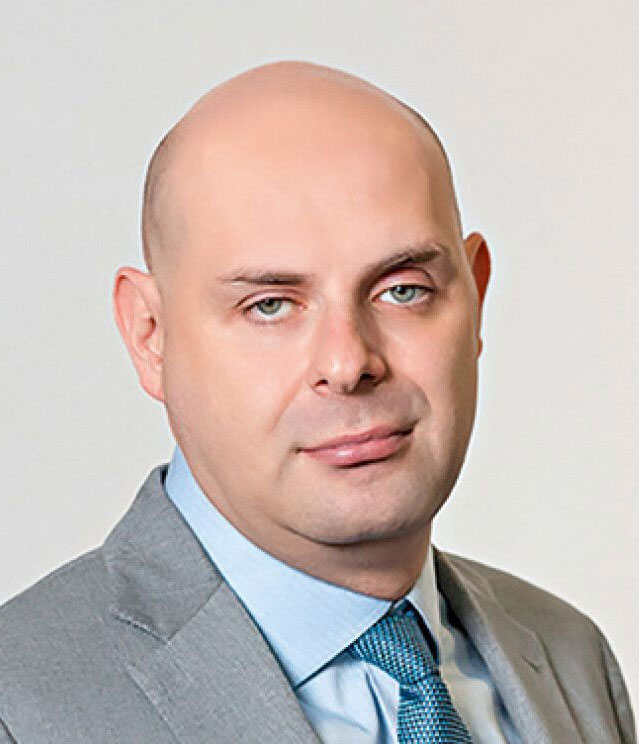 Fadi Khraibe: There is a lot of talk in the press now that India is being unfairly punished. You said correctly, India imports 37% of Russian oil, and China imports 47%. But it is necessary to distinguish the delivery methods and how much influence can be exerted on them. Today, China imports about 2 million barrels a day from Russia, with half of that going through pipelines. These supplies cannot be stopped. Historically, China imported very large volumes of oil from Russia until 2022, I think, one million six hundred thousand barrels a day. So imports have grown, but not significantly. India imports one million seven hundred thousand barrels a day, all by sea, by tankers, there is an opportunity to influence this oil. At the same time, until 2022, India practically did not import oil from Russia, buying from Iraq, Kuwait, the USA. The second factor is that India processes most of this oil and exports it as petroleum products to various markets and makes money on it. That is, India practically earns on the discount it receives by buying cheaper Russian oil, processing it, and reselling it expensively. This is much closer to our understanding of making money on war than in the case of China, which historically bought this oil and uses it for its own consumption. The fact that India is a much less significant trading partner for the US than China also affects why they started with India. But there are still objective facts showing that for India, this is an opportunity for extra earnings, not what is called historical economic relations. Indeed, President Trump signed an order that from August 7 introduces 25 percent so-called counter tariffs on all Indian products, which are not related to Russian oil. And from August 27, additional 25 percent tariffs, so-called duties, sanctions against importers of Russian oil, are supposed to come into force under the same order. Can Trump cancel them? He definitely can, at any moment.
What does this mean for Russia? Today, according to various estimates, oil exports to India bring the Russian budget about 1.6–1.7 billion dollars a month. If it can be completely stopped, these are significant losses, but not fatal. Putin will always have the opportunity to simply print money and continue the war and his aggression. But it is a significant blow. Unfortunately, oil is a commodity, a fungible product, and if India stops buying Russian oil and starts buying it somewhere in the Middle East or the USA, someone else will be found who will buy this oil and somehow make money on it later. Probably, the discount will increase. At some point, it was one and a half dollars, but after the announcement of new tariffs, it rose to 5. Maybe it will rise to 10 dollars, and so on. But from an economic point of view, this will not have a big impact on the Russian budget. And even more so on Putin's ability to continue aggression against Ukraine, unfortunately. Therefore, I perceive this more as a symbolic gesture from Trump, that he is ready to take some actions. But he, unfortunately, has a very limited economic range of levers that he can use against Putin.
It was not fear of sanctions that made Putin go to negotiations. If there was fear, we would see some concessions. But today there are no concessions from Putin
Evgenia Albats: American media write that in July, Russian budget revenues from energy products decreased by 27%, that Russia has already spent 80% of the National Welfare Fund. So Putin is still bearing some costs. But do you think that fear of sanctions is not what made Putin go to negotiations?
Fadi Khraibe: I don't think fear of sanctions made him go to negotiations. If there was fear, we would see some concessions. But today we do not see any concessions from Putin. As for the reduction in Russian budget revenues, all the figures were before secondary sanctions against importers were introduced. It could be a seasonal factor, it could be a factor of expected price reductions in the market. It could just be manipulation by companies shifting their budget obligations from one month to another. I wouldn't look at this as fundamental changes. The fact that 80% of the stabilization fund has been spent, yes, but it was spent at the time of adopting the budget for 2025.
It seems to me that Trump is trying to show that he is ready for some decisive actions. Especially against the backdrop of the last two months, the horror that is happening in Ukraine, he needs to show action. But I don't think Putin was afraid of this. Over the past three years, it seems, Putin has formed the opinion that no sanctions will cause enough damage to the Russian economy to make him back down.
Evgenia Albats: Then why did he suddenly agree to negotiations? What happened?
Fadi Khraibe: I do not exclude that there was indeed a misunderstanding of his position from the American side. My impression is that Putin has always been ready to meet with Trump. And Trump was not ready to meet because there were no acceptable proposals. It seems that some proposals appeared, which were either misunderstood or Trump decided that he could push these proposals from the other side, from the Ukrainian side, I don't know. The question is rather why Trump agreed, not why Putin decided to meet.
What's on Trump's Mind
Evgenia Albats: In July, Russian troops occupied another 504 square kilometers of Ukrainian land. And they continue to advance. In just one month of July, the Russian side fired more than six thousand five hundred missiles and UAVs at Ukraine. Lukashenko, in an interview with Simon Shuster, said that the Donetsk and Luhansk regions are traditionally Russian lands, but the Zaporizhzhia and Kherson regions, Lukashenko said, are traditionally Ukrainian lands. And he hinted that perhaps Putin might give them up for the Donetsk and Luhansk regions. In the Donetsk region, Russia would need to take Kramatorsk and Sloviansk. You, Yuri Evgenievich, said it would take another year. And since Zaporizhzhia and Kherson are generally unclear when Russia might fully occupy them, Putin allegedly might give up these regions. In your opinion, why is Putin going to these negotiations? And is he?
No talk of peace was heard in Moscow. And no real actions that could confirm this signal were taken
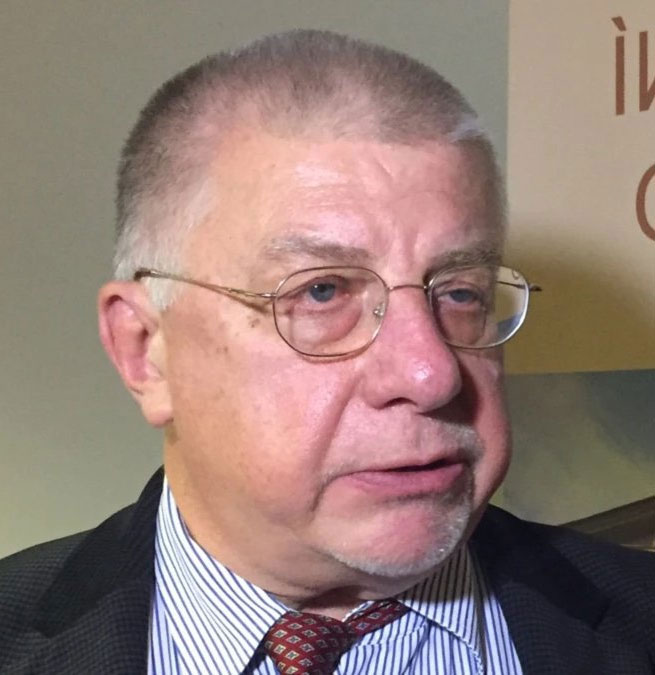 Yuri Fedorov: This is generally quite understandable, as colleagues have said. Putin is very flattered to meet with Trump, the President of the United States. The question is different, in my opinion. Why did Trump agree to this strange meeting? There are many mysteries in this story. Out of the blue, when the situation becomes quite tense and there are only a few days left before the implementation of the ultimatum that Trump set for Putin, suddenly Whitcoff finds himself in Moscow. I do not believe that Moscow wants peace and somehow conveyed this to Trump. In fact, no talk of peace was heard in Moscow. And no real actions that could confirm this signal were taken. It would have been necessary to somehow reduce the intensity of hostilities. It would have been necessary to shut the mouth of Russian propaganda, including Medvedev, for his typical but quite monstrous statements, and so on. That is, the signals should have been confirmed by some actions showing that they are really ready to discuss something similar. Trump falls for this bait, falls into this trap, and is ready to rush headlong to Alaska, to Anchorage to meet with Putin. A very strange story, agree. The only explanation I have is that Trump really did not want to implement his ultimatum, to impose sanctions. He just grabbed at the straw that Putin extended to him. Calling what Putin proposes, or possibly proposed, and what Whitcoff misunderstood, what Lukashenko lied about, the exchange of the Donetsk region for the withdrawal of Russian troops from Zaporizhzhia and Kherson cannot be called an exchange, undoubtedly.
I interpret the events as follows. Trump really wants to make some kind of deal with Russia, with Putin, despite the fact that Putin is a character who can cause nothing but disgust in any normal political figure in the West. For some reason, Trump needs this deal. Why, I do not know. He has been talking about this deal since his arrival in power, his arrival in the White House, and something stands behind it. What? The only explanation I have is that this is simply a consequence of the logic characteristic of American politics under the current administration: maybe it will be possible to tear Russia away from China. For this, you can sacrifice Ukraine, you can sacrifice anything, because China is the number one problem for the United States. Or I just cannot understand and cannot explain in more or less rational terms the policy of the United States under the current administration.
Evgenia Albats: Yuri Evgenievich, you said that the Russian side does not have the strength to conduct an offensive in both the Donetsk and Sumy regions. That Putin needs a break to build up weapons, recruit people. Judging by the fact that the contract price is constantly rising: the demand for contract service is falling and therefore they are increasing the offer. So Putin himself needs this break. Do you not allow for such a possibility?
It is not so easy for Putin to decide on peace negotiations and stop military actions even for a while. Because this is fraught with very serious troubles with the "party of war"
Yuri Fedorov: I allow that in Moscow somewhere near the Kremlin or in the Kremlin there are indeed people who believe that it is necessary to stop this war for some time and prepare for the next round of hostilities, it is unclear where, either in Ukraine or against the Baltics. Now the problem of Azerbaijan arises. Maybe they want to send troops there too. Yes, such a point of view among Putin's entourage may exist. There are talks that Dmitry Kozak, one of Putin's old friends and a person close to him, has lost the master's favor and is about to be fired because he insists on stopping this war and somehow finding a way out of the difficult situation. But at the same time, there is another group, very influential, and as I understand it, this group includes many senior military officials who insist that the war must be fought to victory and that such opportunities exist for Russia. Mobilization needs to be announced, blah-blah, something like that. Therefore, it is not so easy for Putin to decide on peace negotiations and stop military actions even for a while. Because this is fraught with very serious troubles with the "party of war".
Therefore, I think that there was some sequence of mistakes, starting with someone misunderstanding Lukashenko, Whitcoff misunderstanding Putin, Trump possibly misunderstanding Whitcoff himself. And as a result, there is an extremely unpleasant story that legitimizes Putin, turns him into something acceptable for a number of political leaders who doubted whether it was worth dealing with him. But since Trump himself is negotiating, it means you can deal with Putin. Now let's see what will happen at this meeting, more precisely, what could be. In my opinion, Putin will not make any serious concessions. There can be no talk of withdrawing troops from the Kherson and Zaporizhzhia regions. This is just a trap or misunderstood words. So far, the situation looks as follows. Putin says: let Ukraine give me the Donetsk region. This is a completely understandable position because it is very undesirable to storm the Kramatorsk-Sloviansk agglomeration. Because it is unclear whether it can be done with the available troops and when it can be done. In general, you give it up, and I may stop military actions in the Zaporizhzhia and Kherson regions for a while. But he is not going to give them up at all. At least because he will immediately say at the meeting in Alaska: you know, the land corridor to Crimea passes through the Zaporizhzhia region. How can I give this up? It turns out that Trump made a gross mistake.
Normal Heroes Always Take a Detour
Evgenia Albats: Andrey Vladimirovich, you are probably the only one among us who understands how all these back-channels, unofficial channels work. For some reason, the Americans established such a channel through Lukashenko. And it's not only that Lukashenko said it in an interview, he won't lie for long. But this was confirmed by the American side, both in the White House and in the State Department. Do you understand why this was done? And now we see a meeting in Alaska. Do you somehow connect this?
Lukashenko is a toy in Putin's hands, negotiating with him is more than unprofessional. Especially on such matters that directly concern Putin
Andrey Kozyrev: If you can't solve a problem directly, you take a detour. Moreover, let's be honest, Whitcoff is not the only unprofessional diplomat there. As far as I understand, professional diplomats are not involved in anything serious. They are not listened to. You see, this is also a situation I have encountered many times elsewhere. When professionals are not listened to because they don't want to, because they speak tediously, because their explanations are very long, although otherwise, you can't explain, you understand? There are things that require detailed explanation, especially in such a complex situation. But there is no one, you see? Trump is busy with other things, he generally doesn't like long conversations, and then he is sure that he has charisma, some inexplicable magical success. In short, I'm not saying there are no professionals there, I'm saying they are not listened to. Decisions are not made based on their recommendations, or they are forced to give recommendations that should please the top, otherwise, they will be fired, which we are seeing now throughout the administrative structure of America. This explains the attempt to find a bypass maneuver, to cut a corner. And who appeared immediately, of course? Lukashenko. But Lukashenko is a toy in Putin's hands, he exists only because Putin holds and helps him. Negotiating with him is more than unprofessional. Especially on such matters that directly concern Putin. This is absurdity from absurdity, that Putin will consider Lukashenko or share secrets with him. Putin deceived Lukashenko or simply told him what to say, and he plays this role.
I can also say from my own practice that informal channels usually fail. It is a rare case when they are of any use. The Soviet Union's ambassador to the USA, Dobrynin, somehow managed to establish personal relationships and discuss very delicate details. Despite the fact that Foreign Minister Gromyko was very jealous, his influence was enormous in Moscow. Brezhnev listened to Dobrynin, Andropov listened to him, his recommendations were taken seriously. But this was not a back channel, it was a direct channel. And this is always better than creating informal channels because they create confusion, mutual distrust, it is unclear who says what. We had such a moment in our time with Japan when some people were negotiating, it was unclear on whose behalf, and it created terrible confusion then.
I understand that Trump needs to save face to some extent. He promised sanctions, made threats, he thought they would work. In fact, he is scared to impose such sanctions. Small countries run to him and somehow negotiate. But this does not work with China, it does not work with India, it does not even work with Europe, and it does not work with Putin, who is used to threats, and almost none of these threats from the West work.
There is another reason why Putin is happy to go to Alaska. One of his strategic goals is to humiliate, undermine the influence of the West, change the entire world picture. He likes the situation where America can look stupid. He will come there now, be as rude as possible, leave, and arrange another bombing that night. And he will be happy. Happy not even that he killed someone else in Ukraine, but that he managed such a wonderful maneuver - to deceive, humiliate, discredit America. Because if he discredits America and NATO, which he is already successfully doing, then everything will fall apart during his next aggression, for example, in the Baltics. And who will then believe in American guarantees or NATO's fifth article? Putin has shown that he can disregard, that he will get away with everything.
How to Stop Putin?
Evgenia Albats: Fadi, you know the situation in Ukraine and follow the situation in the Russian economy. Does the West really have no levers of influence on Putin?
In Russia, there is a market economy, private entrepreneurship, and like any market economy, it adapts to the situation. And sanctions create an opportunity for many people to earn super-profits through smuggling, money laundering, etc.
Fadi Khraibe: Economically, those that would force Putin to stop the war - no. Let's take the example of Iran, which has been under sanctions for over 20 years. It is a much less economically developed and diversified country than the Russian Federation. But this does not stop either the nuclear program or the support of Hamas, Hezbollah, the Houthis, and all of Iran's aggressive actions in the Middle East. The West still does not understand what distinguishes Russia from the Soviet Union: in Russia, there is a market economy, private entrepreneurship, and like any market economy, it adapts to the situation. And sanctions create an opportunity for many people to earn super-profits through smuggling, money laundering, etc. Therefore, today in Russia there is already a whole cohort of businessmen who will simply resist with all their might stopping the war and lifting sanctions because they feed on this.
Evgenia Albats: Then what option does Ukraine have?
Fadi Khraibe: Ukraine's only hope is that finally, European and American allies will start providing all the necessary weapons, all the necessary assistance that will allow Ukraine to withstand and stop Russia's advance.
Evgenia Albats: But the latest data I read about Ukraine says that the number of cases of desertion from the Armed Forces of Ukraine has sharply increased. That the Ukrainian army has colossal problems with people. You will provide weapons, but someone has to fight with these weapons. Not only can they not recruit, but people are simply fleeing. Local Ukrainians say that the level of morale in the Armed Forces of Ukraine has also fallen significantly, people no longer believe in the possibility of victory. Recent polls show that two-thirds of surveyed Ukrainians want the war to end as soon as possible. Understandably, this war has been going on for three and a half years, people are exhausted to the limit. What option does Zelensky have?
Yuri Fedorov: We will have to talk about things that are not very pleasant for Ukraine. There is a political crisis in Ukraine. The authorities have lost the trust of society due to a number of reasons. Firstly, corruption, which has crossed some acceptable boundaries. Secondly, the authorities have not been able to mobilize the country for war. The picture is roughly as follows. There is an army that is fighting, there are volunteers who help this army. There is power in the broadest sense of the word, deeply corrupt. And there is the rest of Ukraine, these are people who, on the one hand, are tired of the war, on the other hand, do not want to fight. They do not want to fight largely because the war is perceived as the defense of this power. Are there any chances? I do not presume to advise anyone in Ukraine, but in my opinion, the only possibility is to restore trust, for this, serious changes are needed, both political and in power. The creation of a government of national trust or a government of national salvation, as you wish. One of Zelensky's gross mistakes was that he did not follow the path that many countries take in a complex military situation. In Israel, several times a national unity government was created. When internal problems, internal disagreements were left outside, were set aside, and practically all political forces assisted each other in saving the nation, saving the country. Something similar happened in Great Britain during World War II. Other examples can be given, but for Ukraine, in my opinion, this was simply necessary. But nothing like that. Moreover, it is known that sanctions have been imposed against Petro Poroshenko. This is something beyond common sense. Because sanctions can be imposed against a foreign citizen, but against a citizen of one's own country?..
Evgenia Albats: I think Ukrainians will sort this out without us. They have managed significantly better than we have in Russia. Zelensky, despite everything, is an undisputed hero, at least in the eyes of the entire West. He managed to establish working relations with the European Union, he is accepted, he is respected. I think Ukrainians will figure it out themselves.
Let's summarize. If I understand correctly, all three of you believe that the meeting in Alaska, if it takes place, will not bring any results. Or do you also think it will be a monstrous precedent when the fate of Ukraine is decided in the manner of the Munich Agreement, that is, Ukraine and Europe will be excluded from the negotiation process?
The way out is to give Ukraine powerful weapons and force Putin to start suffering defeats on the battlefield. Then he will sing a different tune and then start serious negotiations
Andrey Kozyrev: I think there is a risk. Trump may follow Putin's lead, discuss some option with him, and the very discussion of this option will cause great damage. Then he will say, as has happened before, that it is Zelensky's fault, he does not want to concede. I do not think Zelensky will sign anything similar, but the attempt to pressure him will most likely be made. This is in Trump's spirit. But in the end, there will be no real result, everything will return to square one, and nothing will remain but to give weapons to Ukraine. And there is no other way out. The way out is to give them powerful weapons and force Putin to start suffering defeats on the battlefield. Then he will sing a different tune and then start serious negotiations.
But most likely everything will return to where it started, and it will be an uncomfortable, humiliating situation for America. It will be a blow to the international community because there is no other contender for leadership besides America. It will be a pity if America, as the leader of the free world, continues to lose this status, and consequently, the entire free world will lose trust, strength, influence.
Evgenia Albats: Fadi, do you think Trump will be able to seat Putin and Zelensky in the same room?
Fadi Khraibe: Hope dies last. All of Ukraine is very hopeful that the processes we are seeing will lead to a just peace. Or at least to a just truce. But I agree with Andrey Vladimirovich that at best we are now seeing just maneuvers from both sides, which for Trump are more oriented towards the domestic audience, and Putin wants to show that he is no longer in isolation. This is at best. At worst, which everyone fears, Trump will simply "sell out" Ukraine and try to push through an unjust decision, just to stop the war.
But I would also like to say a few words about recruiting people into the Armed Forces of Ukraine. You know, this is probably a reflection of the hope that remains in Ukraine. Give people hope, and I am sure people will go to fight. But when people see and feel that America is turning away from them, that Europeans are taking a talkative position and practically giving nothing significant, of course, people do not want to go and lay down their lives on the front for nothing. But if Ukrainians understand that both America and Europe are ready to give everything necessary for victory or at least for Ukraine to be able to stop Russia's aggression, then I think there will be people who will go to the front.
Yuri Fedorov: I assume that the meeting in Alaska will end in nothing. They will meet, talk. Then they will try to make it look like everything is more or less normal. They will say some routine words at a press conference or press approaches - I am not even sure there will be a joint press conference. This, I believe, is the most favorable outcome. But another option is possible. It is possible that for some reason Trump will decide to make Zelensky a scapegoat and demand Ukraine's consent to a de facto capitulation. And whether Zelensky will have the strength of will, the courage to refuse, to say no - I do not know.
Evgenia Albats: And stopping the bombings? Can they at least agree to stop bombing?
Yuri Fedorov: This is a very bad option for Ukraine, <which is just successfully hitting targets deep in Russia>. The air war that Putin unleashed did not achieve the goals he set for it. It was not possible to destroy Ukraine's energy sector. It was not possible to affect the mass consciousness enough for society to demand the leadership to immediately cease fire. Most of the population in surveys spoke about the fact that in one way or another the so-called European-Ukrainian plan is acceptable, but neither Trump's plan nor Russia's plan, their settlement parameters, are acceptable. Yes, Trump can blackmail Zelensky with the cessation of arms supplies. I do not think that if Zelensky can answer "no," Trump will decide to leave Ukraine without weapons, without intelligence data, because he will take responsibility for the deaths of tens of thousands more people. Whether he will decide or not, I do not know, but he may try...
Video version:
* Evgenia Albats, Andrey Kozyrev, Yuri Fedorov are declared "foreign agents" in Russia.
Photo: CNN.