Evgenia Albats*: Evgeny, thank you very much for publishing this book. Of course, I want to ask you about how you met Alexey Navalny** and how you started photographing him.
 Evgeny Feldman: I can honestly say, this is the project of my life. I thought about this book for many years, imagined it, prepared it, collected it in my mind. And this summer we finally put it together and are ready to publish it. It turned out even better than I expected, even more precise, even more lively. Worthy of Alexey, that's how I formulated it for myself.
The first time I photographed Alexey was in June 2011 in the Khimki forest. The «Antiseliger» camp was held, all the protest forces gathered there, set up tents, held speeches and seminars for each other and for activists for several days. This was probably Alexey's first public appearance in a new role. I was 20 years old at the time, and I hadn't seen him before. In the months leading up to this, he had become really noticeable, started attracting attention, calling «United Russia» a party of crooks and thieves. At «Antiseliger» he appeared as a very popular person. When he walked around the camp, a crowd of people followed him, everyone wanted to say something to him. I had a rather poor opinion of him, for a silly reason. By that time, I had been attending rallies for several years, first as an activist, then as a photographer. There was an established process, with Kasyanov* and Kasparov* sitting in presidiums and discussing a new coalition every few years. It seemed like that's how everything was arranged. Or there were Limonov and Alexeyeva, who held «Strategy 31», which actually got me into all this. And then suddenly Navalny appears, saying that things should be done differently. Here we need to attract nationalists, not be shy. Here we need to speak sharply in interviews, not as is customary. And here we need to talk about corruption. And with this, we can make the movement noticeable.
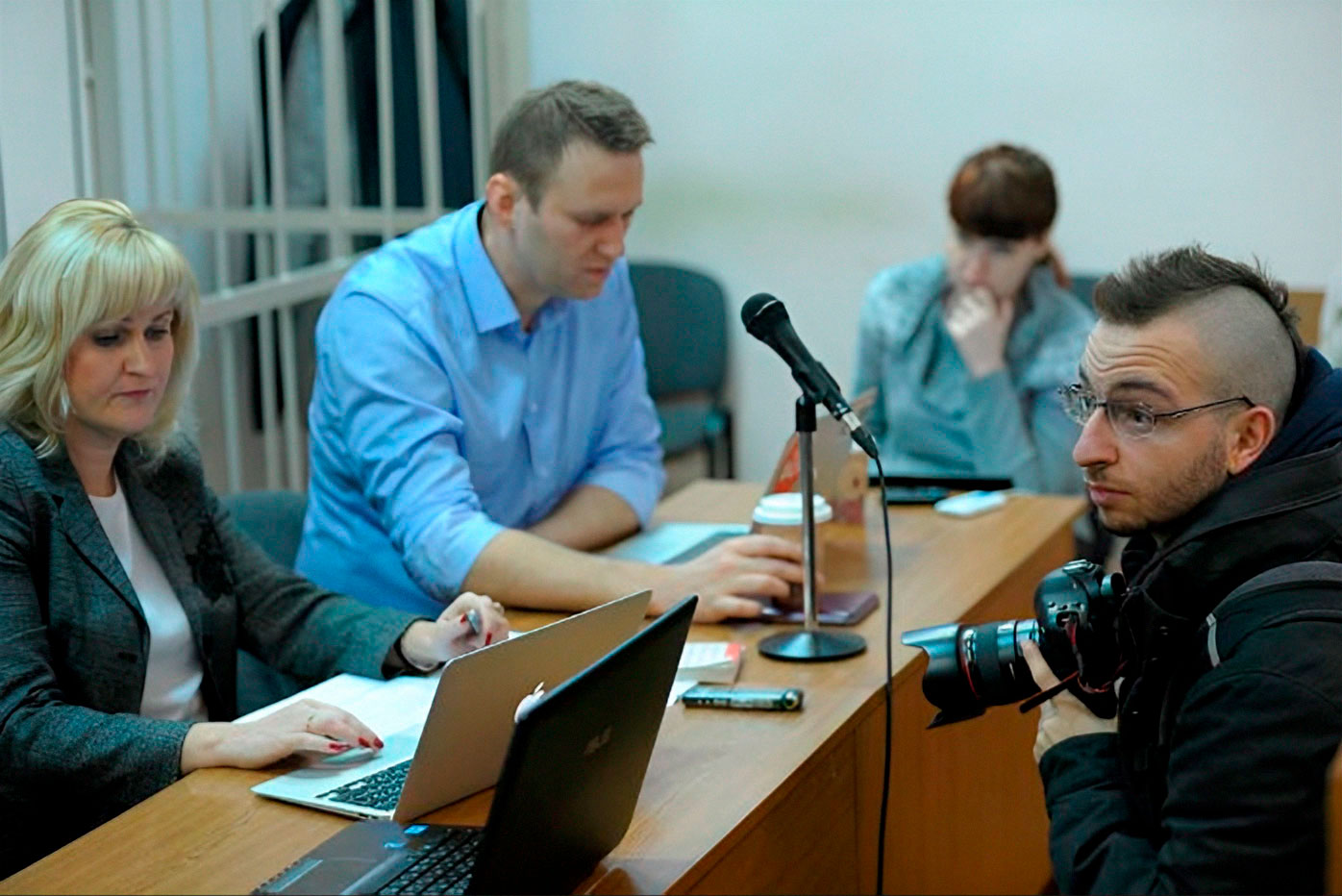
Navalny in the Zamoskvoretsky District Court of Moscow, 2014. Right: Evgeny Feldman. Photo: E. Feldman's social networks
I was probably already looking at this as a journalist, but at the same time, I learned about Navalny from reposts of various ultra-right Spartak fans, whom I somehow read in another part of my life. And all this mixed in my mind into the image of a populist who seems to be juggling topics to make something hit, and he would take off with it. And the first time I looked at him through this prism and was quite irritated, but it passed very quickly. Six months later, it became clear that his strategy «vote for any party except «United Russia» — was winning, because there was open competition of ideas about what to do in the elections. His idea forced the authorities to falsify the elections. This, in turn, brought people to the streets. And Navalny managed to create a cumulative effect by uniting the old opposition, which was used to taking to the streets, with the new generation he brought out. And then, maybe not by December, but by January, when changes were already felt in the air, there were huge rallies, unimaginable compared to what I had photographed before. It became clear that Alexey — I found the wording, probably — was commensurate with this.
We started communicating, I took some comments from him, and this also changed my attitude towards him. We got to know each other personally quite well in the spring of 2012, during the protests in Astrakhan, after <State Duma deputy Oleg> Shein's victory in the mayoral elections was stolen. I've been thinking about all this in recent months, and here's why. I'm now 34 years old. And I recently realized that Alexey was then... It turns out, when I first photographed him in the summer of 2011, he was 35. Just turned. There was a protest on Chistye Prudy, Alexey got his first 15 days, and it was discussed that the protest movement should nominate him for president. I look at this now and think, damn it, he was then as old as I am now, and he had to make decisions: whether to run for president, how to build relationships with the committee, how to arrange and resolve everything. And this probably greatly influenced my attitude towards him. Then both he and everyone else obviously made some mistakes, since this impulse ended in nothing. But now I look at those mistakes completely differently because if such responsibility fell on me now, I would try my best to avoid it. And «Kirovles», and the mayoral campaign happened, it turns out, when Alexey was a little older than I am now, 35–36. I got used to looking at him as an adult uncle who was always an adult and always did something, decided something. Working on the book made me reevaluate this part of his life and my work about his life a little.
The Beginning of the Story
Evgenia Albats: How did you start photographing him constantly? Am I right in remembering that you had an agreement with Navalny's headquarters during the Moscow mayoral campaign?
Even had to acquire some new skills to shoot the story, which, as I understood back then, in April 2013, needed to be shot more than it was
Evgeny Feldman: Not quite. The agreement was during the presidential campaign, already in 2017, and before that, everything happened organically. When Navalny was tried in Kirov, the process began in 2013, a few months before the mayoral campaign, I was working at «Novaya Gazeta». I had been on staff for a year, I was a novice photographer. And even then, I felt very strongly that Navalny needed to be photographed. I persuaded the editorial office to send me to every session in Kirov. They told me they could only send one person. If you want to shoot every session, you'll have to write. As a result, at these sessions, sitting on a bench, I would either take out the camera and shoot, or write texts on a laptop, and editors taught me to write on the go. So I even had to acquire some new skills to shoot the story, which, as I understood back then, in April 2013, needed to be shot more than it was. By that time, I had probably already learned to shoot more or less, so there are decent shots.
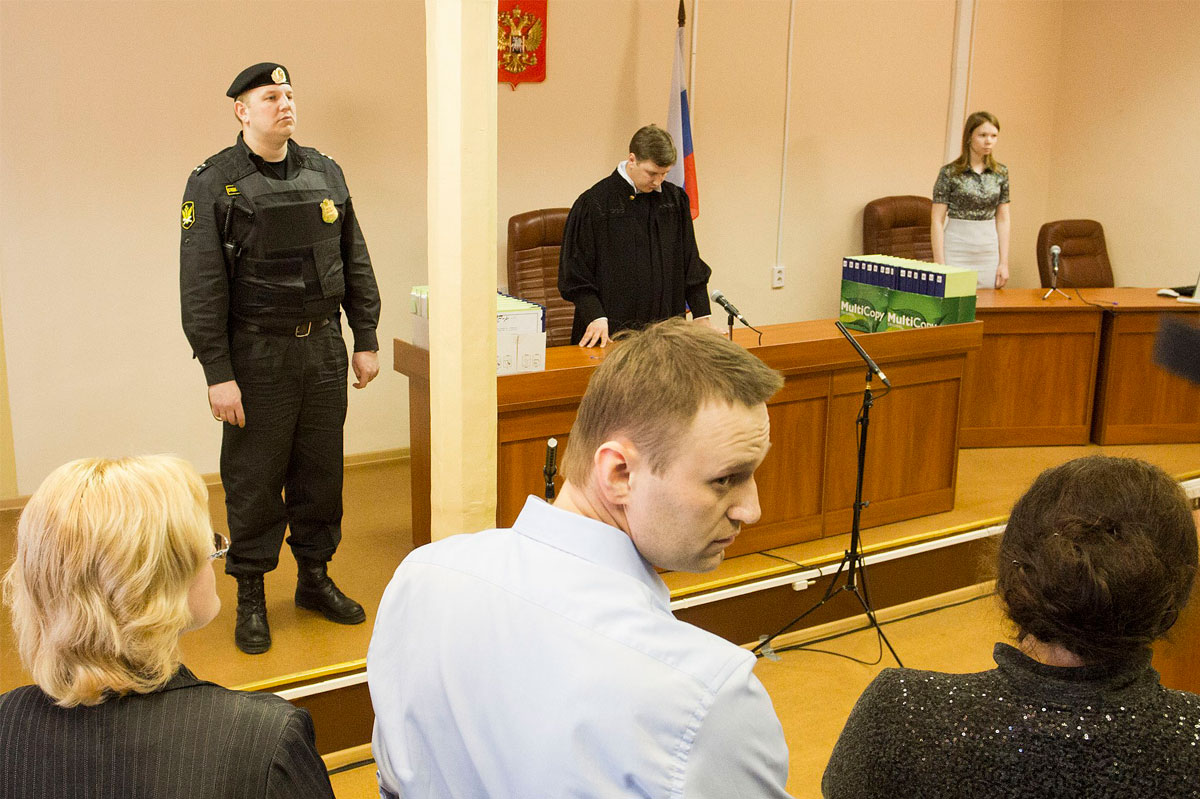
Leninsky District Court of Kirov, 2013. Photo: Evgeny Feldman
And then the campaign for the Moscow mayoral elections began, and in exactly the same mode, being a journalist for «Novaya Gazeta», I tried to photograph him all the time. Photography is always about luck. Of course, first and foremost about getting there on foot and making a physical effort, but then you also need to get lucky. And in these shots, you can see very well how work transforms into the amount of luck. I photographed rallies one, two, three, five times. And then on the 25th, he spoke at Semyonovskaya, and it was evening, already at sunset, the third speech of the day. And there the sun was such that I got several really good shots. Before that, there were some ordinary ones, and then — op! — and it worked out.
In general, since 2013, I have been trying to fill the information vacuum, constantly following Alexey.
For the book, we came up with such a structural solution. It has four parts: «The Beginning», «Search», «Leader», and «Home». The beginning is clear. Here I photograph him for the first time, then Bolotnaya happens, then «Kirovles», the mayoral campaign. And at this point, he is already, in general, a recognized leader. And then the next phase. In fact, maybe even the most interesting. I also write about it in detail in the book «Dreamers Against Cosmonauts». I think this is something that is not much discussed about Alexey. He had a long period, just from the end of 2013 to 2017, this is the presidential campaign, which I call the search. When he, in a new situation against the backdrop of «Yves Rocher» and the arrest of his brother Oleg, against the backdrop of the annexation of Crimea and all this «Crimean consensus» and so on, against the backdrop of his house arrest, against the backdrop of the failure of the opposition campaign in Kostroma — he was trying different options, trying to find a new path. He attended the trials of those accused in the Bolotnaya case and tried to draw attention to this. He tried to create a party. Started making videos on YouTube. Including campaigning in Kaluga and Kostroma during the regional campaign, trying to go to the people, yes. I photographed him then, and there are shots in the book in some city like Sharya or Buy, cool names in the Kostroma hinterland. Some yard dog next to him while Alexey was speaking in front of a hundred people, and they tried to drown him out by opening a supermarket nearby on the square...
In the book, we have a design find. We put large important words of Alexey on some spreads — large, poster-like. Famous phrases that became memes — about the beautiful Russia of the future, or «I will sleep with you on the asphalt», etc. Alexey, as a true politician should, knew how to speak in bright phrases. And one of the very important statements for me was at a rally in September 2015, right after the defeat in Kostroma, when the opposition for the first time agreed to hold a rally not in the center of Moscow, where they tried to prevent it by all means, but in Maryino. Alexey often told me that he never prepared speeches in advance. He always tried to be in the flow. And there he said what he later wrote to you from prison: yes, we are in the minority, but at least our children and our grandchildren will probably be proud of us. We are used to perceiving Alexey as a mold of optimism, but here it's different. I think this is also very important.
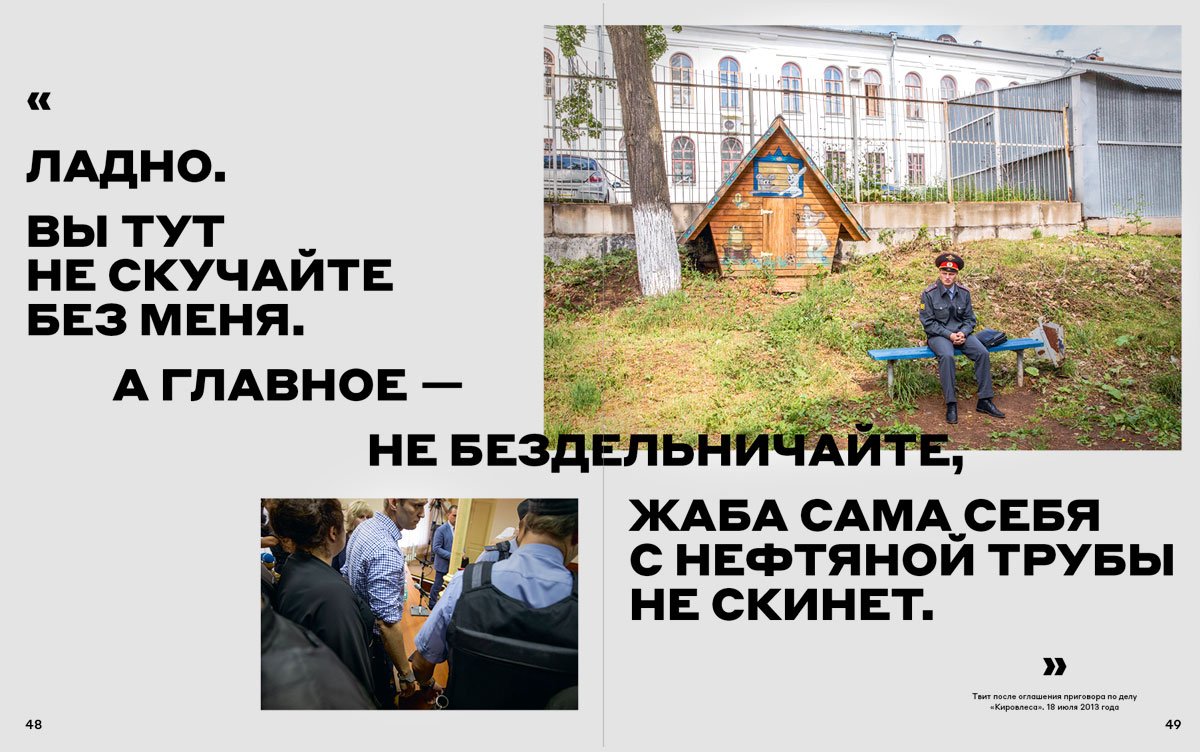
Spread from the book «This is Navalny». Photo: E. Feldman's social networks
And even more importantly, I think, he eventually found a solution by trying different options. Firstly, YouTube as a platform, which he turned into a free political TV. And on the other hand, the presidential campaign. This coincided with the annulment of the sentence in the «Yves Rocher» case and his readiness to really engage in the election campaign, not as is customary in Russia.
Rally on the Playground
Evgenia Albats: You saw Alexey's evolution, after all, you photographed him for so many years, were present at various conversations. You photographed when he was doused with green paint, and what they didn't do to him. Tell us how he changed. And he wasn't always an easy person to communicate with. Sometimes he got irritated, could get angry, suddenly leave...
Evgeny Feldman: People often ask me if he was different on stage and off stage. I always sincerely say that not really. The Navalny that all viewers know from his streams or rallies was about the same off stage. He just had different audiences. He knew how to make caustic jokes from the stage, and off stage, he often made quite caustic jokes about me. Knowing that during the presidential campaign I was defending my independence, he endlessly called me just a personal photographer. Or a bad photographer, or something else. It was clear that it was a joke. Fortunately, he accepted jokes in his address too. For example, there was a propaganda trope that he always spoke only to schoolchildren and children. And somehow, when he finally got me with jokes about my photos, we were entering Khabarovsk airport, and there was a children's playground inside the departure area. And I told him, well, look, your audience, go rally. And two months later, I actually photographed his rally on a playground in Saratov. In general, there was all sorts of stuff. And even within the presidential campaign, there were various tensions. He didn't really like what he called the gloominess of my photos. We traveled to rallies in Kemerovo and Vladimir in the evenings, well, it's clear, everything is quite gloomy around. Dark, November. Or, for example, there was, I don't remember now, either he personally or his headquarters had a complaint that I didn't photograph him enough with the team. As a result, in December, there was a shot where they are walking together to the CEC...
Evgenia Albats: A brilliant photo, where they are going to file with the CEC and where this CEC is shown.
Evgeny Feldman: Yes, just this is a shot with the team. It's not that I sat and thought that I need to shoot him with the team. It was still a portrait project, I focused on Navalny, and suddenly he was in the strongest image surrounded by the team. And he, by the way, bought a print of that photo and hung it in the FBK office.
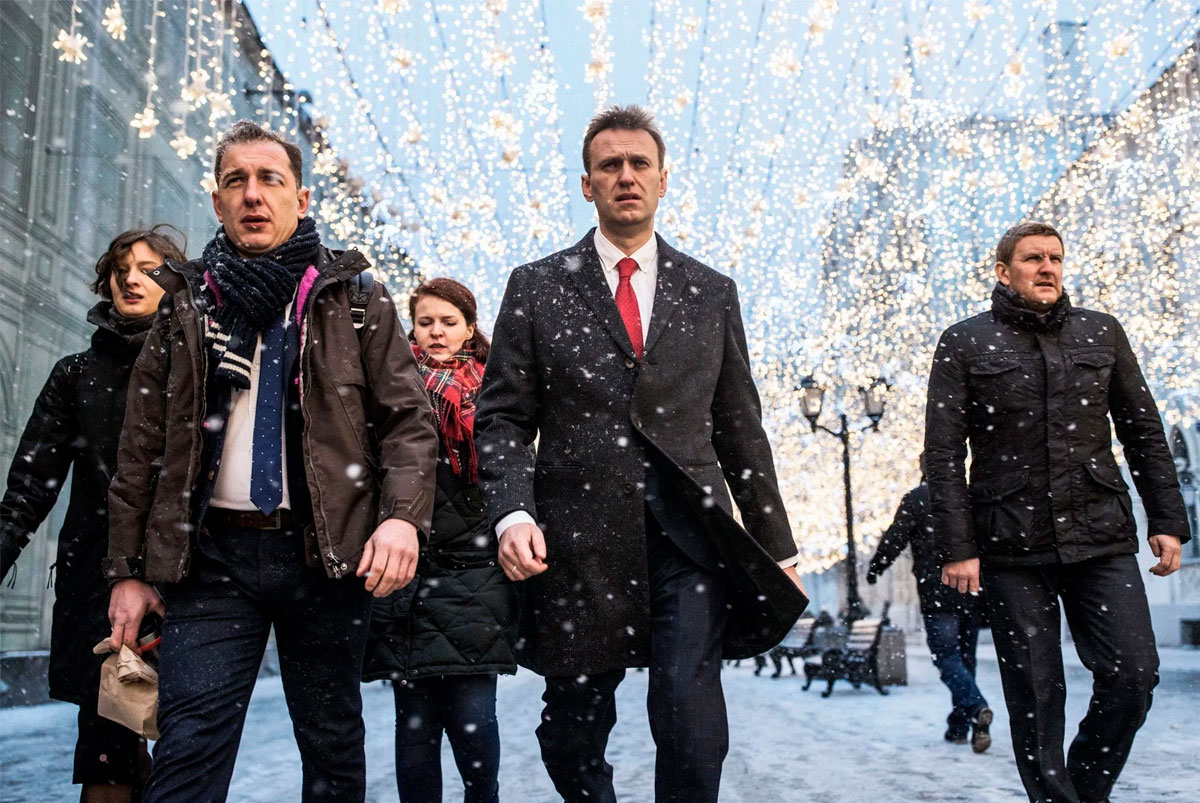
Navalny with the team heading to a meeting of the Central Election Commission of Russia in Moscow. December 25, 2017. Photo: Evgeny Feldman / AP IMAGES
Evgenia Albats: Did it ever happen that he said: no, don't print this, don't put this out in public?
Evgeny Feldman: He didn't see the photos until I published them. We had a special site where I uploaded photos somewhere in the evening, somewhere on a trip. We had some minor tensions, but they never concerned any specific photos. There were photos that Navalny really didn't like...
Evgenia Albats: For example?
Since everything was built around his schedule, we had to snack on the go if there was time. We, of course, were terribly hungry. Hunger and lack of sleep are my main memory of Alexey Navalny's presidential campaign
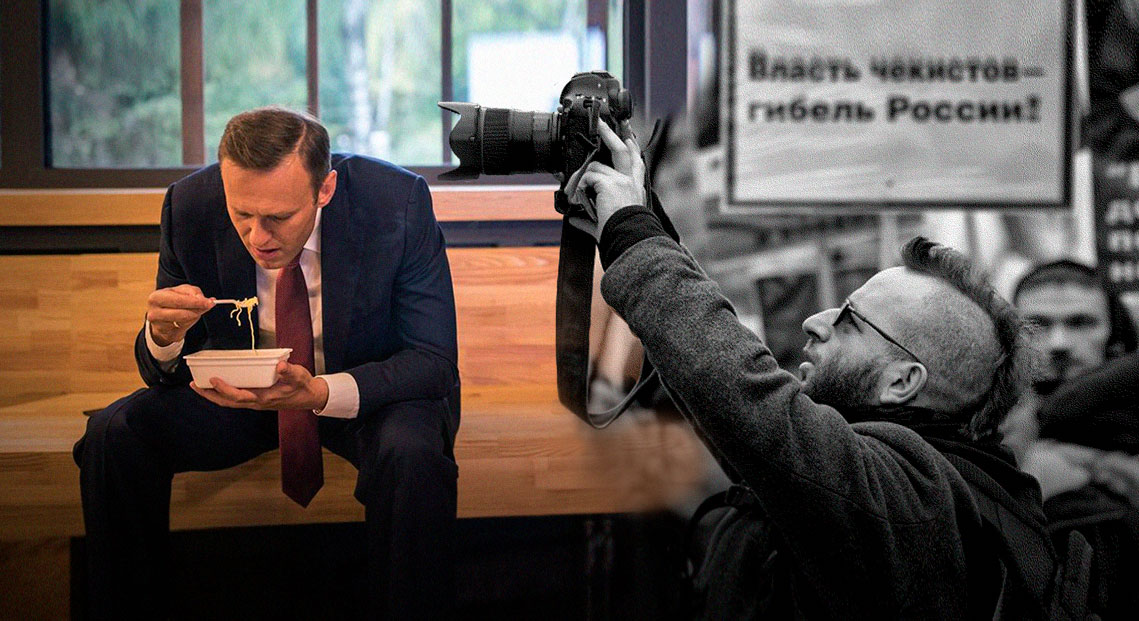
Evgeny Feldman: In Khabarovsk before the rally in September 2017, he was giving an interview at the hotel. And I had this format there where I sometimes just posted random photos as singles, separate frames. And there was a portrait that I really liked — in a slightly twilight light from the window, and some chandelier illuminated him. Alexey didn't like this shot. Well, that happens, it's normal. I generally don't and never did think about how he looks — neither from the point of view of general favorability, nor especially from the point of view of political expediency. Here's a famous shot of him eating instant noodles in some isolated corner. Many people were walking around, his employees, including operators who were filming that meeting with the heads and employees of regional headquarters. But for some reason, no one even took a picture on the phone while passing by. Probably because people who work in a political campaign look at this differently, try to play it safe. And I, on the contrary, just didn't think about how Alexey would look there, favorably or unfavorably, especially since we were always terribly hungry during these trips. Navalny usually didn't eat before public appearances, and because of this, on trips, he often didn't eat until the evening. And since everything was built around his schedule, we had to snack on the go if there was time. We, of course, were terribly hungry. I literally reread a post yesterday about Hillary Clinton's book about her 2016 presidential campaign, and she also writes that she was always hungry. Hunger and lack of sleep are my main memory of Alexey Navalny's presidential campaign.
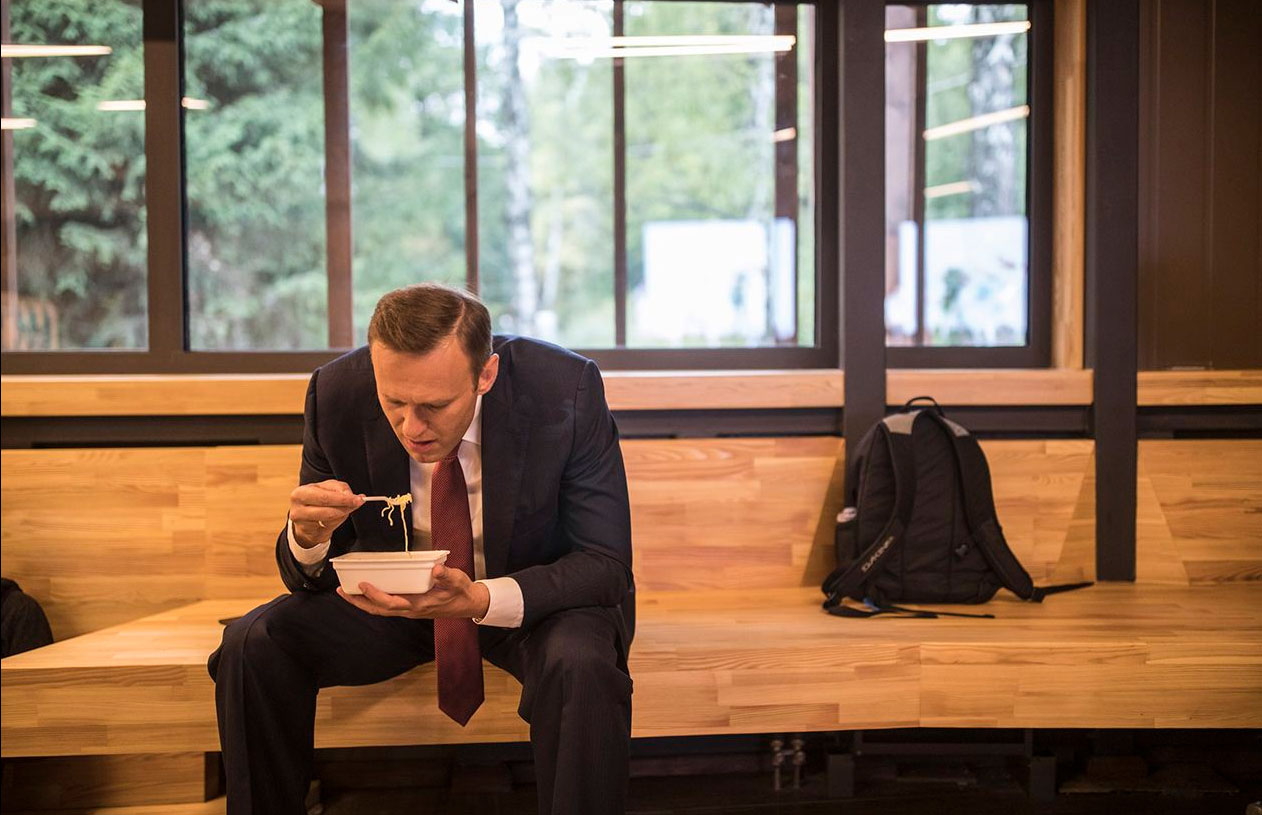
Photo: Evgeny Feldman for Navalny's campaign
Elections: Profession and Hobby
Evgenia Albats: Not everyone knows that you have a book «Dreamers Against Cosmonauts», it was released in electronic form last year, and now it is being published by Boris Akunin's publishing house. But you also run a video blog about American politics. This, as I understand it, is a hobby, I understand it very well because I also love politics very much, and the absence of politics in Russia was compensated for me by the fact that I came to the primaries in the United States, traveled, and wrote from these meetings.
Evgeny Feldman: It's a hobby that became my profession. YouTube channel about elections is indeed a big part of my life. But it's a part of life that is completely inseparable from Alexey. In 2016, I traveled all year from Moscow to America, shooting voting in another state, then returning, and so on. And Alexey supported me very much in this. He came to my public appearances even in the very early phase of this process when I was talking about some Iowa, not really understanding much, but at least as a witness. I probably made many mistakes then, and yet he supported me very much. And even after that, when those elections ended, he invited me to FBK to give a lecture on how campaigning is organized in American politics. I didn't even suspect then that he would announce his presidential campaign in a few weeks. And since then, Alexey has constantly and very consistently shown me that he values my expertise in this topic. Sometimes he just retweeted my texts, some links to them, Facebook posts. Sometimes he directly called and asked before the 2020 elections something about Biden and Sanders. Actually, my YouTube channel is a direct consequence of his inspiration, so to speak, when Alexey was already in prison. We constantly corresponded with him. This was one of our main topics. I advised him on some books about American politics. He ordered my favorite biography of Robert Kennedy for himself in the colony. I have that book that was with him in the colony, the very copy with censorship stamps. And then in these letters, month after month, he kept pushing me: start a YouTube channel, start a YouTube channel, now there will be elections, it will be popular. And indeed, at some point, I gave in, all last year diligently, by order, and command, and decree, and advice of Navalny, I conducted streams every week. This grew into some small media, around it there is a cool community, which I am very proud of. And all this would not have been without Alexey. I even have a piece of his letter hanging as a picture in the description of the channel, where he persuades me to start this YouTube channel.
Alexey, even outside of his political function, not as a tribune, not as a person on stage, did a lot for me just as a person who inspired me
I photographed Alexey for 11 years, he was, first of all, a hero of the story for me. I wouldn't have thought to call him a friend, it's still a different type of relationship, I always quite consistently and diligently built equality in them, so to speak. Even when I was 20, and he, as we found out, was 35, he addressed me informally, well, and I somehow immediately started. Precisely to be on equal footing as a journalist. And then, when I was forced to leave Russia, and he was in prison, of course, we already communicated in a completely different way. This correspondence is probably already truly friendly. And this is such a separate twist that I probably haven't fully comprehended yet. But I think a lot about the fact that Alexey, even outside of his political function, not as a tribune, not as a person on stage, did a lot for me just as a person who inspired me. And it was all the more important for me, of course, to make this book, also capturing him as a person. I am very proud that in this album he is still not only and maybe not so much a tribune. It is, of course, built from public appearances, but there are many details that show Alexey as a person. I am very proud that the book turned out this way.
Revealing Details
Evgenia Albats: The photo behind bars — where was it taken?
Evgeny Feldman: I don't remember exactly now, May 7 or 8, 2012. The march on Bolotnaya had just been dispersed, and «Occupy Abai» began on May 7, the day of Putin's inauguration for the third term. Navalny was detained 6 times during these days, probably. But then the time was different. He was detained, fined a thousand rubles, and released. He would come out and return to the square, where there was such a nomadic Maidan. A flowing protest, which would run somewhere to a neighboring square when the police appeared. And this continued for many days. It started with the dispersal of people who tried to get to the place through which Putin was supposed to drive to the inauguration. And then it somehow continued everywhere and ended, in fact, with the «Occupy Abai» action, which in a static form lasted 5–7–10 days. This seems to be the last detention, after which he was finally given 15 days. This detention is near the TASS building on the boulevard. In general, in fact, he is looking at the TASS building, and Moscow journalists are illuminating him from outside with mobile phone flashlights so that he can be seen behind this grille.
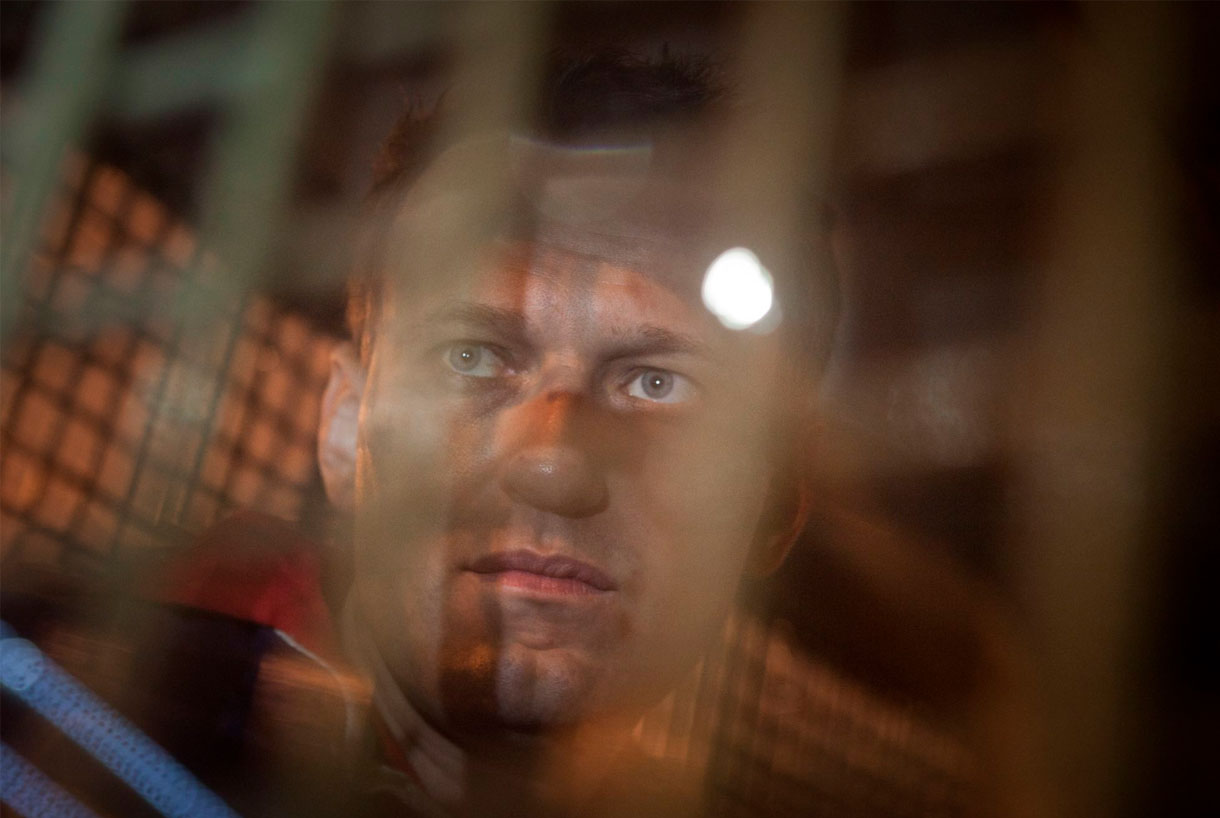
Navalny, detained by police during «people's walks» in Moscow. May 2012. Photo: Evgeny Feldman
I love printing photos very much because they are perceived completely differently than on the internet and on the phone. When you print, you start noticing a huge number of details. In February, I had an exhibition in Melbourne about Alexey on the anniversary of his assassination, and I noticed several small details on that very famous photo, which I had seen a million times, where he is going to the CEC. In the album, around three famous photos, we will have one clever thing that will allow us to learn much more about them.
Evgenia Albats: Do you edit photos? And did you do this with photos of Alexey Navalny?
Evgeny Feldman: This is, of course, a key question of ethics in journalism. In photojournalism, there is probably no unambiguous answer. I think that, by and large, everything comes down to a very simple formula. Photo processing should not change its content. Minimal technical correction.
Evgenia Albats: What team worked with you on this book?
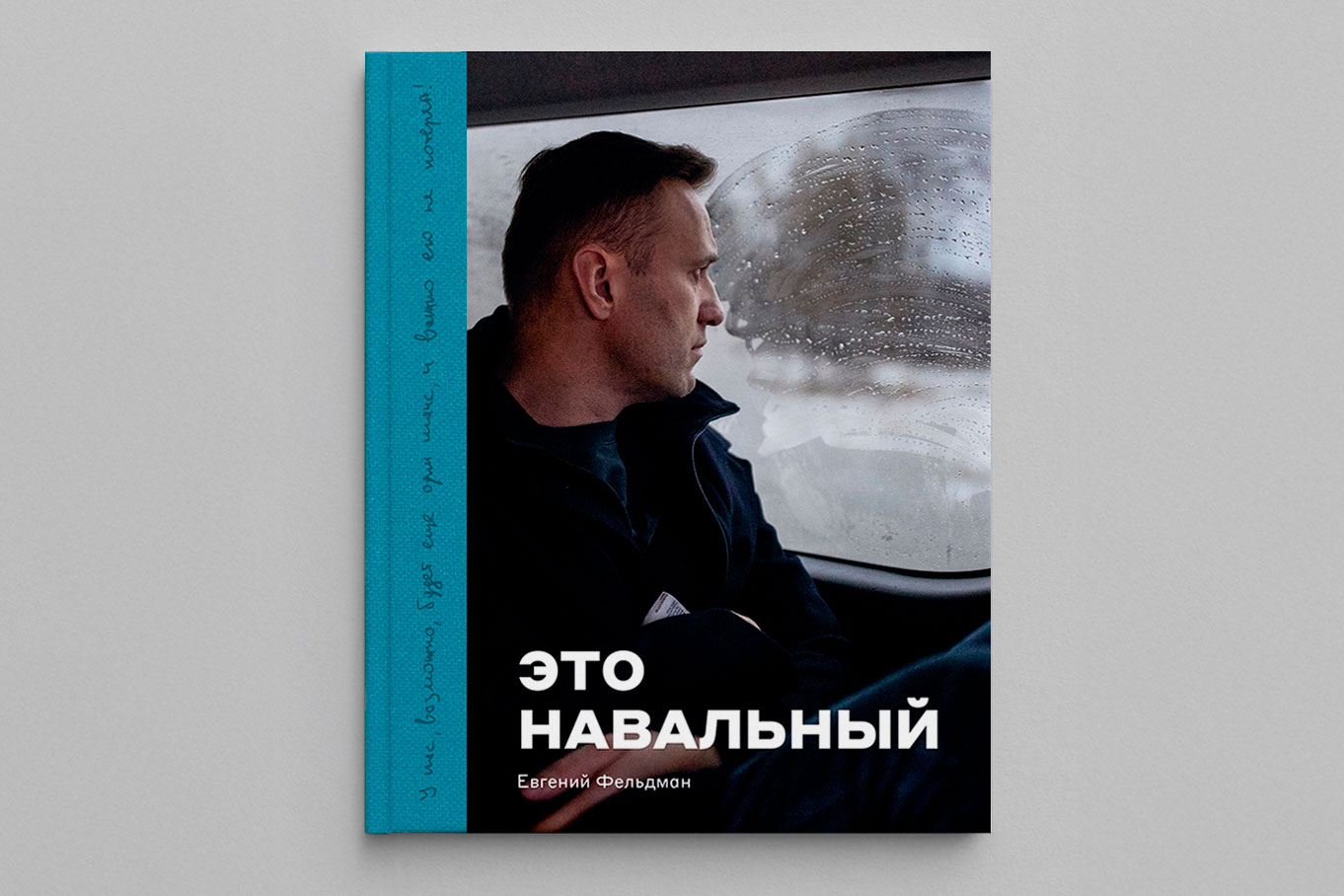
Cover of the book «This is Navalny». Image: E. Feldman's social networks
Evgeny Feldman: I don't really want to talk about this, we agreed for various reasons. We generally made an ideological decision that there is nothing superfluous in this book. It has a foreword written by Dasha Navalnaya. To be honest, I cried when I first read it. I still can't believe that there can be something like this about Alexey in my book. It's a huge honor for me. And there's nothing superfluous there. Everything else there is the story. Photos and texts that are necessary. In the texts, I tell a little about the work so that the photos get some new context. There's no foreword from me, no author's photo, as is usually the case in books. And there are no names of the people who worked on the book, it's a matter of safety. They are all not in Russia, and our wonderful designer, and the book editor, and the people who did the color. But we agreed that we don't disclose them. Unfortunately...
Evgenia Albats: You said you cried when you read Dasha Navalnaya's text. Why?
Evgeny Feldman: Because she writes there that the photos of Alexey that I took quite strongly influence her memory of her father. To be honest, I might even misquote because I read this text when Dasha just wrote it, and since then I haven't reread it because I don't have the strength to do it again. I read it, it turns out, in April last year, 2024. I honestly didn't think that, well, maybe I also slightly influence the memory of Alexey's children about him. This is something that doesn't quite fit in my head.
Ban on Navalny
Evgenia Albats: It became known that the Russian authorities declared Alexey Navalny's book «Patriot», published in Lithuania, extremist literature, and it will be banned in the Russian Federation. Aren't you afraid that the same will happen with your photo album?
Evgeny Feldman: I can't really influence this, and what can I do? Not release it? I will release it. In the winter at the Australian exhibition in the evenings, when the gallery was closed, I sat on the floor and thought various thoughts about myself, about Alexey. And one of the directions of these thoughts was about what I should do next. Well, I'm a journalist, a photographer. But my specialization requires me to shoot something related to Russia. I can shoot the conclave, as I did in May. But in general, I work more in the long term. So what should I do? I can try to pretend that I have nothing to do with Russia, and look for a job, say, as a photo editor at «The Guardian». And choose some such track in my life. And sitting there, I realized that no, that my job is probably to comprehend what happened in Russia, with Russia, with Alexey, and so on. I shot something, I can write about something, I came up with a second book, something else. In short, my thought moved like this. In the end, comprehension is a thing that doesn't require an audience. I will be very happy and glad, of course, if this book sells, otherwise my life will become significantly worse. I would very much like to be able to return the money I invested in it. But it's not that important. My job is to preserve, among other things, the memory of Alexey in the ways I can. I can write a book, I can release an album. Maybe a movie will work out. We'll see. This is my job. And the fact that some strange people, who also flood neighboring countries with blood, decided to ban me from doing my job — well, I can't stop them, but I also don't intend to listen to them.
Video version:
* Evgenia Albats, Evgeny Feldman, Mikhail Kasyanov, Garry Kasparov have been declared «foreign agents» by the Russian Federation.
** Alexey Navalny, Garry Kasparov have been included in the list of «terrorists and extremists».
Main photo of Alexey Navalny — E. Feldman,
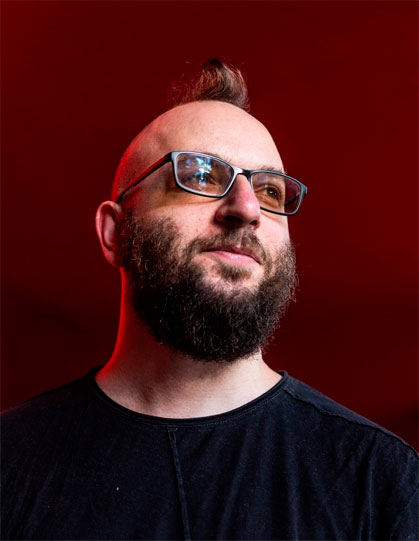
main photo of Evgeny Feldman — I. Vereshchagin.