Yevgenia Albats*: Almost every week, or even every day, there are reports of the detention of various officials, of criminal cases initiated across the country. Ministers and ex-ministers, federal officials, current and former governors, their deputies, advisors. Top officials of the Bryansk, Belgorod, Vologda, Voronezh, Kemerovo, Kursk, Novosibirsk, Sverdlovsk, Rostov regions, Buryatia, Dagestan, Kuban, Krasnoyarsk and Khabarovsk territories, Tatarstan and Udmurtia. The geography of arrests and criminal cases — the whole country. Plus at least 10 generals and senior officials of the Ministry of Defense, General Staff, and Navy. The opposition Russian press writes that repressions of the Stalinist type are beginning in Russia. Do you agree with this?
«Shaking» the Nomenclature
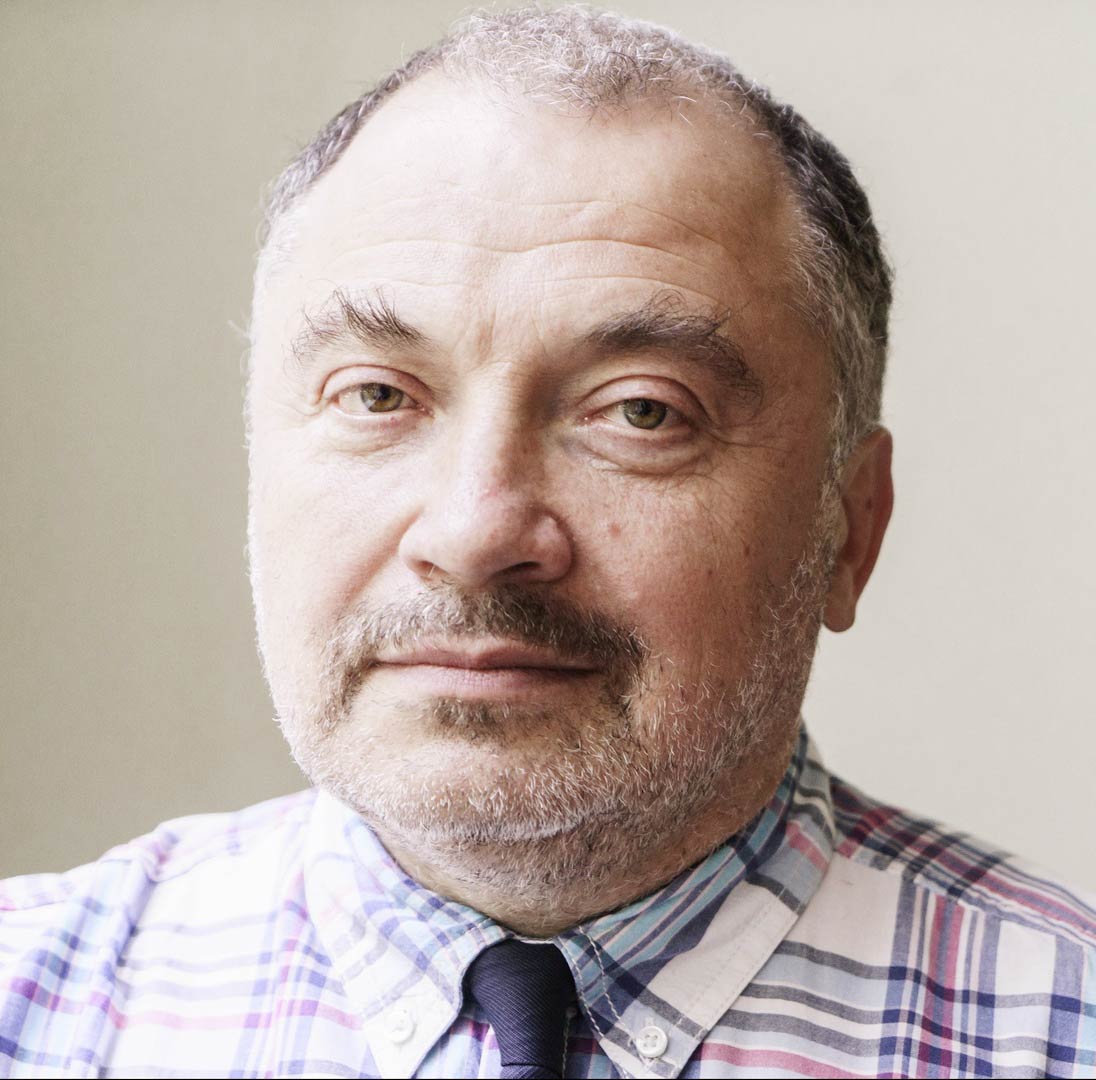 Nikolai Petrov: No, I do not agree with this. You are well aware of the book by Treisman and Guriev («Spin Dictators: The New Face of Tyranny in the 21st Century». — NT), which was published relatively recently and was also translated into Russian, about what dictatorships look like in the information age. There, the idea was put forward that today mass repressions are not needed to produce the effect that repressions produced in Stalin's time. It is enough to show on screens how a governor or minister is arrested. I think that in terms of scale, today's repressions in the Putin system are significantly smaller than in Stalin's time, simply because it is not necessary today, but in terms of effect, they are about the same. But it is important to understand that repressions are not an excess, not a deviation from the normal operation of the system, but an integral part of it. If you build a nomenclature system like the one Putin built, then you have no particular choice. You have no external control, you have no control either from society or from representative authorities. To keep the nomenclature in a certain tone, you must shake it from time to time, right? In Popov's radio receiver, there was such a mechanism, a coherer, which shook the tube with iron filings with a hammer so that they would not sinter and continue to perform the work they were supposed to do. In this sense, the repressions we observe both in relation to the elite and partly in relation to opposition activists, who today are practically no longer on the surface, perform the same quite rational role for the system. In terms of scale, in terms of the number of people who fall under repressions, they do not even increase much. But to ensure that the effect does not disappear and does not weaken, they become more severe both in terms of punishment and in terms of the arbitrariness of proving guilt and choosing victims. And in this sense, it seems to me, they are under strict political control, and we observe the psychological effect and functionality of these repressions almost the same as in Stalin's time, although the quantitative scale, of course, is orders of magnitude smaller.
Yevgenia Albats: Stephen Kotkin, a famous American professor, author of a duology about Stalin, writes in his second book that the reason for that bloody wheel that spun was largely Stalin's fears. He feared Trotsky's influence even after he exiled him. Since Trotsky was one of the main figures of the Russian Revolution of 1917 and he had many supporters in various bureaucratic organizations, in industry, in the Red Army. In this sense, Stalin was rational, as he was very afraid of Trotsky's influence. From this point of view, Putin has nothing to fear, because even the opposition that existed, including the opposition in the Russian nomenclature, has ceased to exist. On the other hand, Guriev and Treisman write about why dictators of Putin's type need elections: this creates legitimacy in the information age. But they also write that the Putin regime is turning into a dictatorial one of the 20th century type, where repressions become a tool of governance. And in this sense, Putin's return to the model of 20th-century dictatorships should lead to more serious repressions. Your and Kirill Rogov's research of 2016 or 2017, when many mayors were arrested, claimed that the percentage was quite small. Has the number of criminal cases now become significantly more, fundamentally more than it was then?
Repressions are an integral part of the nomenclature system. When the system gets hooked on them, they can only intensify or persist, but cannot weaken
Nikolai Petrov: I think it rather seems so. And it is also related to how public and widespread everything is. This is an important element of modern repressions. I consider political repressions any punishments of people not related to the fact that a person violates certain rules, internal or external, or, say, steals more than others, but aimed at sending a signal to a wider group, in this case, the political elite. It is not important whether the person stole or not, or how much they stole. What is important is that they are punished in accordance with a political task. I track all governors, vice-governors, mayors of capital cities. This is about 800–900 people in the country. And every year, about one and a half to two, sometimes a little more percent fall under repressions. You can consider that this is not so much. On the other hand, if, for example, gathering once or twice a year, governors look at each other and each time at this meeting one or two are missing, they are behind bars on grounds that are absolutely applicable to any of them, this has a quite serious intimidating effect. Repression is an integral part of the nomenclature system. And once they are included as a political tool, the system cannot abandon them unless it changes or finds another political tool to compensate for the loss. In this sense, repressions, when the system gets hooked on them, can only intensify or persist, but cannot weaken.
Yevgenia Albats: Do you see any patterns? For example, the detention of chiefs in the Belgorod and Kursk regions is more or less understandable since a lot was stolen, as it turned out when the Ukrainian army occupied part of the Kursk region: it became clear that the money allocated for the «dragon's teeth» and the defense system on the border with Ukraine was apparently stolen. Probably, this is also related to the fact that the former governor of the Kursk region Starovoyt shot himself. But in a number of regions, ministers or deputy ministers responsible for healthcare have been detained. Quite a few detainees among ministers or deputy ministers of transport. Do you see any patterns in who is being removed? At the same time, note that there is no one from Moscow, from the Moscow region, from the Leningrad region. That is, in such central donor regions, as I understand it, there were no special detentions.
Nikolai Petrov: About patterns. This is practically not related to the donor or recipient status of regions. The «roof» is important. And the roof can be a minister, as in the case of the Ministry of Transport. If the roof leaks, that is, the minister changes, the team changes, then the protection that the minister previously provided to his subordinates — we see this in the example of Shoigu and the Ministry of Defense, — weakens sharply. You are right, today we see a whole series of criminal cases against those responsible for road construction and transport in the regions. On the one hand, this is huge money, and accordingly, the scale of corruption here can be greater, and on the other hand, this is the effect of the minister's change and the change in configuration. The regions you mentioned, the Moscow region, Moscow, St. Petersburg — they are with their former owners, but when these owners weaken or even leave, and others come to replace them, we will see a whole series of criminal cases against current high-ranking officials. And the same can be said about the security forces and law enforcement officers. They are, on the one hand, parts of the repressive machine, on the other hand, they themselves sometimes fall into the millstones, it all started with the heads of the Ministry of Internal Affairs, now it has reached the heads of regional courts, and the only group so far as if possessing immunity is the heads of regional FSB bodies. All the rest, both the Investigative Committee and the prosecutor's office, sometimes fall into the millstones.
Yevgenia Albats: Well, that's understandable, they won't arrest themselves...
Nikolai Petrov: That's true, but we see a reduction in the island of untouchables every year. 2015 — the first governor goes, 2017 — the first federal minister. Two years ago, they started arresting heads of regional courts. This was not practiced before.
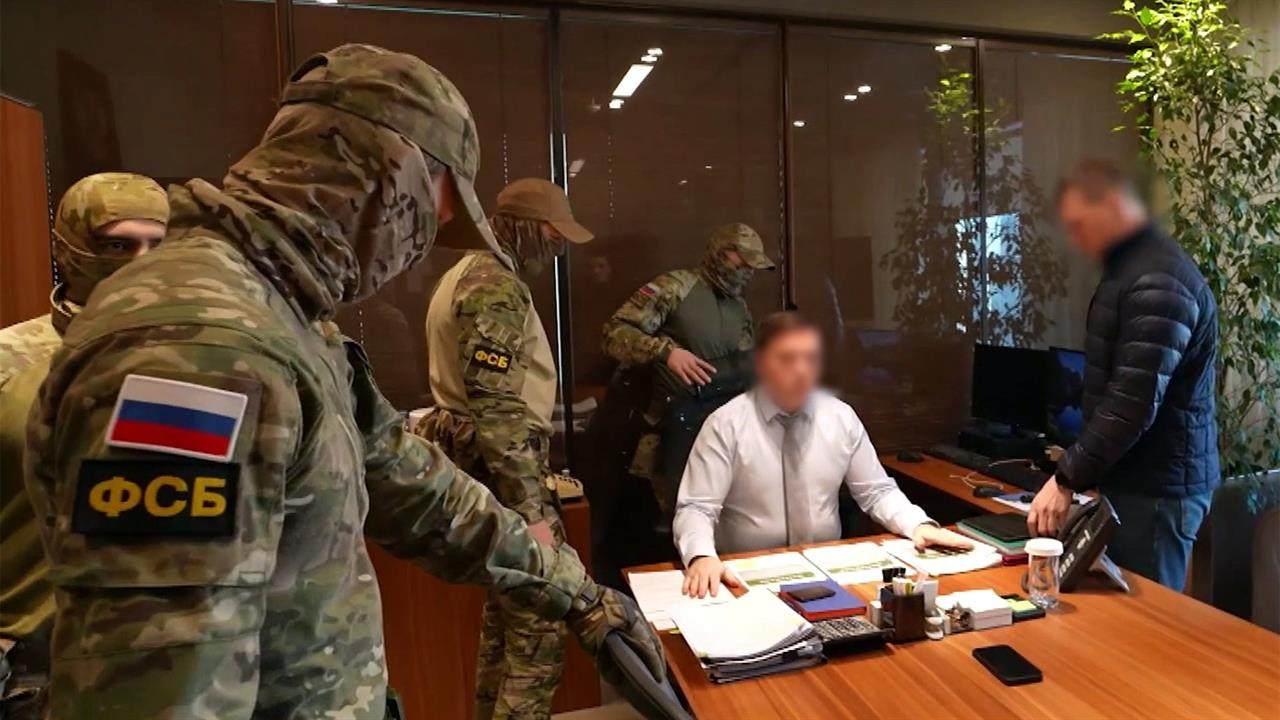
Detention of an official of the Ministry of Economic Development, 2024. FSB operational shooting, photo: FSB COS RF / TASS
(the FSB does not disclose the name of the detainee)
What the System Stands On
Yevgenia Albats: Yes, but I just can't imagine how Putin can afford to detain the Chekists, since his entire life and the life of all his close ones depend on them 24/7. But do you understand what interests are behind the detention of a particular official? We know that bribery and corruption are what the Putin system is built on. What allows him to keep regional officials on a leash. He remembers 1999 well, when the late Yuri Luzhkov managed to unite around himself and Primakov most of the then governors, and this regional front against Yeltsin was extremely dangerous. And it is clear that Putin learned these lessons. But which ones? After all, why does he persecute chiefs in Buryatia and Dagestan, and not somewhere else? Is there some logic in this?
To ensure the loyalty of the corporation, you need to radically change its leadership from time to time. If during the war the military turns into a potentially formidable powerful force, you cannot allow this corporation to have a voice on the political scene, you need to sharply change the leadership
Nikolai Petrov: Yes, there is logic, it is not always visible in each specific case, but in general, we can see it. For example, the last mass campaign associated with the Ministry of Defense is also a very functional thing. Such a system was put into operation after 2014, when Putin gained the legitimacy of a leader after the annexation of Crimea, and not just an elected president. If you are a leader, you address people over the heads of the elite and in this sense, you depend much less on them even once every 6 years when you go through elections. And in fact, since 2014, we have observed a certain percentage of punishable representatives of the managerial bureaucracy. For example, to ensure the loyalty of the corporation, you need to radically change its leadership from time to time. If during the war the military turns into a potentially formidable powerful force, you cannot allow this corporation to have a voice on the political scene. You need to sharply change the leadership. And as it was done once with the internal troops, with a number of other structures, military and civilian, today it is done with the Ministry of Defense. Another question is how corrupt they all are. But we know that there is a folder with compromising material on each representative of this system, if not with criminal violations, then with nomenclature privileges. Today it is a benefit, and tomorrow, if someone wants to be punished, it is a great reason to imprison.
Yevgenia Albats: There was a lot written about the shrinking pie of the Russian economy from which one can steal. Accordingly, the Chekists, who are in a more or less independent position from all other power institutions, have opportunities and desires, unrestricted by anything or anyone, to take pieces of property. Do you see from the list of those arrested recently what they are trying to take away?
Nikolai Petrov: I would distinguish between cases related to repressions against the bureaucracy and cases of redistribution of property, which have also been going very intensively in the last two years. Moreover, in the latest cases of redistribution of property, we still do not know the beneficiaries to the end, we rather see some intermediate options that cannot be considered as an established new status quo. But you are right, there is an intra-species struggle both within the security forces and between them and departments, and between various civilian departments. When the pie shrinks, there is a temptation to set up or eat a neighbor to keep your piece. And this is another function of repressions. However, unlike some of my colleagues, I do not believe that the repressive machine has gone out of control and works in its own interests. I believed and still believe that it performs an instrumental role, acts on a political order, and the political leadership, genetically linked to the KGB-FSB, controls this system to a very serious extent. This does not mean that in the Kremlin they determine the name of each next detainee, but it means that they monitor all this. And they can intervene if the system suddenly, from their point of view, begins to act contrary to their political interest.
Who Controls the Chekists
Yevgenia Albats: Nikolai, if you talk to people from Moscow, some of them will tell you that there is no single decision-making center for arrests now. That in fact, several centers have appeared, where Chekists are allowed to take whoever they consider right. And in these conditions, Putin periodically has to not so much pull back, but, for example, take some steps, inviting a particular official or former official to himself in the Kremlin for television filming. And this is a sign: don't touch this one, this is my competence. Do you think that Putin and his janissaries in the Kremlin are still able to control the Chekists from Moscow to the very outskirts?
Nikolai Petrov: Yes, and there are many examples of this kind. It is clear that the power corporations and special services represent the greatest political risk for the authorities, so they are controlled quite strictly. The forms of this control are different. It can be an internal squabble supported by the Kremlin. It can be the retention of an old and already feeble leader at the head of a potentially strong, powerful corporation, like the Investigative Committee, for example. I understand that not in all cases (and there are hundreds of them, even if we take the upper layer of the bureaucracy) personal decisions are made at the very top. But the ability to prohibit or, on the contrary, the go-ahead that allows you to move forward with these decisions, is certainly there and it represents the full control of the Kremlin over the situation. This does not mean that this control makes someone personally absolutely protected, especially if they are not personal acquaintances of Putin, but it means that the system works in the interests of the system, and not some corporation, works in the interests of the Kremlin.
Yevgenia Albats: The Chekist corporation is important because it is in power. If you look at the numbers, who controls the financial flows in the ministries — almost all the deputy ministers are Chekists, members of the corporation. It was the same under Soviet rule. But I understand that when it comes to a governor, probably Kiriyenko or someone from the sixth department of the KGB comes to Putin and says: we will now take such and such, or we now have cases on such and such. How do you imagine the work of this mechanism?
In relation to the persecution of most governors and regional officials, it is not a system of direct orders from the Kremlin that works, but a go-ahead that allows the security forces to start some actions
Nikolai Petrov: I think there are quite a lot of proposals, initiatives coming from the security forces regarding the detention, «closure» of a particular official. But, for example, how it worked after the murder of Boris Nemtsov, where two very influential and important people for Putin clashed, namely Kadyrov and Bortnikov, and it was impossible to make a decision in favor of one of them at the expense of the other. Putin disappeared for about ten days then, and then it turned out that Kadyrov received an order, and the FSB detained the first governor — Alexander Khoroshavin in the Sakhalin region. That is, a go-ahead was given for those proposals that were obviously made earlier. In relation to most governors and regional officials, I think it is not a system of direct orders from the Kremlin that works, but a go-ahead that allows the security forces to start some actions.
As for the Ministry of Defense, I think everything looked different there. At the top level, there were obviously personal decisions about those who were detained. And sometimes the system does not work the way the Kremlin would like. Remember the searches at Belyaminov, then the head of the Federal Customs Service, when they showed shoe boxes with some bundles of banknotes, money, jewelry, and everything else. Then Putin stomped his foot, including publicly, and the case ended with Belyaminov receiving some apologies. And although it was clear that the consent to work with him was given by Putin personally, there was a violation of some rules of the game. And for a year and a half or two, Belyaminov was still on the surface, he did not return to the position of head of the customs service, but he also avoided public punishment.
Yevgenia Albats: It is known that the FSB clashed with the Kadyrovites since the time of the Chechen war, and the relationship was very difficult. Kadyrov was pushing the FSB out of Chechnya, and they believed that Kadyrov could not be trusted. Why did you somehow link this with the murder of Boris Nemtsov?
Nikolai Petrov: Here, as always, there is no way to get direct evidence. I just talked about the sequence of events, which, in my opinion, are obviously connected with each other, when a very dangerous conflict situation for the system arises and two pillars of the regime find themselves in a sharp public conflict with each other. The leader can do nothing about it, cannot sacrifice anyone, and then we see that both in terms of the corporation they represent, receive some reward, and the incident is thus considered resolved.
Yevgenia Albats: You mentioned arrests in the Ministry of Defense. Moreover, we see that many people were somehow involved in the rear, where there was incredible theft, as we understand. At the same time, it is also obvious that those generals who were somehow connected with the former Minister of Defense Mr. Shoigu were being removed. It was known that there was theft in the Ministry of Defense: the Accounts Chamber provided data on this to Putin almost on a weekly basis. At the same time, he did not touch Shoigu. We remember that Prigozhin, the head of PMC «Wagner», constantly attacked Defense Minister Shoigu and Chief of the General Staff Gerasimov. First of all, because there were big problems with supplies, especially when «Wagner» fought for Bakhmut. Then, as we know, Putin removed Prigozhin, waited some time, and removed Shoigu. Also a very common bureaucratic technique when everyone involved in a public scandal is gradually removed so that it does not become clear whose side the owner was on. But do you have an idea of what else is behind this? After all, when generals are arrested during the war, this is not the best message for those on the front.
Nikolai Petrov: The perception of what Prigozhin was talking about by the military testified to this. It was a popular move for the military. As for the mechanics, look: first, Timur Ivanov is arrested, this is conditionally Shoigu's right hand, after this, after some time, Shoigu voluntarily or less voluntarily leaves the post and moves to another. The scheme of arresting a loyal person is used in a number of cases, and the boss of this person can even be moved with a promotion, as it was with Novak, the deputy prime minister, or with Saveliev, the deputy prime minister. Both of them had trusted people, deputy ministers, arrested. Whether they gave any testimony or not, but what is important is that in this way an important task was solved in relation to, say, the Ministry of Energy and the Ministry of Transport: when a person moved to the position of deputy prime minister, he completely lost control and contact with the ministry he continues to oversee, but on which he can no longer fully rely. And in this sense, what we observed in the Ministry of Defense is typical: if the main one fell, then the next ones follow like dominoes. Until it reaches everyone who was connected or was under the protection of the Shoigu clan, and those who were part of the leadership of this clan. The rest are more like an addition, not necessarily with specific names.
Moreover, there are some indicators. When we talk about repressions, I specifically made a reservation that I do not consider the degree of guilt of each, but I say that since there was a politically motivated arrest, it is a political repression. But in a number of cases, we see that when the security forces have absolutely no grounds, then completely anecdotal reasons come up, when a general is detained because 10 cartridges were found in his office, a minister or deputy minister is arrested because his wife received a salary for two years in some institute controlled by this ministry. It is clear that they are not arrested for this, but nothing more substantial or nothing that would not threaten public scandals could be imputed by the security forces.
Yevgenia Albats: The Anti-Corruption Foundation** conducted an investigation into Timur Ivanov and talked about what incredible property he has in Moscow, and near Moscow, and in Italy. And all this was known for a long time. It seemed that he was very protected. Why suddenly arrest and sentence? It is clear that a person who steals on such a scale is capable of paying for a roof and is capable of protecting himself. What happened?
Nikolai Petrov: I do not think it is sudden. It seems to me that this just falls under the political explanation. There is a powerful corporation that during the war becomes powerful both in terms of financial flows and in terms of the role it can play in politics if suddenly someone has such a desire. And to prevent this, the leadership of the corporation must be changed and weakened. And it doesn't matter how we feel about Sergey Kuzhugetovich Shoigu today, what matters is that a person who led the corporation for 12 years can use it as a potentially very powerful base for any political steps and actions. And to prevent this from happening, a person comes to replace him who has never had and cannot create any team, who is an absolute outsider for the military corporation. A powerful corporation is placed under a weak person who is not perceived by this corporation as its representative. This greatly blocks the political role of the corporation.
There are two ways. Either change the boss, as happened in the Ministry of Defense. Or leave the old, elderly, feeble, or not very powerful leader who is living out his days. We have already seen how the chairman of the Supreme Court, a potentially influential structure, died in his office. That is, 70-80-year-old terminally ill people are not changed, but left in office because in this way the control over the corporation they head is maximal, and the danger of independent actions and demarches is minimal.
System of Protection from Disloyal
Yevgenia Albats: Of course, the idea that generals become a serious threat to power during the war is absolutely correct, especially when in the first year of the war the Russian army showed itself extremely unsuccessfully on the Ukrainian front. And all the stories about how everything is ready for war turned out to be a puff. But nevertheless, it seemed that Shoigu was very loyal to Putin. And by removing him, Putin should have created an enemy out of Shoigu. Isn't that so? In this logic, he should have imprisoned Shoigu. After all, it is clear that Timur Ivanov was stealing not only for himself but also for the boss.
Nikolai Petrov: Stealing is not a sin in the system if you steal according to your rank. But I draw your attention to the fact that in the KGB there is no concept of loyalty as personal devotion. This devotion must be duplicated institutionally. It would seem difficult to find a more loyal and weak placeholder than Dmitry Medvedev. But even here, Putin built an entire system of protection so that it would be impossible to be disloyal. The same is true here. And this is not Shoigu's personal problem, although I think the beginning of the war greatly disappointed Putin in him. Shoigu is a person who possesses the art of PR, creating a good impression. And obviously, even in Putin's eyes, the army looked like a much more capable and powerful force than it turned out to be. But here it is fundamentally important that he led the corporation for a very long time, which means the corporation gradually turned into a personal corporation, in this case, Shoigu's. This happened before, Russian Railways headed by Vladimir Ivanovich Yakunin was also a powerful corporation, and at some point, everything dissipated. That is, since the mid-2010s, there has been a replacement of major leaders, including security, law enforcement, and the principle here is the same as once used by Stalin, or Napoleon, or any leader with authoritarian inclinations. If a person is, as Stalin said, in a region for several years, he ceases to be absolutely loyal to the center, he acquires a large number of connections, and he needs to be changed. This principle of rotation works today at the level not only of regions, they started with them, but also at the level of corporations, both economic and managerial.
Today's information environment does not require Stalinist-scale repressions, because maintaining a large-scale repressive machine is also an overhead thing, and it also requires changing the millstones from time to time. But you can use the information environment and replicate the punishment of some individual officials and get the same effect
Yevgenia Albats: Well, Stalin removed them in layers. But he killed them. Putin is not yet going for such cannibalism. When he removes and does not imprison — he creates a big threat for himself, doesn't he?
Nikolai Petrov: I think this is not excessive Putin's humanism, but a rational thing. Today's information environment does not require such scales of repressions, because maintaining a large-scale repressive machine is also an overhead thing, and it also requires changing the millstones from time to time. But if you can use the information environment and replicate the punishment of some individual officials and get the same effect, you can always do without these huge scales and rivers of blood. This is quite rational behavior. It was rational for Stalin, his cannibalism was not some kind of excess, it was part of the system he built. And the Putin system is not nomenclature, I would call it neo-nomenclature. There are mechanisms that allow achieving about the same effect without noise and dust.
As for creating enemies, the authorities act very sophisticatedly here. This is also a system of hostage-taking. All the children of the Putin elite, from whom it is difficult to imagine that they will grow up or have already grown up as effective bureaucrats and managers from the system's point of view as their parents, — they are largely hostages. Then look, 10, 15, 20 people from the civilian leadership of the Ministry of Defense were arrested, but Shoigu's daughters continue to do business as they did. There were no requisitions of what Shoigu himself accumulated. In this sense, everyone has something to lose. This is the rationality of the system, and Putin has been very successful in this from the very beginning, when former prime ministers, except Kasyanov, were employed in quite decent places and thus avoided open fronting. So here too. He never punishes people so that they can pose any threat to him. Either you went to prison and sit there and pose no threat, or you sit in the chair of the Secretary of the Security Council, but you know that a step to the right, a step to the left — and you can be punished.
Adjutants of His Excellency
Yevgenia Albats: What is your forecast? How will Putin's entourage and this system of checks and balances that allows controlling billionaires who are in power in Russia today develop further?
Nikolai Petrov: I think the main problem the system faces today is aging. And the old KGB model of management, when you can only conditionally trust a person you have known for 20–30 years, and even with this person, you have to discuss something one-on-one and not allow any collective formats of decision-making. We see how this system is stalling. When Irina Podnosova, Putin's classmate, was appointed last year to replace Vyacheslav Lebedev, she was not much younger than the one she replaced. And this is understandable. Putin has no people left who would be known to him for 20–30 years and at the same time would be radically younger than him. Therefore, adjutants are used. People who are around the president 24/7, whom he can trust and whom he has seen for many years, today occupy very high positions. And what in 2016–2017 a whole galaxy of these adjutants were appointed governors, seems to me as a very long strategic plan. They worked quite publicly for five years or more and gained important experience for them. And only now, starting from 2021, Putin calls them to himself, and we see how these people are appointed to key positions. It is clear that they are less effective as managers than any serious member of the corporation, but their advantages for the authorities lie in the fact that they are personally loyal to Putin and no one else. They have no loyalty to the corporation because they are personal adjutants. They are even less connected with their family, if they have one, than with Putin. But this system does not allow maintaining high managerial efficiency, and in this sense, it seems to me, it is doomed — due to the fact that it is one-time. It may end even before Putin leaves. And then we will see how a technocratic system, conditionally Mishustin's or Kiriyenko's, which has a block of reproduction, selection, training of personnel, and so on, and which is quite technocratically effective, will come to replace it.
Yevgenia Albats: And what will happen then to Putin's guys? The system is built in the mode of military-bureaucratic authoritarianism, where there is a coalition of people in uniform who can produce both the image of force and the force itself. In Latin America, these were the military, in the Russian version, these are the Chekists. Technocrats who play no role in politics deal with economic issues. Putin cannot allow some Mishustin or Siluanov to claim anything more than counting money.
Nikolai Petrov: That's true, but he has fewer and fewer associates, and note, they don't even necessarily leave for natural reasons. Putin pushes them aside, and a new cohort of those same adjutants comes to replace them, who, from Putin's point of view, can continue the course he considers correct, while distancing Putin himself. It is clear that there is no place in the system for civilian technocrats and all other unfinished liberals in Putin's plans. The question is whether he will be able to replace his rapidly aging one-time system with some new one, but with the same cohort of special service officers at the head.
Yevgenia Albats: How do you think, will repressions increase or will everything go, as you say, at a stable level of 1–2% per year, as it has been since 2014? Or will the system become tougher due to the fact that an aging dictator has significantly more fears?
Nikolai Petrov: It will become tougher both due to the aging of the dictator and due to the harsh external conditions, which will not soften but will become tougher. And to ensure control, an increase in repressions will be needed. Therefore, I would talk about a self-spinning funnel of repressions that covers an increasingly wide circle of representatives of the managerial bureaucracy and ordinary people, which tends to tighten. Another thing is that the funnel, like in a tornado, cannot spin indefinitely long. At some point, the machine may break. But until it breaks and until we see signs of this moment approaching, it will only intensify and expand.
Video version:
* Yevgenia Albats, Nikolai Petrov are declared «foreign agents» in the Russian Federation.
** The Anti-Corruption Foundation is considered an «extremist» organization in the Russian Federation.