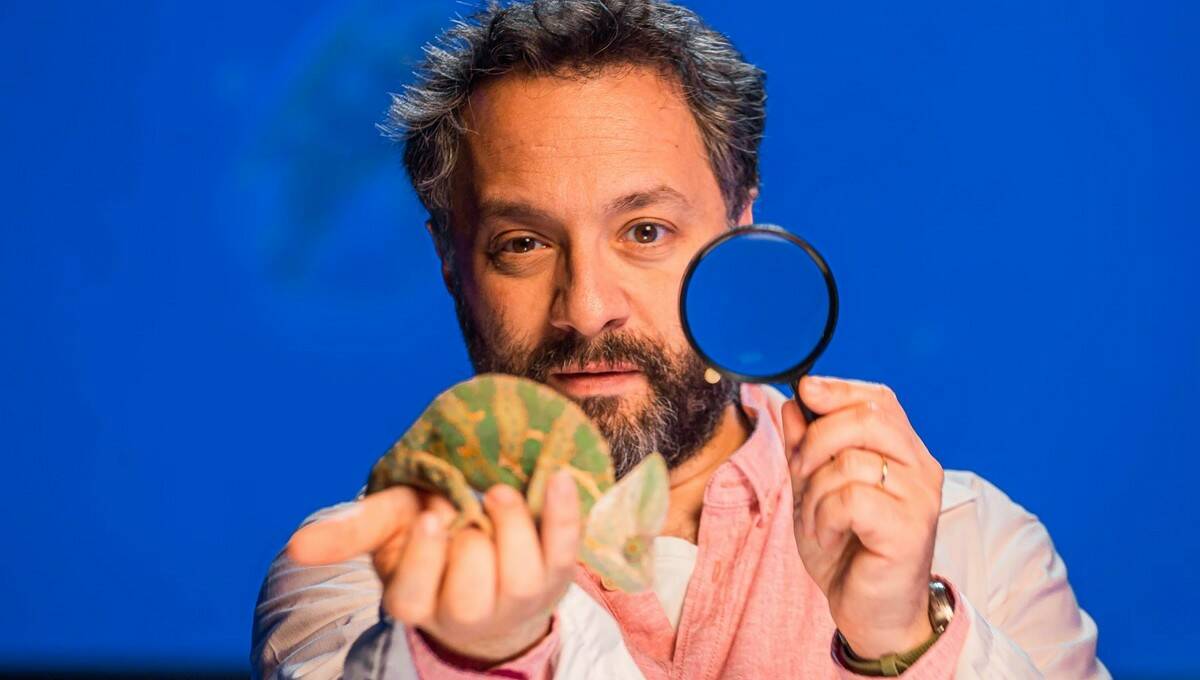
Ilya Kolmanovsky
Evgenia Albats*: Today, it's rare to find someone, especially in urban areas, who hasn't poured out their soul to a paid listener — a psychologist, psychiatrist, or psychotherapist. In the United States, such specialists are called shrink — a person who shapes the mind. Along with the psychologist come antidepressants. Once, one of the first appeared — Prozac, and the creator of this Prozac, Dr. Kramer, wrote a very interesting book about how it works. Antidepressants make people who are impossible to communicate with quite acceptable, and those for whom life is completely unbearable, they stop from turning on the gas or jumping off the roof. And of course, for us who were forced to emigrate and who observe from afar the nightmare happening in our part of the world, in Ukraine and in Russia, it seems impossible to do without antidepressants.
The hit of recent times — drugs like Wegovy and Ozempic, which allow people who have suffered from being overweight all their lives (for various reasons, often due to problems in the head, not the body) to lose tens of kilograms and stop being self-conscious about the incredible size of their clothes.
But here's the question, how much do these «happy pills» (or, conversely, pills for unhappiness, call them what you will) affect our personality? Are we really the same when we take or don't take pills? Or does our essence, our mind change? This is especially concerning for those who write texts, paint pictures, or create films. To what extent are we still us when we are on antidepressants or using Wegovy or Ozempic to feel better about ourselves? So, Ilya, a direct question. When we start taking antidepressants, and some of us have been on them for decades, is it still us? Or am I no longer I, but something like I-prime?
What changes us
Ilya Kolmanovsky: This is an extremely complex question. It depends on what it means to be me. There is no doubt that this is an experience, an experience that my personality goes through. A separate question is what this personality consists of. My interlocutors generally consider it a miracle that every morning from complete oblivion you wake up again as the same person. Is this considered a miracle created by our brain? Some consider it an illusion. But in the end, the brain can recreate you from the night's oblivion in just a few seconds.
But then the daily journey of this personality begins. And on this path, there is a very different experience. Everything that happens to us changes us. We can fall in love, and it will be a completely different person. We may have a broken heart, we may experience this experience. We can experience grief or loss. We can feel inspiration or, conversely, an inability to work. All this changes us.
And yes, different substances invented in the 20th century. Actually, why start with them? Let's start with more ancient substances. Here I am drinking tea now. Buddhists, when they encountered it somewhere in Japan, were amazed that it is a psychoactive substance. And although Buddhism has a negative attitude towards psychoactive substances, tea entered the culture of Japanese Buddhists because they became very interested. This is me, maybe an improved me, maybe some special me, but this is an important ritual for them.
Biologists experimenting with psilocybin and LSD today will say that there seems to be some biologically natural phenomenon here because many people enter altered states of consciousness without any mushrooms, and they become poets, prophets, spiritual leaders
When we consume alcohol, even in a very small dose — everything changes dramatically. I see the essence of things differently, which I do not see before I drink even a tablespoon of wine. But it's still me. Why did they say «truth in wine»? There is a philosophical aspect there. You see the world differently, you see something else. And at that moment it seems to you that this is the truth. And sometimes it is. Maybe you remember something very important from this experience associated with the grapevine and its fermented juice. This is as ancient as civilization. All civilizations have experience associated with hallucinogenic mushrooms. And people who experienced this experience often became spiritual leaders of their generation. And biologists experimenting with psilocybin and LSD today will say that there seems to be some biologically natural phenomenon here because many people enter altered states of consciousness spontaneously, without any mushrooms or LSD, and they become poets, prophets, spiritual leaders.
I started from afar on purpose so that we have some context. I would not like us to consider the experience of our civilization, today's urban civilization, unique, somehow especially dangerous, disturbing. It is as ancient as our civilization. People have always used some substances. A zoologist will say that the ability to consume alcohol arose in us when we were small animals in the jungle and ate fermented fruits. Most mammals cannot consume alcohol, it is poison for them. But primates can. In short, this is an experience as ancient as civilization.
The question is how to deal with it? If something helps you, something you love — Zoloft, Cipralex, Fevarin, Prozac, — then that's great, it means your personality has found support. And what this personality was able to do next, I think, is very important not to devalue. You did it. You were able to write all those emails that you couldn't write before. You were able to look for a job. It's you. No substance creates the experience by itself, the brain creates the experience, the substance is a trigger, the substance is some kind of support. And each personality refracts the experience with the same molecules very differently.
In this sense, I return once again to alcohol. I had a very interesting interlocutor, David Nutt. There is an episode of the podcast «Naked Mole Rat» called «How to Sing and Drink Less». It's a New Year's episode. David Nutt is a British psychopharmacologist who was expelled from the government, where he determined alcohol policy, for his uncompromising stance on alcohol. He has a very negative attitude towards alcohol: we underestimate its toxicity and the degree of overdose we receive en masse. He says it's a very simple molecule, and precisely because it is small and simple, it integrates very differently into about 400 different biochemical cascades that occur in the brain, and therefore it integrates very differently in different people. And the experience a person has in a state of alcohol intoxication is also the experience of their personality, very personal and very different.
And this applies all the more to modern psychoactive substances, antidepressants. Or, for example, stimulants for people with ADHD, attention deficit hyperactivity disorder, new antipsychotics used by people with very high nervous system reactivity — something that helps people sleep. All these drugs, when you start using them, initially cause a 100% feeling that this is not me at all. But those who have long-term experience with these drugs will say that they «wear in» to fit, they need to be worn in. They will also say that drugs are absolutely ineffective without psychotherapy: it is important for a person to use this biochemical crutch to learn something. And this is the fantastic ability of the brain, precisely our personality — undergoing a special pharmacological experience, to make something of its own out of it. No pill will work by itself.
Moreover, I see growing skepticism among psychiatrists. It must be said that specifically antidepressants are not experiencing the best of times today. The main biochemical theory on which the idea of the main class of antidepressants, these serotonin reuptake inhibitors, was based, has not left a stone unturned. Two years ago, when several large studies were published, it became clear that we do not understand why antidepressants work in cases when they do. But maybe you don't need the bells, but to go, like in that joke about a taxi. The main thing is that it works. If it somehow works out, then great.
Evgenia Albats: What did they find? Why doesn't it work?
Ilya Kolmanovsky: At the heart of the main class of antidepressants, serotonin reuptake inhibitors, was the idea that there is a certain serotonin pathway, if you interfere with it, then serotonin and dopamine will begin to regulate more optimally, better, and depression was thought to be a dysfunction of these two mediators. This is a hypothesis that no one has been able to properly demonstrate in an experiment, has not been able to show that this is the case in a real organism. Which did not prevent people from taking these drugs for decades. And now we are taking them. And it's good if they help someone. We just don't know exactly why they help.
I'll repeat once again. Perhaps, in the end, it will turn out that all unhappy people are unhappy in their own way, paraphrasing Tolstoy. Perhaps attempts to name the breakdown of such a complex system as the brain, which we know so poorly, with one word will seem very naive 20–50 years later, and this disorder is arranged very differently for everyone. Maybe it can't be cured with one pill. But now I want to say that if you have found yourself a psychiatrist, if something helps you, then this is very good. It's just that it's a difficult path — to look for something that will help. Change shrinks, change psychiatrists, change drugs — for this, you need to have great courage. And this is hard work, a lot of work. I think it's wrong to look at this as cheating or a desire for an easy life.
No magic pill
Evgenia Albats: But am I right in understanding that no one disputes the fact that people suffer from depression, and that they have an organic nature and leave a mark on us? There are states when reason says that you need to do this and that, but what happens in the brain turns out to be stronger, and depression suppresses human will.
Ilya Kolmanovsky: The question of the nature of depression is very complex. Every year it becomes more and more confusing what is happening there, how neurons can agree among themselves to act coherently and harmoniously, and can torment us very much. There is a reward system when the brain rewards us for doing something the brain needs. And there is an anti-reward system when the brain believes that we made a mistake. And it came to the conclusion that the outcome of this action, which was conceived, is bad, we did not succeed. As we ourselves know perfectly well, this is a completely subjective thing. You can win a million dollars in the lottery and be very unhappy, you can lose a limb but find happiness. In general, people who deal with depression say that people with severe depression have an extremely active anti-reward system. Their brain believes that all outcomes are bad. For us, it is not so important whether this is an organic thing or a functional one. We need to do something about it. As one neuroscientist says, we cannot choose our feelings. But one of the most radical and amazing properties of our brain is the ability to choose how to relate to this. Choose which thought I will think. Then try to learn to do something about it. In any case, this is a question that will not be solved with a pill. A pill can be a crutch, it can help somehow move forward with this.
Yes, there is what we are used to calling depression. This is a life-threatening condition. There are many cases when the medicine does not work, and this is very dangerous. Almost for no one, medicines themselves can turn out to be the solution to this problem. People eventually get out through hard work.
Evgenia Albats: We see in Israel one case after another when people who were hostages, sat in Hamas tunnels, who were rescued, who managed to survive until the moment they were handed over to the Israeli side, then end their lives by suicide. Recently, a policeman who figured out what to do on October 7 and saved many people committed suicide. Such cases are becoming more and more common in Israel. I read that post-traumatic syndrome occurs not only in war veterans but also in people who have experienced some terrible life situations. A person often cannot get out of this state on their own. And combinations of pills are needed, not just strong antidepressants, but combinations with other drugs. So as far as I understand, there is still no other option.
There are people who are extremely difficult to communicate with. There are many reasons too. Pills really help a person to be more or less acceptable to others. I understand that you are now saying that modern research shows that this is all unjustified.
Returning to peaceful life, the brain often cannot learn to live in reality after a catastrophe. Nature did not prepare us for chronic stress, chronic trauma
Ilya Kolmanovsky: I am saying that civilization has not invented magic pills that, by taking them, I can erase a monstrous crippling experience and fix a dislocation, metaphorically speaking. There is no such pill. Our psyche was formed over millions of years in very harsh conditions. And nature prepared us for experiencing mortal danger several times in a lifetime. We are adapted to this. Stress response and survival response are triggered. Our problem, especially in the modern world, is that for some reason, returning to peaceful life, the brain often cannot learn to live in reality after this catastrophe. Nature did not prepare us for chronic stress, chronic trauma. Trauma that is fully actualized again with every loud sound. If stress in response to danger is a normal reaction, it saves our lives, it makes us very fast, mobilized, helps us freeze at some moment when necessary, then stress and trauma that haunt us always are very crippling things. This is a path where the brain must be taught to live in peaceful reality again.
Pills can provide some help, can relieve the sharpness of pain, anxiety, can help a person sleep better. There are substances that can help us. But we must learn. This is our task.
Evgenia Albats: People cannot talk about traumatic experiences because it is simply impossible to tell, probably. But why, after they are saved, do they end their lives by suicide?
Ilya Kolmanovsky: Because for the brain, all bad things weigh more than all good things. Those people whose brains thought otherwise did not survive, did not leave descendants. We are descendants of champions of bad mood because the rest were eaten by a leopard. We must take negative experiences seriously and carefully. And many people experience it, no matter how hard it is, adaptively. In the sense that it was hard, it was scary, but they move on. These were the people who built Israel in the post-war period. They survived God knows what, up to the Holocaust, but they built a new home for themselves. People are diverse, both biologically and due to their upbringing. There are people who are more sensitive, and their psyche forever fixes the negative experience, does not want to get off it.
Evgenia Albats: So a person continues to live in this nightmare, although they already live in completely different conditions.
Ilya Kolmanovsky: The brain has a fantastic ability to predict what will happen next. The brains of these people have been greatly restructured, recalibrated in terms of their pessimism, and they had a very good reason for this. And its settings are such that any outcomes, any next 20 seconds are perceived as very bad. Without very special help, this system will not recalibrate itself. In this sense, it is extremely important that in a society that has experienced October 7, there would be a powerful support system for everyone who was involved in this. Both from the first person and from the second person. You know that in American culture there is the concept of second-hand trauma. When you are indirectly burned by this through someone. We are all burned by this through social networks, through different things. And again, we differ in our sensitivity, our fragility. For someone, this may not be such a strong impact, but for someone, it is the straw that breaks the camel's back.
And then help is needed. Help can be with medicines, or it can be related to therapy. Most likely, it should be associated with some form of training the brain to live now in this reality. And somehow grow a layer of new experience. Grief will never go away, but around it, some next layer of your personality, your everyday experience can grow.
Synthesis of happiness
Evgenia Albats: You said at the beginning of our conversation that we are us only until night, and at night — it's not us.
One of the hypotheses is that the brain shows us dreams to prepare us for daytime reality. Dreams should be strange, unusual, extreme, or about solving some very complex problems
Ilya Kolmanovsky: You know that dreams occupy some negligible fractions of a percent of the night's time. Most of the night, our personality completely disintegrates, it is not there. We see dreams at the moment when the brain partially wakes up. The next stage is lucid dreams when the brain is already so awake that we just begin to return to our daytime personality. And at the same time, we can observe a dream, hypnagogia, lucid dreams. This sometimes happens when falling asleep when the brain is not completely asleep yet. Or when waking up. But I repeat once again, most of this night experience is hidden from us because our personality is absent at this moment. A separate interesting question is how and why the brain synthesizes strange visions for us. The short answer is we don't know, but I like one of the hypotheses I heard from people at Tufts University, that it's similar to how we train neural networks. If we want to train a neural network to write simple texts well, we need to show it a lot of texts, including all sorts of paradoxical, strange, incorrect, illiterate ones. This is called oversampling when the neural network receives excessive experience in relation to what will be required of it later. It will then need to solve simpler classes of tasks, but to be very competent, it needs to be given a lot of different experiences. One of the hypotheses is that the brain shows us dreams to prepare us for daytime reality. Dreams should be strange, unusual, extreme, or about solving some very complex problems.
Another hypothesis is such a night watch. The essence is that we sleep with our eyes closed, the visual cortex is inactive at this moment, and neighboring fields connected, say, with hearing can capture it. And we will need to wake up quickly and run away from the leopard in the same second. It will be bad if our visual cortex takes a long time to wake up, pushing aside neighbors. Therefore, the brain activates the visual cortex several times a night, just so that we are ready to use it quickly, opening our eyes. We don't know exactly how it works.
But returning to the question of adaptation, I will say how the brain brilliantly knows how to synthesize happiness. And in this, its possibilities are completely limitless. People who have gone through the Gulag or the Holocaust talk about this. I mentioned people who won the lottery and others who lost a limb. I was unconsciously quoting a Harvard happiness study, which showed that the psyche has a happiness homeostasis, a constant amount of happiness. Losing a limb drastically reduces the level of happiness, and winning a large sum in the lottery drastically increases it. But about two years later, people return to the level of happiness they had before this event. Because the psyche knows how to maintain a constant amount of happiness. And this happens with the help of some insights. The brain at some point finds an image to show you to get you back on your feet. The brain wants you not to lie on your side, overturned by grief, but to get up and move on. It just doesn't always manage to get through to us. For this, maybe help is needed.
Evgenia Albats: From one specialist, a psychologist or psychiatrist, I heard the version that each of us is actually a family of different personas because we have different moods. And the use of antidepressants affects one of our states, which makes it difficult for us to work, write, interact with other people, does not allow us to get out of bed. And therefore, when we take antidepressants, they do not change our personality. They change only one or several personas that are present in us. Am I understanding correctly?
We start things very well and finish them very poorly because our brain, the further it goes, considers that the investments happening here will not pay off and are quite pointless
Ilya Kolmanovsky: This is a question of language, a question of how it is more convenient for you to describe. The idea of several personalities is a metaphor. A way to look at it. We live in a world of stories that we tell ourselves. This is one of the stories. There is no objective truth here that could be carved on tablets and then looked at the next time you have a bad mood. The question is how each person can cope with this life. It is clear that many people, or rather their brains, have great pessimism about what will happen if I get out of bed now and start doing something. The brain is constantly weighing the cost of investing in any business and, possibly, its return. Is it worth getting involved in this or not? This has always been our strong point when our ancestors, hunters and gatherers, did not stubbornly and endlessly search for oysters on the seashore if they searched and did not find them, but very quickly switched and started catching fish or small animals, or switched to nuts. We start things very well and finish them very poorly because our brain, the further it goes, considers that the investments happening here will not pay off and are quite pointless. But then, in the limit, in the extreme case, it may consider any movement extremely unprofitable and not see the reward in finishing those very emails. You may think that it would be good for you to do this for some deferred future, for the fact that later you will feel good. But here and now, the brain does not consider this a promising thing.
Indeed, many pills can quite sharply shift this balance. There will be a feeling that we have been added gasoline to the tank or oxygen has been turned on to this engine. And everything went. We have energy, we can move because now the brain is not so pessimistic, and it agrees to many of the undertakings that we have in the to-do list. The nuances are that we are still us. If there are fundamental reasons for my psyche, why it is now in this state and why it is still very difficult for it to take on some tasks, then the pill will not fundamentally do anything new. A person will very quickly eat through this advantage. They will function for a while, and then quickly return to some previous patterns. It will quickly turn out that the energy given by these pills is used for procrastination: to do something very actively on social networks, to buy something very actively, to do something else, and still not do their tasks.
This problem must be fundamentally solved at the level of learning, at the level of the brain learning something. For example, functioning in a completely new reality, after severe trauma, after some big losses. Accept that life has changed a lot, accept that maybe the status has changed a lot, the reality around has changed a lot, and that in it you need to recalibrate from scratch what I consider success. And the fact that I, for example, went and collected papers and received a residence permit, the brain should consider a big success, say a big thank you to myself, rejoice and look with optimism at the next package of papers that need to be collected. This he will not learn just with the help of a pill. It is important how our personality uses the advantage given by pills, both antidepressants and, by the way, weight loss drugs. How we use them still depends on us.
Evgenia Albats: Nevertheless, there are, especially in Russia, two approaches to antidepressants. One — «I will never take any pills». This is all from the devil, this is chemistry, etc. And another approach, especially among people who were forced to leave their homeland and found themselves between heaven and earth, in another reality — that no, on the contrary, this is very important. Am I right in understanding that you have somehow revised your attitude towards antidepressants and are now more negative towards them?
Ilya Kolmanovsky: I am a progressive and a big enthusiast of any measures that civilization offers us. I am certainly far from the idea that if you feel bad, you need to grit your teeth and just «pull yourself together, rag». The approach of the culture from which we come is essentially a militarized approach, the approach of a society that always lives in a state of internal war or, I don't know, some kind of camp reality, where it is shameful to be weak, shameful to be sick, shameful to ask for help. Therefore, people often do not live long, and they have many untreated chronic diseases. I have gone through quite a long journey with psychiatrists and with pills. Honestly, I really don't want anyone to apply my personal experience to themselves. I am speaking now not as a science reviewer, but just as a person. Indeed, if we talk specifically about antidepressants, I have some skepticism left. It seems to me that their possibilities are very limited. They help someone, and thank God, and that's very good. But it seems to me that there is always a question of how — if it helps you, if you can somehow rely on it — how you use this advantage, this help. You must learn something that you have forgotten or never knew. And the pill itself will not solve this. There is no such magic button, magic pill that will remove all your problems.
Breakthrough or dangerous story?
Evgenia Albats: Wegovy, Ozempic, and the entire group of similar drugs were developed to fight diabetes, serious diabetes, and it turned out that they allow people to lose weight. And now doctors say that these are drugs that really change the lives of a whole generation. People who have not been able to lose weight for decades, and this is often a psychological problem, and there is a group of so-called food addicts, who have the same painful addiction to food as others to alcohol, for example — have started to actively lose excess weight. Suddenly it turned out that the invention of the Danish pharmaceutical company simply changes life. This is very important because it affects self-perception, self-understanding, the well-being of people who have always been complexed. Not to mention that it helps fight a colossal problem that provokes diseases and shortens life.
The drugs are very effective, I felt it myself, but on the other hand, there are a lot of unpleasant side effects that significantly worsen life. Doctors talk about an incredible breakthrough with all these diabetes and obesity drugs, but to what extent is this a dangerous story?
Ilya Kolmanovsky: When we assess the danger of side effects, we must definitely put the danger of obesity on the other side of the scale and compare it with any potential side effects of these inhibitors. Sometimes a study gets into the news showing an increased risk of this or an increased risk of that. Let's look at the percentage of this risk and compare it with the risk of heart attack, stroke, diabetes, and various other problems that, unfortunately, result from being overweight. This is a problem for America, but it is also a global problem. Civilization has invented a very cheap way to produce empty calories. Somewhere they are packaged in the form of chain restaurants, as in America, and somewhere in the form of coveted sausage, mayonnaise, and the «Pyaterochka» store. These are different cultures. But it catches up with everyone because nature created us to live in very hungry conditions, where everyone eventually died from a lack of food, one way or another. As long as you can get food, you live for a while, 20–30 years, and then you lose this race and die. And the losers were those who could not store reserves. If you have a small surplus this season of nuts, which are very high in calories, then those who could quickly and efficiently store these extra calories around the waist survived. Those who could not do this died out and left no descendants. So we are champions at creating these reserves.
Ozempic will not improve our mood because if the psyche is used to getting pleasure from food, it will face the fact that this pleasure has gone somewhere
The nuance is that nature did not take into account that we will live so long, much, much longer than our ancestors. Literally, in the last centuries, life has doubled or tripled. And apparently, we cannot live long with such reserves. Therefore, our doctors really want us to lose weight. This especially concerns visceral fat, which is hung on internal organs. This is a metabolically very active tissue. And it literally reprograms our body, drastically increasing the risk of heart attack and stroke.
The mood can be very different. Ozempic will not improve our mood, it can significantly worsen it because if the psyche is used to getting great pleasure from food, it will face the fact that this pleasure has gone somewhere, and food no longer fits in us. Many people have a bad mood. And there were even studies that seemed to show an increased risk of depression. The percentage of these depressions is very, very small. But anyone who has embarked on this path must be prepared for the fact that they will not be able to eat as much and as often as they are used to, and will not want to eat as much. In addition, they will not be able to drink as much as they are used to. There will indeed be weight loss. And you will have to monitor the intestines with a doctor.
But we need to return to the beginning of the conversation. A person is a very complex being, it is not just an intestine and a brain attached to it. A person has a psyche, culture, there is a context in which they live, and they will have a very personal path with these substances. A personal path can be very different. It may turn out that you will fall into a long-term effect, and everything will be long and harmonious. By the way, these are probably lifelong drugs. And you need to treat them like blood pressure medications, like cholesterol medications that we take constantly. You just need to pick the dose at which you will live.
Evgenia Albats: It would be good if they fell in price, otherwise it costs some incredible money.
Ilya Kolmanovsky: That's right. It is clear that this is a huge market. But then the question is how your psyche will behave. It can very easily find a loophole. The question is whether you will train your brain to this new correct type of nutrition. Honest work on this path can give new habits. You can learn to be satisfied with healthier food, the one your doctors recommend.
Pills forever
Evgenia Albats: Is this really what will change our, well, at least Western, civilization? Or is it a temporary thing?
Ilya Kolmanovsky: Most likely, this is with us forever, and most likely, it will change a lot. Probably, this will create a strong segregation at first between the rich and the poor, or between developed countries and less developed countries. But the experience of civilization shows that this levels out very quickly. No inventions of this type ever remain the prerogative of any one class. Once birth control pills were invented. Now they are used all over the world, and birth rates are rapidly declining in Africa and Asia. The same will happen with these inhibitors.
The question is whether people will learn to maintain a lower weight with the help of these drugs, this is a question not in the plane of pharmacology, but in the plane of our culture, our civilization, in the plane of how we will learn and how we will teach the next generations to make more conscious choices when eating. It will still be a struggle. Just once again civilization gives us some support, some crutch.
Evgenia Albats: Does this mean that manufacturers who make a lot of money producing trash food will be forced to either stop producing it or make it healthier?
Ilya Kolmanovsky: It must be said that junk food itself does not lose its attractiveness. I think it increases in the sense that if I can eat not very much, then at least let it bring happiness. And if I am very tired, if I am stressed, if I have a learned pattern at this moment to bring myself pleasure with junk food, or sweets, or something else, then this habit of mine will not go anywhere. Maybe a little less will fit into me. But the pattern itself will not go away. I really like the idea of healthy junk food. I am against abstinence, I am against the idea of prohibition, I am against hypocritical propaganda. Yes, yes, we will all nod and then just feel more guilty when we do this. And it will be a vicious circle. The World Health Organization believes that almost any such temptations are much more effectively managed on large populations by ideas of harm reduction. If science learns to create junk food that is just as attractive but not as harmful, it will be wonderful.
Evgenia Albats: Last question. Understanding all the pros and cons, would you still advise people to use these drugs?
Ilya Kolmanovsky: I would advise discussing this with your doctor, who follows evidence-based medicine. Maybe get a second opinion. But it is quite likely that your doctor will be enthusiastic about this idea. The doctors I talk to are very optimistic. They do not expect big dangers because there is data collected on a very large number of people with diabetes who used these drugs. When there is a very large statistic, you can be sure that some special side effects would have been caught there. There are rare serious complications, but every time we read about them, it seems that this is an exception that proves the rule — in the sense that if we saw these rare complications, then we are looking correctly, we are observing correctly, we can assess how rare they are and compare them with the very frequent serious costs of being overweight. That's why doctors feel such enthusiasm.
It seems to me that you need to try, and then very carefully assess how you did with this antidepressant. Just like with this shrink, with this therapist, with this partner, with this husband, with this country, with this power — look and maybe change something, improve something. We always create the experience ourselves.
Video version:
* Evgenia Albats, Ilya Kolmanovsky in the Russian Federation are declared «foreign agents».
Photo: varvara-circle.ru