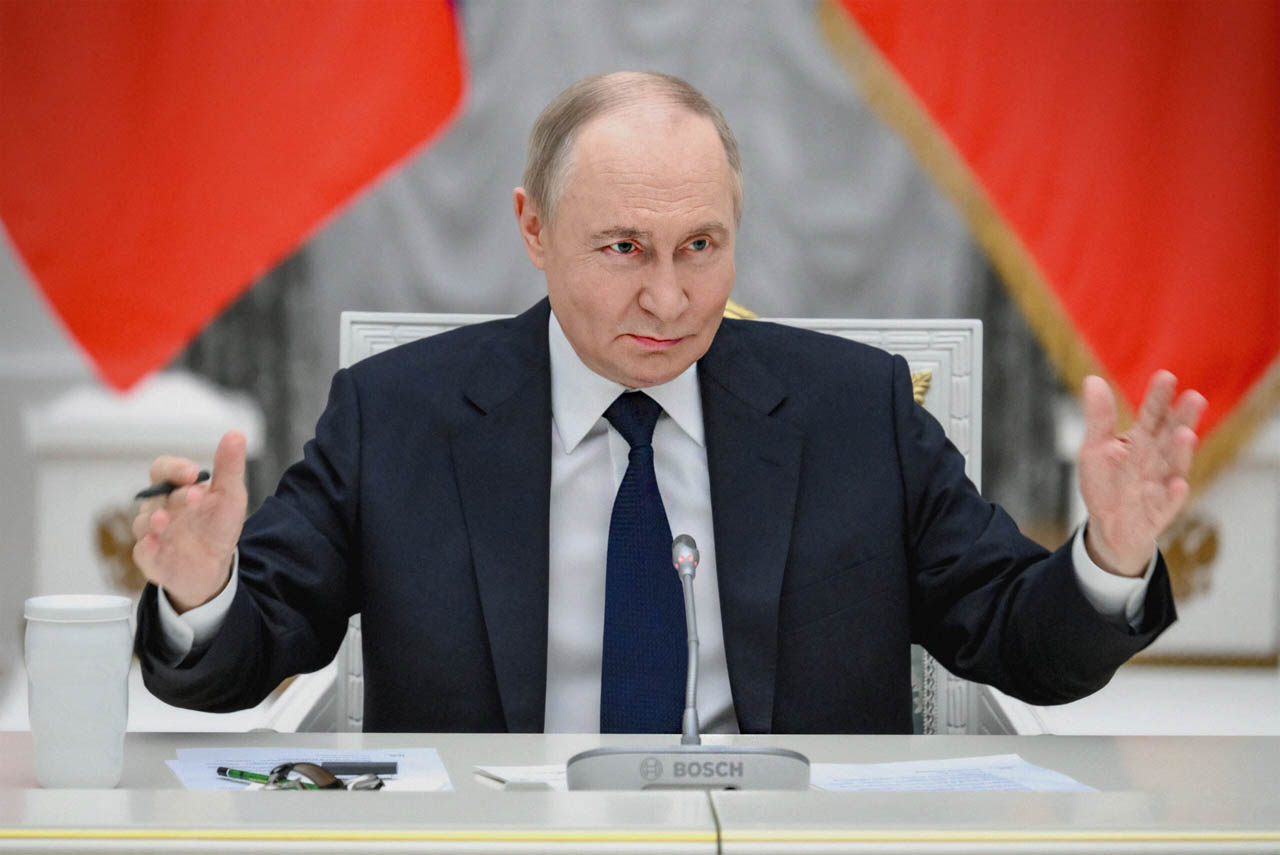
Vladimir Putin meets with representatives of Russian business circles in Moscow. May 26, 2025. Photo AFP
Evgenia Albats*: Putin has gone absolutely crazy, «Putin has gone completely insane» — wrote US President Donald Trump on his social network Truth Social after a three-day fierce bombing of Ukrainian cities by Russian drones and advanced Iskander missiles. Dozens of people were injured and killed. In one family alone, three children were killed, their mother died later in the hospital. And almost simultaneously with this, the Russian nomenclature holds the St. Petersburg Legal Forum. They invite not just anyone, but representatives of the completely medieval movement «Taliban», which prohibits women from studying, working, showing their faces, and even speaking on the street. This very «Taliban» shares its experience of prison management with the Russian nomenclature. And they call this «Russian civilization», this formula is repeated by Mr. Karaganov, and after him some American professors.
Tell me, do you also think that Vladimir Vladimirovich Putin has gone insane, or is something happening that I completely fail to understand?
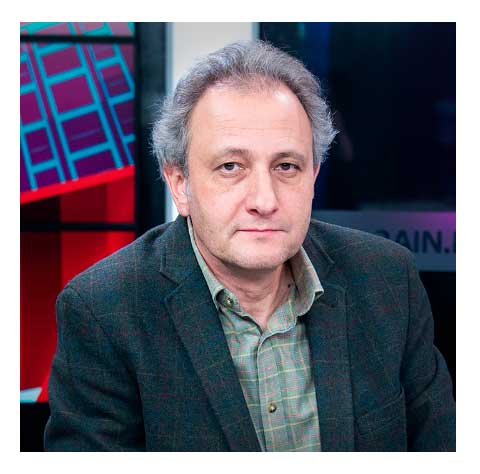 Andrey Kolesnikov: This could be called collective madness because what is being said by people related to the Russian establishment truly crosses the boundaries of ordinary etiquette, decency, and some reasonable notions about the world. This is done with deliberate audacity, I would say, because it is not just allowed, it is morally encouraged behavior, it is not just permissible, it is necessary to do. Just as deputies compete in a race of loyalty through new and wild legislative initiatives, so do any officials, any figures compete in making the wildest statements. And this happens at a rather modest forum, which has never played the role of a platform where thoughts and ideas revealing the true essence of this regime were expressed. As if they stripped down and showed what tattoos they have on their bodies. But this is not madness in the medical sense. This is political madness, conscious, it is part of the political regime and the ideology on which it is built.
It must be said that this happened on other platforms as well. Lavrov spoke at a forum called «Southern Russian Lands». He spoke in Yerevan before Russian-speaking students. At the same time, the 23rd assembly of the Council on Foreign and Defense Policy was taking place, where the cream of our foreign policy expert elite gathers, and Lavrov spoke before them. Moreover, with a secret speech — he spent the first five minutes saying some words of gratitude, said something about multipolarity and neocolonialism, and then asked journalists to leave and remove the cameras. Something incredibly interesting was said there, but at the same forum, a document (I understand, written by Karaganov) «Living Idea-Dream. The Code of the Russian Person» was presented and discussed.
Evgenia Albats: From Karaganov «The Code of the Russian Person» — that's great.
Andrey Kolesnikov: There was also talk about the cult of consumption. I note that he was surrounded by wealthy people. There were quite standard calls for modest behavior, for disdain for all material things, and so on. All that has been developed since the time of Count Uvarov through the Slavophiles to our bearers of the «Russian party» of the 60s-70s — all this was simply collected in this essay, and all this was discussed in various sessions.
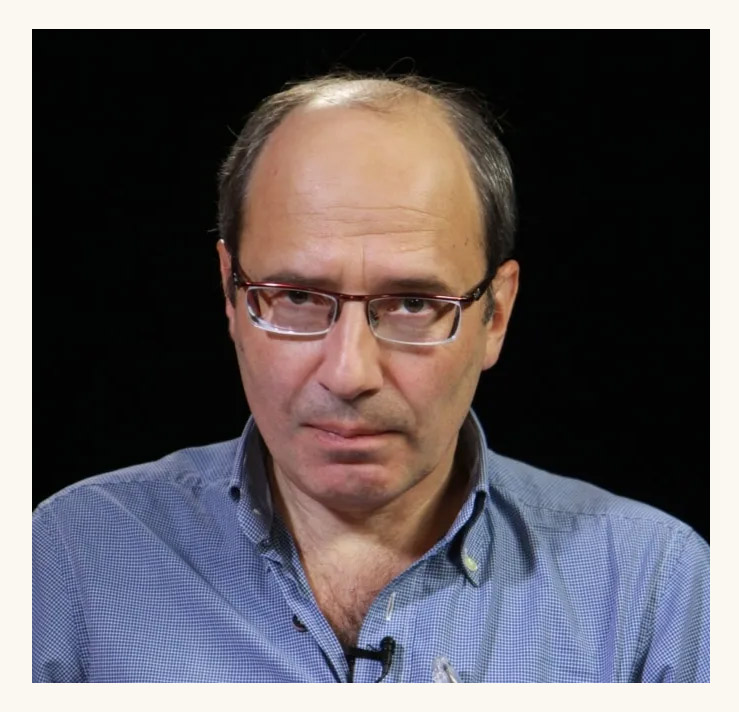 Ilya Shablinsky: I think Trump chose some sharp form of reaction in his statement. He understands that everyone expects a response from him. And he found such a form. It is clear what he wanted to say. But it is important that Trump draws some conclusions after this phrase. That corrections follow in his political line.
And Putin, most likely, made some decision. This is not an act of madness. He, apparently, preferred the continuation of the war to any deal with the USA. Or he believes that the deal will not escape him anyway. But he, I think, is still mistaken. Bombing peaceful cities in a row, civilian objects — this is an act of intimidation, moral pressure on the Ukrainian population, on the world. At the same time, Putin gives the order to strike, and Russian diplomats are rude and provide a theoretical basis for this. Now this is their style. Partly a reflection of this was the forum in St. Petersburg. You can try to analyze what was said there from a legal point of view, but we understand that this is not an object of legal analysis. There was a competition of servility. A competition of sycophancy. People holding very high positions, receiving large sums of money, chose the role of political serfs. Well, they chose and chose, but this requires some ingenuity. So they invented, competed with each other.
Stages of Decline
Evgenia Albats: Ilya, you worked in the Federation Council, in the CEC, in the Human Rights Council. I think you were removed from the Human Rights Council at the same time as other people criticizing the regime, in 2019. Nevertheless, you lasted quite a long time, 19 years of Putin's rule. Do you see evolution, or was everything around you the same, but you thought it was necessary to try to do something inside this zoo?
Since 2016, Putin stopped being interested in topics like someone being imprisoned, someone being tortured, about the anti-Semitism of prosecutors, and such cases were more and more — Putin was not interested in all this. He talked about one thing — why are you not paying attention to what is happening in Donbass
Ilya Shablinsky: I believe there was evolution. It went, so to speak, from 2003, from the arrest of Khodorkovsky. The last stage was — 2016, 2017, when Putin decided to intensify the war or find some ways to separate the Donetsk and Luhansk regions from Ukraine and considered different options. Since 2016, he spoke about one thing at Council meetings, he stopped being interested in topics like someone being imprisoned, someone being tortured, about the anti-Semitism of prosecutors, and such cases were more and more — Putin was not interested in all this. He demanded — why are you not paying attention to what is happening in Donbass? He fixated on this. In 2013, he told the Council meeting about how he saved Snowden, how Snowden called from Hong Kong by phone to the FSB, and Putin had to decide where to put him. And he decided that he should be let in here and somehow saved. After that, he calmly told us (this was 2013, November): after all, pressing on a human rights defender is like shaving a pig — a lot of squealing, little wool. Then there was a pause. It seemed we should have laughed. An awkward silence hung.
Evgenia Albats: A lot of squealing, little wool. This is his qualification of human rights defenders.
Ilya Shablinsky: Yes. After which he continued the conversation about how we should help human rights defenders, like I pulled out Snowden. This was 2013. Relatively vegetarian time, because at the same time we talked about the need to release the girls from «Pussy Riot». And Putin somehow unexpectedly hinted that he was not against it, let them be released under amnesty. This was like another stage of evolution. This is still before Crimea.
In 2014, we — Lena Masyuk, Sasha Verkhovsky, I — wrote a draft statement of protest against the military invasion of Crimea. And almost 30 members of the Council voted for it. Just a little short of a majority. There was a wild scandal. <The then head of the Council Mikhail> Fedotov was promised to be fired. There was a meeting, 2–3 people from the administration came, and they yelled at Fedotov, at us. We thought that now they would kick us out of the Council, and good. For a reason. Good reason. No. They left all of us — and Elena, and Svanidze, and me in the Council.
But then everything got worse, worse, worse. And the last stage of evolution — this is 16–17 years, when Putin became interested only in foreign policy. And he was only ready to talk about this. Outwardly he did not change much, but he began to interrupt, did not listen to the end, because we irritated him. At the same time, we sat until 2018, some until 2019, and in 19 he, apparently, decided to kill Navalny**.
Language of Hatred
Evgenia Albats: Andrey, your recent column in The New Times about how Russian diplomats switched to a new language. Style — it's not just a person. Style — it is also a political regime. We remember how the Ministry of Foreign Affairs, in the person of Nebenzya, Russia's representative to the United Nations, switched to street language. And it's clear why. This is the language of the security officers who have taken almost everything under control. But the Ministry of Foreign Affairs could say — we are diplomats, we need to adhere to the strictness of formulations. Even Dmitry Peskov, in response to Trump's words about Putin being crazy, said: well, now is such a difficult time, we all allow ourselves emotional statements. That is, he did not respond in Lavrov's style. And the Ministry of Foreign Affairs switched to this language, and not only Zakharova, but also the Minister of Foreign Affairs. Do you have an explanation?
Andrey Kolesnikov: Even Ryabkov, who was highly regarded as a diplomat, who deeply understood his narrow problems and was highly regarded by many as a negotiator with the Americans on nuclear issues, which should generally be the content of Russian diplomacy — even he switched to this language of the late 40s–early 50s, when derogatory phrases could be used against ideological opponents. When there was a complete break with the West. And this is a sign that the people who are now saying this do not even hope that they will ever sit at the negotiating table with any of the European leaders. With Macron, with Starmer, with von der Leyen. That the Putin regime is very long-lasting, enough for their lifetime, and therefore they are freed from politeness, from diplomatic expressions.
The fact that Peskov is more careful — he generally has a less rude style, he is restrained, he is evasive, especially when the question concerns Trump. Trump is a person who cannot be missed, who should remain our Russian partner, with whom some economic deals will be concluded later or in parallel with military actions. It is very important not to offend Trump. They see Trump as a source of investment, which is desperately needed in a situation where the economy is beginning to experience serious erosion. And now this has become more or less obvious.
No one believes that Putin will want to establish a truce. Their task, obviously, is to stretch the negotiation period as long as possible to advance further to the West, to conquer more territories. How long can this be done? A lot depends on Trump and his patience. So far, he speaks out, but does nothing.
Maybe Lavrov and others have realized that this regime is forever, until the end of their lives. No illusions are needed, this regime must be served to stay afloat with everyone
Evgenia Albats: We remember Karaganov in different phases of his development. He tried for a long time to show that he was more of a pro-Western person. Then the war began. And suddenly Karaganov became completely frozen, shouting that the West should be hit with a nuclear bomb. What does Karaganov's evolution say? After all, you can sit quietly, continue teaching at the Higher School of Economics, earn very good money and not run ahead of everyone.
Andrey Kolesnikov: The thing is, no one would shoot for relatively quiet support. Most adapt, try to comply with the rules. Partly this is the Soviet school of wavering along with the party line. Such a turn by Karaganov is obviously caused by some very strong emotional frustration, if speaking from a psychological point of view. It's hard to believe that this is sincere. Although we know examples of patriotic hysteria in the history of the First World War, when intellectuals of all countries in the First World War were terribly obsessed with pro-war sentiment. They hated other nations. I am now rereading «The World of Yesterday» by Stefan Zweig, where this is very well described on the example of Austria and France, how intellectuals, professors hated «enemies».
Ilya Shablinsky: I found a whole discussion on this topic by Sigmund Freud in August 1914. «For the first time in my life, I am proud to be an Austrian. Finally, we will fight back». Well, how?
Andrey Kolesnikov: Yes, then it smoothed out a little, but the first two years people were burning with the desire to punish the enemies. Maybe there is such an intention here, which then grew into an understanding in the same Lavrov that this regime is forever, until the end of their lives. No illusions are needed, this regime must be served to stay afloat with everyone. Anyway, it will not end sooner than in 15–20 years. And in 15–20 years they will no longer be in this world. People are still not very young. Putin is being rejuvenated, he may live to be a hundred years old, but they are people of a lower flight. Maybe such motivation exists, otherwise how else to explain this? Because what is said and written in the reports is absolute nonsense. This is all that the Russian elites have gone through dozens, hundreds of times, in Russian history this is all present. Nothing new, the same messianism, the same special path, the special role of the Russian people, «state-civilization». This new ideology is now being actively promoted and even codified in textbooks, in presidential decrees, in a dictionary. A dictionary is even being created of all sorts of correct words, including those describing our special spirituality. This needs to be explained. The Russian people, he is such and such, fifth-tenth. And the non-Russian people — he is different, he is bad. And has always been bad, and has always attacked us. The situation changes, the discourse of power changes, as now with the Americans, and this even affects the moods of the population.
Ilya Shablinsky: Do you remember the article by Naryshkin, the head of the foreign intelligence service? He wrote that the original enemy of Russia and the Russian people — Anglo-French imperialists. The whole article is an attempt to create some new ideological framework. But it doesn't pull on ideology. These are fragmentary sketches, from which, I think, nothing holistic will come out. Andrey said that the fascination with traditionalism and radical nationalism has been encountered over the past 100–120 years both in the Romanov Empire and in the Soviet Union. Brezhnev spoke about the fact that we are the creators of a unique Soviet civilization, a civilization of a new type. Speechwriters proposed the construction, he liked it, but they did not have time to develop this idea. In general, these are artificial constructions, and they are worthless. However, they will try to feed the youth with them in the coming years. But Putin, Patrushev, and others — not young people, they don't have much time, so they are in a hurry.
The Phenomenon of Bastrykin
Evgenia Albats: I can't help but ask you about Bastrykin, at the St. Petersburg Legal Forum the head of the Investigative Committee shocked everyone a bit. Suddenly compared Mariupol, which the Russian army leveled to the ground, with besieged Leningrad. The second incident, when he suddenly quoted Alexei Navalny «Russia will be free». And in general, he soloed at this forum — a person who is remembered in St. Petersburg for driving a pink convertible with girls. What is all this about?
Ilya Shablinsky: Of something legally significant, it is worth recalling his statement regarding the rights of migrants, the oppression of persons who recently acquired Russian citizenship. Bastrykin chose his main direction as pressure on migrants from Central Asia. Remember, he managed to say that 20 thousand citizens who recently acquired Russian citizenship are already fighting.
Evgenia Albats: But explain, what does he express?
Ilya Shablinsky: Radical ethnic nationalism.
Evgenia Albats: So they are shifting from imperial nationalism to ethnic nationalism?
Ilya Shablinsky: Yes, they are shifting. The basis was imperial nationalism because nearby are Tatars, Bashkirs, representatives of the Caucasian republics, and people like Bastrykin could not immediately press on Russian nationalism. But they are gradually moving towards it. Bastrykin is not a very sophisticated person, this line comes to the forefront for him. And this may ultimately affect policy. He managed to express satisfaction at this forum that some Russian schoolchildren somehow humiliate, bully non-Russians. «Well, at least there», remember? This is his current line. And I think that modern «black hundreds», all these «Russian communities» are curated by the Investigative Committee, literally reproducing the logic of actions of that «black hundred» that was a hundred years ago.
And regarding Mariupol, the explanation is very simple — he was drunk, he just sincerely blurted out his impressions, and spoke, I think, sincerely. It just didn't fit with what is customary to say in their clique. They don't talk about Mariupol being under Russian blockade for three months, now it's customary to say that the city is being rebuilt, revived, hooray-hooray. And he said such a thing. Because he was really shocked. Well, what is on a sober mind, a drunk person, as you understand, has on their tongue. That's all.
Transformation of Nationalism
Evgenia Albats: There is a transformation of imperial nationalism, its transformation into ethnic nationalism, you say. We remember how the Putin regime suddenly began to imprison Russian nationalists — Demushkin, Belov, Krylov. One of our most famous specialists in various forms of nationalism, Professor Emil Pain, said that for Putin's purposes, for the purpose of reviving the Russian Empire, not Russian nationalism is needed, but unification: on one side Chechens, on the other Bashkirs, on the third Buryats, Gorno-Altaians (who are now dying completely disproportionately to the size of their peoples) make up, as I understand, along with convicts, the basis of the Russian army. Therefore, the Putin regime cannot afford ethnic nationalism. But judging by what you, Andrey, said about Karaganov's report, and what Ilya says about Bastrykin's statements, there is a transformation in the glory of the Russian people, as Comrade Stalin said after the war.
Andrey Kolesnikov: In this case, one does not contradict the other because there is a certain Russian empire that under the roof of Russian civilization unites all other peoples. These peoples, according to their logic, are second-rate, but they are kind of ours because they are within Russian civilization. And Karaganov's report, in fact, begins with this. With the fact that we gather different peoples, but there is a state-forming Russian people. All peoples are equal, but there is one people that...
Evgenia Albats: More equal than others.
Andrey Kolesnikov: More equal than others — this is already a national-imperial formation. And already, frankly, contempt for other peoples and other confessions. When Lavrov says — well, how can we meet in the Vatican when we are two Orthodox countries. And according to the Constitution, Russia is a secular state where the church is separated from the state, where there are different confessions, and they are equal. It turns out there are confessions that are more equal than others.
And as for extreme nationalists, they are certainly controlled by someone, but those who cross a certain line find themselves in the danger zone. They will be punished under political articles just as liberals are punished. Yes, the system is nationalistic and imperial, but it does not allow its subjects to go beyond systemic activities. You either be with us, within our structures, there are many structures, we will give you money for the same «Russian communities» — please, work, guys. But if you pursue an independent policy, make a career out of it, like Strelkov-Girkin, well, sorry, you may be the father of the «Russian spring», but these merits are not taken into account, you went practically against the system, we punish you for this.
Cosmopolitans already exist. They have a social color. These are «foreign agents» and «undesirables». Bearers of «destructive globalist liberal ideology». Terms are already appearing quite clearly
Evgenia Albats: So, your logic is that the Russian state remains on the positions of imperial nationalism, but when necessary, ethnic nationalism will be included. Does this mean that the next step is the fight against cosmopolitans?
Andrey Kolesnikov: Cosmopolitans already exist...
Evgenia Albats: You mean foreign agents?
Andrey Kolesnikov: They have a social color. These are «foreign agents» and «undesirables». Bearers of «destructive globalist liberal ideology». Terms are already appearing quite clearly. Not necessarily Jews, these can be completely Russian people. Of course, this very much resembles Stalin's post-war policy of fighting cosmopolitanism. It was heavily ethnically colored, but the underlying reason was the same — these are still hirelings. Hirelings of the West, Anglo-American imperialism, they undermine our regime from within.
War is More Important than Trump
Evgenia Albats: Ilya, how does ethnic nationalism, which, as Andrey says, is combined with imperial nationalism, combine with hugs with Trump and the obvious desire to befriend America against Europe?
Ilya Shablinsky: This is purely political conjuncture, which for the current diplomatic corps, for ideologists, for propagandists presents a difficult task, but they, look, in two and a half months managed to write quite a lot about the fact that America is still not our enemy, we have a lot in common with them, and mainly Europe is causing trouble, the British are causing trouble. A turn in the spirit of Orwell, it is purely conjunctural and can be canceled. This is a maneuver that, apparently, Putin approved. It is important to Putin.
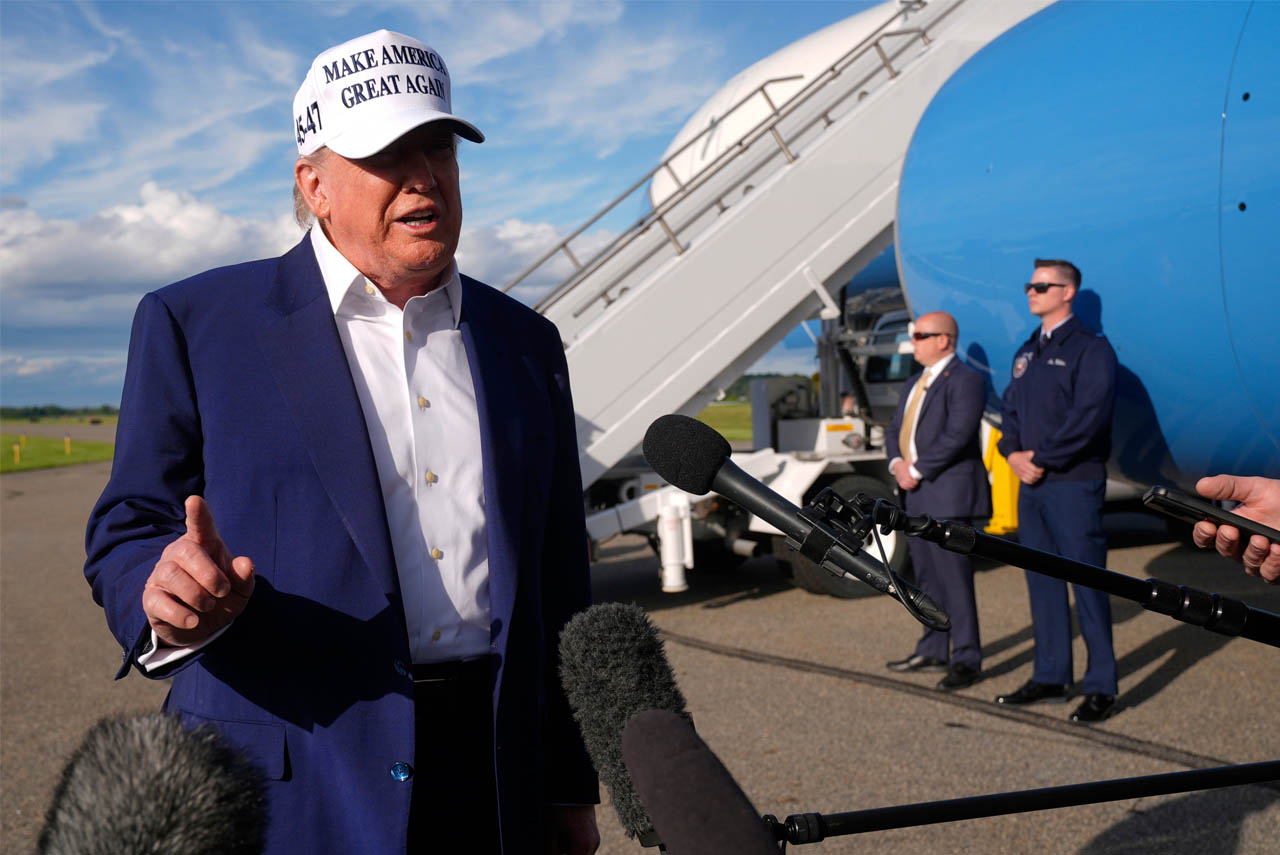
Donald Trump talks to reporters at Morristown Airport, New Jersey, USA. May 26, 2025. Photo AP
But the war is more important to Putin. For me, too, this was a puzzle. It seemed to me in February that Putin would agree to some compromise and stop, that it would be enough for him to reach Pokrovsk, well, and that's it. And then he would try to conclude some big agreement with Trump. No. No. We see that the war is more important to him. And this conjunctural turn towards Trump's populist nationalism may be canceled in the next one and a half to two months. Because Trump will now have to decide something. I can't be sure of this, but if Trump still quietly begins to turn in support of Ukraine, then Putin will have to cancel the rehabilitation of America. This will, of course, be a funny political somersault, but it is quite likely.
In general, their imperial and Russian ethnic nationalism is not compatible with friendship with the USA. Not compatible. It is inorganic. They somehow these last weeks tie the green and the wet. But it seems to me that this is temporary and unstable.
Evgenia Albats: But Russian nationalism is quite compatible with Chinese nationalism. All of Xi Jinping's policy is built precisely on Chinese nationalism.
Ilya Shablinsky: Yes, absolutely. Putin likes the Chinese experience. Somewhere from his third term, Putin gradually began to substitute the European path of development with the Chinese path. The peculiarity is that on this path he ensures almost a vassal relationship of Russia to China. This is unprofitable for Russia from all points of view. Economically, first of all. But Putin began to make this turn, and the adaptation of state ideology to sinicization is happening gradually, being formalized along the way. They go along the path of selective repressions. Nationalism in the Chinese spirit. But in China, minorities have long been dealt with. And they are indeed in the clear minority there. In Russia, everything is not like that. In Russia, there is a whole region of Caucasian republics, a significant part of the Muslim population. In general, jokes with ethnic nationalism are bad. Putin took this into account. But he is aging, the situation is getting more complicated. And he, I think, may at some point decide that any tools should be used to retain power. Any.
For this system to stand, it somehow overexcites itself, winds itself up, invents more and more enemies where there are no enemies left. This is a sign of state erosion
Evgenia Albats: Andrey, since you are in Moscow, tell me how technocrats relate to all this? People like Elvira Nabiullina, like Mishustin, Kudrin, Vyugin, etc. Or are they so quiet that no reactions can be recorded?
Andrey Kolesnikov: This is an absolutely closed caste, undoubtedly. No one knows what they think about themselves. But we understand that there are different people. And someone may accept this as a natural component of the regime that is built and put up with it. For someone, these are signs of further savagery and archaization, but what can be done about it? Maybe someone from the legal departments of the government apparatus or the presidential administration is trying to do something, but this is not noticeable because all the terrible legislation, undoubtedly contradicting the Constitution, passes through these filters. And ends up on the president's desk, and the president signs these laws.
Sometimes something wakes up in the government and they slightly pause or ask to rework something, but this is cosmetic. I think there are many people within the system who see signs of non-medical madness, which indicate that the system is moving into a stage of full totalitarian maturity. True, not yet completely. For this system to stand, it somehow overexcites itself, winds itself up, invents more and more enemies where there are no enemies left. This is a sign, perhaps, of the collapse or beginning erosion of statehood. When Justice Minister Chuychenko says that statehood is more important than laws and human rights, he is just talking about the collapse of statehood. Because at the core of a normal, strong state are institutions, laws that are above the discretion of officials, even if it is the president. And human rights, which must be observed in accordance with the same Constitution. That is, with these laws, they are destroying the foundations of statehood.
Evgenia Albats: But there must be an instinct for self-preservation. The Russian nomenclature should remember the history of both the tsarist bureaucracy and the Soviet bureaucracy, right?
Andrey Kolesnikov: Many of them believe that this regime will last for their lifetime, and it is necessary to behave so frantically to support this regime, to comply with its rules.
Evgenia Albats: And how to look children in the eyes?
Andrey Kolesnikov: Well, I don't know how they are doing with children. If we talk about the upper layer, their children are all with Western education, and many live in the West. What we once considered a guarantee that they would not destroy the state to such an extent, it turned out, it was not a guarantee. The middle layer just serves, behaves quite quietly. They try not to think about what is happening. Or convince themselves that everything is done correctly. People adapt to the system in which they work. If they believe that the system is outdated, archaic, does not correspond to human rights, then they choose another path: either opposition to this system, or another job, outside this system, or they leave the country. Students do not return because they do not understand how to apply themselves in an authoritarian state. So people adapt. This is ordinary adaptation to the circumstances in which you live. This is not an exclusive property of the Russian people.
Evgenia Albats: Absolutely. Just the experience of Soviet power shows that this does not save. That when the tsar, the sovereign decides that a little blood should be shed so that others are afraid, it does not protect anyone. That's what I'm talking about.
Andrey Kolesnikov: It does not protect, yes, and we remember an even closer historical period, the collapse of the Soviet Union, when party officials were treated negatively, and there were indeed human tragedies, people ended themselves.
Evgenia Albats: Ilya Shablinsky, a specific question to you about Sergey Kiriyenko, his evolution from a liberal to the deputy head of Putin's administration. Kiriyenko must understand that he is still an outsider for all this KGB fraternity around? Or is he so technocratic that he doesn't care who to serve?
Ilya Shablinsky: My opinion — this is deep adaptation. It does not deceive anyone in his environment. I think Putin roughly understands what Sergey has in mind. But he is effective because he organizes elections, he organizes all major political campaigns.
Evgenia Albats: Referendums in the occupied areas too.
Ilya Shablinsky: Yes, yes. A person performs dirty work. Nothing, he takes it. Despite the fact that I think this whole KGB gang has no illusions about Kiriyenko. They believe he is an outsider. But he copes. Works. Well, live.
Evgenia Albats: Does Kiriyenko understand what kind of regime they have built in Russia?
Ilya Shablinsky: Of course. They chose two different behavior options. There is Dmitry Anatolyevich Medvedev, he chose the role of a jester. And Kiriyenko chose the role of an advisor on technical issues. And he turned out to be in place. He is convenient for Putin. He made such a choice. This is a terrible choice. Indeed, it is easier to leave, not to get into this swamp with dirt and blood. He climbed in. As far as I understand, he tries to avoid loud public statements, not to speak like various Nebenzya, Zakharova, Lavrov. Once Putin made him say something about Ukrainian nationalists. And he wrote an article on why he is against Ukrainian nationalism. This happened once. And in general, he remains silent. He understands everything perfectly. But the person made such a choice...
Video version:
* Evgenia Albats, Andrey Kolesnikov, Ilya Shablinsky have been declared "foreign agents" in Russia.
** Alexei Navalny is included in the register of "terrorists and extremists".