Yevgenia Albats*: Many of the news stories from the past month concern the progress of US-Russia negotiations on a ceasefire in Ukraine, on stopping the fighting, on how it will all proceed and what to expect. Perhaps it is already possible to draw some conclusions. Recently, Russian fascist Alexander Dugin stated in an interview with CNN that «Putinism has won in the US». Essentially, he said that if the United States of America stops supporting Ukraine, then Russia and the US can fight together against European globalism. What do you think about this?
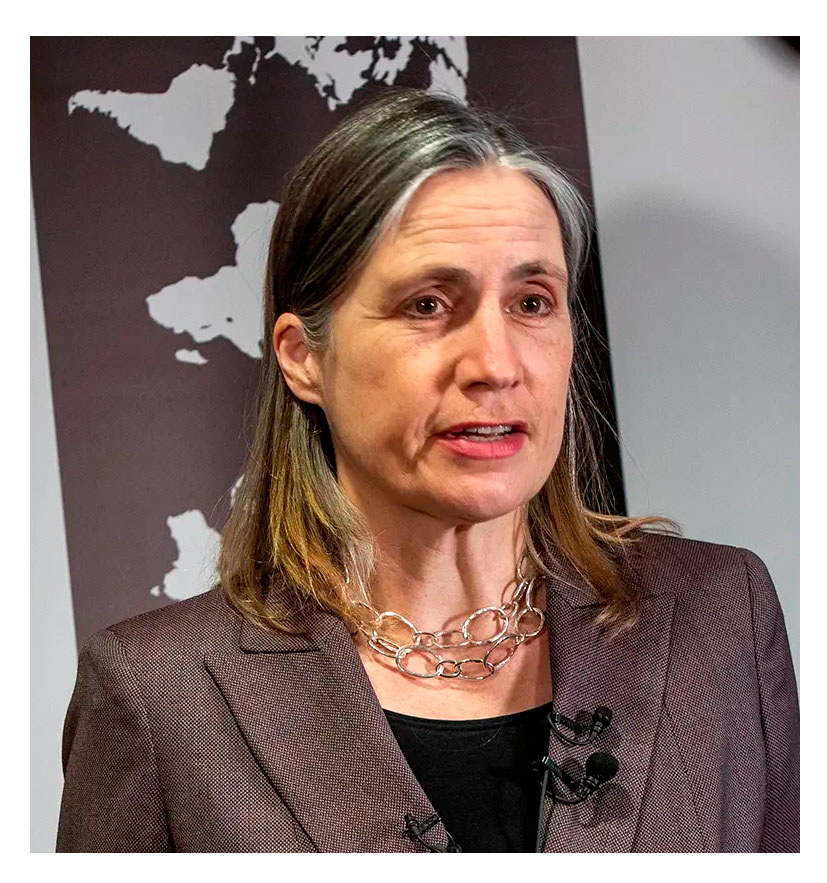 Fiona Hill: I'm not that surprised by this statement. I met Dugin 25 years ago when he had just written his book on the turn of history, and I quickly realized that this is a man obsessed with identifying the turning points of history. He takes us back to Sir Halford Mackinder's idea in his 1904 pamphlet that the pivot, the leverage point, is obviously on the Eurasian continent. At that time, there was Britain and the Great Sea Empire. The United States was part of these empires, and Dugin's thesis was that through the revival of Eurasianism, Russia would return to its rightful place in the world and perhaps cooperate with the United States from its oceanic fortress. Dugin was indeed pondering such things 25 years ago, and interestingly, it is more of a reference to 1984 than just to 1904.
But what he touches upon is actually very puzzling and alarming. Indeed, if the US withdraws from supporting Ukraine, it effectively leaves Europe unprotected from the war that Russia is waging, but where Russia is supported, perhaps not by the United States (although we saw Trump trying to cozy up to Putin and reset relations as he wanted in his first term), but actually by China, North Korea, and Iran. So we find ourselves in quite a difficult position, and it raises many questions about European security, which is why Europeans are trying to figure out what to do.
China's Proxy War
Yevgenia Albats: Ukraine reported captured Chinese nationals fighting alongside Russian troops. Are the Chinese ready to supply Russia with their ground forces?
Fiona Hill: I don't think this is necessarily connected to the Chinese state, but we are witnessing a situation where Russia is indeed desperately seeking mercenaries for the war in Ukraine. North Koreans are fighting there, but we know that there are also hapless Indians, Nepalese, and people from all sorts of backgrounds from other countries who are somehow recruited, often deceitfully, into this war, and they end up on the front lines.
Lucien Kim: Well, we know that recruitment efforts have been made if not directly in China, then somewhere in India or neighboring countries...
Fiona Hill: Yes, there are many Chinese. Well, we need to find out if they are indeed soldiers of the Chinese army or if they are being trained in Russia. This is an open question, but I think Lucien is absolutely right that Russia is recruiting everywhere. Many come from Central Asia, especially with dual citizenship and Indian passports, as you mentioned, and some without. Were these Chinese working in the Far East or elsewhere in Russia who were recruited. If you talk to Paul Whelan, the American who was captured and held hostage in Russia, he will tell you all sorts of stories about the people he met in prison. It is actually a fascinating study of how recruitment to the front happened, with people being taken, arrested, placed in Russian prisons, and then sent to the front, for example, from all sorts of backgrounds, nationalities, and citizenships.
I think the most important point will be how China reacts to this and how the Chinese state will address this issue in its bilateral relations with Ukraine, as well as how they will respond to this publicly. This can tell us a lot, because as I said, the main question now is whether the United States is switching sides, whether they are withdrawing from the conflict, because China, North Korea, and Iran see this as a proxy war against the United States and openly tell Ukrainians: «It's not about you. It's about our relations with the United States». How will they react to the change in the US position? Will they continue to support Russia in its war against Ukraine, because now this is a European war, and a war, obviously, for the future of Europe and European security.
Ukrainians always wanted to win the war, for them it was always existential, but it wasn't existential for the United States. And now many Europeans have understood Ukraine
Yevgenia Albats: Americans played an important role in helping Ukraine. However, as many now say, «too little, too late»: Ukraine must win, but not quickly, to bleed Russia as much as possible at the cost of Ukrainian lives?
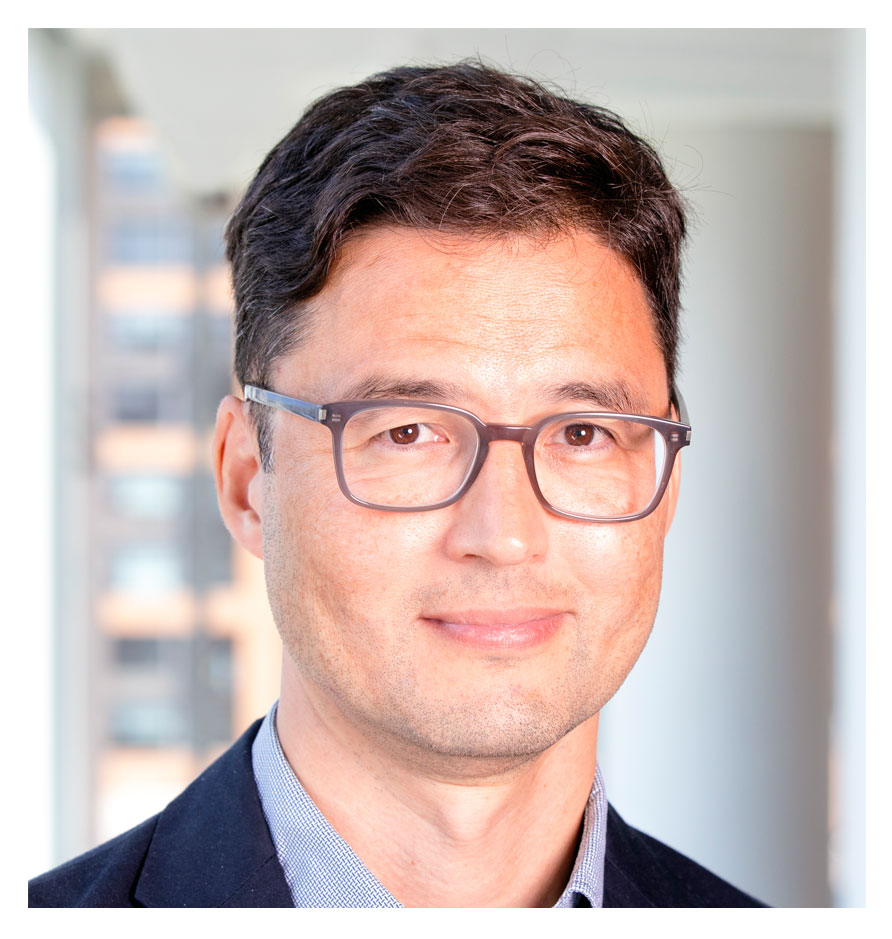 Lucien Kim: As someone who spent a lot of time in Ukraine last year, I would say that there is also quite a bit of disappointment with the Americans, the Biden administration, and the speed of arms deliveries. There was a naive hope that Trump, despite his «track record» in Ukraine during his first term, could somehow change the situation.
Fiona Hill: President Biden made it clear that his number one goal was to avoid nuclear Armageddon, a third world war. And Trump talks about the same thing, defining it as an exchange of nuclear strikes. If you were to create a sort of decision tree and your number one goal was to avoid nuclear war at all costs, then all other things related to Ukraine would be much lower. General Milley made it clear a year and a half or two ago that he believes Ukrainians should dig in and fight a defensive war.
But for Ukrainians, this meant giving up the opportunity to reclaim Ukrainian territory. Thus, there was always a simultaneous confrontation with different levels of involvement, different points of view, and different goals. Of course, Ukrainians always wanted to win the war, for them it was always existential, but it wasn't existential for the United States. Many Europeans believed that since the United States decided to intervene, perhaps they shouldn't be doing it. And now very many Europeans — Poles, Balts, and others realize that this is existential for them as well.
How to Impose a Deal
Yevgenia Albats: We were told about negotiations between US and Russian representatives in Saudi Arabia, which lasted for 9, for 12 hours. Fiona, you probably participated in many negotiations, including semi-secret and secret negotiations in Geneva, and so on. What can be discussed for 12 hours? Were they really discussing Ukraine, or was there something else, like in the negotiations between Churchill and Stalin in 1944?
Fiona Hill: Listen, the people from Trump's entourage, most of whom went to these negotiations or discussions, had never met Russians before. They know nothing about Russia, about Russians, or even about the conditions Russia sets. On the American side, there are still people I and others worked with, they are still working in the State Department and in the intelligence services, preparing materials, but they are not there. Those who are there may not even have bothered to read the prepared materials. So they are just getting acquainted and getting into the situation. And the statements made by the Russians just repeat the entire history of US-Russia interaction over the past few years, just repeating where they left off. That is, essentially, they are going back to basics and starting all over again. So I'm not surprised by these 12 or 9 hours.
Neither Putin nor Zelensky asked Trump for negotiations or mediation. Trump is trying to impose, essentially, a peace deal, but he hasn't received any agreement from Putin. Just a portrait and «prayers»
Yevgenia Albats: Nevertheless, there were reports that an agreement was reached on specific ceasefire issues, but it all ended with new brutal shelling of Ukrainian cities. In the end, Putin even said he would finish off Ukraine. So what kind of ceasefire or peace talks can we talk about?
Fiona Hill: Trump wants a ceasefire. He wants to be able to say that he made a peace deal. Neither Putin nor Zelensky asked him for negotiations or mediation. Trump is trying to impose, essentially, a peace deal, but he hasn't received any agreement from Putin. He got a portrait, he got «prayers» and opportunities to chat with Putin, as he wanted. And now he is getting a whole series of discussions about resetting US-Russia relations, which he wants. But his ability to achieve a real ceasefire remains elusive because Putin is only interested in US-Russia relations. And the goals regarding Ukraine, his goals have not changed at all. So Trump can't do anything.
Lucien Kim: I think they were also talking, especially Kirill Dmitriev when he was in Washington, about deals. About «what we can do together». Fossils, space, etc.
And I think that in the future we will see more division and a certain dissonance between what is happening in bilateral relations between Russia and the US and what is happening on the ground in Ukraine. They will just be two different things in the understanding of the Trump administration.
Fiona Hill: And Trump saw this from the very beginning, to be honest. I mean, he keeps repeating: it has nothing to do with me or Ukraine, nothing at all. In the very first conversation he had with German Chancellor Angela Merkel, she asked: «What are you going to do with Ukraine?» And he replied: «What do you mean, Angela? What am I going to do with Ukraine? What are you going to do with Ukraine? What does this have to do with me?» So he was quite consistent. And now he really wouldn't want to have anything to do with Ukraine. He would like it all to stop.
What Can Europe Do
Yevgenia Albats: Fiona, you are advising the Prime Minister of the UK and the President of France on their strategy regarding Putin. Do you think Europe, given the position of the President of the United States, can help Ukrainians end this war?
Fiona Hill: I think these are complex and very different questions because we are very far from a peace plan or, in fact, a peace process. I mean, these negotiations, as we all agreed, are at this point much more about the US and Russia than about Ukraine. And even in the case of a ceasefire — look at what happened in Gaza. I mean, the ceasefire seems to have completely disappeared. All these things are quite fragile. Europe has the opportunity to help Ukraine hold the line and deprive Putin of the opportunity to move further. This is already a completely different topic for discussion. But we know that both Starmer and Macron are talking about the fact that if a peace agreement is indeed reached, they will be ready to do something, mainly to send a signal.
France and the UK have a core of rapid reaction forces. But previously, the allies' call to respond was more intended for expeditionary activities, which is somewhat different from what we will be dealing with in Ukraine. Now Europe is very seriously discussing the future of European security. The war in Ukraine is perceived as World War I, World War II, as a huge turning event. The largest in Europe since World War II. It changes everything. And if the United States is doing what they have often done in historical times — after 80 years of being the most significant military power in Europe, they step aside, it means that Europe must start thinking very seriously about the future.
And the war in Ukraine becomes that very turning point. What they do with Ukraine becomes very important. Of course, Ukrainians have sent 800,000 people into the field and also deployed their defense industry. They are producing drones themselves, they are producing weapons themselves. Ukraine is a completely different place than it was before, not only in terms of territorial and population losses but also in terms of the fact that the whole country is thinking about defense, like Finland after World War II. We are seeing massive changes. So in some sense, we are distracted by all these talks about ceasefires and sending peacekeepers when something bigger and more fundamental is actually happening. I think there is definitely a sharp shift in Europe and in how Europeans think about their defense.
Yevgenia Albats: How long will it take for Europeans to mobilize? Do you expect the European Union to really stand up and start preparing?
Fiona Hill: The European Union is not going to do this because it is not the role of the European Union, we are talking about the European pillar of NATO. And other bilateral relations. In fact, there are many more opportunities in Europe than we think. There are also all sorts of arrangements. There are the so-called Joint Expeditionary Forces, which include all the Scandinavian countries and the Baltic states, all of them spending much more than 2% of GDP on defense. And it's not about the percentage of GDP, but about what they are actually doing and what they can do, what their capabilities are. They have Finland, a country with a population of 5.5 million people, which has a standing army of 125,000 people and can pull up even more. Look, Ukraine overnight created a huge army because it had to do it out of necessity. If a country has to mobilize, it will do it in the face of a threat.
But the main question is what Europeans consider their future long-term threat. There are types of threats that do not require the presence of hundreds of thousands of people on the ground. You have probably read in the press about sensors washed ashore from Russian ships, which were clearly intended to collect data from the seabed about underwater cables and pipelines for the UK, one of which transports 70% of British gas. We talked about what happened with the «Nord Stream».
I mean, critical national infrastructure is at risk. This is GPS jamming and similar things that can happen. These are poisonings, killings, and sabotage. There are many different events happening in Europe that need to be responded to. And there is also what is happening in Ukraine that needs to be taken into account because it is the Europeans who could provide the most help to Ukraine at the moment.
Lucien Kim: I think the «coalition of the willing» can be much broader than the European Union. And of course, a country like Turkey can play a key role in the coalition. I mean helping Ukraine.
Yevgenia Albats: Will Erdogan go against Putin?
Fiona Hill: They are already restricting access to the Black Sea, as required by the Montreux Convention during wartime. Moreover, the Russian Black Sea fleet is not being replenished with ships arriving from the Baltic. Whereas the Baltic states have provided Ukraine with drones.
Lucien Kim: The only hope Ukrainians have right now is that Europeans will somehow pull themselves together. But how long will it take to create a European army? How long will it take to create an integrated Ukrainian or European defense industry that can also supply Ukrainians? At the moment, only the United States can gather enough resources to supply Ukrainians.
Fiona Hill: To be clear — you are not creating a European army. You are thinking about how to combine existing European armies because the United States was there as a link in terms of leadership within NATO, with Supreme Allied Commander General Cavoli, who recently testified and actually made it clear that Ukraine is in better shape than it is credited for. But this is precisely leadership. In addition, as Lucien said, equipment is very important. Europeans can probably replace American equipment, but over time they will need intermediate potential. There is also intelligence, but Europeans also collect intelligence. It's just that the United States is too large-scale.
But look, the US is leaving Europe. And Finnish troops are not leaving Europe. Turkish troops are not being withdrawn from Turkey. British troops are not being withdrawn from Britain. That is, this is a voluntary contribution of national armies to the common cause of Europe. The European army exists because European armies exist. It all depends on how they organize themselves. They can mainly use the NATO framework. NATO's political plans are not going anywhere. They are already training and operating. There are also NATO substructures, such as the Joint Expeditionary Forces, headquartered in the UK. And, as I said, they include all the Scandinavian and Baltic countries. Poland can be added to them. There are relations between the UK and France, which we have already talked about, Germany and France, Germany and the UK. There are other bilateral and regional relations that can come into play. It's just a matter of time.
It all depends on what you do. Do you help support Ukraine or defend your own territory from Russia, or what other operations do you conduct? All this is being discussed. And it has to be discussed in real-time, very quickly, because in a hundred days of Trump's rule, everything turned upside down.
What Does Putin Want
Yevgenia Albats: Europe lived with two German states for 40 years. China has been divided for almost 80 years. Can you imagine two Ukraines — pro-European western and pro-Russian eastern — as a result of a ceasefire?
Lucien Kim: I think this is the most likely outcome of a ceasefire, as the Trump administration has made it clear that it expects Ukraine to abandon the return of territories by military means. So it's hard to imagine that in the foreseeable future Crimea or Donbas will be in Ukraine's hands. The problem is that the regions we are talking about are now integrated into the Russian constitution and the Russian state. And how to extract them — it's hard to imagine. They can't even be compared to the Baltics because the Baltics had their national languages and very distinctive identities, whereas these Ukrainian regions are largely depopulated, devastated by war, and populated by people from Russia. Therefore, I think even the character of these regions is changing.
Fiona Hill: Which is obviously Putin's deliberate policy.
Look, even reincorporating the eastern regions of Germany into Germany was not easy. Look at the voting results for the «Alternative for Germany». I was in Germany two years ago, and they said they don't feel like part of the new Germany. They had different states. It was not an easy transition. So even if by some miracle these territories returned to Ukraine, everything would not be so simple.
Lucien Kim: And I want to add that these four regions plus Crimea, their inclusion in Russia was never Putin's goal. On the eve of the full-scale invasion, he said: we have no plans to occupy any Ukrainian territory. And I don't think he was lying. I think his idea was to decapitate the Ukrainian government and establish a puppet regime that would not require the occupation of these regions. Of course, everything went completely differently than Putin wanted. Hence these fake referendums. Of course, Putin will not calm down until Ukraine is subordinated to the Kremlin. And therefore, moving the borders is not what this conflict was started for.
Yevgenia Albats: Nevertheless, the Russian army planned to take Odessa in August 2022. That is, not just occupy Kyiv and retreat, not just overthrow the government and retreat. Obviously, they really want to have the Odessa port. So there were several plans.
Fiona Hill: I think Putin was always ready to take whatever was available to him. But there can be different stages of the plan. You may not have enough troops to occupy everything. But there is the experience of Georgia, where we are talking about gradual occupation, re-occupation. I think that expanding the scale is part of the goal, and this happened in Georgia with a complete reversal of the state's position and the blurring of the country's identity. I think no plans have disappeared, and Putin will take what he can, by any means.
Trump wants to show that supporting Ukraine has benefited him. What's the main thing in this matter? It's rare earths, raw materials, and minerals for the 21st-century economy, and it seems everyone is expanding their territory for these purposes. For Putin, this was also one of the justifications for invading Ukraine.
Yevgenia Albats: The United States proposed a plan that involves huge US investments in Ukraine. I mean a deal for mineral development. Why does Trump need this?
Fiona Hill: Here, as in everything, there are hidden motives. I mean, Trump wants to show that supporting Ukraine has benefited him. What's the main thing in this matter? It's rare earths, raw materials, and minerals for the 21st-century economy, and it seems everyone is expanding their territory for these purposes. I mean, for Putin, this was also one of the justifications for invading Ukraine. His own ministers talked about all the abundance that Russia is going to get from the same set of minerals, raw materials, rare earths, and agricultural products.
In addition, <negotiator>Kirill Dmitriev and others told Trump that the US allegedly missed business opportunities due to sanctions and the breakdown of relations with Russia, Dmitriev talked about 500 billion. There was never such a level of investment and trade between the US and Russia, but that's the idea: you lost something. And Trump always exaggerates the amount they lost. And so he wanted to show that the US will get compensation.
For Ukraine, this is not equivalent to security guarantees. Unfortunately, this is a game that is going on, it is not very pleasant, but it is all for appearances and to show that you are getting something and that the United States is not going to support Ukraine just like that.
Lucien Kim: It's a caricature of reality to show that, supposedly, it was all about resources. However, I don't think the United States initially showed any interest in Ukrainian resources when the war began.
Fiona Hill: Now they have started. And this brings us back to Dugin and Sir Halford Mackinder in 1904. Britain and other countries divided the world in search of resources, and now we seem to be returning to this period.
Yevgenia Albats: Interestingly, the markets are evaluating the prospects of the deal with much more enthusiasm. Why?
Fiona Hill: I think when it comes to markets, there's a lot of gambling going on. I mean, it's pure speculation. Of course, there is hope that some kind of breakthrough will happen, especially in US-Russia relations, and we won't be thinking about a ceasefire and a peace agreement in Ukraine. Dmitriev once worked at Goldman Sachs and in many other places. He knows how to play this game. He is probably talking to analysts who then try to shape the markets because there is an idea that a lot of money can be made from all this.
In fact, this is the whole point of the message for Trump, Witkoff, and others. We all need to make a peace deal to make a lot of money. And what's not to like about making a lot of money? Putin genuinely believed that in relations with Ukraine, the main thing was to get a price. How much is Ukraine willing to pay for its freedom? He showed that he is ready to go to great lengths and costs to get what he wants. 800,000 casualties on the Russian side, killed and severely wounded — the result of his efforts over all this time.
The markets are trying to understand the same thing. If US-Russia relations change, maybe we'll make some money. Maybe financial sanctions will be lifted. Maybe there won't be secondary sanctions. Maybe the US, pursuing the shadow fleet, will back off. Many people are very eager to return to the Russian financial markets and trade Russian debts, bonds, and so on. But are people ready to return and invest in tangible things on the Russian market — that's another conversation.
Yevgenia Albats: Why did Putin invade Ukraine at all? And what could make him agree to a real ceasefire?
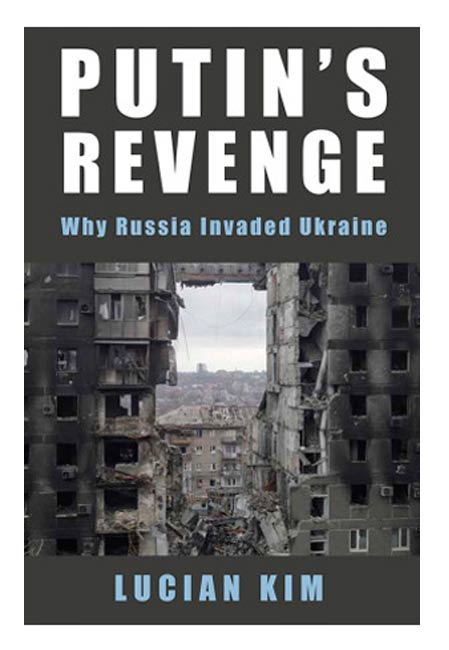 Lucien Kim: I wrote a book about this, the subtitle of which is «Why Russia Invaded Ukraine». And I highlighted two main reasons for the Russian invasion. The first is Russian imperialism. That is, it's the idea that Russia has a historical mission to be the center of a great Eurasian empire. I think this is largely related to the collapse of the Soviet Union and the legacy of this empire, which has been a heavy burden on many people. And we certainly know that this was the case with Vladimir Putin and his clique.
But I also argue that just nostalgia for the empire or the Soviet Union is not a sufficient motivation to attack your neighbor and try to conquer it. The other element, the main driving force, was Putin's dictatorship. After 20 years in power, Putin evolved or, more correctly, degenerated as a leader. He believed that his power was threatened by the West. And in his paranoia, he saw that the so-called color revolutions were approaching his border and that their goal was regime change in Russia. I think the combination of these two things ultimately pushed him to attack.
The tragedy of Ukraine is that in fact, no US president cared about it, and it remained in limbo for so long
In my book, I also talk about what the United States was doing all this time, what NATO's role was. And to speak very briefly, I came to the conclusion that only one US president really insisted on Ukraine joining NATO, and that was George W. Bush — as a reward for Ukraine's participation in the US military campaign in Iraq. All subsequent US presidents — Barack Obama, Donald Trump in his first term, and then Joe Biden at the beginning of his term were completely uninterested in Ukraine. Contrary to Russian propaganda or, I think, Putin's paranoia, these three presidents put US-Russia relations first. And so I believe that the tragedy of Ukraine is that in fact, no US president cared about it, and it remained in limbo for so long.
Fiona Hill: I want to add that Ukrainians themselves were somewhat more ambivalent about NATO at that time. When the invasion of Georgia happened, I think the Ukrainian leadership read the writing on the wall. And after that, they made a deal with the Russians for a long-term lease of Sevastopol and other Black Sea Fleet facilities. And they actually backed off from the push for NATO. So only after Russia's annexation of Crimea did the idea of Ukraine returning to NATO become a topic again, but no one was interested in Ukraine becoming a NATO member at that time.
Yevgenia Albats: So what are Putin's incentives to stop this terrible war and make a peace agreement?
Fiona Hill: I don't think he has any incentives at the moment. I think it's more about whether he realizes that he can't achieve what he wants.
Lucien Kim: He only has an incentive for normalizing relations with the United States. Thanks to this, he is on the world stage.
Negative Incentive
Yevgenia Albats: You both said that Putin has no incentives to end the war. But look, he had to give up Syria. He lost his base in Syria because he simply didn't have the resources to support Assad. He is definitely losing if he doesn't have the opportunity to support another war.
Fiona Hill: But that's what we were just talking about. It's about giving up, right? It's not an incentive. He wouldn't want to leave Syria. It's all about the calculations changing, and he couldn't hold on there because the new Syrian government didn't want him to stay, and he lost it because of Assad. He could easily lose the opportunity to move forward in Ukraine if Trump didn't come with his cards. I mean, Trump is essentially playing another hand and losing Ukraine at this particular moment. So why should Putin do anything until he sees how this game unfolds?
Yevgenia Albats: Because he lacks people. He has to bring troops from North Korea.
Fiona Hill: But he believes he has far more people than Ukraine. And that's why we all sit in meetings and talk about when Ukraine will run out of weapons. He constantly listens to all this. He reads the Wall Street Journal, or someone supplies him with all these materials. So why should Putin do anything at this moment? I mean, in Syria, everything went in a different direction.
Lucien Kim: I think he still has to wait, right? I mean a war of attrition. They believe in a war of attrition. I mean, no matter how hard it is for Russia, it's still worse for Ukraine, especially if the US is now cut off, and Europeans can't come up with adequate measures.
Yevgenia Albats: Oil prices today are just above $50. The Russian budget is holding at best at the level of 45. Putin was able to wage this war for these three years because he was receiving 350 billion in revenues from oil sales, and that's what he needed to sustain the war. Can we imagine something like the deal Reagan made with the Saudis in the 1980s when oil prices collapsed and the Soviet Union finally fell apart?
Fiona Hill: Putin is watching all this very closely. And even listening to this, he thinks: «Well, no, I have more advantages». I mean, he has a really cool team of central bankers and economists gathered around him. He has people like Kirill Dmitriev running around everywhere. He has Trump, who is very, very, very eager to make a deal and have something he can point to. And he is betting that Europeans won't be able to pull themselves together. I would like to bet that Europe will pull itself together, but Putin wouldn't agree with me.
Lucien Kim: I can imagine a scenario where even some kind of peace agreement on a ceasefire is reached, and everyone is very happy about it, especially the market. And what happens next (and this is what I hear from Ukrainians since last summer), what happens after the shooting stops? The thought that once domestic politics returns to Ukraine, Ukrainians, who were so united and so cohesive in fighting the external aggressor, will start turning against each other is frightening. And I can assume that this is also one of the reasons why we keep hearing from the Kremlin about the need for a legitimate leader in Ukraine. We will hear more and more calls for elections, and elections are opening Pandora's box for all the internal disputes and aggression that exist within Ukraine.
Fiona Hill: This brings us back to Georgia. In Georgia, everyone started fighting each other as soon as the Russian threat transformed, took another form. And where is Mikheil Saakashvili now? In prison. Putin, of course, wouldn't mind seeing Zelensky in prison as well. I'm sure he will have direct video surveillance of Zelensky, in whatever prison he ends up in. Sorry for speaking so bluntly, but you know that's exactly what they want.
Advisors to the Autocrat
Yevgenia Albats: Fiona, you worked with Trump for some time during his first term. What is the decision-making procedure in the administration? Who advises Trump? Are there people capable of telling him something he might not like? There are practically no such people in Putin's circle.
Fiona Hill: We know that Putin himself made the decision to enter Ukraine. He made the decision, announced it to a very small number of people, and they supported it. But it's not just that. The thing is, if you are in a hyper-personalized presidential system, there aren't many people who can get into the room with the president to be able to talk about something for more than two seconds. I can't say that I advised Trump. I mean, he asked me two questions directly. I didn't have the opportunity to sit in front of him and say: «Hey, President Trump, here are my thoughts on this». That didn't happen. Trump is guided by his instincts, as he tells everyone. There is a through line of things he has believed in for a very long time. For example, tariffs, he is a tariff man. He said he believes in tariffs since the 1980s. Unfortunately, he doesn't believe in Ukraine, just as Putin doesn't consider Ukraine an independent country.
And when Putin told him that he doesn't consider Ukraine a country, Trump agreed with him at the very beginning of his presidency. And he constantly talks about it: maybe it will be an independent country, and maybe not. He is always guided by what his intuition tells him. He has repeatedly said: I know better than you. I know better than my generals. He does this constantly. So I think the answer to this question is who will try to get to him and will try to shape his views. Why did Witkoff spend so much time talking to Tucker Carlson? Because Trump will watch him on TV, because without this Witkoff is unlikely to get more than a few minutes. Even the closest associates have to come up with how to present it to him.
So this is part of the problem we are facing. Trump is not infallible. He makes mistakes, but he is a very smart politician. He shouldn't be counted out of the game.
Of course, life is full of surprises, with any person, the greatest, anything can happen. But if we talk about the through line, the through line now is Trump, and now he is even more convinced of his genius. He survived an assassination attempt. He returned in a way that no one thought he could. He is the first president in over a hundred years to be re-elected after being out of office. Why should anyone know better than him? So everyone is trying to figure out how to influence Trump...
Video version:
Reference
Fiona Hill from 2017 to 2019 served as Deputy Assistant to the President of the United States and Senior Director for European and Russian Affairs on the National Security Council. From 2006 to 2009, she was a National Intelligence Officer for Russia and Eurasia at the National Intelligence Council of the United States. She is the author of the bestseller «There Is Nothing for You Here: Finding Opportunity in the Twenty-First Century», co-author of the books «Mr. Putin, Operative in the Kremlin» and «The Siberian Curse: How Communist Planners Left Russia Out in the Cold». She holds a master's degree in Soviet Studies from the Davis Center, as well as a doctorate in history from Harvard. She has a master's degree in Russian and modern history from St. Andrews. She studied at the Maurice Thorez Moscow Institute of Foreign Languages.
Lucien Kim — Senior Analyst for Ukraine at the International Crisis Group. He worked for over 20 years in Moscow and Berlin, covering events in Ukraine and Russia. He covered events in Central and Eastern Europe as a correspondent for National Public Radio, Bloomberg News, and Christian Science Monitor. Author of the book «Putin's Revenge: Why Russia Attacked Ukraine».
* Yevgenia Albats is declared a «foreign agent» in the Russian Federation.
Photo: Banki.loans.