Yevgenia Albats: We are all following the difficult negotiations on ending the war or at least a ceasefire in Ukraine. During the funeral of Pope Francis, there was a meeting between US President Donald Trump and Ukrainian President Volodymyr Zelensky, after which Trump published an unusual post on his social network Truth Social, questioning: is Putin leading me by the nose? What would you answer Donald Trump?
Putin Doesn't Need Peace
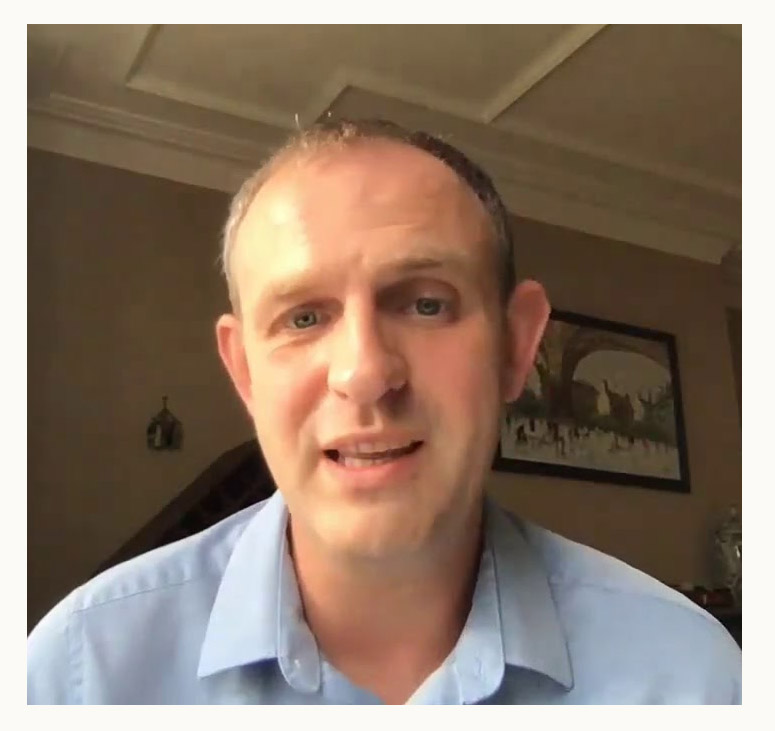 Sergey Radchenko: The fact is that there have been no serious peace negotiations yet, and they are not even planned. A process is needed for peace negotiations. It is necessary to gather parties interested in these negotiations. This is not only Russia and not only Ukraine, but also European countries, which are currently sidelined, despite the fact that they should play a key role in any agreement that will or will not be reached. So far, there is no movement towards a serious peace process.
The negotiation processes for ending the wars in Vietnam, in Afghanistan, when the Soviet Union withdrew its troops, took years. Trump, however, wants to conclude an agreement, a deal, as he calls it, within one or two weeks, which is technically impossible. It seems to me that he just wants to quickly do something in Ukraine, then wash his hands and say: that's it, guys, I'm done with this matter, now I will deal with what seriously concerns me—primarily China. At least everyone will say that I, as president, advocated for peace. That's his approach. And Putin, it seems to me, has a more long-term approach, which is set, at least, for months, and maybe even years of prolonged struggle, including military means. This mismatch of positions, mismatch of time frames, I think, is the main reason why President Trump now feels confused or even outraged that Putin is not meeting him halfway.
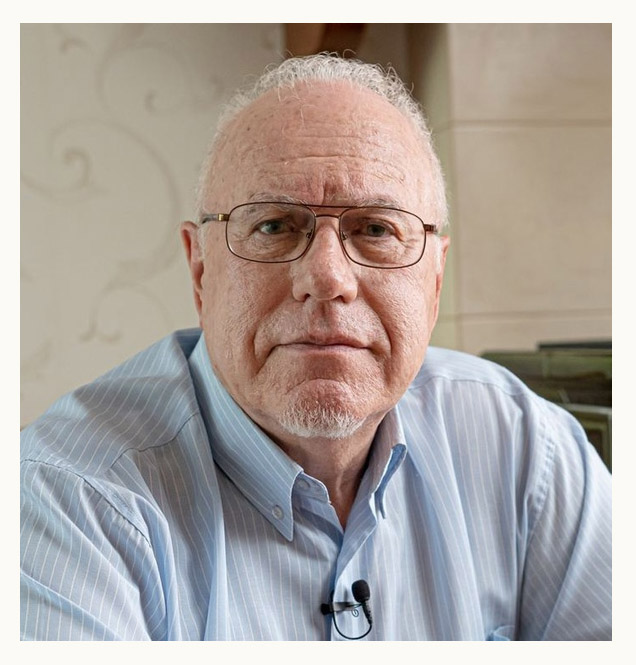 Igor Lipsits: I would say that negotiations in the Kissinger model: you give me, I give you, and in the end, we find an acceptable compromise—we don't see that yet. I think that Putin is not striving for peace because he still believes that he has a solid foundation for maintaining state stability, for financing the war. And if Russian economists are increasingly cautiously saying that Russia's economy is in trouble and may collapse under Putin's feet, as the Soviet Union collapsed, then Putin does not believe this. He is convinced that everything is fine with him. He is ready to make very large economic concessions. And he believes that he will buy Trump. He has something to buy Trump with, strangely enough: he can give Trump gas, can give oil, make the US the main seller of oil and gas to Europe. And in fact, hook the European economy. Through this, Trump and Putin will gain control over the European world.
Putin believes that he can still string Trump along for a long time, as they say in his world. That Trump will eventually give in and accept an agreement with Ukraine on terms favorable to Putin. This is a dangerous and quite bluffing game, but Putin is playing it
I don't know if this will work or not, but there are talks about it, these are not my speculations. Pay attention to some statements by Peskov, Putin's press secretary, who quite cheerfully said that we allow the possibility that the US will be the largest intermediary in the sale of Russian gas to Europe. This is possible. Therefore, Putin believes that he can still string Trump along for a long time, as they say in his world. And Trump will eventually give in and accept an agreement with Ukraine on terms favorable to Putin. I think this is a dangerous and quite bluffing game, but Putin is playing it and believes in it.
I have always assumed that for Putin, war is a way to preserve himself, to maintain his power, and it's a way of controlling Russia's financial flows, and ending the war means losing all the foundations of both life and control over the economy and his entourage. Therefore, I see no prospects. At most, there may be some agreements on a temporary truce with some extension. But I don't see any serious solution, as it was with Vietnam, as it was with Korea.
Yevgenia Albats: You said that many economists talk about a sharp deterioration in the economic situation in Russia. But a recent work by Alexashenko* and Inozemtsev* says the opposite, that everything is quite normal in Russia and Putin has enough reserves for many years to come.
Igor Lipsits: This is a six-month-old work. By modern world standards, this is quite an old report. And it is not very confirmed. The Russian economy has not yet collapsed, but it is already in a situation of stagflation. High inflation, since last year the Central Bank has not lowered the key rate of 21%, despite the insane attack on
Nabiullina from all sides. Even government experts are already saying that since mid-last year in Russia, not only stagnation, but a decline has already begun, especially throughout the civilian economy, and now the decline has begun in military production as well. There are, of course, people who say that the decline is because Russia is preparing for peace and reducing military production. I strongly doubt this. The essence is simply that production is beginning to contract even in the military sector, despite the gigantic inflows of money. And this very much reminds me of the late Soviet Union. Also, if there was an opportunity, they would fight and accumulate weapons to the half-death of the rest of the population. However, the country collapsed underfoot. I think that this is where Russia is heading.Yevgenia Albats: You said that Putin can give Trump oil and gas. How so? Will Trump gain control over Siberian oil fields or start developing oil on the Arctic shelf?
Igor Lipsits: Everything is done much more simply. American companies become exclusive distributors of Russian oil and gas in the European market. Then the control is with them, they buy Russian oil and Russian gas from "Gazprom" and "Rosneft", it will already be American oil and American gas, which are not subject to sanctions, through the "Nord Stream" and through the pipeline through Ukraine they quite calmly deliver American gas to Europe, pay the Russian government so that it can continue to kill Ukrainians, and Europeans are happy to buy cheap energy resources. Don't accuse me of cynicism, I'm just a realist.
Tariff War
Yevgenia Albats: Donald Trump announced on the so-called "liberation day" tariffs against almost all countries of the world. Three days later, when the stock market wobbled and all American indices fell, he suspended tariffs for 90 days for everyone but left them against China. China responded with tariffs against American goods and began looking for places to apply its goods in other countries of the world, particularly in Southeast Asia. For the United States of America first of all, but also for other countries of the world, the European Union, it was profitable to place their productions in China because there was cheap labor. And China rose on the fact that the West ordered production there, refusing to produce at home, where wages are significantly higher. How can China afford a trade war with the United States in this situation?
Sergey Radchenko: It cannot afford this trade war because a huge part of China's GDP growth comes from the export of goods. They have long been trying to reorient the Chinese economy towards domestic consumption. But it's easier said than done. Although China has a huge domestic market, nevertheless, the export of goods accounts for a large part of China's growth. The question now is: if exports are stopped, the goods will have to be disposed of somewhere. In Southeast Asia, the purchasing power is not so significant. Therefore, the only place that can, in principle, accept these goods is Europe. An interesting question arises, how will this look? Europeans themselves, in principle, need to export their goods, not take Chinese ones. This is now one of the key questions for the future of Europe itself, the European economy, and the relations between Europe and China.
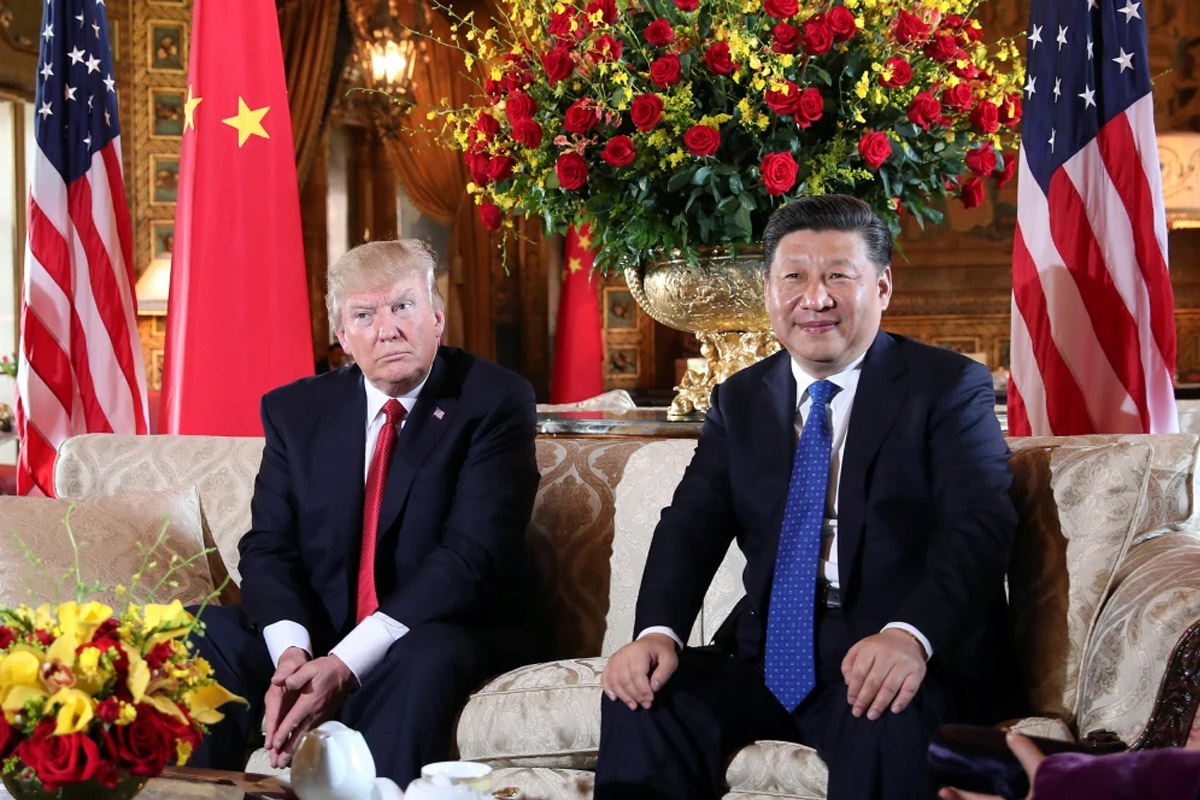
Donald Trump and Xi Jinping. Archive photo. USA, Florida, April 6, 2017. Photo: Carlos Barria / Reuters
Yevgenia Albats: If China cannot afford a trade war with the United States, why does it also impose prohibitive tariffs on American goods?
Sergey Radchenko: Because China cannot lose face. They are trying to pressure us here, and we must show that we are not afraid of this pressure. We must stand proudly and respond to the Americans' claims. This is in the political culture of the Chinese Communist Party, and this is a long-standing tradition. They actively discuss this in the press with references to Mao Zedong's strategy. Maybe Trump is counting on the Chinese being very rational in their foreign policy, but I think there are a lot of emotions and a lot of pride, a lot of striving to show themselves: we are a great power, we cannot be dictated to.
Igor Lipsits: I would allow myself to not fully agree. Let's rely on the numbers, they will clarify the situation a bit. Yes, everyone is used to the concept of Chimerica, the inseparable union of the American and Chinese economies, everyone traditionally talks about this, but the picture is changing. Let's start with the simple. In 1960, the share of the US in the world economy was 40%, now it's 24%. This means 76% of the world economy is not the US. And this is a market with which China can work. The share of the American market in Chinese exports is 14.5%. This is large, this is important, but it's not 60 or 70 percent. The share of exports to the US in China's gross product is 2.3%. Imagine a complete picture of the break between the US and China in trade. China's GDP falls by 2.3%. This is a heavy, painful story, but it's not a catastrophe. Of course, many Chinese manufacturers will face big troubles, but I think they will be supported. And at this moment, the turn to the domestic market can intensify, and Xi Jinping's model—the domestic market is more important than the export one—can work.
Not only do I see it this way, I see publications by American economists. They model this war and conclude that China is more likely to win, to withstand, than the US, which is more dependent on Chinese supplies. In this sense, the US economy is more vulnerable because it will lose a huge mass of goods. And today we can say that the US, under Trump's influence, is approaching a situation that was during COVID. Especially since Trump is completely going crazy and introducing fines for the entry of ships built in China into American ports. Which, of course, creates gigantic difficulties for trade, but means that most of the world's merchant fleet will not enter American ports. How will America supply stores? Store closures will begin, many enterprises will be left without resources. Remember 1930, the Smoot-Hawley Act, which led to a 60% drop in imports to the US, it was one of the most serious factors of the depression. So, as funny as it is, in this situation, the American economy is weaker than the Chinese one.
Sergey Radchenko: I agree that the trade war is harmful to both countries. And as we see, after Trump raised tariffs on Chinese goods, he even backtracked because he realized that for certain producers it would be a catastrophe, including for technological producers. Recently, there was a closed meeting in Washington where Bessent, the finance minister, literally said: we have gone too far in this trade war, and we will go for de-escalation. It was a closed seminar, but investors were there, they passed this information into the open space, stocks immediately jumped by 3%, especially the stocks of tech companies.
So the techies understand what the trade war can lead to. The American market will not benefit from this. As for the Chinese market, the main question for China is how to make the Chinese spend money on consumption. Will the trade war help with this? Well, maybe. But given that they have been trying to do this for many years and still can't, the question is, well, what to do if they don't spend money and save it? Then the second main rule of the Chinese government is to strengthen investments in the economy. Build all sorts of infrastructure projects, etc. Often investments are not quite healthy, it's essentially just spending money, but thanks to these investments, they manage to draw 5% growth. Unlike America, where, in principle, GDP growth is determined by the actual economy, in China, GDP growth is drawn, and everything else is adjusted to it.
Will China Escalate?
Yevgenia Albats: Sergey Sergeyevich, you reminded of Mao Zedong, who wrote a book about the long war with Japan. Now in a leading Chinese newspaper, one of the analysts also talks about a long war. In Russia, the thesis that we need to rise from our knees and prove to everyone how great Russia is led to the unleashing of full-scale aggression against Ukraine with the prospect of extending this war further to the territories of other countries, primarily Eastern Europe. If China fails to win and make its own population buy, and it starts losing the trade war with the United States, won't this lead to China choosing the same path that Vladimir Putin chose?
Sergey Radchenko: The military path? This is a very interesting question. At the Kissinger Center in Washington, I have a colleague named Hal Brands, they, together with Michael Beckley, put forward an interesting thesis that the main danger coming from China is not that China is too strong, but that China is too weak. That is, it has already reached a certain level, and the Chinese leadership realizes that now they have the opportunity to finally get something, and then everything will get worse and worse. The population is decreasing because they have insufficient population growth, there are also various internal problems. Therefore, there will be no Chinese century in the future.
Brands and Beckley just put forward such a theory that, given these factors, China may escalate the situation because this is kind of its last chance to get Taiwan. A few weeks ago, I met with Chinese colleagues in Beijing and asked such a question: in Washington, almost everyone is sure that China will attack Taiwan and try to capture it by military force, how do you react to this? Everyone assured me, swore that this would not happen. Everyone talked about their internal problems, so many economic difficulties, etc. Why would we still get involved with Taiwan? I answered them that in Moscow in February 2022, almost everyone could say the same thing about Putin, that he would never go to Ukraine, never start this war. Why? Because it is irrational from the point of view of Russia's economic interests. The same can be said about Xi Jinping. Xi Jinping is the person who makes all the key decisions in China. The establishment simply cannot know what Xi Jinping wants. And what he wants is a very interesting question.
Can we imagine that Xi Jinping, like Vladimir Putin, wants history to say something about him? Like about Mao Zedong. Mao Zedong made a revolution in China, led China to communist rule. Deng Xiaoping launched economic reforms. And what did Xi Jinping do? Under him, the Chinese economy began to decline. And given that lately, he has been increasingly and with some special zeal talking about the inevitability of China's reunification with Taiwan, it can be assumed that he will consider that in the future there will no longer be such an opportunity as now to return Taiwan to the bosom of the motherland. This cannot be completely ruled out.
Demographers say that two countries in the 21st century are experiencing the most terrible demographic catastrophe—Russia and China. By the end of the century, the population may fall by half. What new territories, why do they need them?
Yevgenia Albats: Just now, there was a message that China seized some reef near the Philippines, and the Filipinos reacted very sharply to this. It feels like there is constant escalation from China. Russia for China, of course, is a gas station, a gas column, plus roundwood, which China itself harvests along the entire length of the Russian-Chinese border. The question is. They say about Russia that it has become a vassal of China. To what extent can we fear that China will try to solve its problems at the expense of Russian territory?
Igor Lipsits: I very much doubt this, although Russians believe in it sacredly. And they always convince me that everyone wants to occupy Russian territory. Europe wants to occupy everything up to the Urals, China wants to occupy everything beyond the Urals. But Sergey Sergeyevich knows no worse than I do that the northern part of China is extremely sparsely populated. There are, as far as I remember, even empty cities that were built for the future.
But indeed, China is experiencing a terrible demographic catastrophe. As far as I remember, demographers say that two countries in the 21st century are experiencing the most terrible demographic catastrophe—Russia and China. By the end of the century, the population may fall by half. So what new territories, why do they need them? All the natural resources of these territories China already receives, without occupying these territories, creating infrastructure there, creating a management system, somehow stabilizing relations with the local population, accustoming it to work according to Chinese patterns. Oh my God, what benefit would China get from this? It already gets everything it needs. Pay attention, it has been resisting the second line of the "Power of Siberia-2" gas pipeline for years. Russia imposes, and China says: step aside, I don't need this, I have enough electricity.
These are some very strange ideas in the US administration that China's strength is determined by its proximity to Russia, that if you pull Russia away from China, then China will sharply weaken and can be driven into a more convenient negotiation option. This is all completely wrong. At China's feet, by the way, is the rest of the world. If you remember, a bunch of leaders from third world countries came to the summit in Kazan to bow to Xi Jinping, fall at his feet, and express their loyalty to him. They didn't come to Putin, but to Xi Jinping. Because global North investments in the global South are falling. And China is now happy to provide everyone with the opportunity to receive investments. They will open markets, just so that China cooperates with them instead of the US and a weakening Europe. So to say that Russia is a key factor in strengthening China—come on. It doesn't have such a necessity.
Sergey Radchenko: That's absolutely right. I'll tell you a joke. I had a Chinese friend, a billionaire in Shanghai. I was living in China at the time, and we were talking about how some people say that China will seize Siberia. You remember where these talks started. In 1964, Mao Zedong, when meeting with Japanese socialists, put forward the thesis that in the 19th century, the Russian Empire took certain territories from China, and we will still present them with a bill. The territories that Mao Zedong then designated reached Kamchatka. He even said so: Siberia, Kamchatka, and so on. I asked this Chinese businessman: well, how about Kamchatka, are you going to take it? He says: why do I need it, my whole family is in Vancouver.
As someone who grew up in the Far East, lived there in the 90s, I remember the fears that the Chinese would come, but mostly it wasn't the Chinese who came, but shuttle traders. People went to China, took consumer goods there, brought them back, and sold them at so-called Chinese markets, but they were all Russian. There were Chinese among them, but there was no mass migration then, and now even more so. The Chinese who were in the Far East left during COVID, and new ones have not really arrived. Although tourism from China is increasing, they go to Russia to see Moscow, there is now a lot that can be read in Chinese, especially for tourists. As for expansion, there is none, they are not even going to seize Mongolia, thank God.
You asked a very good question about how Americans are trying to play the Russian card. I have always thought that this is a problematic policy for America. Now they are talking about doing a "reverse Nixon", as they call it. Let's go back to 1972. Richard Nixon goes to Beijing, in February 1972 meets with Mao Zedong. Before that, Kissinger came, of course, certain agreements were concluded. And at that time, the Americans played the Chinese card against the Soviet Union. This, of course, was painful for the USSR. But on what basis were the Americans able to play this card? On the basis that Soviet-Chinese relations were already in crisis. In March 1969, there were clashes on Damansky Island. Then in August 1969, the Soviet Union even hinted that it might launch a preemptive nuclear strike on China. The Chinese were shocked, frightened by this, and dug tunnels under Beijing—now tourists are allowed there. There was indeed a fear on the part of the Chinese leadership that the Soviet Union would do to China what it did to Czechoslovakia in 1968. On the basis of this fear, they reoriented their policy towards the US.
Now the situation is completely different because starting somewhere in the mid-80s, even from 1982, because in 1982 Brezhnev made a famous speech in Tashkent, where he stated that the Soviet Union advocates for the normalization of relations with China,—normalization began. In May 1989, Mikhail Sergeyevich Gorbachev came to Beijing, met with Deng Xiaoping, they agreed to close the past, open the future. These are their words, the words of Deng Xiaoping. And everything went on the trajectory of good relations. Now these relations are indeed at the best stage in their entire history, and therefore it is not possible to play this card, as Nixon did in 1972, it will not be possible to pit Russia against China. Why is this necessary? Good economic relations, good neighborliness are necessary for both Russia and China.
Another question is whether it will be possible to persuade the Russian leadership not to get involved in the quarrel between China and America, which maybe the Americans hope for.
What Are Americans Afraid Of
Yevgenia Albats: Why does China need such a close alliance with Russia? And how can Putin afford any confrontation with China in today's situation, considering that Moscow and the whole country are filled with Chinese cars, Chinese goods? What are the fears of the Americans based on?
Igor Lipsits: You assume that there are people in the US administration who understand something about Russia. This is a very strong hypothesis. From my point of view, it is not confirmed in any way. Let's start with the fact that there is no close alliance. In three years of war, China has not given Russia a single state loan. Moreover, there was an attempt to negotiate through the Russian Ministry of Finance with the Chinese authorities to place Russian Federation government bonds on the Chinese stock market. Two years of negotiations, no result. That is, China does not provide any serious financial support to Russia. And the fact that it sells goods, well, that's a sacred commercial matter. European brands left, American brands left—let's dump our car junk. But to build factories in Russia, adapt models, change the suspension system for specific Russian roads, as the Europeans did—none of this is happening. There is no close alliance. There is an accidentally opened market where something can be sold. Not that they sold so much, but it helped them to become the number one car seller in the world.
However, no large state companies have been sold to China yet. And even, I repeat, China refuses the second line of the gas pipeline. They have an excess of electricity in the border areas, and in the Far East, there is an energy crisis, so Russia will now buy energy from China.
Sergey Radchenko: I'll add another nuance. After the West imposed sanctions on Russian oil and introduced price restrictions, Russia began selling oil in China at a very reduced price. China earned billions of dollars on discounts.
Yevgenia Albats: But this is while China fears secondary sanctions from the US and Europe, and therefore it is forced to limit contacts with Russia. Don't you think that if Trump lifts the sanctions, the interaction between China and Russia will increase? And the second question—China solved Russia's problem with chips for missiles, which is why Russia continues to bomb Sumy, Kryvyi Rih, Kyiv, Odesa. What do you say about this?
Igor Lipsits: This is an absolutely real story. China can now weaken the mechanism of restrictions on secondary sanctions. Since there is a trade war between China and the US, they are no longer so afraid of secondary sanctions. Therefore, Russia may start receiving more military components that were previously restricted. Payments may accelerate. But this will not change the reality of the situation in Russia. Moreover, I repeat, a decline in military production has begun in Russia. And it is difficult to fix this. This is a completely different story. Equipment needs to be replaced at military factories. I don't really know how much China is able to supply it and whether it will want to do it. Because relationships can be different. Today everything is fine, tomorrow everything is bad. Russia on the one hand wants to be friends with China, and on the other hand, tries to be friends with India. At the same time, it is also friends with Pakistan. This is a very specific ally, considering China's relations with India, India's relations with Pakistan, etc.
Yevgenia Albats: How can this affect the war in Ukraine?
Igor Lipsits: The war in Ukraine depends on the state of Russia's economy. They tell me: you must tell us when the Russian economy will collapse so that they stop fighting. I cannot predict this. The Russian economy is weakening, it is losing people, it is losing money, it is entering a severe financial crisis. Problems are starting in the consumer market, we may see very big problems even in the food market in the fall. Therefore, the same picture will be as with the Soviet Union. The Soviet Union did not lose the war, there was no plague, and yet, as you remember, the Soviet Union collapsed, a huge country with a huge number of KGB troops crumbled in three days. When the economy weakens, all ties within the state system weaken. This can happen. And what sanctions against China or China against Russia—do not play a role. The main thing is what is happening inside Russia. And inside Russia, quite unpleasant situations are happening.
Will China Help?
Yevgenia Albats: In "The Collapse of an Empire", Yegor Gaidar wrote that because the Soviet Union went bankrupt, the Soviet government could not pay the KGB and the army and could not continue to buy the loyalty of the population, the population saw empty shelves. In this sense, China can just help Russia if such a process begins.
Igor Lipsits: If Russia has something to pay China with. After all, no one will help for free. And will Russia have the money to pay China well, this is a separate question. What can it additionally sell to increase the flow of money with which it will pay China? Russia has nothing but gas and oil.
Yevgenia Albats: But China is not interested, I think, in the liberalization of Russia, just as Putin feared the liberalization of Ukraine. If such a large neighbor as Russia begins to disintegrate, then China may well get involved to stop the chaos in a neighboring nuclear country.
Igor Lipsits: They will buy the elite. China always did what? China did not seize territory, Sergey Sergeyevich knows this better. It bought the local elite. And it worked in the interests of China. I think here will be the same story: local regional elites will receive support from China, pledge allegiance to it, receive a label for reign. This has happened once before, and it will happen again. Of course, no one wants disintegration. Neither the Chinese nor Europe, because no one knows what gangs will run around here with nuclear weapons. This is true. Therefore, Russia lives, and no one wants to crush it to the end. But that China has some special fears associated with liberalization—no one cares about that. Everyone is concerned that there are no criminal groups here controlling certain territories and transferring weapons to someone that can be aimed at China.
Sergey Radchenko: Chinese people are pragmatic. I'll tell you a historical anecdote. In 1991, during the coup, the Chinese ambassador was the only one, as far as I know, who met with the coup plotters. Why? Because China was not interested in the collapse of the Soviet Union. You will say—how so, after all, the Soviet Union was China's enemy throughout the 60s, 70s. But they were afraid that if the Soviet Union collapsed, then the main direction of American policy would be towards China, and they did not want this, they considered the Soviet Union a lightning rod. And therefore, they even offered loans to the Soviet government at one time to help maintain control in the country. But when the Soviet Union collapsed, they quickly recalled this ambassador who met with the coup plotters and established normal relations with the republics of the former Soviet Union.
At this stage, China is certainly interested in a strong Russia, they have long been talking about this, albeit not publicly. As long as Russia holds on, stands on its feet, it helps China. Well, if suddenly there are some disturbances and collapse, it will not be in China's interests. But I think they will approach this topic pragmatically.
Agricultural Industry
Yevgenia Albats: Sergey Sergeyevich, in 2020, a book Invisible China was published. Authors Scott Rozelle and Natalie Hell write about the contradictions that exist between the center of the country and the periphery. The contradiction between the city and the Chinese province is a problem for Chinese growth. Rozelle's idea is that China has found itself inside the so-called middle-income trap. Much has been said about this in relation to Russia before the war. If the Chinese do not change their education system, especially in the provinces, then China will lose the battle for a post-industrial, technological economy. Although we see that China has perfectly created its AI industry.
Sergey Radchenko: I think it's not just about education. There are many excellent universities in China that produce a huge number of young specialists who simply have no jobs. This is now one of the main problems in China—youth unemployment. The gap they write about has always, of course, existed, and now exists. In China, there are huge megacities—Beijing, Shanghai, Guangzhou, Shenzhen, and others, where labor from all over the country comes. Previously, these were people without education. Now these are more or less educated people because there is a good school system in the Chinese provinces. China is developing, they have long adopted a policy of developing internal provinces. I think that yes, the gap exists, but probably it is now less than 10 or 15 years ago.
Yevgenia Albats: So you don't think this is a threat to China's ability to continue developing as fast as it has been developing in the last three decades?
Igor Lipsits: China now leads in the number of patents received and in the number of scientific publications. It is difficult to find any barriers to China's transition to a post-industrial economy. Another thing is whether they will want this. A post-industrial economy makes the economy dependent on partners, as you are now observing in the US, and Trump is trying to turn America back into the industrial economy of the 19th century, on this road he will ruin it. Whether China will choose this road, I don't know. At one time, I believed that China had a fairly reasonable global strategy for the 21st century, which is a bet on food production, since oil may cease to be needed, but food will sell well throughout the 21st century and feed China well. This is not an industrial economy at all, this is quite an agricultural industrial economy that supplies the whole world with high-quality products. China is already moving in this direction, it is leaving the markets of cheap low-quality products.
We talk about the unpredictability of Russia or China. But the hardest thing is to predict the Americans. Neither by speeches nor by documents
Yevgenia Albats: If China tries to take back Taiwan, will the United States stand on Taiwan's side or will it be roughly the same as with Ukraine, they will talk a lot "oh-oh", "we will never allow", but in fact, they will do nothing?
Sergey Radchenko: Regarding Taiwan, the United States has a policy of strategic uncertainty. Why? Because if you say that we will indeed defend Taiwan from encroachments from China, then the Chinese may test this, see how real these statements are, and this may just lead to an escalation of the conflict. If you say that we will not defend Taiwan, this can also lead to China deciding to attack. Therefore, the policy of strategic uncertainty is actually a fairly smart policy. What will actually happen, time will tell. It's hard to predict American foreign policy. We talk about the unpredictability of Russia or China. But the hardest thing is to predict the Americans. Neither by speeches nor by documents. Because here the emotional question is very important. How much will this undermine the American opinion of themselves? If they think they cannot come to terms with this, then they will have to come to Taiwan's aid. And it should be taken into account that Taiwan is, of course, not Ukraine, in the sense that it is a very well-defended island. The Chinese can declare a blockade and try to block communication channels there. But then the Americans can also declare a blockade of Chinese ships. And China is very dependent on the supply of oil and gas by tankers from around the world. Therefore, this is a double-edged question, a stick with two ends.
Igor Lipsits: We now absolutely do not understand what the economic and international policy of the US administration will be. It has never been so unpredictable. Now we don't even know how combat-ready the American army is. We haven't seen any outstanding victories of the American army in Afghanistan. It left there, as you remember, with disgrace. Therefore, I don't think that now the Americans will be interested in disgracing themselves greatly. I am not sure that America is now ready for a situation where Chinese troops will deliver a devastating blow and destroy the military power of the US, which is not as boundless as it seems to many...
Video version:
Reference
Sergey Radchenko was born in the Far East, grew up in the city of Korsakov on Sakhalin. As a high school student, he went on an exchange to the United States, studied at a university in Texas, then in Hong Kong and the UK, completed a doctorate at the London School of Economics. He taught at universities in China and Mongolia. Author of monographs on the history of the Cold War and Soviet-Russian-Chinese relations. Professor at Johns Hopkins University in Washington.
Igor Lipsits — economist, one of the founders of the Higher School of Economics in Moscow. Created departments at HSE for firm economics, marketing, management. Author of a complete cycle of textbooks on economics for grades 7–11 and three textbooks for university economics faculties. After being dismissed from HSE, he emigrated and renounced Russian citizenship. Lives in Lithuania.
* Yevgenia Albats, Igor Lipsits, Sergey Alexashenko, Vyacheslav Inozemtsev are declared "foreign agents" in the Russian Federation.