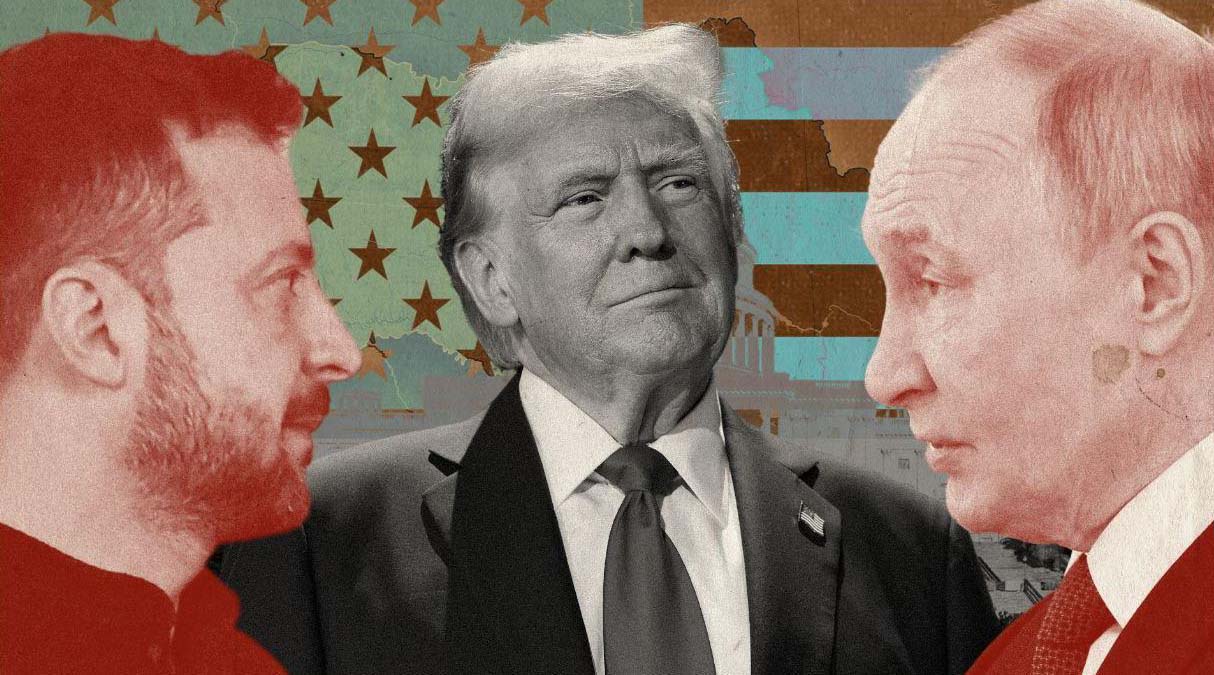
Evgenia Albats*: The main topic of today and recent weeks is, of course, the negotiations in the unequal triangle of the USA–Russia–Ukraine. Do you think the war will end this year?
Alexei Venediktov: The war — no. A temporary ceasefire is possible, I would put it at 60 percent against 40.
Katerina Kotrikadze: It seems to me that the probability of a temporary ceasefire is somewhere around 80 percent against 20. There will be some deal by the end of the year, and even sooner, in my opinion.
Evgeny Savostyanov: There will be no peace. I have long said that peace will come in one of three scenarios: either Russia captures all of Ukraine, Ukraine liberates all its territory, or Putin leaves power. But a ceasefire may occur, although I think the probability is small.
Too Early to Draw Conclusions
Evgenia Albats: After the negotiation meeting in Paris, where US Secretary of State Mark Rubio was present, Trump's negotiators Whitcoff and Kellogg, who also met with representatives of the UK and French President Macron, reports emerged that the United States is ready to exit the negotiation process. President Donald Trump repeated the same. But already this week, as Wall Street Journal wrote, the Americans proposed to the Ukrainian side to recognize Crimea annexed by Putin as Russian and to declare Ukraine's commitment not to join NATO. And supposedly, Trump is now waiting for Ukraine's response. Alexei, how does this negotiation situation look from Staraya Square, in the Kremlin, and generally in Moscow?
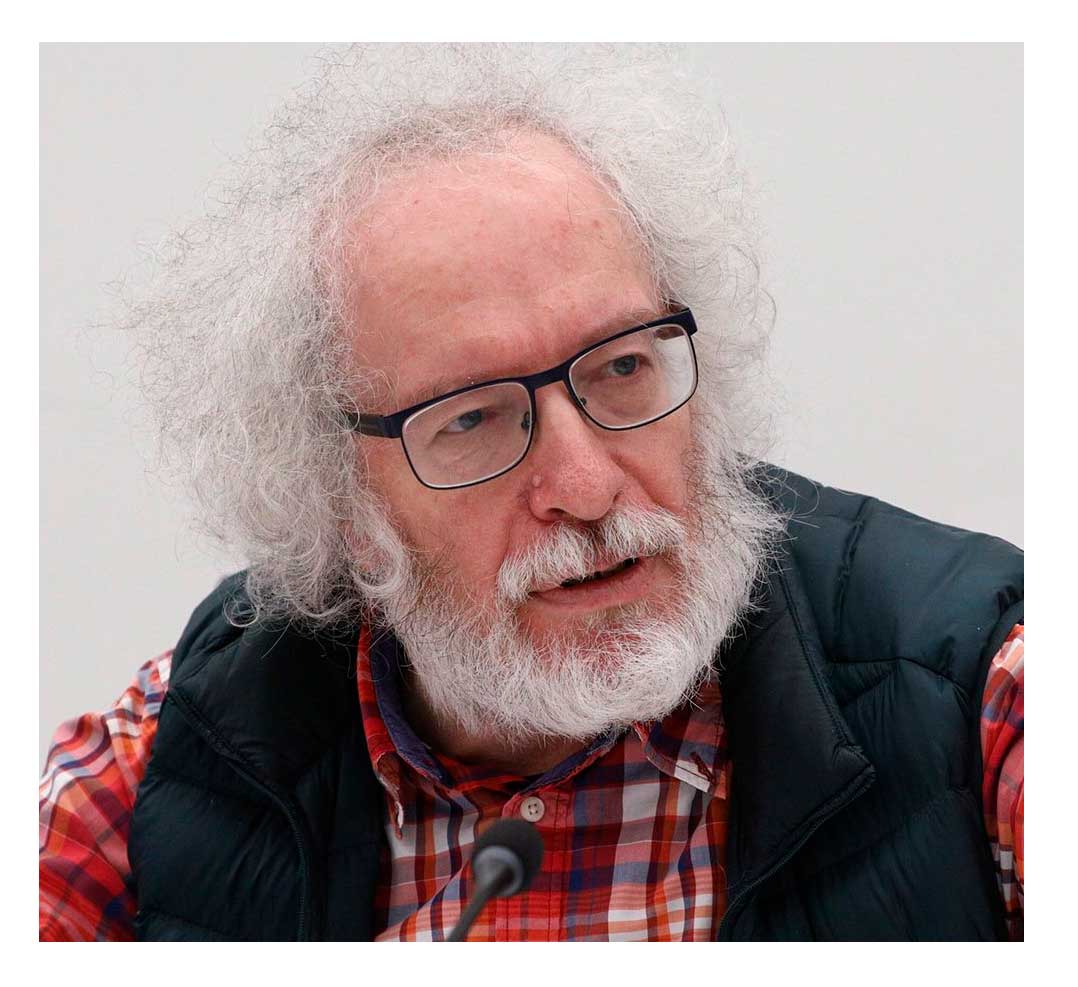 Alexei Venediktov: Everyone sees it differently here. When you talk to different people, they tell you different visions. Everything changes quickly, like the scenery outside a train window, we are inside the process. Moreover, this process is very well hidden. First of all, we need to understand that what the Wall Street Journal wrote is not an American proposal to the Ukrainians. There is no proposal yet. These are considerations about what the Russians might agree to. It seems to me that the Americans are saying that if this happens, the Russians might agree. But this is not an American proposal. This is a contour, a framework in the representation of American negotiators about Russia's position. We are dealing with shuttle diplomacy, which is underwater. There are no conditions yet, the table is empty. Everyone throws everything they want onto this table and their ideas. Therefore, it is too early to draw any conclusions.
Evgenia Albats: Donald Trump stated that we should expect news this week and that he hopes the news will be good. Katerina Kotrikadze, what do you know about these negotiations?
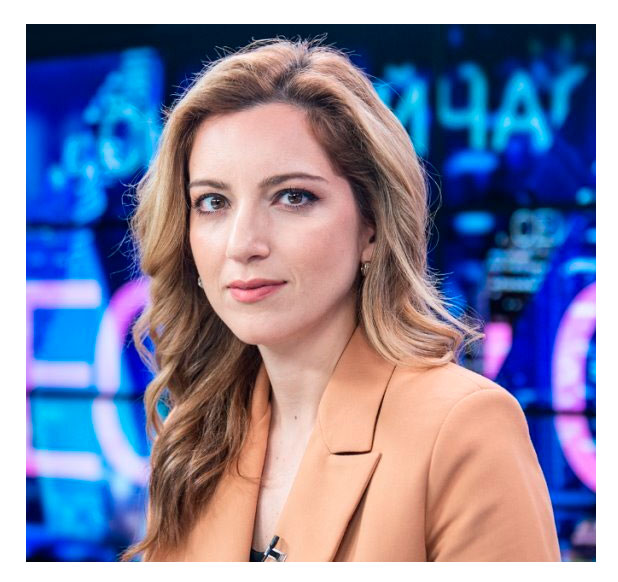 Katerina Kotrikadze: Listen, I slightly disagree with Alexei Alexeevich because, as it seems to me, Donald Trump is distinguished by his consistency. Unlike a large number of analysts, I see in his actions, in his statements from the very beginning, that he wants to end this war. The reasons are not very close to me, nor, I think, to you, but he wants to get out of this thing, he wants to stop caring about some war that is far away and not in his sphere of interest.
Therefore, he is ready to make deals with Putin that have nothing to do with common sense and honor, conscience, dignity, and so on. I think that for him, this is a very understandable move towards concluding an agreement. Now, what I disagree with. In the fact that supposedly the Americans can assume what the Russians want. I don't think that's the case. I think they understand well what the Russians are willing to agree to because they have met with the Russian delegation repeatedly. Moreover, Mr. Dmitriev even flew to Washington, despite the sanctions, attended dinners at the White House, and conveyed all the necessary information.
Trump knows that Putin is playing a "push-pull" game: let's raise the stakes, demand the cancellation of all arms supplies, and then demand the unthinkable external control of Ukraine
Evgenia Albats: Sanctions were lifted for one day. For one or two days.
Katerina Kotrikadze: Exactly. So that Kirill Dmitriev could get to the United States of America. In general, the first meeting was not with the Ukrainians, as you know, but with the Russians. And then several rounds of negotiations took place with the Russian side, which did not include either the Ukrainians or anyone else; these were US-Russian negotiations. Whitcoff flew three times to Putin. In short, I want to say that, in my opinion, the US knows perfectly well what conditions Putin might put forward and does put forward. And they also suspect or rather even know, and Trump knows, that Putin is playing a "push-pull" game: let's raise the stakes, demand the cancellation of all arms supplies, and then demand the unthinkable and unfeasible external control of Ukraine. And I'll tell you about some of my crazy ideas to show the whole world how strong and cool I am, and how everyone listens to me. But in the end, I will sign a deal that is agreed upon in a bilateral format with the Americans.
Another thing is, as it seems to me, they do not fully know the position of the Ukrainians. Or they may know it but do not want to accept it. And the main problem is to persuade Zelensky to the conditions that Putin has put forward, with which Trump agreed, considers them logical, etc. And among other things, yes, there is the recognition of Crimea as Russian, the cessation of hostilities along the current line of contact. There is also a point about the Zaporizhzhia nuclear power plant, which, according to this proposal, comes under the control of the United States of America, and a few less significant details, but the main thing is that this is a story about borders, which is terribly painful for Ukraine. Borders not only concerning Crimea, but these are borders determined by the state of occupation at the moment. Some amount of territory is occupied, and Donald Trump says: okay, keep them for yourself, Vladimir Vladimirovich. And Putin says — well, okay, maybe I'll agree to that.
But here already arises a problem with the Ukrainians, with whom it is necessary to negotiate this status quo, which is very painful for them. And it will be very important to understand what formulations the parties will write down. How will these territories be designated? Temporarily occupied or de facto Russian? How will this be legally resolved? In my opinion, there will be a different status for Crimea, which the West has long considered Russian and long "gave up" Crimea, and what status — for those territories that Russia controls at the moment. This is what the bargaining will be about.
Evgenia Albats: I am quoting a verbatim translation from Wall Street Journal:
"...US President Donald Trump expects a response from Kyiv regarding the recognition of Crimea as Russian and the refusal to join NATO..."
Wall Street Journal refers to sources in Trump's inner circle.
"...These proposals were outlined in a confidential document handed over to Ukrainian authorities and European allies in Paris. The US is waiting for Kyiv's response at a meeting of American, Ukrainian, and European officials in London at the end of the week. If the American, European, and Ukrainian positions coincide, the proposal may be sent to Moscow. A senior State Department official on Sunday described the ideas presented to the Ukrainians as options Kyiv should weigh, not as a "take it or leave it" offer. He said the list of potential options was presented for discussion and feedback..."
Evgeny Vadimovich, a question for you. Do you think Putin can be satisfied with Crimea? By the way, regarding the Zaporizhzhia nuclear power plant, American sources say that it will take 5 years to restore the Zaporizhzhia nuclear power plant. And that Ukraine itself cannot do this without help, so... But there are major concerns from the atomic agency and Europeans about the situation at the Zaporizhzhia nuclear power plant, and therefore everyone prefers it to be under the control of some international or foreign institution. Just like it happens with the rare earth elements agreement, which is likely to be signed. And thus, the United States kind of tells Putin: dear Vladimir Vladimirovich, almost all rare earth elements are located in the occupied territories, keep in mind, you are now bombing what we are going to invest in. So, do you think Putin will be satisfied with such a deal — Ukraine recognizes Crimea as Russian and refuses the possibility of joining NATO?
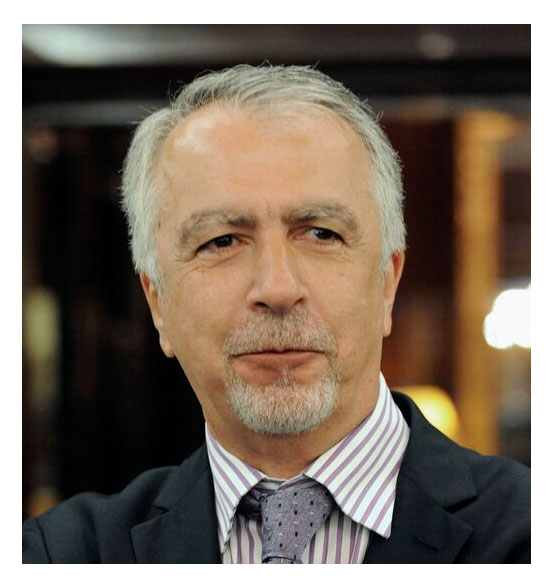 Evgeny Savostyanov: Well, let's start with the fact that your initial formula about the unequal triangle needs clarification. There are already four parties now, Europe has actively joined the negotiations and is an essential part of them. Point two. Of course, for Trump, it is completely clear that a new war is unfolding. I call it, by the way, not cold anymore, but smoldering. He needs to leave the entire Atlantic theater of military operations and focus on the Pacific Ocean. This is a separate conversation. But he is leaving everywhere. He will leave the conflict in Ukraine, Iran, Gaza. He will gradually remove all these obligations and the dissipation of forces. As for the topic of discussion — of course, Putin will not be satisfied. Putin's goal was the destruction of Ukrainian identity altogether. Confirming Crimea's status was not his goal. By the way, when you talk about recognition, what do you mean? That Ukraine recognizes that Crimea is an integral part of the Russian Federation and not part of Ukraine? No, Ukraine will not agree to this. When you talk about the border, I say, maybe it's not a border, but a line of demarcation. Here, indeed, much depends on the formulations. Now the fog surrounding these negotiations is so great that I am not going to comment on a newspaper article. I generally get the impression that through some formerly authoritative publications, a Russian propaganda operation is being conducted to destabilize sentiments in Ukraine and maybe even work for future elections. Publications are more likely to create fog than bring us closer to an answer. Let's look at reality.
Imagine a somewhat reverse picture: negotiations are underway between the USA, Europe, and Russia, and Ukraine is not participating in them. What would Ukraine's reaction be? Panic, frankly speaking. Now we see that for the second round in a row, negotiations are underway between the USA, Europe, and Ukraine without inviting Russia. And Whitcoff will take ready-made agreed decisions to Russia. Most likely, Putin will not accept this. Because for him, this is a colossal historical defeat — the cessation of hostilities at this stage. Because the main component is the presence of European troops on Ukrainian territory. It is this presence that can fix the impossibility for Putin to resume aggression in the future. So here, perhaps, will be the main stumbling block — to allow or not to allow.
I am convinced that everyone will agree on demarcation along the line of contact. Everyone will agree that Crimea is under Russian control. This is an objective reality. But the question is in what legal status. Ukraine will not agree to recognition, to international recognition, especially since this is a direct violation of the UN Charter. This is the destruction of the world order that has developed over the past decades, in which, generally speaking, no country has ever seized the territory of another country by force. Well, Iraq tried to seize Kuwait, and how did it all end.
The inclusion of Crimea in Russia was the first annexation after World War II. Therefore, in one form or another, most likely in the Baltic form, as it was after World War II, they will agree that the territories under Russian control will not be recognized, but the issue of revision will not be raised either. That is, the issue will be postponed to some distant future. I think everyone will agree with this. But Putin will not agree to stop there. This is not his task. If he stops there, it is his colossal defeat, practically a capitulation. And therefore, I believe that the option where he agrees is very small.
Evgenia Albats: There is a proposal from Macron and Starmer for British and French military to act as blue helmets in Ukraine. Will Europe agree to this? And secondly, will Putin not bomb these troops?
Evgeny Savostyanov: Let me draw your attention to the fact that Europeans have a gigantic superiority over Russia in air forces. Just gigantic. And it is enough for them to deploy a couple of hundred aircraft on Ukrainian territory and corresponding units to guard these airbases, and this will be more than a reliable deterrent. It is not at all necessary to deploy infantry with APCs and tanks by Russian standards. So, in principle, Europe can provide such guarantees and deterrent forces.
Divided Ukraine?
Alexei Venediktov: The conditions being written about are the Americans' representation, it is one of the options, and there, as the State Department representative correctly said, there are several options that need to be discussed. On Crimea, I absolutely agree with Evgeny Vadimovich. There will be no recognition. In the USA, there is the Simpson Doctrine, Congress will not approve it. And why? Crimea existed for 8 years without recognition. Recognized, not recognized — ours. Grabbed — ours.
Of course, we are in the middle of the process. You can exchange ultimatums, they do not exchange ultimatums. A meeting with Russia without Ukraine, well, okay, and in Paris — without Russia. Zelensky in the Oval Office was also without Putin, they discussed something with Trump without Russia. And in London without Russia. And finally. It's not about peace, of course, not about where the border will pass, not about where peacekeepers will be placed. It's about a ceasefire, a truce, roughly speaking. Where will the truce line be? Obviously, along the line of contact. And everything else will come later. And Whitcoff must achieve not peace now, but a ceasefire, so that Trump can say: well, that's it, now Europe is on its own. He must show — that's it, a truce, no shooting, further — a conference, invite whoever you want, and I'm off. I don't see such contradictions-contradictions. We are waiting for another round in different capitals, and it will be like this for a long time.
Evgenia Albats: So there was a divided Germany, and there will be the same divided Ukraine?
Alexei Venediktov: Trump's representative on Ukraine, Mr. Kellogg, said that this is one of the possible options. Either like Germany or like Northern Cyprus. In Cyprus, troops have been standing between them for 50 years. Well, no one recognizes Northern Cyprus except Turkey. But nothing, they live. And when you now talk about Germany, I say — yes, they see it as one of the possible options because Zelensky, I know, was told: well, listen, Germany was divided in forty-nine, and after 40 years it united and became powerful, and regained its eastern lands. Literally. That's what the Americans said.
In Europe, there is a very difficult conversation about whether to change their attitude to the defense of the European continent, to independent decision-making, to a European army, maybe. But for now, all major decisions are expected from Trump
Katerina Kotrikadze: And yet the negotiations of Europeans with Vladimir Zelensky, wherever they may be, in any European country, are not equal to the negotiations of Americans with the Russian side, because no Europeans are ready now, at least for now, to take on all the decisions on the war in Ukraine. They can't. And Keir Starmer stated this directly. He said — still, let the Americans lead this process. As Washington says, we will follow. This position remains, at least at this stage. Maybe this will change. But now, of course, the United States is the main player, the main mediator. And further in Europe, according to my data, there is a very difficult conversation about whether to change their attitude to the defense of the European continent, to independent decision-making, to a European army, maybe. This is some other story. For now, all major decisions are expected from Trump, and he is waiting for this pressure — my patience is running out, my patience is running out, I am ready to flip the table, that's it, I won't wait any longer, Putin has a psychological deadline, any deadline... This game, as Trump believes, and I am sure that he believes in this, — will lead to a 30-day ceasefire.
Alexei Venediktov: I just want to say that for Trump, Ukraine is not a priority right now. For him, the priority is the tariff war, China, and here he wants to free himself, and let the Europeans create an army, raise their military budgets to five percent, etc. Great, guys, I'm giving you everything, I'm off, don't hold me back, that's what he's saying.
Evgenia Albats: If this is so, then why are Donald Trump and his entourage so insisting on signing an agreement with Ukraine on rare earth elements, plus they are interested in ports, and even some talks about a gas pipeline. Why are they ready to invest, there is already a calculation — to extract 500 billion worth of rare earth elements in Ukraine, you need to invest a trillion, that is, it is clear that this is some kind of framework agreement.
Alexei Venediktov: Trump and his team are predators, they see everyone and everything as targets and objects, as something to grab. Now, while Ukraine depends on the US decision — we'll grab! And you can grab gas from Russia and turn it into American, then "Nord Stream" may resume. This is also being discussed. And we'll grab in the Arctic. "Let them pay us for mediating. We have changed our position. We were allies of Ukraine under Biden. Now, to speak frankly, we have ceased to be allies, we have become mediators. Pay us for mediation. We are doing it in a way that benefits both Russia and Ukraine." He is really a predator.
Forget About America
Evgenia Albats: Donald Trump extended the sanctions against Russia that were introduced by Biden. We see with you what is happening with the oil industry, with oil, with the price of oil. Today I read in the Russian press that the Russian government is revising the budget or, in any case, considering a model, an option, in which oil will be $56 per barrel. And the United States is increasing shale oil production. If Trump is indeed ready to exit the negotiations, and sources from Reuters and Axios indicate that this is not a bluff, then why did he do it?
Evgeny Savostyanov: Where did the idea of a truce come from? It was a fragment of Trump's election campaign. To spite Biden, you could say. Biden brought the matter to war, and I just need to growl, wag my finger, and the war will end. Then he became, to some extent, a slave to these carelessly spoken words. He was reminded of them all the time, he had to confirm it. And frankly, I always thought about what the point was? After all, it is completely unprofitable for the Americans to end these hostilities, especially now when Russia has entered a phase of strategic depletion as a result of the latest sanctions imposed by Trump, when every day brings Russia not an increase in wealth, as it was starting from 2022 at high oil prices, but losses. Since the new year, especially since February, the flow has begun to dry up. And it would seem, according to all the canons of military strategy, you should prolong the war at this stage, it is not in your interest to stop it. But Trump's main task today is China.
By the way, I do not share the thought that the United States has turned from an ally into a mediator. They occupy a very strange role of both an ally and a mediator. The US will really leave the negotiations in a very short time, regardless of their results. How will events develop after the US leaves the negotiations? There are two options here. The US remains a supplier of weapons, but on a reimbursable basis. They will no longer give anything to Ukraine for free. Or almost nothing.
Evgenia Albats: Europe will pay.
Evgeny Savostyanov: By the way, the resource deal also fits into the logic of confrontation with Biden. You see, Biden was ruining the country, and I, you see...
I am a miner by first profession, so I can say that the deposits in question are such a cloud that in the end will dissolve unnoticed, there will be no implementation of these projects. But they are needed to spite Biden, to spite the Democrats, who need to be constantly kicked and weakened. After all, political life in the US is not over. And this is a demonstration that we can grab something. Moreover, pay attention, Russia is bargaining, offering its resources to America, Ukraine is bargaining. And Uzbekistan quietly signed an agreement these days with the United States on the development of critical mineral deposits, where there are investments, technologies, and sales. That is, everything that the other two sides are bargaining about now.
In short, until the official results of the negotiations are clear, let's think about whether the US will remain as a potential helper, that is, will sell weapons and provide support to Ukraine, or will they spit and leave altogether. And they will say: Europeans, sort it out yourselves, you have enough money, strength, means, you need to create a pan-European army, a pan-European command — which I have been writing about for more than two years. Now they need to make a political decision to create a new alliance. NATO is an extremely ineffective organization, it serves only as a nuclear umbrella. Ukraine needs to create a new military-political alliance around itself, which will really be a deterrent alliance.
In short, Europeans, if they do not resolve issues of military-political subjectivity today, are doomed to a colossal catastrophe. And all these European cities will eventually become Russian backwaters. Just as devastated and insignificant.
Imperialists and Guardians
Evgenia Albats: You say and write that contradictions between the FSB and the army are growing in Russia. And that for Putin, stopping this war is the end of his power or a colossal defeat.
Evgeny Savostyanov: I want to clarify. I did not say that this would be a catastrophe personally for Putin. Although today a paradoxical situation has developed that Putin is not needed by anyone. Especially in the case of stopping the war, he no longer has, roughly speaking, what is hidden legitimacy. Putin's main task is lifelong rule. And preferably, life should last forever. After Prigozhin's rebellion, he realized that the main source of danger is not defeat on the fronts, not conflicts with the Americans, but internal turmoil. When he saw that Prigozhin was going to Moscow, and the people, in fact, applauded him. They do not try to support him, do not take to the streets, do not try to stop the enemy's tank columns. And he realized that the main problem is turmoil, and who is the only support in this struggle? The Presidential Security Service, the FSO, and the FSB. These structures are now a priority.
Evgenia Albats: And they are for stopping the war? Where are their interests?
Evgeny Savostyanov: During the period when I worked in these structures, I understood such an interesting nuance — what is the difference between the FSB and the SVR, between the first main directorate and the second main directorate. The first main directorate, the SVR, essentially solved imperial tasks. Projections of power, expansion, and so on. The imperial spirit was stronger there. And in the FSB — guardians-conservatives, nationalists, who were focused on solving internal tasks. The FSB is still an executive structure, it performs what it is instructed to do. Its main task is to protect the regime. So it is engaged in solving this task in all aspects, while also stealing, doing its businesses, expanding its influence, and so on, and so on.
Evgenia Albats: Alexei Alexeevich, how does this look from Moscow?
Alexei Venediktov: Putin is the head of the Russian bureaucracy, both military and civilian. We know that there are contradictions inside, they spill over into specific things, into some decisions that some "Kremlin towers" are dissatisfied with. For example, the mobilization caused great dissatisfaction both with the Federal Security Service, internal security structures, and the economic bloc, and then Shoigu insisted, that is, the military. There are contradictions. The question is, why do they need Putin? And why did they need Putin before the start of hostilities?
Evgenia Albats: He was a mediator between different groups.
Alexei Venediktov: So he remains a mediator. If we talk about the war, then now there is not a single large section of the Russian bureaucracy that is winning from the continuation of this meat grinder, treading in place. Inside, even in economic terms, more events are happening: this is taken away, this is given, this is nationalized. We see that the generals are not moving, that the FSB is mainly fighting "foreign agents," of whom there are only 560 people on the list throughout Russia, two-thirds of them, or even three-quarters — abroad. That is, in fact, he is still a moderator, and we see this, say, in the appointment of Belousov, in the appointment of General Beseda, who was accused of failure, but who, from Putin's point of view, understands the Ukrainian issue well. This is Putin's point of view. In other words, he is still a moderator.
And the story with Western sanctions, personal ones in the first place. Well, the officials have rallied around. Where to run? Only Putin now, only victory — victory in the sense of ending the war, with some profit, with some benefits. The Russian bureaucracy, Russian big business — they are always in power. The story is that there are contradictions, of course, and there is, let's call it, fatigue. There are fewer and fewer gains from hostilities, and stability is also decreasing, and this is a fact.
Evgeny Savostyanov: We must not forget about the roots of this war. The roots of this war are illusions, some phantoms in Putin's head, you understand? This war is not caused by objective factors. If today the Russian elite sees (and it sees, in principle) that the sanctions can be lifted, albeit gradually, then their own interests will begin to revive. That is why I say that today there is a paradoxical situation where Putin is not needed by anyone. As a moderator — yes, but only until some internal compromise of the elites is reached. It is always unreliable, but it must be reached somehow because Putin is mortal, like all of us.
Europe's Fatigue
Evgenia Albats: Europe is now experiencing a shock after the speech of the US Vice President at the Munich conference, after all the statements about the United States possibly leaving NATO, stopping funding NATO, etc. A question to Katerina Kotrikadze, who is right in the center of Europe. How do you think Europe is ready to defend Ukraine's interests? The UK has stated that it is ready to provide its air force to protect all of Europe. Macron stated that the nuclear weapons that France has, it is ready to use to protect all of Europe. How does all this look to you from Amsterdam?
Now, when Donald Trump is essentially pointing to a split, to the fact that the fifth article of the NATO charter may not work in the event of a Russian invasion, — everyone is very worried. In Europe, there is a very high level of anxiety
Katerina Kotrikadze: Honestly, it seems to me like a quite unambiguous attitude towards the war, it has tired everyone. Not only in France or Germany, where the "Alternative for Germany" is strengthening. Many are tired here, in the Netherlands. Many are tired even in Eastern Europe, which traditionally supports Ukraine. I will not go into details, but for example, there is a large number (relatively large, much more in Poland) of refugees here who need to be helped, who need to be supported. This has been going on for three years, the fourth year has begun, how much longer? I often hear such conversations. At the same time, the issue of self-defense, self-protection, has sharply arisen. Until now, there were many loud words about Ukraine protecting all of us. Thanks to Ukraine, Russian troops are not on NATO territory, on the territory of the European Union. Yes, many said this and even believed in these words, but still did not take the Russian threat seriously. Now, when Donald Trump is essentially pointing to a split, to the fact that the Americans may not support, may not protect, the fifth article of the NATO charter may not work in the event of a Russian invasion, — everyone is very worried. I now feel a very high level of anxiety here. Because people, especially Macron, Starmer, and this "coalition of the willing" have begun to act actively in the context of supporting Ukraine. Let's call things by their names. Not because they are so worried about the citizens of Ukraine, but because they are very worried about themselves. They are very worried about the security of their own countries. They do not consider the Russian threat to be something ephemeral and not looming over them. They take this very seriously. And they see in Donald Trump's coming to power a very serious chance that Putin will sooner or later attack one of the Europeans.
But there are other Europeans who look differently, who do not see any threats. Therefore, I have recently observed very serious contradictions within the European Union. They pass not only along the line of the "coalition of the willing" against Fico, Orban, Vucic. For example, Spain takes an absolutely conformist position, just don't touch us. There are other states that hesitate: let's not get involved in this, we hope that somehow it will fly past us if something comes from the Russian Federation. In fact, there is a big historical process of creating a new European security system, or rather moving towards a new concept of the European security system. Much depends on how strong the voice of the same Macron will be, how strong the voice of Starmer and Merz, the future chancellor of Germany, will be. Whether they have enough strength to make fundamental decisions and change the European Union. Frankly, I somewhat doubt this because it seems to me that they do not have enough strength. And I repeat that they constantly, in the hope of signs of reason, in the hope of historical support, because this is a matter of honor and dignity, look to Donald Trump, to Washington, and knock on wood, and maybe Trump will change his mind.
Evgeny Savostyanov: I have long been writing and saying that any military construction plan in Europe should begin with the first point: active work to explain to the European population the threat looming over them. Until there is an understanding of the danger among the peoples of Europe, the efforts of the elites will hang in the air, on a very thin thread. Therefore, of course, Europe may not wake up, which is why I say that in this case, it faces the death of European civilization. Just under the pressure of forces coming from the east, which, by the way, may themselves disintegrate, and then it may turn out that Russia was not the biggest threat, not the biggest disaster looming over Europe. Other forces may appear on the horizon.
Alexei Venediktov: I absolutely disagree with this remark. Because the elites rely on voters in Europe. If we look at the main countries, then there the forces against the reindustrialization and remilitarization of Europe are growing. "Alternative for Germany" is now equal to the ruling party — 25%, and it opposes military loans, it opposes "guns." In the UK, the "reform party" of Farage — has as many votes as Starmer, the prime minister. In France, 30% of voters support Marine Le Pen. The Dutch parliament voted for participation in a military loan of 800 billion, and supporters lost, 75 voted "against" and 73 — "for." The elite — this is also a huge number of deputies who speak out on the left and right against reindustrialization — rely on the will of the voters. Look at the Polish elections, what the representative of the party that is likely to win, the current mayor of Warsaw, says: well, that's it, enough already of Ukrainian refugees. And this is Poland, which helped more than anyone. He feels that this is the voice of the population, and he needs votes. Therefore, it is not just about the people, but about the voters who choose guns or butter. And here will be a question for Europe, which now needs guns, conditionally speaking. But the voters do not think so unequivocally.
Evgeny Savostyanov: That is why I am talking about the need for such a campaign.
Alexei Venediktov: Macron has two years left, and he cannot be re-elected. When are Starmer's elections? What should he think about? He should think about the voters. European leaders live from election to election. Putin knows this. He uses it. He drags out time until the elections. This cannot just be crossed out. It's not that Macron agreed with Starmer, and Trump said, do what you want.
What is the difference between Putin and Zelensky? Zelensky is a democratically elected president. He has to look at Ukrainian public opinion. And if he even wants to conclude some unfavorable truce, Maidan will sweep him away. 79% of Ukrainians, according to the latest Ukrainian polls, are against concluding a truce, not a ceasefire, but a truce. How will Zelensky have to twist if he considers it necessary for various reasons? And Putin has no public opinion inside Russia, he forms it himself, and therefore he doesn't care. That's the problem too — in democracy, which is both strength and weakness when you need to make sharp decisions.
Evgeny Savostyanov: I still want to add that you can't take the mood as a given. You either work with people or you don't. I see that today in all the politics of the European elites there is clearly a lack of addressing the peoples. A danger is looming over you, you may lose everything you have. That's what politicians should be talking about.
Katerina Kotrikadze: I, in fact, am waiting for the development of events with horror, I do not feel any optimism. Sorry for the frankness. I assume that regardless of what agreement will be signed, it will be very bad for Ukraine for a number of reasons. And I would very much hope and rely on the strength of European democracy, the strength of European determination, if they manage to pull themselves together, convince their voters that a new world has come, and in this new world, there is no America. Let's proceed from this.
Can something change? Let's see how the midterm elections in Congress go in two years. But for now, we need to proceed from this. We need to be strong. If you are not strong, you will not be able to resist such regimes as Putin's. In any case, the bad news is also that regardless of the further development of events, I do not see the prospect of Vladimir Putin's disappearance, at least at this historical stage. Therefore, we need to work with what we have and continue to do our work as much as possible.
Video version:
* Evgenia Albats, Alexei Venediktov, Katerina Kotrikadze, Evgeny Savostyanov are declared "foreign agents" in Russia.
Photo: GettyImages.