Evgenia Albats*: Kyiv is constantly attacked by drones. In Sumy, they hit a school, in Odesa a shopping center. Meanwhile, in Riyadh, Saudi Arabia, another round of negotiations was underway. All we know about these secret negotiations is that, as I understand it, representatives of Ukraine and Americans are in one room, representatives of the Russian Federation and Americans are in another room, and the Americans are running between the offices trying to somehow coordinate positions. What do they say about this in Ukraine?
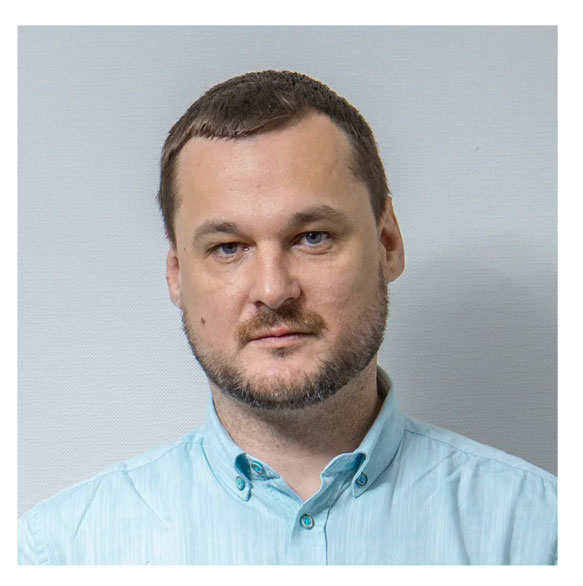 Ivan Yakovina: In Ukraine, people are waiting, waiting a lot. Some say that everything will end now. Some say it will never end as long as Vladimir Putin is alive. Some were surprised that the Ukrainian delegation did not include the foreign minister but included the defense minister, trying to extract some meanings from this. In fact, there is no strict information, we are just waiting.
Where the drones fly
Evgenia Albats: Putin promised to stop firing at the energy infrastructure. What is the situation with this in Ukraine now?
Ivan Yakovina: Strictly speaking, there has been no fire on the energy infrastructure for a long time because this infrastructure was mainly hit in winter when it was cold. When it warmed up, they stopped hitting because they found some more suitable targets for the Russian side, like shopping centers and residential buildings. Because now, if you hit a power station or substation, of course, it's inconvenient to be left without light for a while, but it's not a disaster, as it could have been in winter. In some cities, there are probably power outages, but not globally, as it was before, when half of Ukraine was sitting without light. This hasn't happened for a long time.
Drones fly relatively slowly, 100–200 km per hour. They are often shot down, but because there are many of them, some reach their target. They simply take by numbers. And when they reach the target, 100 kg of explosives fly into the house
Evgenia Albats: We read that now the main strikes are delivered by drones. Explain to me, an ordinary untrained person, and to those like me — what do drones do? Do they drop explosives?
Ivan Yakovina: Drones don't drop anything. It's a small plane, in which instead of cargo, instead of a pilot — a centner of explosives. This plane flies along a certain route. And at the end point of the route, there is some object, either a house, or a store, or a power station, or something else. Drones fly relatively slowly, 100–200 km per hour. They are often shot down, but because there are many of them, some reach their target. They simply take by numbers. And when they reach the target, 100 kg of explosives fly into the house. You understand that this is not very good for the house, or the store, or something else.
This is a kamikaze drone, in fact. During World War II, there were Japanese kamikaze planes, only now a pilot is not needed, there is electronics. And this electronics guides it, it flies into some building and explodes with it. Such a drone costs about 20 thousand dollars to manufacture, like a car.
Evgenia Albats: One drone?
Ivan Yakovina: Yes, but it's peanuts because a Patriot missile, which could shoot it down, costs a million dollars and more. So shooting down drones with Patriot missiles is very unprofitable, they are suitable for shooting down ballistic missiles, one ballistic missile itself costs many tens of millions. Drones are usually shot down with machine guns, rapid-fire cannons, or helicopters are raised into the air and they are shot from helicopters, or somehow else, but with simpler and cheaper means. It's not so difficult to shoot down. The problem is that there are very, very many of these drones. In Yelabuga near Kazan, factories are working that produce these drones by the hundreds. And some of these drones, unfortunately, reach their target.
Evgenia Albats: In Russia, special troops have been created that manage drones. And there were special formations before, but now it is somehow legalized. I understand that professional people sit and direct these drones. When a drone, like in Sumy, hits a school, does it mean the drone operator specifically directed it to the school?
Ivan Yakovina: Drones are different. Some are controlled by operators. There are drones where a flight mission is laid, and it flies according to the program that was embedded in it. I don't know which one was in the Sumy case, but some drones have operators, we know this for sure. They themselves published videos of an operator sitting and directing a drone to a particular object. But such drones are not everywhere. In any case, a person lays the flight mission for the drone, where it should fly.
Evgenia Albats: I was explained that when large missiles are shot down over the city, there are situations where the remains of these missiles collapse, for example, the entrances of houses. This can be imagined. We know that Russian military are constantly looking for underground military factories in Ukraine, trying to hit them, and they can hit houses. But the drone operator cannot fail to see that he is hitting a school?
Ivan Yakovina: If there is an operator, then he sees. If it's a drone with a laid flight mission, then it's possible that the flight mission is based on some outdated data. For example, they assume that the drone is flying over empty space, but in fact, an illegal skyscraper has long been built there. And the drone flies into this skyscraper. Can this happen? It can. As for missiles, they often deviate from the course not because someone shoots them down, but because they are very inaccurate themselves. They hit who knows where. The same with drones. A drone assembled under an Iranian license in Kazan by some African workers. Well, you can imagine what the quality of assembly is there. So it can fly not where it should, or it can specifically aim at schools.
Evgenia Albats: So you assume that this can be both intentional and accidental. I'm just trying to determine the level of barbarism that exists in the Russian army. There was a report that in the Kursk region, Russian military were robbing the homes of their own citizens. And it's clear that this barbarism is not only in the army. After all, people go to the army who are paid money to go and kill. Plus there are professional military there. We thought their job was to protect the Russian Federation, but it turned out their job is to kill people in Ukraine. I'm just trying to understand the level of brutality, because we have to return there someday.
Ivan Yakovina: I'm not sure we will be able to return there, and I'm not sure we will want to, to be honest, considering how rapidly everything is degrading there. Morality, public ethics are turning into nothing. Putin, as they say, allowed everything. He canceled conscience, canceled morality. And by the way, not only Putin. It has been a long time when compassion, empathy, sympathy were perceived on Russian television as foolishness, excuse the word. You have to be cynical, greedy, selfish, and then you will succeed. They instilled this in the head starting from kindergartens, and now these children have grown up, taken up arms and gone to war. And as they loot on the territory of Ukraine, so in Kursk and Belgorod, for them to rob their own is the same as robbing strangers. The moral image of the current Russian soldier to a certain extent reflects the moral image of Russian society. As valor is presented that they are so ruthless, tough, and constant executions of Ukrainian prisoners of war are from the same place, and much more. From Ukraine, it looks like a wave of some kind of hellish, absolutely infernal barbarism. Ukrainians are fighting not for some high ideals, but simply for order, for principle, for civilization, probably, this is the most correct way to say it. Against barbarism, for civilization. This is how the war looks now, at least from Kyiv, where I am.
Can civilians be bombed?
Evgenia Albats: Yuri Evgenievich, explain as a military expert, what is a ceasefire regime if people continue to be bombed in cities?
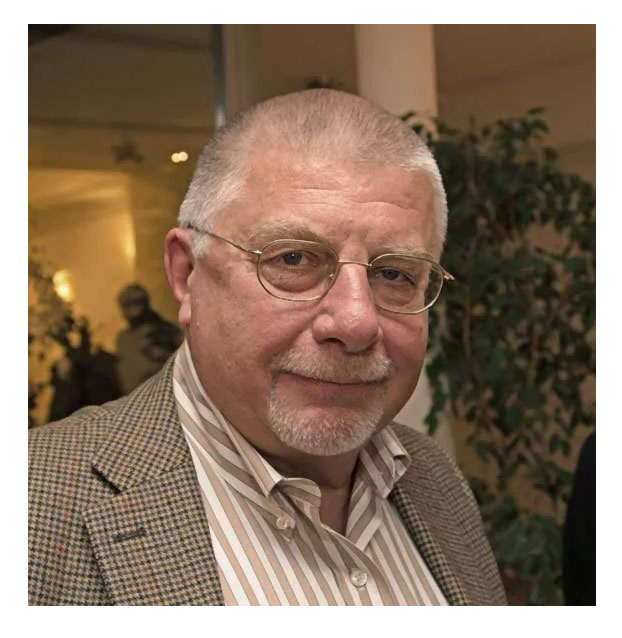 Yuri Fedorov: If I understand correctly, the ceasefire regime being negotiated is extremely limited. The idea is not to strike the energy infrastructure and ships in the Black Sea. Moreover, it is unclear whether this regime extends to military ships, combat ships, that is, whether the Russian Black Sea Fleet will be removed from under the strikes of Ukrainian naval drones, which have effectively paralyzed its actions, or it will only apply to civilian ships, so they have the opportunity to enter ports in Ukraine and Russian ports on the eastern coast of the Black Sea without hindrance. Naturally, Russia is interested in removing its oil bases, terminals on the eastern coast of the Black Sea, through which oil and petroleum products are exported, or gas pipeline stations that go to Turkey, from under strikes. So it's about a very narrow circle of objects. At the same time, the criterion of what belongs to the energy infrastructure and what does not is unclear.
And a full ceasefire regime simply means stopping hostilities and fixing the location of units and army parts at the positions they are at the moment of the ceasefire. That's the difference.
When civilians are bombed to achieve some military or political goals, it is terrorism elevated to the rank of state policy
Evgenia Albats: Why do they continue to bomb cities?
Yuri Fedorov: Because it is part of Russia's strategy — bombing or striking with drones and missiles. It is part of the terror strategy. As I understand it, Ukraine does not have specific goals and strategic settings to strike residential areas of Russian cities, although mistakes and failures in the management of drones or missiles that Ukraine now has may occur. For Russia, however, this is a deliberate policy, and there are no talks in Moscow about stopping strikes on cities. Putin wants to break the spirit of resistance in the people of Ukraine and force public opinion to put pressure on the authorities, on the political leadership of the country, to make it capitulate. The logic is very simple.
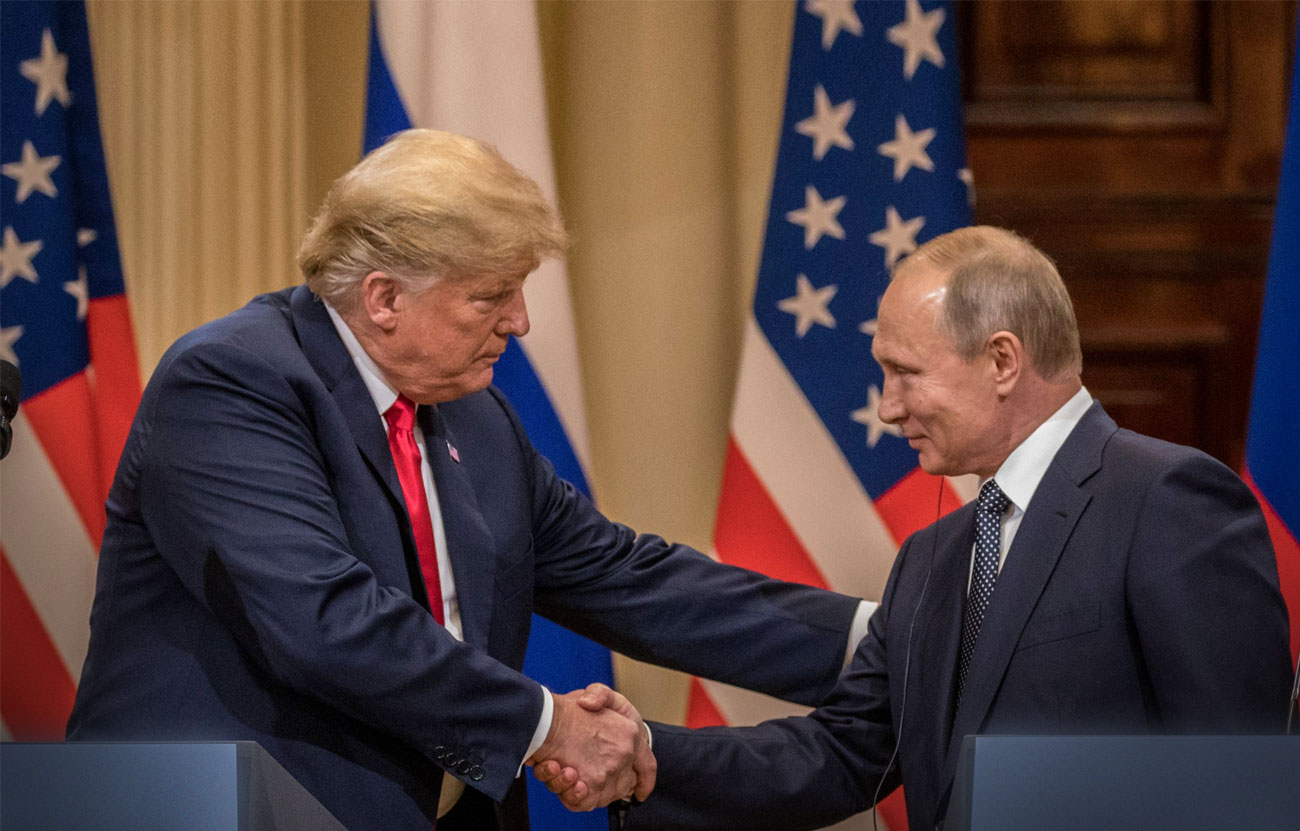
Archive photo: Donald Trump and Vladimir Putin at a joint press conference after the summit on July 16, 2018, in Helsinki, Finland. Photo: Chris McGrath | Getty Images News
Ivan Yakovina: This is, in general, terrorism, when civilians are constantly put under attack to achieve some military or political goals. It is terrorism elevated to the rank of state policy.
Evgenia Albats: But if negotiations are underway, it would seem that now Putin should show Trump that he really wants to stop the killings. But he does exactly the opposite.
Ivan Yakovina: Why should he prove anything to Trump? Trump is already for him. That is, Trump helps him. Therefore, Putin can do whatever he wants. Now Putin's main task is to force Ukraine into capitulation or concessions, and he does everything to get what he wants.
The pipe in Sudzha
Evgenia Albats: What is happening in the Kursk region? Have Ukrainian troops been surrounded? Have they been completely driven out of the Kursk region? What happened in Sudzha?
The loud story with the gas pipe in Sudzha, through which Russian special forces penetrated there — this is an absolute adventure on the part of the Russian command
Yuri Fedorov: In the Kursk region, the Russian side created a numerical superiority of troops of about two and a half, three times. Let me remind you that on the Russian side, there are also 10 thousand North Korean thugs, and apparently, reinforcements appear from time to time. Defense under such conditions is a rather difficult matter, doomed, in general, to failure. This is what is happening on this section of the front. At the same time, the encirclement of the Ukrainian armed forces, according to all the data provided by independent analysts, did not happen. But the main communication, the main road that connects Sudzha with Sumy, the Sumy–Sudzha–Kursk highway, along which the main supply of the AFU grouping in the Kursk region was going, was put under so-called fire control, that is, under artillery strikes. After this road found itself under Russian artillery strikes at the end of February – early March, the supply was, if not disrupted, then extremely difficult. After that, the withdrawal of the Ukrainian armed forces from the territories they occupied occurs, partially organized, partially chaotic. I don't know if there was a direct order from the commander-in-chief and the president of Ukraine to withdraw. In any case, resistance in the Kursk region continues for now. A part, a very small one, about 100 square kilometers on the border is held by the Ukrainian armed forces.
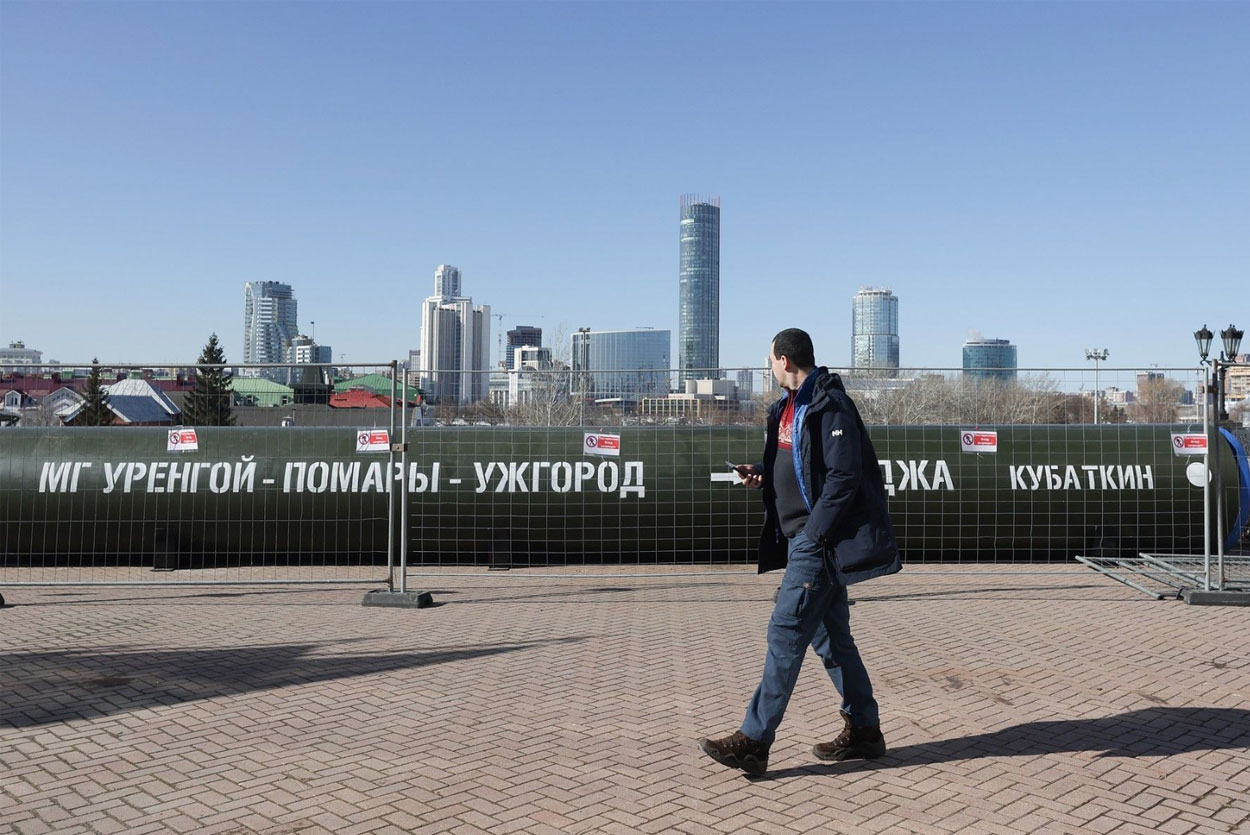
In Yekaterinburg, near the Church on the Blood, an exhibition dedicated to the Russian army operation in Sudzha was opened. March 24, 2025. Photo: Donat Sorokin / TASS
The loud story with the gas pipe in Sudzha, through which Russian special forces penetrated there — this is an absolute adventure on the part of the Russian command, or it's just some kind of informational fake. It's hard for me to figure this out. But if indeed a more or less significant number of Russian soldiers were sent through this pipe to Sudzha, then they were, in general, sent to be poisoned. And most of them, if they were indeed there and survived, end up possibly disabled for life. They have serious lung damage.
Evgenia Albats: Why?
Yuri Fedorov: Because there was gas in the pipe, it's a gas pipeline that wasn't ventilated.
Evgenia Albats: Were they thus entering the rear of the AFU? Did I understand correctly?
Yuri Fedorov: The idea was to get into the center of Sudzha, into the rear of the Ukrainian armed forces, and act from two sides. From the outside, some parts of the Russian army are advancing, and from the inside, special forces appear in Sudzha, which were supposed to disorganize the rear.
Evgenia Albats: Did they succeed? Did the Russian troops achieve this goal?
Yuri Fedorov: The information coming from various sources is, firstly, quite contradictory, and secondly, if you abstract from the fascinating stories of propagandists, the picture looks as follows. The Ukrainian armed forces suspected that such an operation was being prepared: there were reports that Russian troops in this area, in the Kursk region, were trying to find oxygen devices, breathing apparatuses used in gas-filled rooms. They guessed that there would most likely be an attempt to penetrate Sudzha through the gas pipeline. And they were waiting for these special forces at the exit, and in general, they were heavily battered, those who managed to overcome the journey through the pipe and get out. According to reports that appeared in the first days after this operation seemed to be completed, a significant number of special forces were shot. There were such reports, including in Russian telegram channels.
Evgenia Albats: You mean the so-called war correspondents' telegram channels?
Yuri Fedorov: War correspondents' telegram channels and some Russian telegram channels that claim to reflect the positions of certain power groups. Mainly these are disinformation channels, but to make disinformation convincing, they intersperse it with more or less reliable facts. There are telegram channels that are quite critical of the current military leadership, so they sometimes allow themselves to publish such hype materials related to the activities of the top command. Plus, there are telegram channels run by some officer groups that are also in strong opposition to Putin and the country's leadership. They are usually of a fascist nature, or almost fascist, but by criticizing Putin and Belousov, they sometimes spill real information.
Evgenia Albats: From your words, it follows that the Russian authorities do not control the information space. I doubt this. But if indeed they do not control the information space, then this is very important information for analysis.
Yuri Fedorov: I have my own explanation, I'm not sure it's correct, but nevertheless, it exists. The explanation is that the political leadership is afraid of the officer corps, in which the sentiments are quite critical towards both the military command, that is, the top generals, and the political leadership. But to unleash serious repressions against the officer corps, including combat officers, those people who command companies, battalions — who will fight, firstly? And secondly, how will the officer corps as a whole look at this?
I think the authorities do not want to quarrel with the military. One thing is a narrow group of Moscow parquet generals in the Ministry of Defense, and another thing is a caste that, in fact, controls the army. They have troops in their hands. And no presidential security service can handle a military uprising. Actually, the Prigozhin mutiny showed this.
Ivan Yakovina: I'll add about the story with Sudzha. It was known in advance that the Russians were going to crawl through this pipe, and they were preparing to meet them. And they met them when they crawled out of the pipe, killed many. But then they simply ran out of ammunition, because the Russian army blocked the only and main supply route of the Ukrainian army, the same highway that leads from the city of Sumy to the city of Sudzha. They couldn't repel this attack, but hundreds, probably, of Russian special forces were killed, after which the Ukrainians, left without ammunition, simply withdrew.
The wall of the dead
Evgenia Albats: Ivan, you probably read the famous article by reporter Shura Burtin, in which he says that the mood at the front is bad and Ukrainians can no longer endure all this.
Ivan Yakovina: Well, that's complete nonsense. In fact, this article caused great outrage here in Ukraine. He writes that complete despair has taken over Ukraine. There is no despair. Everyone lives as they lived. Everything is normal, as normal as it can be in wartime conditions, of course. He writes that here they hunt people like rabbits, these CCC officers. In three years of war, I have never seen in Lviv, Odesa, Kharkiv, or Kyiv that someone was grabbed on the street by CCC officers. This is really a lie, it can't be. I don't know where he saw this.
In three years of war, you can get tired. But you can't refuse to protect your life. Yes, no one wants to die, no one wants to perish. But when they say that everyone is ready to give up, not resist, this is pure nonsense
Evgenia Albats: President of Ukraine Volodymyr Zelensky told the whole world about the palaces that military commissars built for themselves, who, of course, collected wild bribes so that people could excuse their sons and brothers from the front. It is quite obvious that corruption related to conscription exists. Representatives of the Office of the President of Ukraine also spoke about the failure of mobilization. About people being tired of war. Three years! This nightmare has been going on for three years.
Ivan Yakovina: You see, they are not tired of the war. This is a very serious manipulation. Probably, you can get tired. But you can't refuse to protect your life. Yes, no one wants to die, no one wants to perish. But when a reporter says that everyone is ready to give up, not resist, and so on, this is pure nonsense, nothing even close to it. There are people who are in a bad mood, there are people who love to complain. Ukrainians generally love to complain, I'll tell you a secret. But there is nothing like general despondency, apathy, and readiness to surrender. I don't know where he saw this. I constantly pass drones to the military. They say: yes, it's hard, yes, it's difficult, but we stand, we hold on. Moreover, I recently talked to marines, they say: our people go on vacation and return from vacation in three days because they simply can't be without their guys at the front.
Of course, a lot of bad things happen in war. But what he writes about relates to some very small slices of reality, not to reality as a whole.
Evgenia Albats: Yuri Evgenievich, what do you think about this article?
Yuri Fedorov: You see, if what is written in this article were true, Ukraine would have capitulated long ago. If, despite all the difficulties and certain dissatisfaction with the country's political leadership from public opinion, Volodymyr Zelensky's electoral rating, which was 20–25% before the episode in the Oval Office, increased one and a half to two times after that, it means Ukraine is not going to surrender.
Evgenia Albats: I was on Mykhailivska Square in Kyiv, where this terrible "wall of the dead" is located. As I walked there, I thought: all the passionate ones are killed... Most of the Ukrainian passionate ones who rushed to defend Ukraine at the beginning of the war died. If we know the numbers of the dead from the Russian Federation, we can understand that somewhere close to this are the numbers of the dead from Ukraine. Ukraine lost its first army, so after three years of war, these are different people. I follow the information from the front very closely, my colleagues, American journalists went there, talked to people at the front. But it remains a fact that the average age of people in the AFU is now about 40 years.
Ivan Yakovina: That's right, because they don't take young people, young people are protected.
Evgenia Albats: They don't take them or because they don't go?
Ivan Yakovina: People under 25 are not taken to the front. And you know that today's forty-year-olds are the baby boomers of the 80s. There are simply a lot of them.
Trump is a bad negotiator
Evgenia Albats: Yuri Evgenievich, there was hope that if anyone could stop this war, it would be Trump. Your forecast: will Trump be able to force Putin? You said that Putin is interested in a respite.
Yuri Fedorov: Putin is absolutely interested in a respite. At the same time, he retains hope that the resources he has will allow him to wage war for another year. A year is the time that most analysts name. During this year, he can achieve some changes at the front and force Ukraine to accept his conditions, if not all, then most.
Now, regarding the position of the United States. Trump made a gross mistake from the point of view of negotiation strategy. If he wants to force Putin to stop the war and for this purpose conduct some negotiations, then you should not lay all your cards on the table from the very beginning and say: yes, Ukraine will not be a member of NATO, yes, Ukraine will lose all or most of the occupied territories. We understand, of course, that Ukraine is unlikely to be a member of NATO and that with part of the occupied territories, it may have to part for a time or forever, life will show. But these cards should be laid not at the beginning, but in the process of negotiations, this is a backup position. Well, at least that's what negotiation theory says, whether it's real estate deals on Manhattan or negotiations on military-political issues. You start with request positions and tell Putin: dear Vladimir, we love and respect you very much, but if you do not stop the war, we will do this, this, and this. We will block your entire shadow fleet, and so on.
Instead, what does the administration of Donald Trump do? It tells Putin: we give you this and this, and Putin immediately has an irresistible desire to get more concessions. He sees that the negotiator behaves, to put it mildly, strangely. Instead of starting to twist arms and then gradually laying out concessions one after another in exchange for the counterparty's concessions, he immediately lays out his main cards on the table. What do you want from Putin after that? He, of course, is fully convinced that this is not the partner to be reckoned with. He can be wrapped around his finger. So he does it. Sends portraits, tells a touching story about how he prayed with the patriarch, or something, for the health of Donald Trump. This is Vladimir Vladimirovich's signature style. To one American president, he gave a silver cross that supposedly saved him during a fire, to another, I think, George W. Bush, he talked about his religiosity, and that one "looked into his eyes".
Evgenia Albats: Well, classic recruitment.
Yuri Fedorov: That's basically it. You can force Putin, the tools are there. But I don't see the desire and determination yet. I have the feeling that the current administration of the United States is in the grip of illusions. Which, in general, is characteristic of the American political class. Illusions about the fact that "you can deal with Putin," there was a "reset," and so on. Either naivety, or it's the legacy of Henry Kissinger, who believed that you can negotiate with everyone.
If Trump does not dare to issue ultimatums to Putin, then there will be no truce. When he realizes this, then the most interesting will begin. We will see, perhaps, a conflict between Putin and Trump
Evgenia Albats: Do you think it will be possible to reach some kind of truce this year, at least to stop bombing cities and to fix the line of confrontation? Is it possible that the British and French will still send their troops to Ukraine, "blue helmets," as it was in Yugoslavia?
Ivan Yakovina: I think they will send them because in Europe there is an understanding that if they do not send their troops to Ukraine now, then after a while they will have to fight on their own territory. In Europe, the popularity of sending troops to Ukraine is growing very quickly, which is surprising because Europe has always been categorically against it. Now even Germany, surprisingly, is going to invest 800 billion euros in its army, in the defense industry. In Europe, they realized that the Americans will not stand up for them if anything, and "if anything" may come if not this year, then next year. For them, it is preferable to defend Europe on the territory of Ukraine, not their own. Therefore, I am sure they will send troops here. As for the truce, it depends only on one factor — how much Donald Trump wants the Nobel Peace Prize. If he wants it very much, then a peace agreement will be concluded. If not very much, then it will not be.
But since the war is primarily waged by Russia against Ukraine, only Russia can stop it. Trump, at some point, I think, will come to the realization that to stop the war, he must put pressure on Putin. If Trump does not dare to issue ultimatums to Putin, then there will be no truce. When he realizes this, then the most interesting will begin. We will see, perhaps, a conflict between Putin and Trump. At that moment, as it seems to me, everything will happen. It will be decided either in one direction or another.
But I think that if Trump starts applying any pressure on Putin to stop the shooting, then Putin will succumb to this pressure. And for now, we will watch as Trump tries to persuade Putin nicely, and Putin will try his best to dodge, deny, and try to escape.
Video version:
* Evgenia Albats, Yuri Fedorov, Ivan Yakovina are declared "foreign agents" in the Russian Federation.