Simon Shuster. Photo: Time
Yevgenia Albats*: Europe is agitated by an unprecedented scandal in the Oval Office of the White House, the altercation, and the sharp complication of relations between the presidents of the USA and Ukraine. What do they say about this in Kyiv, Simon?
Simon Shuster: The reaction here in Kyiv is, of course, mixed. Firstly, I feel that people are proud of their president and support him. One acquaintance of mine here even said that unity and a sense of common struggle have returned, meaning the cohesion of society around the president now reminds many of the first months of the war. People feel that their president acted with dignity, did not allow the president and vice president of the United States to insult him and the people of Ukraine, and tried to convey the emotions and vision of the Ukrainian people and leadership with dignity.
But in parallel, of course, there is fear, shock, and misunderstanding of what will happen next, what the reaction from the United States will be. When news began to arrive on February 28, on Friday, I was just having dinner with a Ukrainian officer. My editor called me, his colleague called him, and they said to urgently watch the footage from the Oval Office. And his reaction was initially supportive, he said — well done, that's how it should be. But immediately the thought followed — what will happen to us, what will happen to the military if Trump now decides to cut off or stop military aid to Ukraine. What will happen to Ukrainian intelligence if they do not receive help from American intelligence, which is also very important for continuing the fight against Russia. So these thoughts went side by side — pride and fear.
The way Europe united around Zelensky reassured many here in Kyiv that Ukraine will not be left alone and European leaders will not abandon Ukraine to its fate. But there is still fear because, of course, the main ally is the United States, and today we simply do not know how relations between the USA and Ukraine will develop further.
Ally-Opponent
Yevgenia Albats: Has Zelensky's rating really risen from 45–47% to almost 90% now? Or is it a myth?
There is a feeling that Zelensky was forced to fight on a new, diplomatic front. As if an ally turned into an opponent, and it was necessary to defend from this side too
Simon Shuster: At the very beginning of the full-scale war, in March 22, the support rating was somewhere around 90%. Over three years of full-scale war, it gradually decreased from 90% to below 50%. I have not seen this poll, but I have seen others that show high support again. Here I feel it, talking to people who did not support Zelensky before, did not vote for him in 2019, from whom I never heard words of approval in his address, and there are such people, naturally, in a free democratic country. And from these people in the last few days, I have been surprised to hear words of support. It is really noticeable in society, noticeable here in Kyiv, even among the military, among people who did not support him before. I don't know how long this effect will last, but now there is really a feeling that Zelensky was forced on Friday to fight on a new, diplomatic front. As if an ally turned into an opponent, and it was necessary to defend from this side too, simultaneously with the ongoing war with Russia.
Yevgenia Albats: You speak Russian well, but nevertheless, it is clear that you are American. Do you feel any rejection or hostility towards you?
Simon Shuster: No, there was none of that. In the magazine Time there is a security service that worries about correspondents who are in the war zone. And the head of the magazine's security service asked me the same thing. I was surprised, to be honest, by the question. I don't feel anything like that. I think people in Ukraine understand that President Trump is a very controversial figure in America. He is not the entire American people, let's say.
Yevgenia Albats: American media wrote that Ukrainian President Volodymyr Zelensky was advised not to go to a meeting with US President Donald Trump. Moreover, it was written that General Kellogg, who was in Kyiv and who is still considered a special representative for Ukraine and Russia, although he has disappeared somewhere, and it seems that his powers have been transferred to Whitcoff, advised against it. American media also wrote that Trump did not want this meeting, especially after he called Zelensky an "unelected dictator" and accused Ukraine of starting the war, not Russia. But Zelensky, as it was written, wanted to meet with Trump before he met with Vladimir Putin. And especially he wanted this meeting after Ukraine and Europe were bypassed in negotiations in Saudi Arabia, where US and Russian delegations met. And it is said that Macron insisted that Trump meet with Zelensky in Washington. What do you know and think about this?
Simon Shuster: I know that it was indeed an initiative of the Ukrainian side — that the signing ceremony of this agreement should be held in person at the White House. I perfectly understand why. I remember even in 2019, when President Zelensky just started his term, he really wanted to achieve a meeting with President Trump because for any Ukrainian president it is very important to show strengthening relations with the main ally, the United States. Now, in the context of very sharp statements by Trump towards Zelensky, I think the Ukrainian side wanted even more to show that relations are fine. That the partnership continues and will be strengthened. The American side did not exactly not want this, but they did not consider it necessary. That is, the meaning was that the agreement could and should be signed by foreign ministers, this suited the Americans. This document (I read the latest version) is a memorandum of intent, that is, a memorandum of intent to start negotiations on a serious agreement. That is, it is a preliminary agreement. I think the Americans also considered it more reasonable to organize the ceremony when a final agreement is reached. These are my assumptions, but indeed the meeting took place primarily at the initiative of the Ukrainian side.
Yevgenia Albats: Some American observers, including such well-known ones as Ms. Rice, who was the representative of the United States of America to the United Nations during the Barack Obama administration, call what happened in the White House, namely the accusations from Vance, propaganda and nothing more. That in fact, this is not a random story, not that the guys just lost their nerves, but a pre-planned action. Karl Rove, one of the well-known political strategists of the Republican Party, said in an interview with Fox News that such things never happen on camera, that it is very strange for him that there were journalists there. State leaders can quite sharply talk to each other behind closed doors, but this is never done in public. The newspaper "The Washington Post" claims, on the contrary, that all this is pure coincidence, no one wanted a scandal. What do you think about this?
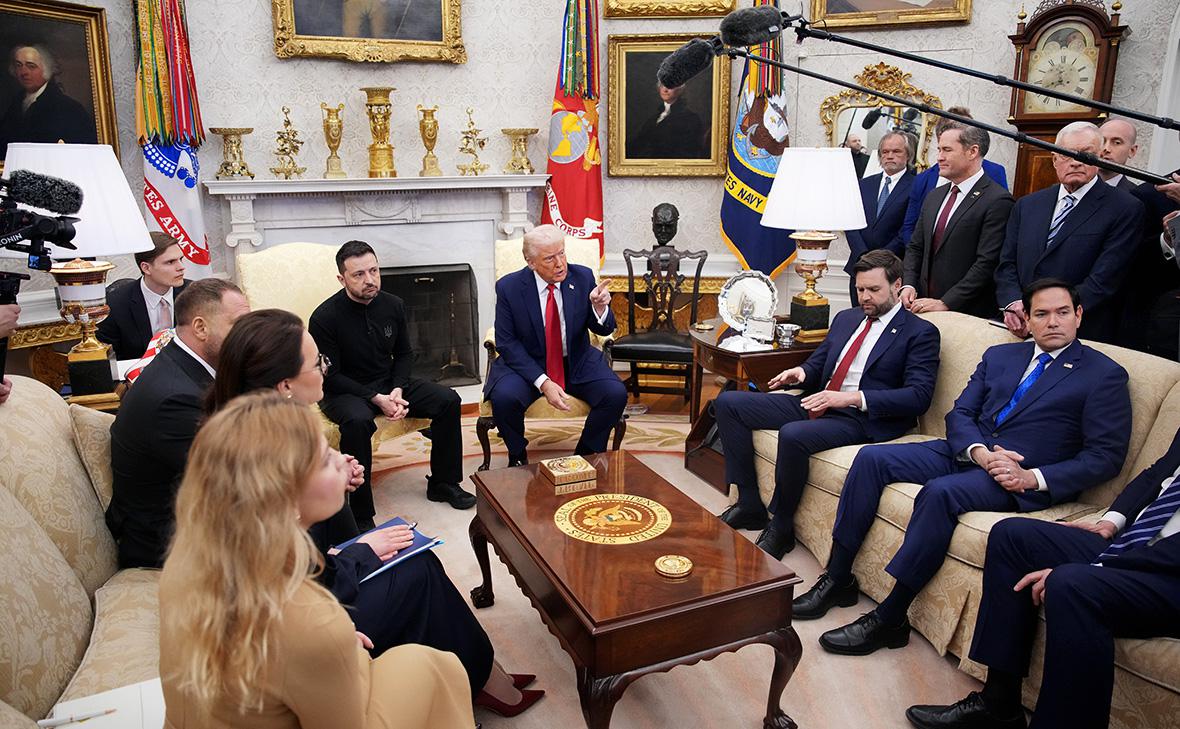
Zelensky and Trump in the Oval Office of the White House in Washington, February 28, 2025. (Photo: Andrew Harnik / Getty Images)
Simon Shuster: I don't know. We can only analyze the situation and make some guesses. I don't believe it was some kind of ambush, the meeting lasted almost an hour, and the quarrel happened in the last 10 minutes. Initially, there was no feeling that something bad would happen from Trump's side. It is also important to keep in mind the relationship between J.D. Vance, the vice president, and Zelensky. I know from various sources that their meeting in Munich was tough, Vance insisted that Zelensky sign the agreement and bring it, hand it over, Zelensky said that the version of the document did not correspond to the interests of the Ukrainian people, it needed to be refined. Two weeks later, I think both Vance and Zelensky remembered this tough conversation. And it must be said that J.D. Vance, even compared to Trump, is not a supporter of Ukraine. When he was a senator, he said that he "didn't care what happens to Ukraine". And it was clear to me that Vance was quite aggressively opposed to Zelensky, emotional outbursts started mainly with him, and he was very sharply attacking Zelensky.
Yevgenia Albats: Why was Vance even present at these negotiations? How common is it for the vice president to be present at such a meeting?
Simon Shuster: Yes, you are right, it was quite strange. There is no clear explanation for this.
Yevgenia Albats: American media wrote that Trump has not been able to stand Zelensky since his first term when his phone conversation with Volodymyr Zelensky about investigating Hunter Biden's activities in Ukraine leaked and became the reason for Trump's first impeachment. Is Trump really such a vindictive person?
Simon Shuster: Quite vindictive, and this is indeed a factor. Trump remembers everything and often talks about this story with the first impeachment. But it is not obvious that he is angry with Zelensky because of this. I remember one of their meetings at the end of September last year. Zelensky came to Washington and New York. And he met with Trump, who was then still a candidate for president from the Republican Party. Trump then mentioned this whole story with the first impeachment and thanked Zelensky for his behavior in 2019. He said: Zelensky could have said then that I pressured him, but he didn't, he behaved with dignity. A lot depends on Trump's mood, so he can remember both the good and the bad.
Zelensky's Mood
Yevgenia Albats: Sources in the Ukrainian delegation say that before Zelensky went to the White House, a delegation from the American Congress came to him at the hotel, from both parties, and they advised Zelensky to be as diplomatic as possible. Did they feel some kind of mood from Zelensky? Sources in both the American and Ukrainian delegations say that the memorandum of intent on the extraction of rare earth elements from Ukraine's subsoil, which Zelensky brought with him, is a framework agreement, but it is extremely beneficial for Ukraine, it means investments in Ukraine's economy. Then why didn't Zelensky hold back? Why did he start talking about not trusting Putin and thus provoke Vance's irritation, from which the altercation began? What does this tell you, Simon? Why didn't Zelensky hold back and why did Vance go so sharply against him? Don't you think that Vance and Trump decided in advance to play good cop and bad cop? That Trump would be more restrained, and Vance would play the role of a young, unpolished, unaccustomed to international affairs senator from Appalachia, who doesn't know how to behave properly.
There are precedents when Western leaders for similar reasons somehow take offense or quarrel with Zelensky. But it must be borne in mind that Zelensky represents a country that is at war. He always hears the voices of his military, generals, and people
Simon Shuster: We don't know what Trump, Vance, maybe this journalist who asked Zelensky an insulting question about his clothes, agreed on in advance, I don't want to guess. I just don't know what they talked about before this, how they were set up.
As for Zelensky, it is interesting to recall situations that occurred between Zelensky and other leaders. It is known that there were quite tough, emotional conversations with President Biden behind closed doors. We know that there was a sharp phone conversation in the summer of 22, when President Biden was offended by Zelensky for not making a long enough pause to thank for a large batch of American military aid, where there were "HIMARS". Zelensky thanked, but quickly moved on to other requests. Biden told him: well, wait, we just provided you with a huge package, let's pause. There was a public moment in the summer of 23 at the NATO summit when Ben Wallace, then the UK Secretary of Defense, criticized Zelensky for not showing enough gratitude again. Ben Wallace later apologized for this and said he was wrong, that he shouldn't have said that.
Why am I telling this? There are precedents when Western leaders for similar reasons somehow take offense or quarrel with Zelensky. But it must be borne in mind that Zelensky represents a country that is at war. He always hears the voices of his military, generals, and people, who expect him to seek the help that Ukraine needs to defend against the Russian invasion. He cannot wait, it is very difficult for him to adhere to political correctness, it is difficult for him to have the patience that diplomacy requires of him. Yes, he often demands help. Asks, demands, insistently and stubbornly. And many partners, leaders do not like it. They get tired of it, and conflicts arise on this basis. The difference is that they usually happen behind closed doors. We sometimes learn about them from various sources, both American and Ukrainian. But I think this would be typical of any leader who represents a country that literally needs this help for its survival. He cannot just wait and say thank you because his soldiers need weapons today.
Yevgenia Albats: So it turns out that Zelensky knows about this impatience. And, apparently, that is exactly why American congressmen tried to persuade him in every possible way to be as diplomatic as possible. But why didn't Trump, a more experienced and older person, try to smooth out the situation? Why didn't the others try to roll it back? Why didn't they try to negotiate?
Simon Shuster: I think Trump also got angry. More than Vance's and Rubio's reactions, I was surprised by Senator Lindsey Graham's reaction. He is a steadfast, strong ally, a supporter of Ukraine throughout these three years of full-scale war. He came out of the White House to journalists very angry and said — I don't know how we can deal with Zelensky after this. In the last couple of days, I think he has softened his position a bit. But the initial reaction from the Americans was very emotional.
Yevgenia Albats: Sources in Washington say that not only Macron but also Senator Lindsey Graham persuaded Trump to meet with Zelensky. Trump called and invited Graham to the front row for the signing of this memorandum of intent. So, apparently, Graham invested a lot in this story.
Simon Shuster: It must be said that in Ukraine it is believed that the very initial idea of the agreement on minerals belongs to Lindsey Graham. He publicly started talking about it last fall, in September, that this deal would have a chance to convince Trump to continue supporting Ukraine. He and other American advisers to Zelensky, including Mike Pompeo, former Secretary of State under Trump, persuaded Zelensky that arguments related to the values of protecting democracy, protecting freedom, protecting Europe are unlikely to influence Trump as much as talking about money. And they proposed various financial deals that could attract and hold Trump's attention. In the end, they settled on this idea of joint development of some minerals.
But the meaning at least for Ukraine, for the Ukrainian side is that on this agreement further relations between Trump's America and Ukraine can be built. This piece of paper, which was supposed to be signed on February 28 at the White House, would give Trump the opportunity to show his voters that now Ukraine will pay us, not us them. And by saying this, he would already have the political opportunity to quietly continue America's policy of supporting Ukraine. These were the hopes, and this was what Republicans like Lindsey Graham and many others in Washington and many in Zelensky's team were counting on. That on the basis of this piece of paper, you can continue to work with the Americans. The document was quite important, key, it was supposed to be the basis for further process of settling relations with Trump and possible negotiations with the Russians. Not conversations — the United States and Russia over Zelensky's head, not taking into account Ukraine's interests — but full-fledged negotiations in which Europeans and Ukrainians will participate. That was the plan, that was the idea, but the piece of paper was not signed, and now Trump has no explanation for his supporters and voters as to why we will support Ukraine. I think to move from this deadlock, one way or another, this agreement will have to be signed. And Zelensky in the last couple of days says that the document is ready, let's resume this process. Because he, I know from his advisers, understands that Trump needs it.
Emotionality and Rationality
Yevgenia Albats: Sources in the Ukrainian delegation said that the Ukrainian side tried to negotiate with the American side for Zelensky and Trump to meet the next morning. And to ensure that the signing of the agreement took place. The same Lindsey Graham allegedly advised Zelensky in an interview with Fox News to express regret about what happened and apologize. And that Trump was waiting for this apology, but not hearing it, said that that's it, nothing more will happen. If Zelensky and his advisers understand how important this agreement is, why did Zelensky go for such an escalation, even though his team tried to somehow fix the situation while still in Washington?
Simon Shuster: I don't know. I can only guess.
Yevgenia Albats: And in Kyiv, is this not explained in any way?
Simon Shuster: It is explained by the fact that the Ukrainian people expect such a strong position from Zelensky. That is, they support him when he behaves with dignity. If he believes he did nothing wrong, then he should not apologize. He did nothing wrong, on the contrary, they behaved badly towards him in the Oval Office.
I know Zelensky quite well, I wrote his biography. It didn't surprise me. He is stubborn, he is proud. And he always believed, from the very beginning of his term, that he should be treated with respect as the president of Ukraine. It was very offensive to him when he felt that he was being treated as some kind of secondary or non-president. As he told me in one of the interviews, a pawn on the chessboard of great empires. He always believed that Ukraine is also a big, strong country, also a power, and it and he as the president of Ukraine should be treated with respect.
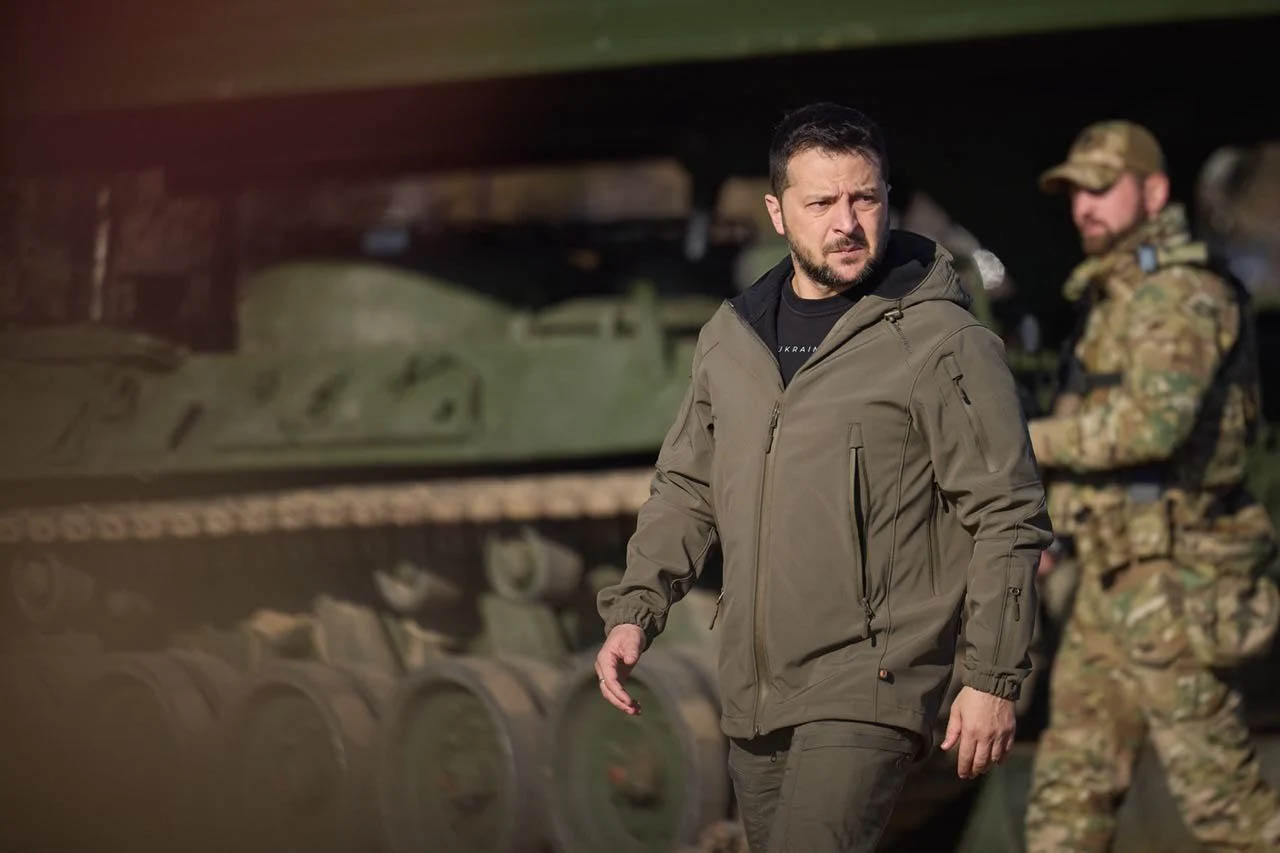
Volodymyr Zelensky (Photo: Ukrainian Presidential Press Service / Reuters)
Yevgenia Albats: But at the same time, President Zelensky and his entourage understand well that the survival of Ukraine as a sovereign country is at stake. Europeans do not have the same electronic intelligence capabilities as the United States, nor satellite intelligence, so in this sense, Europe cannot do without the United States, which means Ukraine cannot either. If Zelensky and his advisers understand this, why didn't he try to reconcile with Trump immediately?
Simon Shuster: I am sure he understands this.
Yevgenia Albats: Nevertheless, he refuses to apologize. And flies to London. I don't see rationality in such an approach. I understand that he has grounds. But he is losing. Nevertheless, he cannot, does not want to restrain himself.
Simon Shuster: This is indeed characteristic of him. In my book, I try to describe in detail this transformation from the beginning of his presidency when he really relied on advisers. He often called them professionals, that is, people who know how the state system works, how diplomacy works, and so on. He really gained confidence in himself, in his decisions over time, mastered all the rules. He decided for himself quite early that some protocol and communication rules are illogical, they interfere. It really annoyed him that he was not allowed to communicate directly with presidents and prime ministers through WhatsApp**, or just write a message, or just call directly. Why are all these closed lines of communication needed? It irritated him. Over time, he gained this self-confidence. And indeed, now he makes decisions himself. Advisers advise him, he listens to them and listens to everyone. He really tries to get the maximum number of opinions from people not connected with political processes, and experts, and professionals. But he makes the decision himself, and often intuitively. Often many in Ukraine and other countries find his decisions too quick, too spontaneous, even emotional. But this is part of his character, part of his style as a leader. I think time will tell if he is right or not. I think he believes that if a leader respects himself, then over time they will respect him and his country more.
What Can Europe Do?
Yevgenia Albats: Zelensky flew straight from Washington to London. We saw footage from London, where the Prime Minister of the United Kingdom met him very warmly, and then Macron and representatives of other European countries and even Canada arrived there. They decided to develop a plan for a ceasefire. How realistic is this? Can Europe really make such decisions, or will it again wait for what the Americans say?
Simon Shuster: I feel strong changes in the rhetoric of Europeans, at least in their mood. They were really shocked by J.D. Vance's speech in Munich. Leaders I spoke to said this is a new era, and we must make the most responsible and serious decisions not to be dependent on the United States, for our defense, for our geopolitical position. There are discussions about whether France can be a nuclear shield for the European Union if the Americans are now unserious about this responsibility. This is really not just talk. Today even the new proposed Chancellor of Germany Friedrich Merz spoke very sharply in support of Zelensky, which is surprising for a German leader. Time will tell, but so far we hear amazing statements of intent from European leaders.
Yevgenia Albats: What reasons do we have to believe that after three years Europe suddenly realized that it needs to help Ukraine? Because there, as Marco Rubio said, soon there will be no Ukrainians left to defend Ukraine.
Simon Shuster: The leadership in the United States has changed. While Biden, who continued to act as the leader of the Western world, the free world, the democratic world, as it is called, was there, Europeans could relax a bit. Now Europeans feel and see that America's position is changing significantly. They talk about possible lifting of sanctions against Russia, about some other agreements with Putin. This makes them very nervous. They are not ready to go down this path. And again, Ukraine will test the European Union for strength, their ability and willingness to unite and find the necessary resources to defend their own continent.
Elections Now — A Bad Idea
Yevgenia Albats: What do they say in Kyiv about possible elections? Trump insisted that the second stage after signing the memorandum of intent on rare earth elements should be elections in Ukraine. It is quite obvious that this reflects Putin's rhetoric, who says that Zelensky is illegitimate because his term expired in December 2024. What do they say in Kyiv?
Simon Shuster: Most people think it's a bad idea to hold elections now. Even Zelensky's political opponents mostly do not support this idea. And the more pressure grows from outside, from Trump and Putin, from the USA and Russia to hold these elections, the more Ukrainians reject this idea and, on the contrary, support the president. Last week there was a vote in the Verkhovna Rada to extend Zelensky's presidential mandate until the end of martial law.
Yevgenia Albats: As far as I understand, the Rada does not have such powers, there should be a decision of the Constitutional Court of Ukraine.
Simon Shuster: This would also help. This is symbolic, of course. To give Zelensky a new legitimate term, elections are needed. But in Ukraine, they have a bad attitude towards this. I discussed this with Zelensky when this topic was raised somewhere at the end of 23, since then he continues to say the same things, explaining why this is practically impossible. Because of millions of refugees who are abroad, because of the number of military personnel who will not be able to vote, because of the division in society that occurs during the election campaign. And because of the possibility of hybrid warfare from Russia, which uses all disagreements in society. He really believes in this. He says this both publicly and personally when he communicates with his advisers, he is not a supporter of holding elections precisely because of these practical issues. Some of his advisers, I know, would like to hold elections because at moments like today, when his rating is rising, you can win elections and not think about it for five years. But he, as far as I understand, is categorically against it. Not because he is afraid of losing, no, he thinks he will win, but because these elections will be very expensive and very difficult, and it is unclear how to conduct them practically.
Yevgenia Albats: But your compatriots, Simon, usually refer to Abraham Lincoln and the fact that he held elections during the civil war.
Simon Shuster: Yes, I heard that. There is a nuance, as they say. The southern states did not participate in the elections. That is, it is unclear whether the elections were legitimate. But they were held, yes, and Lincoln won, but many states did not vote. I think Zelensky does not want it that way — when a large part of his fellow citizens does not have the opportunity to choose.
Trump sees a potential ally in Putin, tries to pull him away from China, and for this is ready to break all Western rules of conduct — that it is impossible to sit at the negotiating table with Putin, he is untouchable
Yevgenia Albats: The United States in the vote on the UN resolution on the third anniversary of the war in Ukraine found itself in the same company with Russia, Iran, North Korea, and Sudan, not recognizing Russia as an aggressor. Why was this done?
Simon Shuster: We can only guess, I am not a big specialist in this part, but I informally spoke with one of Zelensky's advisers, and he said that perhaps for Trump this is a rather cheap bargaining chip, which from the point of view of Trump's voters, Trump's supporters, costs him little. That is, how they vote in the UN, Americans don't care much. The theory was such, quite interesting, that Trump used this to involve Putin, to dispose Putin to some negotiations, to make him this gift, which is cheap for Americans, but valuable for Putin. To show Putin that he is not in isolation, and to dispose him in this way to negotiations, which Trump can then turn against Russia. Such a multi-move. I think it slightly exaggerates how strategically Trump thinks. I believe that everything is much simpler. Trump sees a potential ally in Putin, really tries to pull him away from China, break relations between Russia and China, and will try in every way to do this, and for this is ready to break all Western rules of conduct — that it is impossible to sit at the negotiating table with Putin, he is untouchable. Trump seems to not care about this, and this, of course, greatly offends, worries Zelensky and Ukrainians. I remember in one of the conversations Zelensky told me that Putin will never be forgiven for what he did in Ukraine. And Trump is now hinting that perhaps the United States is ready to forgive him something, lift some sanctions, even invite him back to the Big Seven, make it the Big Eight again. This is a kind of forgiveness.
Yevgenia Albats: This is even a reward, I would say.
Simon Shuster: Yes. It sounds terrible here in Kyiv, and even more so for Zelensky, because one of his global goals in this war is to ensure that no one ever forgives Putin, that he will be a war criminal all his life. And what Trump is doing now is not very encouraging.
Ukraine Cannot Be Bypassed
Yevgenia Albats: Do you think Zelensky will be able to reconcile with Trump or at least establish outward relations with the United States?
Simon Shuster: Based on feelings and communication with people here, the mood among Ukrainians, I mean officials, people close to power, is that this agreement is in the interests of both countries. Trump promised that he would end this war, and without Ukraine, he will not be able to do this. He can negotiate anything with Putin, but he will not be able to end the war if Ukraine does not agree with his approach, and Europe too, by the way. So if Trump is going to fulfill his promise, he will have to reckon with Ukraine and Zelensky. And he really wants to show his voters this piece of paper: you see, Biden gave them money all these years, and now they are paying us. This is very in Trump's style. "We made a deal". I think he got angry, among other things, because this ceremony was disrupted for him, when he could tell his voters: look, I'm a big businessman, I made this deal. I think he still wants this. But I don't know how much time will pass when he calms down (if he calms down), when they return to this deal and in what form. Time will tell, but this should be resolved in the coming days or weeks. I don't think there will be any long freeze in relations between the USA and Ukraine. I don't believe in this.
Video version:
* Yevgenia Albats is declared a "foreign agent" in Russia.
** Owned by the company Meta, recognized as an "extremist organization" and banned in Russia.