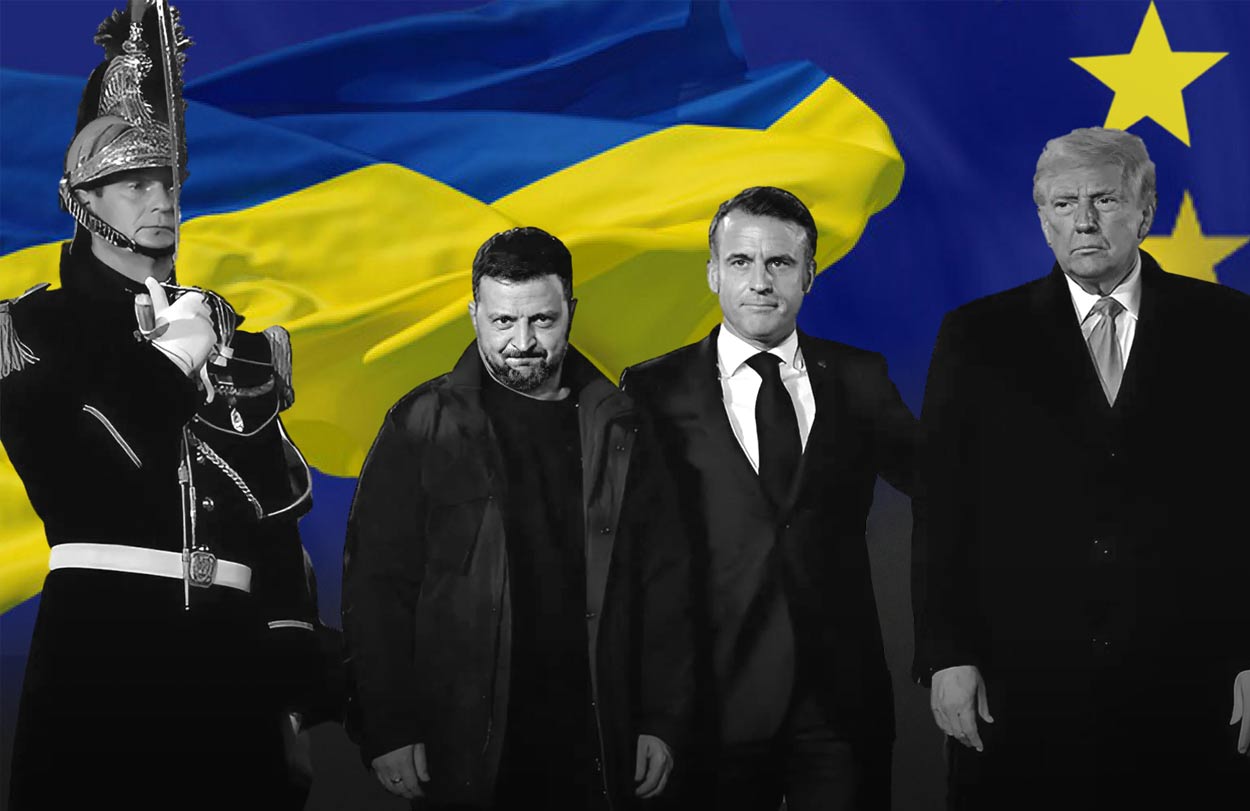
Yevgenia Albats*: Three years ago, the Russian army invaded the territory of sovereign Ukraine and started an aggressive war that has been ongoing for three years. During this time, the Russian army has occupied about 20% of Ukrainian territory, killed tens and hundreds of thousands of people, many thousands of children, the elderly, women, and destroyed Ukrainian cities. All these three years, Ukrainians have resisted in a way that no one expected from them. The country has held on for three years. It is shielding Europe from modern Russian fascism with their bodies and blood.
We will discuss what has literally happened before our eyes in the last two weeks. At the Munich Security Conference, U.S. Vice President J.D. Vance gave Europe a lesson on how to "properly" engage in democracy, what Europe has done wrong to the rest of the world, and what it needs to learn from the United States. Then followed a series of interesting events, namely: the United States offered Ukraine a deal for the extraction of rare earth elements, as well as control over all minerals, ports, etc., on the territory of Ukraine in exchange for the assistance the United States has already provided.
According to President Trump, this is $500 billion, a figure many experts have already disputed. Zelensky refused to sign this agreement, and in Riyadh, the capital of Saudi Arabia, a Russian delegation gathered, represented by Foreign Minister Lavrov, the Russian President's advisor on geopolitical issues Ushakov, and the head of one of the Russian departments, former Kyiv resident, Oxford graduate, and husband of Putin's daughter's close friend Kirill Dmitriev. They met with the American delegation, the Ukrainian side was not invited to these negotiations. We witnessed a spat between Ukraine and the United States, and many observers perceived what is happening as a repeat of the events of 1938, when in Munich, Great Britain, Italy, France, and Germany signed what went down in history as the "Munich Agreement" or the great betrayal, when they handed over Czechoslovakia to Hitler. Do you think this really resembles an agreement, or is it just a dance before serious negotiations begin?
This is an approach to negotiations from a position of weakness on the American side, although in reality, all the strength is on this side, or a concession of a position of strength to Putin, which he is actively using now
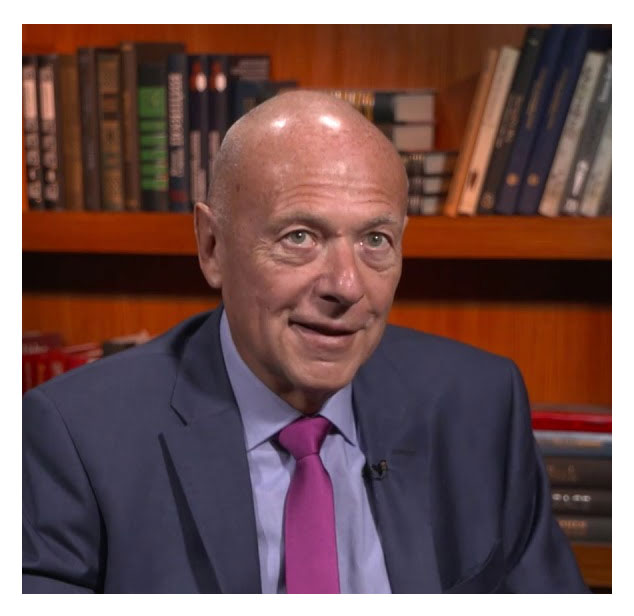 Andrey Kozyrev: This could be either, it's hard to say yet. But one thing is clear to me, that it is at least strange to start negotiations by giving the aggressor, in this case, Putin, almost everything, and above all, Ukraine's participation in NATO. NATO is an inherent adversary of Russia. NATO is an organization created by the United States, and they hold a leading position in it. The logical chain clearly indicates that the main enemy of Russia is the United States. It turns out that America is ready for negotiations and to establish relations with Putin, who considers America his main mortal enemy. And the American side immediately stated that there would be no return of the occupied territories to Ukraine. In my opinion, this is clearly an approach to negotiations from a position of weakness on the American side, although in reality, all the strength is on this side, or a concession of a position of strength to Putin, which he is actively using now.
I won't predict what will happen next. It depends on the situation in America itself. We do not yet see open objections from the Republican side, although there is clear grumbling and rumbling, sometimes even threatening, coming from Congress. This will also matter. As The Wall Street Journal, the mouthpiece of the Republican Party, writes, a decision that resembles a "new Munich" will not pass as a victory for Trump, and I think it will not be accepted by the Nobel Committee as a basis for a peace prize, which is one of Trump's priorities. Therefore, he also has many considerations against such an outcome, and this will clash him with Putin.
Betrayal of Europe
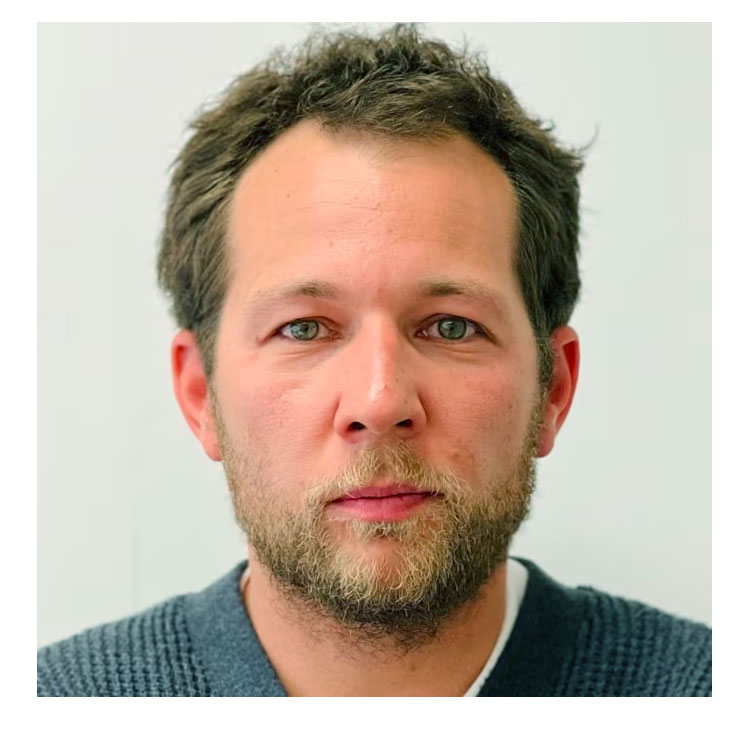 Oleg Itskhoki: I thought about this a little differently. Ukraine is not within Trump's strategic interests. For him, it is a bargaining chip. And this is not a betrayal of Ukraine because he does not consider Ukraine a subject. This is a betrayal of Europe.
Why is Ukraine not a subject of his interests? The subject of his interests, for example, is a truce in the Middle East and the establishment of diplomatic relations between Saudi Arabia and Israel. This is much higher on his list of priorities. This is something he can get some awards for or not. And the strategy is a refusal to participate in the European security system. And this is a betrayal of Europe. What existed for 80 years after World War II is ceasing to exist before our eyes.
What will Europe do? One of the biggest events of recent days is the elections in Germany, which is more important than what the US is doing in Europe. And I will add one more thing, not only Wall Street Journal, but even New York Post, which is a much lower, you could say, far-right link in this media empire, what Trump voters read — published an article on the front page that the real dictator is Putin, not Zelensky. So there is no consensus in society. And it is completely unclear where the scales may tip in the coming weeks.
Yevgenia Albats: Let me turn the question around and play devil's advocate. The devil's advocate will say: what do you want? Ukraine is entirely dependent on the United States of America. If the United States stops supplying weapons to Ukraine, Europe, which has been trying to establish arms production for three years, will not be able to replace it. The only thing Europe can do is chip in and buy weapons for Ukraine from the United States. And it's unclear if they will do that or not. So what option is there? Why did Zelensky even start arguing publicly with Trump? This is a losing situation from the start, considering that Trump does not tolerate being contradicted. What do you say, Yuri Yevgenyevich?
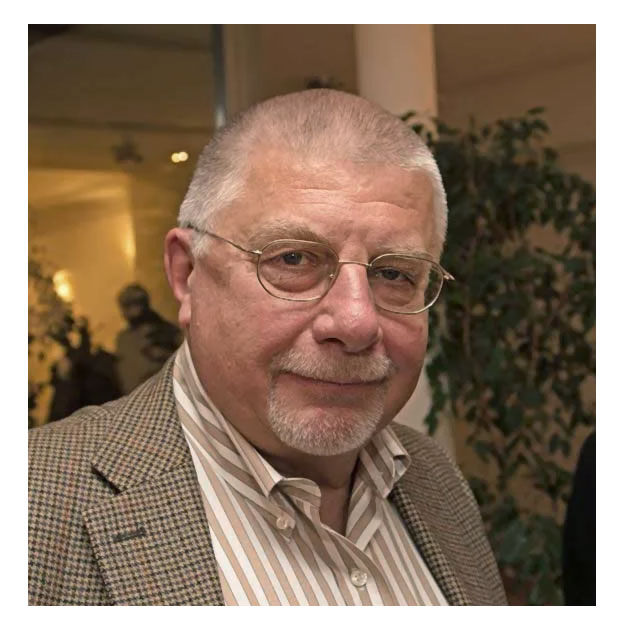 Yuri Fedorov: I want to return to the historical analogy. 1938, the Munich Dictate, as it is called in the Czech Republic. Besides the position of Great Britain and France, there was also the position of Edvard Beneš, the then president of Czechoslovakia, who accepted the conditions put forward in Munich, despite the fact that at that time Czechoslovakia had an army only two divisions smaller than the German one. And moreover, the Czechoslovak army was fully mobilized, ready for war with Germany, ready to repel aggression. But for some reason, now is not the time to talk about it, Beneš simply capitulated. So, Zelensky did not capitulate to Trump, to the pressure exerted on him, unprecedented pressure. This is just a remark that much also depends on Ukraine. Trump can agree with Putin on anything, but Trump cannot withdraw American soldiers from Ukraine because there are no American soldiers there. He can stop the aid, that's true.
But here arises a rather curious situation, which, in general, has not been studied much yet. Ukraine's problem in the last year is not that there is a lack of weapons. There are enough weapons, in general. Some were supplied, and quite a lot, in the last months of Joseph Biden's administration. Ukraine's military problem is related to a very difficult situation with the mobilization of personnel. This is a separate problem, political and social. Stopping aid from the United States (and in fact, in the first half of last year, the US did not supply anything to Ukraine) will undoubtedly weaken the positions of the Ukrainian armed forces, but I think it will not give Russia any real military advantage, at least not such an advantage that could lead to a cardinal change in the course and nature of the war. Namely, it will not allow Russia to break out of the positional stalemate and achieve any decisive victories. This will not happen because the entire course of the war shows that the Russian army, which the American press often portrays as an all-powerful monster, is actually a monster, but far from all-powerful.
It seems to me that the position taken today by the President of Ukraine and the main European states will disrupt the plans that may have been discussed in Riyadh, or may be discussed somewhere else. Not everything is decided in the modern world by negotiations between two presidents, Trump and Putin. There are other forces that can seriously change these arrangements.
In a Positional Stalemate
Yevgenia Albats: Marco Rubio at the hearings in the US Congress Foreign Affairs Committee, when asked about his position on Ukraine, even before he was confirmed, said that Ukraine's problem, as you said, is not a lack of weapons, but that Ukrainians are running out. And this is a serious story because if Ukraine does not have modern weapons, it means that more Ukrainians will simply be killed. At the same time, as you yourself say, there is a big problem with mobilization. What is the situation on the front now? Trump told Zelensky, if you wait any longer, you will be left without a country. How likely is it that Putin can now bomb or occupy Kyiv? Move further west, take Odessa, Kharkiv?
Yuri Fedorov: The entire course of the war shows that the Russian army is unable to solve the tasks set before it by Putin. It's not about the reasoning of experts, or analysts, or journalists. It's about the facts. And the facts are as follows: for three years, the Russian army, having a significant superiority in weapons, 2–3 times, and in some types more over the Ukrainian armed forces, nevertheless, since October 2023, after the unsuccessful offensive of the Armed Forces of Ukraine ended, has been in a positional stalemate. Neither side can achieve any real, serious victory capable of changing, as I have already said, the course of the war. This indicates that the Russian army is not as strong. It is known that about 620–630 thousand Russian soldiers and officers are fighting in Ukraine. How many are actually fighting on the Ukrainian side is very difficult to say, estimates vary, but it is clear that significantly fewer than on the Russian side. Despite this, the Russian army cannot advance at a faster pace than it is advancing. Russia today does not have the strength to achieve a military victory. It is quite possible that the Russian army will eventually, perhaps within this year, reach the administrative borders of the Donetsk region. But at the same time, it will have to spend a long time storming the fortified agglomeration of Kramatorsk-Sloviansk. This is a very serious task. Suppose they reach the borders of the Donetsk region, and what then?
Meanwhile, in Russia itself, if you look at what relatively informed Russian military telegram channels, the so-called Z-bloggers, write, there are very serious disagreements in the military command, in the political elite about the continuation of the war. Many believe that Russia is grinding down its army in Ukraine. The economic situation is not brilliant, it's time to end the war, otherwise, it will be bad. There is another point of view — we need to achieve victory. In general, there are disagreements in Moscow. Putin, it seems, does not quite understand what he actually wants. Or he doesn't know if he can achieve it.
Yevgenia Albats: Am I right in understanding that Putin is interested in a truce, he needs time to at least build up arms?
Yuri Fedorov: Yes, exactly. The paradox is that both sides need a peaceful respite. Both Ukraine and Russia.
Trump Needs a Blitz
Yevgenia Albats: What is this rare earth metals deal that Trump was pushing? Zelensky qualified the initial version of the agreement as quite a colonial treaty. Economists I asked say that to get what Trump wants, Americans would have to invest $800 billion or even one trillion dollars in Ukrainian subsoil. And then, maybe, they will get $400–500 billion. Oleg, do you understand what this is all about?
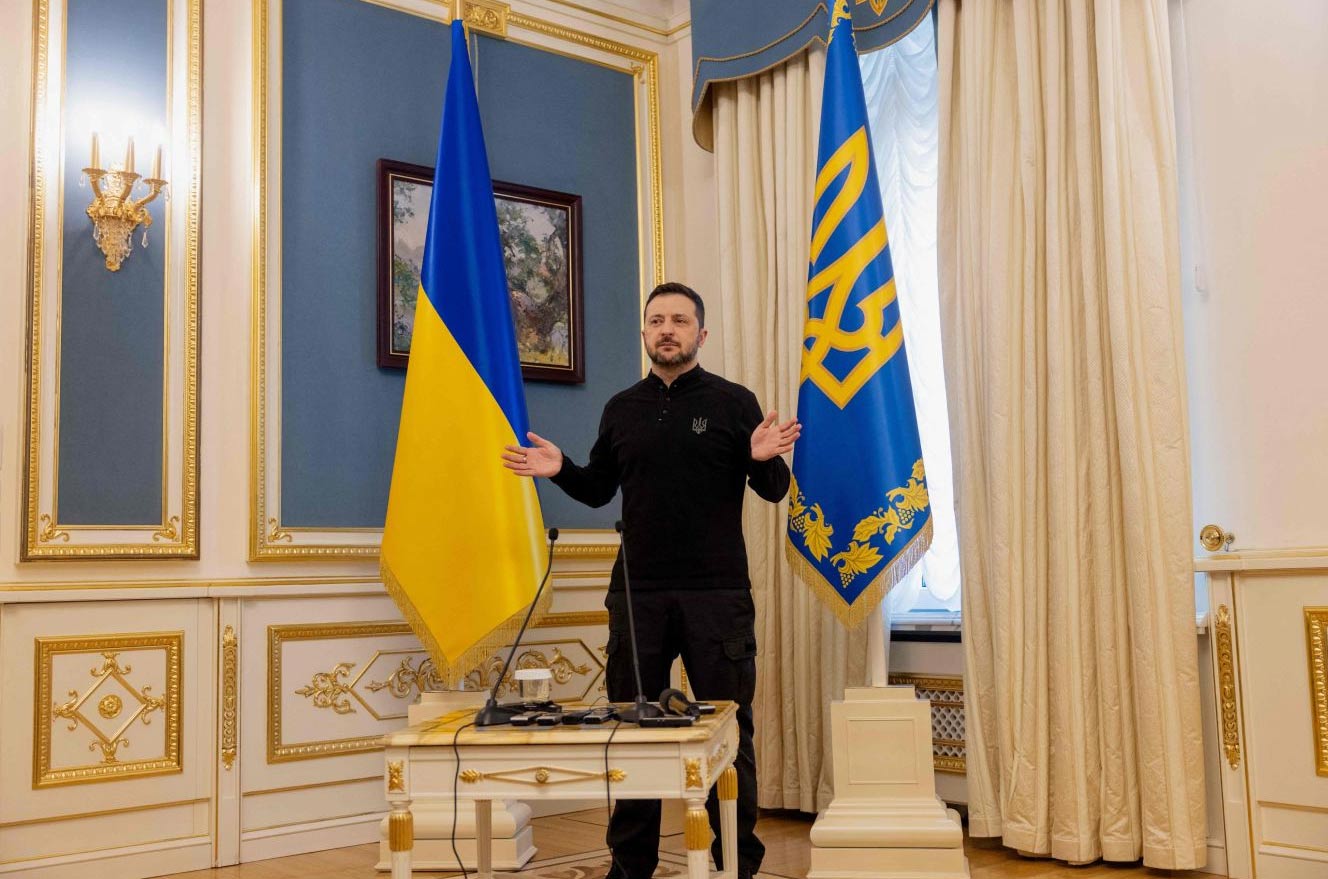
Volodymyr Zelensky at a press conference dedicated to the subsoil agreement.
Photo: Tetiana Dzhafarova / AFP / Scanpix / LETA
Oleg Itskhoki: Trump needs a quick victory. He is trying to portray himself as a strong president with a big mandate, without having this big mandate for changes. Despite having a majority in both houses of the Senate, he is not trying to make changes through the Senate in a complex, proper way. He is trying, where he has presidential power, to earn a few quick victories to boost his ratings. So far, we see that his ratings are at best not growing, and at worst, falling.
It's important to remember that he has three foreign policy initiatives in his first term. North Korea — failure, negotiations with the Taliban — failure, and negotiations around Israel — partial success. Therefore, it is worth thinking about what result all the negotiations he is conducting may have.
Trump finds it much easier to live in a world where he can agree with Putin, divide spheres of influence with him. And he would like to do it, but he can't
But what really matters is the scale of the financial problem. I absolutely agree with Yuri Fedorov that it's not about financial constraints, not about arms supplies. When the US was fighting in Afghanistan and Iraq, these conflicts were on the scale of trillions. That is, each of these wars cost about $3 trillion. The current support for Ukraine is measured in one or two hundred billion dollars. And most of this money is spent in the US on weapons that have already been produced. That is, these are fictitious financial write-offs of what has already been produced. Or spending on the production of something new, but this is not at all like sending soldiers to another country, which really costs a lot of money, huge resources, and requires a big decision from any president.
The scale of the current problem is an order, if not two orders, smaller than any previous war. The US is at the level of minimal military spending in its modern history. If during the Cold War this figure could approach 7–8% of GDP, and during the Iraq and Afghanistan wars it was 5% of GDP, now we are talking about 2.5% of GDP. This is the minimum share of spending. The task of producing weapons is orders of magnitude simpler than the task of producing a coronavirus vaccine, which was done in a year and also cost two orders of magnitude more money, also measured in trillions of dollars. That is, financially the whole issue is actually small, but in terms of importance, it also seems small. Trump finds it much easier to live in a world where he can agree with Putin, divide spheres of influence with him. And he would like to do it, but, as Yuri said, he simply can't do it. And he will not get a quick win. Further, the initiative is actually in the hands of Europe and Ukraine. And financially for Europe, this is also not a problem.
This is a big interesting topic, what choice Europe is facing now. For Europe, a strategy where they do not depend on the US seems winning. In November, I was at a conference with Robert Habeck. He lost the elections with the Green Party in Germany this year, but he said a completely correct thing, which probably all politicians in Germany share. The situation in Europe cannot depend on 20 thousand votes in some city in Pennsylvania, which Europeans have never heard of. And indeed we are witnessing a colossal change in the security structure in Europe: the institutions built in the 40s and 50s are ceasing to function, and now leadership will either be with Europe or it won't.
From an economic point of view, increasing military spending to 3–4% of GDP, stimulating this economy, creating a large number of jobs that will need to be financed, is an absolute win-win for Europe. Another question, for example, is that in Germany there is a law that they cannot have deficit budget financing for anything. This is a crazy law, they will have to get rid of it. Whether they succeed or not, we don't know, but the fact that centrist parties won in both Germany and Austria gives them some time to solve this problem.
Yevgenia Albats: And the agreement on rare earth elements? What is that?
Oleg Itskhoki: This is noise, I think, not worth paying attention to. Trump is trying to press different buttons: he started a trade war with Canada, ended it the same day. It's from the same series. I suggest thinking about it this way until something more serious happens.
Tram Style
Yevgenia Albats: Andrey Vladimirovich, a question for you as the Minister of Foreign Affairs of the Russian Federation in the 90s. There was a civil war in Yugoslavia, and there were many attempts to stop this terrible bloodshed, ethnic cleansing, etc. Trump chose meetings of American representatives with Russians in Riyadh. From your point of view as a diplomat, is it possible for the issue of a truce to be resolved without the side of the conflict, in this case without Ukraine?
Negotiations in Riyadh are negotiations of "nobody with nobody." On both sides, just pawns. Today they say one thing, yesterday they all said another
Andrey Kozyrev: This is impossible. Much of what is happening now, I agree with Oleg, is just noise. But there is one feature. Trump, having created this noise in a boorish tram style, raised such a clamor, perhaps without even expecting it, that he achieved that this topic is now on all channels. Fox News from morning till night, Wall Street Journal almost every day with editorial articles on this very topic, and critical of Trump. Foreign policy is always secondary in the States, and in elections, it is generally in tenth place among the interests of Americans. And therefore he had great freedom to try something and see how it would be. But now it seems that he is stubbornly driving himself into a bottle, and not even at real negotiations yet. And now suddenly people started talking about foreign policy, about Ukraine, he himself has driven the stakes somewhere very high with an unclear result.
As for the preliminary negotiations in Riyadh, these are negotiations of "nobody with nobody." On both sides, just pawns. Today they say one thing, yesterday they all said another. But that's their business, I just want to say that this noise for many now in Washington and, most importantly, for Trump himself suddenly turns into a real problem. So he needs to somehow let it go on the brakes. And Putin is negotiating from a position of strength. He uses this because he has no opposition, he risks nothing. If he doesn't agree — American imperialism and NATO are to blame. If he agrees — on his terms. So he dictates the terms. Politically, America has somehow put itself in a disadvantageous, shameful position. If this is what is called the art of negotiating or making deals, well, let them try, but the problem now exists in America too.
As for the past, I spent five years of my life, when I was a minister, and a huge amount of effort on the Yugoslav settlement. The Yugoslav situation teaches two things. There was an element of civil war there, mainly in Bosnia. This element was not and is not in Ukraine. Everything was inspired from outside. What is the similarity of the situation? In that Milosevic sent military aid there, but the Yugoslav People's Army to some extent obeyed him, in the old way, as they say, and it was not an occupying army, as it is now. Those republics were only just recognized, and problems arose immediately, which we managed to prevent
NATO intervened in the war in Bosnia only when a monstrous mass murder of the Muslim population occurred in Srebrenica, but it is now probably third-rate compared to what Russia is doing in Ukraine. After this monstrous crime, NATO decided to use air forces, and then American bombers conducted bombings of Serbian formations under the auspices of NATO, under the auspices of the UN, by the way, including those that participated in the Srebrenica massacre. And from that moment there was a turning point on the battlefield, that is, without the use of weapons, such conflicts are not resolved by diplomatic means. They are resolved only by military means. People like Putin understand nothing else. When planes arrive and hit the head properly, then he will start, as Milosevic did then, negotiations, but probably it will be too late. And then, maybe, he will be overthrown, like Milosevic. Against a fist, only a fist.
America in a Weak Position
Yevgenia Albats: There is a hypothesis put forward by Kirill Rogov, the editor-in-chief of Re: Russia, which is that Ushakov, Dmitriev, and Lavrov are very experienced negotiators, such Putin's dogs, and against them, very inexperienced people were put, who let everything go down the drain. What do you think about this?
Andrey Kozyrev: I think that whoever was there, even Einstein of diplomacy, you can't do anything with a tongue against a fist. You can only bite it if they hit the jaw hard. And this is exactly what is happening now. That is, they all bit their tongues because Putin responded with bombings of Odessa, double bombings of Ukraine, and this is his answer. All these Trump heroes two months ago were hawks in relation to Russia, now they have turned into some kind of meaningless negotiators, who actually have an unclear mandate and it's unclear what they want to achieve. And they have already shown Putin that we will give you everything, NATO doesn't suit you — to hell with NATO, internationally recognized borders — also to hell. In short, the American delegation came with the question: "What else do you need?" We have already given you everything right away, tell us what else you need. And they want all of Ukraine, they want to kick NATO out, and not from Ukraine, but from all the countries that joined after the so-called Cold War, although in Putin's view it never ended. In short, on the Russian side, they at least know the ultimate goals — to humiliate America, humiliate NATO, capture as much territory as possible, which NATO supposedly captured, and so on. And these guys on the American side — it's hard to watch — don't know what their boss Trump wants.
Yevgenia Albats: Yuri Yevgenyevich, do you also think that without the use of force, all these negotiations are not worth a broken penny?
Yuri Fedorov: In general, of course, yes. The use of force in relation to Russia means, from my point of view, not the invasion of NATO troops somewhere in the Kaliningrad region. The use of force means taking a tough position and negotiating from a tough position, not sliding into non-resistance to evil. After all, Russia is quite weak militarily, if you don't take into account nuclear weapons, but that's a separate story. Russia has not been able to solve its tasks militarily for three years, despite its superiority. So we need to proceed from this: you are not such strong guys, and if you want to get out of this story more or less decently, then agree to our terms. Otherwise, we will help Ukraine with weapons. Otherwise, we can think about sending some contingents to Ukraine. There are a lot of different nuances here. French President Macron can remind about the content of the French nuclear strategy, about the fact that France can be the first to deliver a nuclear strike in case of anything.
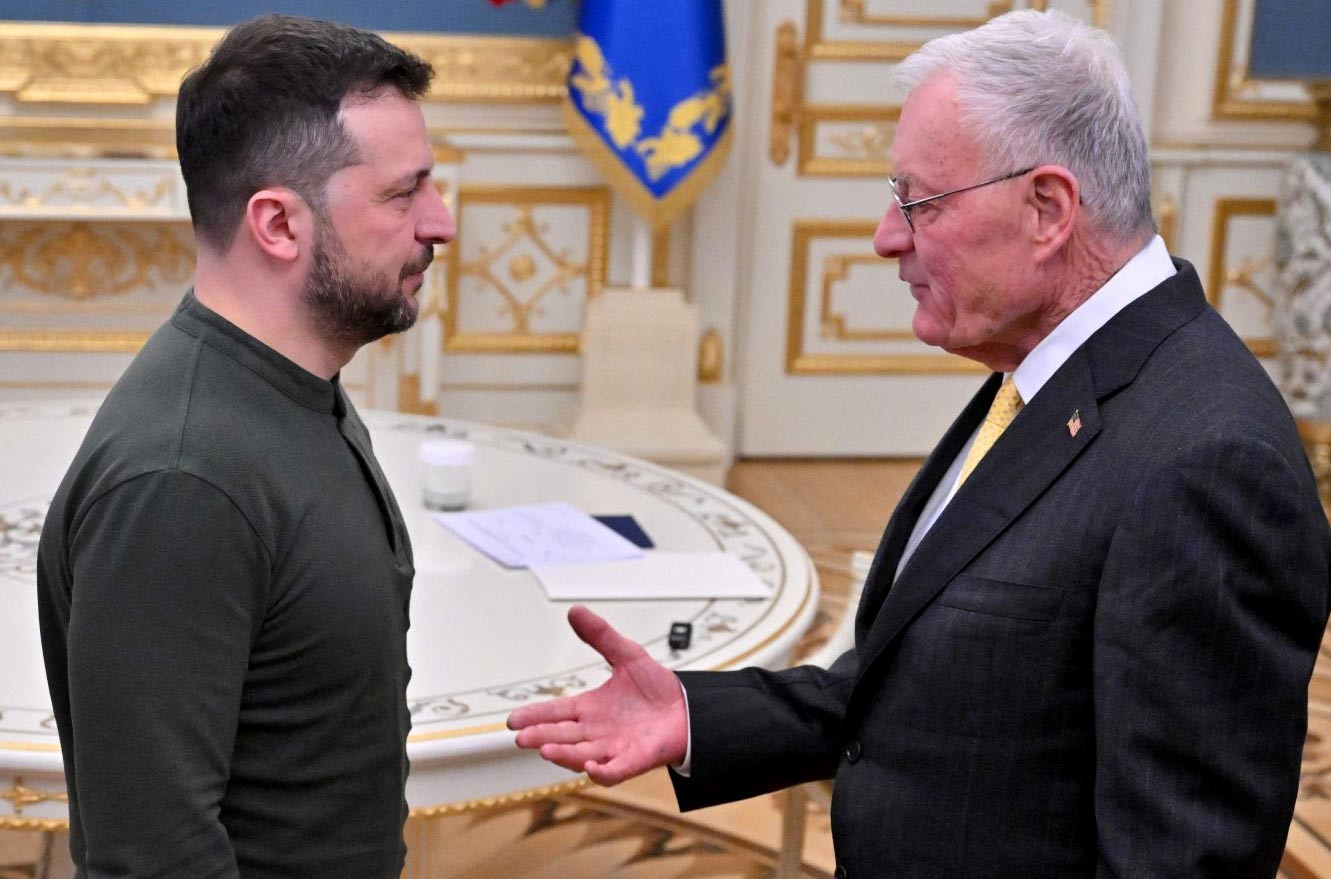
Volodymyr Zelensky and the US President's special envoy for Ukraine and Russia Keith Kellogg during negotiations in Kyiv. February 20, 2025. Photo: Sergei Supinsky / AFP / Scanpix / LETA
You see, everything depends on the tone of the positions. After all, what, in my opinion, was Trump's completely insane mistake. He is called some great tough negotiator who knew how to grab some pieces of land on Manhattan. No, he said from the very beginning: I want to quickly make a deal. In the Kremlin, they very accurately noticed right away: if in Washington they want to make a deal, and very much want to, then we need to proceed from this. So we can roll out maximum demands, which, probably, was done. Whether Trump will go for it or not, I don't know. The second mistake is that he started blackmailing the Europeans: and we will withdraw our troops. It's unclear from where, really, but we will withdraw. And this immediately aroused very unpleasant doubts in Europe about American security guarantees. What is happening in Europe now is fundamentally important. And there they are beginning to understand that the fate of Europe is in European hands. In fact, General De Gaulle talked about this. Now in Europe, they are beginning to understand that you can't trust the Americans, so you need to do something yourself. What else they will do, I don't know, but they have potential, both economic, scientific-technical, and even military. The total number of European armies is 2.2 million people. This is about twice as much as in Russia. 1.8 times, if you count by current real figures. But the question is in political will. Will European leaders be able to overcome the inertia of thinking of the last thirty years?
Yevgenia Albats: Trump, even on the first day when he signed decrees in the Oval Office of the White House, talked about how Putin is destroying his own country's economy, in the end, we can impose an oil embargo, and so on. Oleg, if there is a decision by the American state, can they increase oil supplies to the market and thereby collapse prices? And will Trump do it?
Trump decided that his main enemy is Biden, in second place is China, and Putin is a friend. This, of course, is nonsense
Oleg Itskhoki: That tweet by Trump about increasing production, which you are talking about, really made sense. This is the rare case when there was content in it. And there were several options for this strategy. Negotiate with Saudi Arabia, which needs American weapons. Some other major deals regarding the Middle East. Do something to get Saudi Arabia to bring a large amount of oil to the market. Whether such an opportunity exists or not, it's hard to say, but it seems that you can find something to offer Saudi Arabia. So far, we don't see this happening.
Another option is subsidizing the American oil industry, subsidizing exports. Everything has contradictions, but there was meaning in what was said. This is a question that needs to be seriously addressed, for this, political will and political capital are needed because it is impossible to make everyone happy. You have to set priorities and leave someone at a disadvantage. Trump, as a weak president, does not dare to take any step that will leave someone at a disadvantage because then he has to take on losses.
Trump wants to proceed from the fact, and this is very important, that a constitutional crisis is happening in America now. One of the signs of a constitutional crisis is a change in foreign policy. Trump decided that his main enemy is Biden, in second place is China, and Putin is a friend. In fact, the constitutional change that happened is that he can agree with Putin that the main enemy for both of them is Biden. This, of course, is nonsense. And voters will quickly see this. People see that problems are appearing, not being solved. We still hope for the American voter, who will not let all this pass by.
About Europe, it should be understood that it is larger in economic size, population, and total GDP than America. Europe's problem is that it is not growing. There are no points of economic growth, unlike America, which is growing very fast. And it is not a single state, so it is very difficult for them to solve supranational issues. And that's why military spending could be useful for Europe — it could become a source of growth. Like, for example, in Poland, which is growing fast and has high military spending, which could become a model for economic growth in Europe under the conditions Europe is placed.
The last thing I will say is who needs NATO. It is completely wrong to think that NATO is needed by America. In America, there is dissatisfaction that it has subsidized the security of the Western world too much. NATO is existentially important for the Baltic countries, existentially important for small Scandinavian countries. NATO is an organization that is most needed by small democracies. It will be most needed by Ukraine and may someday be needed by other small democracies of the post-Soviet space. Europe can become an alliance of small democracies, built precisely on the principle of the need to defend itself. Europe must increase military spending. And this was said, but at the diplomatic level. The voter was not involved in this discussion. Now we see that it has entered public policy. And indeed, this is a chance for Europe to become independent. Will Europe take advantage of this chance? Now is a critical moment. Can it take the role it should play in the world and which it has not played for the last 50–60 years.
Zelensky and Ukraine
Yevgenia Albats: Zelensky said at a press conference on Sunday that he is ready to resign if the price of his resignation will be a ceasefire and security for Ukraine. What would you do in his place?
Oleg Itskhoki: In a situation where Putin unequivocally demands the replacement of Zelensky, and Trump plays along with him and talks about elections, threatening to refuse aid and even withdraw their military contingent from Europe, Zelensky should just politely continue to communicate with Trump, receive all the help he can get from America, not be rude, as he is doing, and at the same time not agree to what is a bad deal for Ukraine. This is a great man who probably should sacrifice himself, his ambitions for the security of the country. This does not mean that he should agree to re-election, especially by some rules that will be imposed on Ukrainians from the outside. He should bargain for as much as possible and possibly end his political career at this moment. And what can he bargain for? Naturally, these are some security guarantees. And he is absolutely right in saying that he will leave after these security guarantees are received. And what are security guarantees? It's not even so much NATO as such an advantage in armaments that will allow stopping any future aggression at the root. This is the only thing that works. This is beneficial not only for Ukraine, it is beneficial for all of Europe. Europeans, Central Europe, Northern Europe, Germany have an absolute understanding of this problem. They are preparing for war with Russia. Russia's colonial expansion will not stop without losing such a war. This is understood in Europe. It would be good if this were understood in Russia too.
Andrey Kozyrev: I completely agree that Zelensky is a great man. He is the face of fighting Ukraine, capable of fighting and capable, in general, of winning this war. For Ukraine, he is a replacement, albeit temporary, for nuclear weapons, now their nuclear weapon is Zelensky. And he, I hope, understands this, and this is his historical mission. What else would I do, I would address the Ukrainian people with a fiery speech, such as he knows how to make for the West, and tell them a simple thing, that now we need to endure, we need to stand: we have stood for three years, shed blood for three years, it was not in vain, do not give up, do not lose heart. It is impossible for Trump with his fluctuations to instill fears and greatly cool the Ukrainian people and especially the youth, who think, why go to fight when, judging by everything, we are being abandoned and we have no way out. I listened with great pleasure to Yuri Yevgenyevich, that Ukraine is far from written off, the game is not lost. Ukraine can stand, and Europe can still join. We need to hold out a little longer, and Trump will have to reckon with reality, Europe is beginning to wake up.
Yuri Fedorov: The first thing I would do if I were in President Zelensky's place is to create a government of national unity, which probably should have been done from the very beginning. Just as it was done in Israel after October 7, during the last war with Hamas. This is very important for domestic political stability and for strengthening the president's authority in public opinion and in the political community as well. It is important to include all prominent political figures of the country in this structure, which was not done, unfortunately. And this is a serious problem for Ukraine. And the second problem that needs to be solved and which I would probably solve is the elimination of quite serious social injustice. People do not quite understand why some are fighting, while others are enjoying more or less peaceful life in Kyiv, in the same Kharkiv, by the way. The third problem is the implementation of the slogan "everything for the front, everything for victory." Because this is not the slogan that is being implemented in practical politics in Ukraine, to my deep regret.
All these problems are solved only with the help of serious political efforts.
Video version:
* Yevgenia Albats, Yuri Fedorov are declared "foreign agents" in the Russian Federation.
Photo: REUTERS/Sarah Meyssonnier.